Murderpedia has thousands of hours of work behind it. To keep creating
new content, we kindly appreciate any donation you can give to help
the Murderpedia project stay alive. We have many
plans and enthusiasm
to keep expanding and making Murderpedia a better site, but we really
need your help for this. Thank you very much in advance.
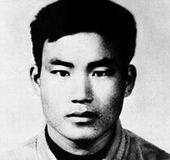
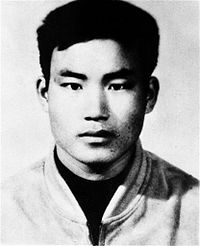
Woo BUM-KON
A.K.A.: "Power"
Classification: Spree killer
Characteristics:Korean
police officer - The
worst incident of spree killing in known history
Number of victims:57
Date of murders: April 27,
1982
Date of birth: February 24,
1955
Victims profile:Men,
women, and children
Method of murder:Woo shot most of his victims, but in one case he
killed an entire family with a grenade
Location: Sang-Namdo,
South Korea
Status: As police forces were closing in, he set the grenades' fuses,
killing both himself and three of his hostages
Woo "Power" Bum-Kon
(February 24, 1955-April 27, 1982) was a Korean police officer who
carried out the worst incident of spree killing in known history,
killing 58 (including himself), and wounding 35 in Sang-Namdo, South
Korea.
Uiryeong massacre
Bum-Kon had an
argument with his live-in girlfriend in the afternoon of April 26,
1982. Enraged, he left the house and sat in the police armory and
began consuming large amounts of whiskey. He became moderately drunk
and raided the police armory of its weapons and built a personal
arsenal. He stole a single high-powered rifle and some grenades and
walked out of the armory with these in hand. By that time, it was
around dinner hour. He walked from house to house, and abused his
position as a police officer to make people feel safe. Then he shot
the victims, or simply blew the entire family up with a grenade. He
continued this pattern for the next eight hours, and into the early
morning hours of April 27.
Village to village
When Bum-Kon had
shot a certain number of people in a village, he ran to another
village and started killing. Eventually, he had torn through five
villages in the Uireyong province. The victims could not defend
themselves, as they thought that he was a friendly officer simply
handling disturbances. And if they were attacked, they could not
fight back, as guns are banned to civilians in Korea.
Suicide
In the early hours
of April 27, Bum-Kon took his final two grenades and strapped them
to this body. He grabbed three people as he set the fuse of the
grenades. They became his final victims, as he blew himself up,
killing the three he had taken hostage. The world's worst spree
killing was finally over.
Resignation of
the Interior Minister
The Interior
Minister of South Korea, Suh Chung Hwa, believed that he had failed
at his job of protecting the peace because of the incident, and in
shame resigned his post. As a result, Roh Tae-woo was appointed as
the new Interior Minister.
Woo Bum-kon
(or Wou Bom-kon) (February 24, 1955 – April 27, 1982) was a
South Korean police officer who carried out the largest known
incident of spree killing in modern history. After the rampage
concluded, 57 people (including himself) were dead and 35 were
wounded in Gyeongsangnam-do, South Korea.
Life
Woo had served in the South Korean
Marines until 1978. In December 1980 he was hired by the National
Police in Pusan and settled in the village of Torongni in December
1981, after being transferred to the local police station in Kungyu.
Uiryeong massacre
Woo had an argument with his live-in girlfriend,
Chun Mal-soon, on the afternoon of April 26, 1982, after she had
woken him by swatting a fly on his chest. Enraged, he left the house
and went to the police station, where he reported for duty at 4
p.m., and began drinking heavily. At about 7:30 p.m. Woo returned
home, punched and kicked his girlfriend and smashed the furniture,
before making his way to the armory. As the other officers were at a
meeting, he managed unnoticed to gather an arsenal, consisting of
two M2 carbines, 180 rounds of ammunition, and seven hand grenades.
At approximately 9:30 p.m. Woo began shooting on
passers-by in a marketplace in the village of Torongni, where he also
wounded Chun Mal-soon, who had gone to investigate, after hearing
shots in the village. His next stop was at the post office in the
nearby village of Kungryu, where he killed three phone operators and
cut off the telephone lines to prevent others from calling emergency
services. From that point on he proceeded from village to village,
taking advantage of his position as a police officer to gain entry to
the houses and shoot its inhabitants. That way Woo managed to kill 18
people in the village of Ungye, and 24 more in the village of
Pyongchon. At one point, he ordered a 16-year-old boy to get him a
soft drink from a grocery store. After getting what he had asked for
Woo shot the boy and his family.
Woo shot most of his victims, but in one case he
killed an entire family with a grenade. Although police were alerted
one hour after the beginning of the killing spree, he was able to
avoid capture and continue his rampage for a full eight hours. In the
early hours of April 27, after rampaging through five villages in
Uiryeong county, Woo took his final two grenades and strapped them to
his body. He hid in the farmhouse belonging to 68-year-old Suh In-Su,
holding him and his family captive, when police finally caught up with
him. As police forces were closing in, he set the grenades' fuses,
killing both himself and three of his hostages. Mr. Suh himself
survived gravely injured.
Altogether, with a toll of 57 dead and 35 injured,
the rampage of Woo Bum-Kon is the killing spree with most victims in
modern times. Chun Mal-soon later said that her boyfriend "suffered
from an inferiority complex and had been bothered by villagers'
comments on their living together unmarried." Later on, the provincial
chief of police was suspended, and four other officers were arrested
for negligence of duty.
Aftermath
The Interior Minister of South
Korea, Suh Chung-hwa and the national police chief, An Eung-mo,
offered to resign as a form of atonement for Woo's rampage. Suh
Chung-hwa, being held responsible for the incident by president Chun
Doo-hwan, lay down his office on April 29, and Roh Tae-woo was
appointed Interior Minister.
A special parliamentary team was formed, consisting
of 19 parliamentarians and led by Home Affairs Committee chairman Kim
Chong-hoh, to investigate the shooting and its disastrous handling by
the police. Furthermore the South Korean Cabinet decided to pay
compensations to the victims and their families.
Wikipedia.org
In S. Korea, a deadly rampage
Drunken policeman kills at
least 53 villagers, then commits suicide
The Boston Globe
April 27, 1982
A drunken police officer, using carbines and hand
grenades, killed between 53 and 79 villagers in an eight-hour rampage
before taking his own life early today.
The South Korean national police gave an official
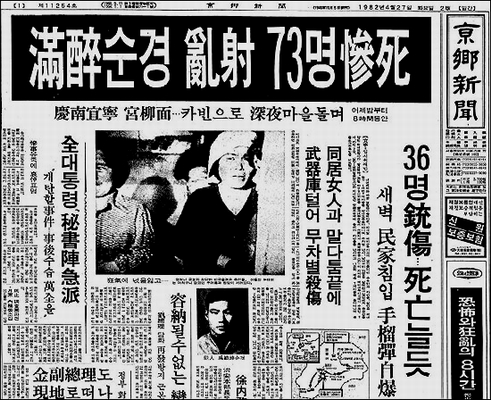
death toll of 53, including 20 men and 33 women, but most afternoon
newspapers reported 62 dead. And the newspaper Kyunghyang Shinmun,
published near the scene of the shooting in a remote southern area, said
there were 79 dead.
Policeman's spree kills 58 koreans
The Boston Globe
April 27, 1982
Home Minister Suh Chung-hwa offered his resignation
today to atone for a policeman who went berserk and killed 58 Koreans
during a drunken rampage after an argument with his wife.
The policeman, Woo Kum-kon, 27, exploded a hand
grenade and killed himself in a farmhouse after terrorizing Uiryong, 200
miles south of Seoul, and five neighboring hamlets for eight hours. The
suicide blast reportedly killed three members of the farm family.
Policeman kills 55 in Korea
The Times
April 28, 1982
Seoul, April 27. - A drunken policeman killed
at least 55 people after quarrelling with his mistress and then ended
his eight-hour rampage by blowing himself to pieces with hand grenades,
authorities said today.
His mistress, who was among the 37 people reported to
have been wounded, said the quarrel erupted when she woke her lover
while trying to brush a fly off his chest. The policeman, Woo Bom Kon,
aged 27, then roamed the surrounding countryside, firing rifles and
throwing hand grenades at villagers before killing himself in a remote
farmhouse at dawn. The events in the Kyongsang Namdo, 200 miles south of
Seoul, prompted Mr Suh Chung Hwa, South Korea's Interior Minister, and
the national police chief to offer their resignations although they did
not actually quit their post.
The mistress, Chun Mal Sun, aged 25, said "I went
out and found Woo on the rampage, firing from two rifles. One of the
bullets hit me". She had earlier been listed among those killed.
Police said Mr Woo stole two rifles from the police station and later
broke into a reserve army depot to take six hand grenades. They said Mr
Woo, a former marine, fired wildly at anything that moved. By dawn,
police and troops finally tracked him to a farmhouse. There he set off
two grenades which killed three members of the farmer's family as well
as himself.
In Seoul, a special Cabinet committee, chaired by Mr
Yoo Chang Soon, the Prime Minister, was formed to investigate the
killings. Four policemen at Mr Woo's station were ordered to be arrested
for neglect of duty.
Koreans say 58 slain in rampage
April 28, 1982
Woo Bum Kon, a 27-year-old
police officer, opened fire with rifles and threw grenades in a rampage
beginning Monday night that killed 58 persons.
Officials said Woo had had a bitter argument with his
25-year-old wife Monday night, began drinking heavily and then went to a
military armory, where he took two carbines, 180 rounds of ammunition
and seven hand grenades. Then, authorities said, he set out on a course
of killing that took him on foot into five small villages in Uiryong
County, about 200 miles south of Seoul. During the carnage his wife was
reported seriously wounded. Woo apparently blew himself up with a
grenade.
Authorities said Woo's first victim was a pedestrian,
shot in the street. Then the police officer burst into a post office,
where four persons were killed, they said, and went on to a marketplace,
hurling grenades and firing the carbines. The body of the police officer
was found early yesterday in an isolated farmhouse about 2 1/2 miles
from his police station. Alongside him were the bodies of three members
of the farm family, the last victims. Authorities said he had exploded
two grenades there. Only four rounds of ammunition and one grenade were
found unexpended.
Some of his victims died in their homes or shops,
others were killed when they ran into the streets alarmed by the sound
of shooting and explosions. "The patrolman came to my house leading
a student," Shin We Do, a 52-year- old shopkeeper, told reporters.
"He asked for a soft drink. I gave him one. He had only one gulp
and fired a shot at the student, killing the boy there. "Then he
fired shots at my wife and two of my children. They all died on the
spot. Running out of the house, I was shot at and hit in the legs."
A 45-year-old farmer, Chun Yong Sup, said he was at
the home of a friend when he heard shooting. "When I came out of
the house, I saw the policeman, drunk and jumping around like a madman,
firing," he said. "I was so frightened and could not get to my
house. I fled into a nearby paddy until all became quiet near dawn, then
returned home."
When word of the slayings reached Seoul, Home Minister
Suh Chung Hwa flew to the scene in a police plane, and later offered his
resignation to assume responsibility for the action.
Seoul is stunned by policeman's slaying of 56
The New York Times
April 28, 1982
SEOUL, South Korea, April 27 - For eight hours
beginning last night, a drunken South Korean policeman stormed through a
southern farm community killing at least 56 people and wounding 37
others, and a stunned national Government sought today to find out why
no one could stop him.
A five-member Cabinet committee headed by Prime
Minister Yoo Chang Soon was formed to deal with the incident, and it
sent an investigative team of 15 prosecutors and police officials to the
scene, in the southern country of Uiryong. South Korea's Home Minister,
Suh Chung Hwa, and the national police chief, Ahn Ung Mo, offered to
resign and assume responsibility for what was viewed as a deplorable
breakdown of the security system's ability to react quickly to any
threat to peace, such as a guerrilla attack from the north.
The provincial police chief was suspended, and four
other policeman were arrested. They were charged with neglect of duty,
apparently for having failed to prevent the assailant, Woo Bom Kon, from
taking two carbines and 180 rounds of ammunition from the police armory
and seven grenades from an army post. Mr. Woo killed himself with two of
the grenades.
The policeman, who was 26 years old, was said to have
fired 170 of the 180 rounds of ammunition during his rampage, which
began at 9:30 P.M. It apparently was set off by rage at the way he was
awakened from a nap he was taking before going to work; the woman he
lived with, 25-year-old Chun Mai Sun, swatted a fly that had landed on
his chest. After reporting for duty at 4 P.M., the policeman, a former
marine sergeant, was said to have done some heavy drinking at the local
police station.
At about 7.30 P.M., a according to Miss Chun, he came
home drunk, punched her, making her nose bleed, and then went off into
the dark. While police colleagues were at a community meeting, Mr. Woo
helped himself to the arms and began roaming through the country.
Many Flee Into Ricefields
About two hours later, he opened fire on passers-by in
a marketplace in the village of Torongni, hitting Miss Chun, who had
gone to find him. Next, he entered a post office in the nearby village
of Kungryu, where he killed three telephone operators and cut off the
community from the outside world.
Mr. Woo, who was in his police uniform, went from
village to village, heading for lighted windows, knocking on doors and
shooting or throwing grenades. Many people fled into ricefields, but
others were trapped, not expecting trouble from a uniformed policeman as
they opened their doors. At one point, he ordered a 16-year-old
schoolboy at gunpoint to get him a soft drink from a grocery store.
After drinking it, he killed the boy and members of his family. Then he
headed off into the night once more. The police said he had killed 18
people in the village of Ungye, and 24 in the village of Pyongchon.
The police were unable to catch up with Mr. Woo as he
kept constantly on the move for hours under cover of darkness. Trapped
finally in a farmhouse, he held two grenades to his body and detonated
them, killing himself and the family that lived there. Miss Chun, who
reportedly was not severely wounded, said Mr. Woo had suffered from an
inferiority complex and had been disturbed by villagers comments about
their living together without being married. She described him as having
been "a little eccentric."
News Dominates Front Page
News of the killings dominated front pages of the
South Korean press, obliterating stories of the departure from Seoul
today of Vice President Bush. Mr Bush had been here for a three-day
visit to assure South Korea of American support at celebrations of a
centenary of United States-Korean ties.
There were expressions of shock and outrage from South
Korean leaders, and President Chun Doo Hwan sent his staff chief, Lee
Bum Suk, to Uiryong.