Murderpedia has thousands of hours of work behind it. To keep creating
new content, we kindly appreciate any donation you can give to help
the Murderpedia project stay alive. We have many
plans and enthusiasm
to keep expanding and making Murderpedia a better site, but we really
need your help for this. Thank you very much in advance.
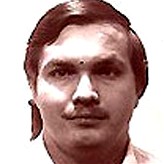
Arthur Gary BISHOP
A.K.A.: "Roger Downs" - "Lynn Jones"
Classification:
Serial killer
Characteristics: Child
molester
Number of victims: 5
Date of murders: 1979 - 1983
Date
of arrest:
July
1983
Date of birth: 1951
Victims profile: Children between 4 and 13 years
Method of murder:
Beating with hammer / Drowning
Location: Salt
Lake County,
Utah,
USA
Status: Executed
by lethal injection in in Utah on June 9,
1988
Raised by devout Mormon parents in Salt
Lake City, Utah, Bishop was an Eagle Scout and honor student in high
school, afterward serving his church as a missionary in the Philippines.
On his return to Utah, he graduated with honors from Steven Henager
College, with a major in accounting. Friends and family members were
stunned by his February 1978 conviction for embezzling $8,714 from a
used car dealership, but Bishop seemed repentant, pleading guilty and
winning a five-year suspended sentence on his promise of restitution.
Instead of paying the money back, however, he dropped from sight, and a
warrant was issued for his arrest. When Bishop refused to surrender, he
was formally excommunicated from the Mormon church.
By that time, in October 1978, he was living as "Roger Downs"
in Salt Lake City, signing up with the Big Brother program to spend time
with disadvantaged youth. Wherever Bishop settled, his charisma lured
children into spending time around his home or joining him on camping
expeditions. Over time, it led five victims to their deaths.
The first
to vanish, four-year-old Alonzo Daniels, was reported missing from his
Salt Lake City apartment complex on October 14, 1979. "Roger Downs"
lived just across the hall, and he was questioned by police, but it was
all routine. Detectives had no leads, no body, and no suspect in the
case.
On November 9, 1980, 11-year-old Kim Peterson disappeared in Salt Lake
City, last seen when he left home to sell a pair of skates. The buyer
was alleged to be a male adult, but neither of Kim's parents had seen
the man, and they had no clue to his identity.
Eleven months later, on October 20, 1981, four-year-old Danny Davis
disappeared from his grandfather's side while shopping at a busy
supermarket in southern Salt Lake County. "Roger Downs,"
residing half a block from the store, was routinely questioned by
authorities, but they made no connection with previous cases and did not
consider him a suspect.
Another eighteen months elapsed before the
killer struck again, abducting Troy Ward on June 22, 1983 -- his sixth
birthday.
On July 14, 13-year-old Graeme Cunningham vanished from home,
two days before he was scheduled to go on a camping trip with a
classmate and their adult chaperone, 32-year-old "Roger Downs."
After questioning "Downs," police began quietly checking his
background, discovering his almost unnatural fondness for neighborhood
children. They also learned that he was wanted -- under the alias of
"Lynn Jones" -- for embezzling $10,000 from a recent employer,
stealing his own personnel file from the office before he disappeared.
In custody, Bishop quickly admitted his true identity, confessing to
five counts of murder. Next morning, he led authorities to the Cedar
Fort section of Utah County, pointing out graves where the remains of
victims Daniels, Peterson, and Davis were recovered. A drive to Big
Cottonwood Creek, 65 miles further south, turned up the bodies of Troy
Ward and Graeme Cunningham.
The continuing investigation revealed that Bishop had molested scores of
other children through the years, sparing their lives for reasons known
only to himself. Several parents had knowledge of his activities, but
none had come forward while the four-year search for a child killer was
in progress. A search of Bishop's home uncovered a revolver and a bloody
hammer, snapshots of one victim taken after his abduction, and various
other photographs of nude boys, focused on their torsos to prevent
identification.
In court, jurors listened to Bishop's taped confession, including his
admission of fondling victims after death. At some points he giggled, at
other times mimicking a boy's final words in a high, falsetto voice. The
clincher was his statement that, "I'm glad they caught me, because
I'd do it again." Convicted and sentenced to die, Bishop waived all
appeals and was executed, by lethal injection, on June 9, 1988.
Arthur Gary Bishop
"With great sadness and remorse, I realize that I
allowed myself to be misled by Satan."
In the tradition of all great christians, Bishop
blamed the easiest target.
Bishop was devoutly religious. He even went to the
Philippines to work for his church, the Church of Jesus Christ of the
Latter day Saints (the Mormons). While in the Philippines one can only
imagine what the sick fucker got up to, but he was excommunicated from
the Mormons in 1974.
Back in the real world Bishop began his new career.
His first victim was Alonzo Daniels, four. On October 16, 1979 he was
playing in his front yard when Bishop took him.
Bishop's next hit was Kim Peterson, eleven, on
November 27, 1980. Bishop set this murder up by telling Kim that he
wanted to buy the boys roller skates. When Kim left his house to sell
the roller skates to him it was the last time he was seen alive by
anyone other than Bishop.
Around this time (1981) Bishop was arrested for
embezzlement. He had written $9000 worth of checks in his boss's name.
Arthur Gary Bishop then disappeared. He ended all contact with his
family and friends, moved cities, and re-amerged in as Lynn E. Jones and
later, Roger W. Downs.
As this new person Bishop enrolled in the big brother
program (a group that care for disadvantaged youth) and started hanging
out with young boys all the time.
Bishop struck again on October 20, 1981 when he
stumbled across Danny Davis, four. Davis's was shopping with his
grandfather when Bishop struck. Witnesses said they saw the child being
led out of the grocery store by a man and woman. It is not known who the
woman was.
He waited for nearly two years before adding to his
score. Troy Ward was six-years-old when Bishop got him on June 22, 1983.
Less than a month later, on July 14, 1983, Bishop made
his last kill. He chose Graeme Cunningham, thirteen. Bishop fucked up on
this one as he was a known friend of the boys, and had promised to take
him on a trip to California the following week. At this time Bishop was
also in trouble for another embezzlement, and was arrested on this
charge so the police could question him further about this murder. When
police looked further at Bishop it was worked out that he was in the
vicinity of the five murders and quickly became the main suspect. Upon
further questioning Bishop caved in and admitted to the murders.
"I'm glad they caught me, because I'd do it again."
Bishop led the police to a secluded area in Ceder Fort,
Utah where the bodies of Kim Peterson, Alonzo Daniels and Danny Davis
were found buried in shallow graves. He then took police to another site,
in Big Cottonwood Canyon, where the bodies of Troy Ward and Graeme
Cunningham were buried. All the remains showed signs of sexual abuse,
and when Bishops residence was searched a number of explicit photographs
were found.
Arthur Gary Bishop was found guilty of all five
murders, as well as five kidnapping charges, two counts of forceful
sexual assault, and one count of sexual abuse of a minor. As the crimes
took place in Utah Bishop had the choice of death by firing squad or
lethal injection. Not surprisingly he chose lethal injection, and was
executed on June 10, 1988.
"I wanted to help her, I just didn't know how to
tell her that I killed her child."
Bishop on visiting the mother of his final victim.
Arthur Gary BISHOP
The decade of the 1980's proved to be
a rampant one for serial killers, and it wasn't more evident than the
Arthur Gary Bishop case.
When all was said and done, even
devout Mormons in Utah weren't free of the rash of serial killings
sweeping the United States.
Raised as a worshipping Mormon in Salt
Lake City. Bishop also went on his "mission" in the Philippines when he
graduated high school. In addition to this, he was also an Eagle Scout
and honor student.
When he returned from his trek, Bishop
graduated college with honors, earning a degree in accounting, and
seemed to be on his way to a long and respectable life as a functional
Mormon in his community.
However, everybody who knew him were
shocked to find out that he was convicted in February of 1978 for
embezzling over $8000 from a used car dealership.
He pled guilty, and promised to pay
restitution, and for this, he was given a five-year suspended sentence.
Once given the chance, he bolted out
of sight and a warrant was issued. Since he didn't give himself up, even
after requests to do so from his church, he was excommunicated.
By the time all of this happened, he
was going by the alias "Roger Downs" in Salt Lake City, doing admirable
things like joining the Big Brother Program, spending time with children
who were disadvantaged.
In October of 1979, four-year-old
Alonzo Daniels disappeared from his apartment. "Roger Downs" was
questioned by the authorities investigating, since he lived just across
the hall. But they had no leads, no body, and no tips.
About a year later, 11-year-old Kim
Peterson also disappeared when he went out to sell a pair of skates. The
police were told that the buyer was supposed to be a male adult, but no
one knew anything else, so police were still stuck without a clue.
Almost a year later, in October of
1981, four-year-old Danny Davis vanished from a busy supermarket, just a
half-block from the "Downs" residence. Again, he was questioned because
of the proximaty to the market, but with no reason to, the police didn't
suspect a thing.
Laying low for a year and a half,
Bishop struck again, abducting Troy Ward on his sixth birthday in June
of 1983.
About a month later, 13 year-old
Graeme Cunningham also vanished just before he was supposed to go on a
camping trip with another boy, and an adult male chaperone, 32-year-old
"Roger Downs".
Now the authorities took notice, and
began to look into the past of this adult who seemed to always be around
children.
What they found was that this "Downs"
character was wanted for embezzling $10,000 from an ex-boss, while using
the alias "Lynn Jones."
With enough to arrest him, they
brought him in and began to question him about the disappearence of the
Cunningham boy.
To their shock, Bishop began to
confess to everything, even unveiling his true identity and telling them
of the five boys he killed.
To prove that he was telling the truth,
Bishop took the officers out the next morning to the Cedar Fort section
of Utah and produced three corpses from graves that he dug. They were
three of the young boys the police were looking for.
After another short drive south, he
then showed detectives where he buried the bodies of the other two boys.
This wasn't the end. Upon further
questioning, police revealed that Bishop had sexually molested scores of
other young boys in the Salt Lake area.
Incredibly enough, authorities also
revealed that in the four year run of Bishop's, there were even parents
who were aware of his activities, but for one reason or another, they
didn't report any of it, perhaps because of his promising, respectable
Mormon facade.
In a taped confession, Bishop told how
he murdered the boys, and even fondled them after their deaths, giggling
at times and stating that he was glad to be caught, since he would do it
again and again.
With this, he was found guilty, and
sentenced to death. Waiving all appeals, Bishop was executed by lethal
injection in June, 1988.
Bishop, Arthur Gary
Raised by devout Mormon parents in Salt Lake City, Utah, Bishop was an Eagle Scout and honor student in high school, afterward serving his church as a missionary in the Philippines.
On his return to Utah, he graduated with honors from Steven Henager College, with a major in accounting.
Friends and family members were stunned by his February 1978 conviction for embezzling $8,714 from a used car dealership, but Bishop seemed repentant, pleading guilty and winning a five-year suspended sentence on his promise of restitution. Instead of paying the money back, however, he dropped from sight, and a warrant was issued for his arrest. When Bishop refused to surrender, he was formally excommunicated from the Mormon church.
By that time, in October 1978, he was living as "Roger Downs" in Salt Lake City, signing up with the Big Brother program to spend time with disadvantaged youth. Wherever Bishop settled, his charisma lured children into spending time around his home or joining him on camping expeditions. Over time, it led five victims to their deaths.
The first to vanish, four-year-old Alonzo Daniels, was reported missing from his Salt Lake City apartment complex on October 14, 1979. "Roger Downs" lived just across the hall, and he was questioned by police, but it was all routine. Detectives had no leads, no body, and no suspect in the case.
On November 9, 1980, 11-year-old Kim Peterson disappeared in Salt Lake City, last seen when he left home to sell a pair of skates. The buyer was alleged to be a male adult, but neither of Kim's parents had seen the man, and they had no clue to his identity.
Eleven months later, on October 20, 1981, four-year-old Danny Davis disappeared from his grandfather's side while shopping at a busy supermarket in southern Salt Lake County. "Roger Downs," residing half a block from the store, was routinely questioned by authorities, but they made no connection with previous cases and did not consider him a suspect.
Another eighteen months elapsed before the killer struck again, abducting Troy Ward on June 22, 1983 -- his sixth birthday. On July 14, 13-year-old Graeme Cunningham vanished from home, two days before he was scheduled to go on a camping trip with a classmate and their adult chaperone, 32-year-old "Roger Downs." After questioning "Downs," police began quietly checking his background, discovering his almost unnatural fondness for neighborhood children. They also learned that he was wanted -- under the alias of "Lynn Jones" -- for embezzling $10,000 from a recent employer, stealing his own personnel file from the office before he disappeared. In custody, Bishop quickly admitted his true identity, confessing to five counts of murder.
Next morning, he led authorities to the Cedar Fort section of Utah County, pointing out graves where the remains of victims Daniels, Peterson, and Davis were recovered. A drive to Big Cottonwood Creek, 65 miles further south, turned up the bodies of Troy Ward and Graeme Cunningham.
The continuing investigation revealed that Bishop had molested scores of other children through the years, sparing their lives for reasons known only to himself. Several parents had knowledge of his activities, but none had come forward while the four-year search for a child killer was in progress.
A search of Bishop's home uncovered a revolver and a bloody hammer, snapshots of one victim taken after his abduction, and various other photographs of nude boys, focused on their torsos to prevent identification. In court, jurors listened to Bishop's taped confession, including his admission of fondling victims after death.
At some points he giggled, at other times mimicking a boy's final words in a high, falsetto voice. The clincher was his statement that, "I'm glad they caught me, because I'd do it again."
Convicted and sentenced to die, Bishop waived all appeals and was executed, by lethal injection, on June 9, 1988.
Michael Newton - An Encyclopedia of Modern Serial
Killers - Hunting Humans
Arthur Gary Bishop
(1951-1988) was a child molester and serial killer from Hinckley, Utah.
He confessed to the murders of five young boys in 1983, as a result of a
routine police investigation.
Bishop began molesting boys as a mentor in the
"Big Brother" program. No one initially suspected him, although dozens
of children would accuse him of abuse after he was arrested for murder.
He was arrested for embezzlement in 1977 and given a five-year suspended
sentence, but he skipped his parole and fled to Salt Lake City, living
(and molesting children) under the alias "Roger Downs."
Bishop killed his first victim in 1979. He
committed the next three murders over a three-year period, spending the
months in between victims attempting to satiate his violent urges by
torturing and killing animals. After committing the fifth murder in July
1983, he approached police (without admitting he had committed the
crime), identified himself by his alias, and said he wanted to help the
investigation.
Local police looked into their past reports and found
that "Roger Downs" lived in the vicinity of four of the murders, and
knew the fifth child's parents. They brought him in for questioning,
discovered his real name, and eventually got him to confess to all five
murders. The next day, he led the police to three skeletons near Cedar
Fort and two more recent corpses near Big Cottonwood Creek.
During his trial, Bishop
claimed that an addiction to child pornography molded his violent sexual
fantasies and eventually drove him to act them out. He was nevertheless
found guilty of five counts of capital murder, five counts of aggravated
kidnapping, and one count of sexually abusing a minor, and sentenced to
death. He was executed by lethal injection on June 10, 1988 at the Utah
state prison at Point of the Mountain.
Arthur Gary Bishop
by Michael Newton
Eagle Scout
Hinckley,
Utah, is a tiny desert town with less than 700 residents. It lies 100
miles southwest of Salt Lake City, in bone-dry Millard County, where
tourists are scarce and locals scratch their living from the sun-baked
soil. The landscape breeds hard men and women, scorpions and
rattlesnakes.
In 1951,
without warning, it gave birth to a monster.
Long
after the fact, defense attorneys would describe Arthur Gary Bishop as
“a lonely, frightened child,” but nothing in the public record validates
that claim. In fact, he seemed to be a model son, and even in
extremis never raised the specter of abuse. Reared by devout Mormon
parents in the ways of their faith, Bishop was an honor student and a
proud Eagle Scout. An anonymous high school classmate of Bishop’s,
posting decades later to a Mormon website at www.xmission.com, recalled
that Bishop was “a geek, rarely if ever finding someone who would accept
the rare offer of a date.” His election to serve as business manager for
the student council was no indication of popularity, this classmate
recalled, “a tradition that went on...to vote a nerd to student council,
as a joke to humble the social elite during the coming year.”
Such
jibes aside, younger brother Douglas Bishop, born in 1956, appeared to
idolize his only sibling. Nearly three decades would pass before a
stunned community learned how much the Bishop brothers really had
in common, and even then no probing questions would be asked.
In 1969,
after graduation from high school, Gary followed the tenets of his
church by serving as a teenage missionary in the Philippines. With that
service completed, he came home and enrolled at Stevens-Henager
College--a Utah business school that promises its students “fast-track,
career specific education”--and completed the school’s accounting course
with top-notch grades. His diploma pronounced Bishop ready to make his
way in the world.
But the
world was not ready for him.
There was
a darker side to Gary Bishop, slowly revealed by degrees, that would
never be guessed from his transcripts, early work experience, or
conversations with his family and friends. The perfect son would later
say he was addicted to pornography, and more specifically to “kiddy”
porn. Where most viewers would have been revolted, Bishop was
enthralled. He nurtured fantasies, elaborating on them over time, until
the fantasies alone were not enough.
No one
can say with any certainty when Gary Bishop crossed the line from morbid
daydreams into active pedophilia. Years later, scores of Utah parents
would complain of Bishop molesting their children, but none came forward
at the time--not even as fantasies degenerated into murder. They were
silent, some perhaps warning their children to avoid the stranger’s
company, none reaching out to the police while it might still have done
some good.
Bishop’s
first brush with the law had nothing to do with children or sex. In
February 1978 he was accused of embezzling $8,714 from a used-car
dealership where he had worked as a bookkeeper since July 1977. His
friends and family were stunned, but Bishop seemed prepared to take his
medicine. He pled guilty as charged, receiving a five-year suspended
jail sentence in return for a promise of full restitution. His
repentance seemed sincere.
Until he
dropped out of sight.
Gary
Bishop was on the lam, an unlikely fugitive who would spend the next
five years living under pseudonyms, finding work where he could,
stealing money when it suited him. The arrest warrant issued for his
probation violation would never be served.
The next
time Bishop went to jail, it would be for murder, and he would be Utah’s
most notorious killer of the twentieth century.
Big Brother
Bishop
did not run far when he went into hiding. A simple name change was
enough to throw police off his track, and Bishop remained in Salt Lake
City, reborn as “Roger W. Downs.” He used that name to join the Big
Brother program, thereby placing himself in close proximity to boys
craving a sympathetic father figure. Author Clifford Linedecker, in his
book Thrill Killers, reports that spokesmen for the Big
Brother/Big Sister organization later admitted receiving tips that
“Downs” had molested at least two children while enrolled with their
program, but neither was his assigned “little brother.” The accusations
were allegedly reported to police, who took no action.
The
Mormon Church excommunicated Bishop in October 1978, but if he even knew
it, the official shunning had no visible effect on Bishop’s life. He
worked odd jobs, indulged himself with boys whenever possible, and
fought the secret urges that demanded more than sex.
A year
after his excommunication from the church, he lost that struggle and
surrendered to the darkness festering within.
Four-year-old Alonzo Daniels was playing in the courtyard of his Salt
Lake City apartment complex on October 14, 1979, when he vanished
without a trace. His worried mother summoned relatives to search the
complex and surrounding streets, to no avail. Police were summoned,
going door-to-door. They met neighbor Roger Downs almost immediately, in
his flat across the hall from Alonzo’s apartment, but their questions
were routine and Downs denied any knowledge of the boy’s whereabouts.
Officers
had no way of knowing that Alonzo was already dead when they reached the
apartment complex. Bishop had lured him from the courtyard with a
promise of candy, attempting to undress and fondle Alonzo in his living
room. He panicked when the boy began to cry, sobbing threats to tell his
mother what had happened. Bishop clubbed the child with a hammer, but it
failed to stop Alonzo’s wailing. Finally, Bishop carried him into the
bathroom and drowned Alonzo in the tub. Afterward, he stuffed the corpse
into a large cardboard box and carried it out to his car, past Alonzo’s
mother as she paced the courtyard, calling out his name.
By late
afternoon, Salt Lake County’s search and rescue team had joined the
fruitless hunt for Alonzo Daniels. Hundreds of civilians pitched in over
the next few days, including students and faculty from the University of
Utah and members of a Teamsters Union local. Photos of Alonzo and
descriptions of his clothing--a cream-colored T-shirt with the words
“Chocolate,” “Lime” and “Vanilla” printed on it--were printed and
broadcast throughout the state. Police questioned hundreds of people,
but none outside his family acknowledged seeing the boy.
By the
night of October 14, he was already gone. Bishop drove the crated corpse
to Cedar Fort, 20 miles southwest of Salt Lake City, and buried Daniels
in the desert, his unmarked grave shaded by trees that gave the nearby
town its name.
Returning
home, he felt a mixture of emotions. Revulsion at his crime vied with
fear of arrest and perverse excitement. Dominating all other sensations
was a certainty that he would kill again, unless he found some means by
which to stop himself.
The Skater
In the
year after he killed Alonzo Daniels, Bishop sought a less dangerous
outlet for his deadly urges. Instead of children, he decided to kill
puppies, adopting 15 or 20 from Salt Lake City animal shelters over the
next 13 months, using them as surrogates for children. “It was so
stimulating,” he later told Detective Don Bell (quoted in the Deseret
News). “A puppy whines just like Alonzo did. I would get frustrated
at the whining. I would hit them with hammers or drown them or strangle
them.”
Bishop’s
neighbors never seemed to notice, and if they had, cruelty to animals
was a cut-rate misdemeanor, nothing to compare with kidnapping and
murdering a child. Still, puppies only went so far toward satisfying
Bishop’s urges. He continued to molest children sporadically, using
charm or threats to prevent them from carrying tales. Only resistance or
the threat of prison seemed to spark his killer instinct and push Bishop
over the edge.
On
Saturday, November 8, 1980, 11-year-old Kim Peterson met Bishop at a
Salt Lake City roller-skating rink. They talked about skates, Kim
mentioning that he would like to sell his and buy a new pair. Bishop
feigned interest, telling Peterson he would pay $35 for the skates. It
is unclear whether Bishop agreed to meet Kim on Sunday, or what name he
used, but Peterson left home with the skates on November 9, telling his
parent he had found a buyer. No names were mentioned, but he promised to
come straight home after the transaction was concluded.
He never
made it.
Police
were called to the Peterson home near sundown, when Kim failed to return
in time for dinner. Another fruitless search began, including a canvass
of skaters from the rink where Kim had met his presumed abductor on
Saturday. Several witnesses recalled a youth of Peterson’s description,
talking to a man aged 25 to 35, full-faced with glasses, wearing blue
jeans and an army-style jacket or parka. Two of the witnesses agreed to
be hypnotized, the session producing further details: dark hair and
bushy eyebrows, weight around 200 pounds. One skater claimed the man had
driven away in a silver Chevy Camaro with out-of-state license tags,
perhaps from Nevada.
The leads
were useless.
Police
saw no similarity to their suspect in “Roger Downs,” living in an
apartment several blocks from Kim Peterson’s home. Again, they
questioned him routinely, making no connection to the Daniels case.
Nothing in the bland 29-year-old’s demeanor let them know that he had
bludgeoned Kim Peterson to death and buried his corpse near Alonzo’s,
outside Cedar Fort.
There was
plenty of room in the desert, and murder was easier the second time
around. Bishop still feared arrest, still spared his victims if they
promised not to talk, but he was learning that murder provided a rush
all its own.
In time,
he would begin to crave it like a drug.
A
Beautiful Boy
Eleven
months passed before Bishop killed again. He was browsing through a
local supermarket on October 20, 1981, Bishop later told detectives
(quoted in the Deseret News), when “I saw the most beautiful
little boy kneeling in the aisle.” Four-year-old Danny Davis was
fumbling with the market’s gumball machine, trying in vain to extract a
treat without paying. Bishop offered him candy, but the boy refused it.
Giving up, he rose to leave the store, then glanced back and saw Danny
trailing him toward the exit. He waited for the boy, then led him toward
the parking lot.
Danny’s
grandmother missed him when she finished her shopping. Suddenly alarmed,
she called for the store’s manager. Employees and customers joined in a
search, but they were already too late. Several shoppers recalled a boy
at the gumball machine, assisted by a smiling young man, but they could
not identify photos of Danny Davis. Hypnosis clarified the descriptions
slightly, put positive IDs remained elusive. One report described a boy
of Danny’s size and age leaving the market with two adults, a man and a
woman.
Once
again, as in the Daniels case, searchers fanned out through the nearby
desert and mountains. Temperatures dropped into the thirties overnight,
reminding police that Danny was last seen wearing only a T-shirt, blue
jeans and rubber “thong” sandals. When their quarry failed to turn up on
the first day or the second, divers plumbed the depths of Big Cottonwood
Creek, east of town. Sheriff’s deputies dragged ponds, searched roadside
ditches, poked through garbage in a hundred alleys.
All in
vain.
The hunt
for Danny Davis rapidly became the most intensive search in Salt Lake
County history. Fliers were printed with the missing boy’s photo, copies
sent to law enforcement agencies throughout the U.S. A $20,000 reward
for information brought no takers. Calls for help to the FBI, Child Find
and the National Crime Information Center produced no useful leads.
“Roger
Downs,” residing half a block from the market where Danny disappeared,
had nothing to share with police when they knocked on his door. Again,
the questions were routine. And again, no one realized that the same
clueless neighbor had lived in close proximity to vanished victims
Alonzo Daniels and Kim Peterson. Neighbors later recalled to police and
the press that “Downs” had an unusual fondness for children. At the same
time, however, he often played host to groups of “rowdy hippies” and
scruffy-looking bikers, including one youth who liked to set fires until
“Downs” punched him out and banished him from the house.
All this,
they remembered years later. Too late.
“Roger
Downs” was not tempted by the public reward offer for information
leading to Danny Davis. He had money to spare from his latest
embezzlement scheme. Several weeks before the Davis kidnapping,
bookkeeper “Lynn E. Jones” had gone to work at a Salt Lake City ski
shop. When he failed to return from lunch one afternoon, the proprietor
found $10,000 missing from the store--along with “Jones’s” personnel
file.
By the
time police visited his rented house to question Bishop, Danny Davis was
already dead. After molesting Danny, Bishop had silenced the boy’s
sobbing by manually pinching his nostrils and covering his mouth. The
next day, Wednesday, Bishop made another trip to Cedar Fort, planting
his third victim beside the other two.
It seemed
to be a foolproof plan.
Police in
Salt Lake City didn’t have a clue.
Panic
Utah
police might be helpless in the face of Bishop’s cunning, but state
legislators were galvanized by the spate of disappearances. When
three-year-old Rachel Runyan was kidnapped from a school playground in
Sunset, 30 miles north of Salt Lake City, in August 1982, the public
outcry was predictable. Discovery of her strangled corpse a short time
later turned the fear to panic. Deafened by grass-roots calls for
action, local politicians did what politicians always do: they passed
another law.
First-degree murder was already a capital crime in Utah, but legislators
showed their indignation with a new statute on child abduction, ranked
among the strictest in the nation. Depending on the circumstances of a
given kidnapping, convicted abductors faced mandatory 5-, 10- or 15-year
prison terms for their crime. Civic groups applauded the effort, but it
did nothing to help locate Utah’s child-killer.
Investigators soon dismissed any link between Rachel Runyan’s murder and
the vanished boys of Salt Lake City. Statewide, they were deluged with
reports of strangers accosting children on streets, in parks and
playgrounds--but still, no one blew the whistle on child molester Arthur
Bishop, alias “Roger Downs.” Rumors circulated of an occult motive in
the crimes, but police dismissed those in turn, noting that none of the
missing boys had been kidnapped within a week of Halloween. The
“sacrifice” theory was finally put to rest when October 1982 passed
without another child abduction in Salt Lake City.
Authorities were baffled. Desperate for new leads, for anything at all,
they rallied at the Metropolitan Hall of Justice in Salt Lake City.
Representatives of the city police department gathered with detectives
from the Salt Lake and Davis County sheriff’s offices, joined by agents
of the FBI. They reviewed their open cases, stymied by the seeming lack
of pattern. Each of the missing boys had been kidnapped at different
times, on different days of the week, thereby frustrating any
speculation on the kidnapper’s employment. Most killers prey on members
of their own race, but Alonzo Daniels was African American, the later
victims both fair-haired Caucasians. Kim Peterson was nearly three times
the age of victims Daniels and Davis, casting doubt on the image of a
pedophile stalking pre-school children.
In short,
the meeting led investigators nowhere. The case was cold by June 23,
1983. Nearly two years had passed since the last disappearance in Salt
Lake City, but the killer was about to return with a vengeance.
Troy Ward
celebrated his sixth birthday that Wednesday afternoon. Permitted to
play by himself at a park near his home, Troy was supposed to meet a
family friend at 4:00 p.m., on a predetermined street corner. The friend
would drive him home, where presents and a birthday cake were waiting.
Come 4 o’clock, however, there was no sign of Troy on the sidewalk. His
would-be chauffeur drove on to the Ward residence, expecting to find
Troy there, but he had not returned from the park.
Police
were called at once, patrol officers searching a grid of streets around
the park. One witness, as related in the press, recalled a boy of Troy’s
description leaving the scene with a man, on foot, a few minutes prior
to 4:00 p.m. The man and boy had seemed at ease with one another, the
witnesses assuming them to be father and son.
In fact,
the man was Arthur Gary Bishop, and his fourth victim was gone without a
trace. At home, Bishop repeated his grim ritual of fondling and
molestation. He later told Detective Bell (quoted in the Deseret News)
that he considered freeing Troy alive, but a last-minute threat to
report the assault changed his mind. The hammer and bathtub were
waiting. Afterward, instead of driving to his private graveyard outside
Cedar Fort, Bishop drove east and buried Troy near Big Cottonwood Creek,
in the Twin Peaks Wilderness Area.
It was
all so easy.
He would
not wait two years to claim his next victim.
In fact,
he would not even wait a month.
End Game
Graeme
Cunningham, 13 years old, was looking forward to a weekend camping trip
on Thursday, July 14, 1983. His gear was packed well in advance, and the
adventure was his sole topic of conversation as departure time
approached. If he was troubled by Troy Ward’s disappearance, three weeks
earlier to the day, Cunningham hid it well. He would be camping with a
junior high school classmate and an adult chaperone, one Roger Downs.
What did
he have to fear?
Graeme
never made the campout, though. Instead, he vanished from his
neighborhood without a trace that Thursday afternoon, his parents
alarmed when he failed to report home for dinner. The disappearance made
statewide news, and Roger Downs came calling to offer Cunningham’s
mother any help that lay within his power. Later, in custody, “Downs”
would tell detectives (quoted in the Deseret News), that his
impulse was sincere. “I wanted to help her,” he said. “I just didn’t
know how to tell her that I killed her son.”
Instead,
before another week was out, he would be telling the whole story to
police.
Authorities went through the usual motions with Graeme Cunningham’s
disappearance. The search was fruitless; their inquiries produced only
blank stares or solemn denials, along with expressions of sympathy for
the grieving family. This time, however, something clicked within the
task force that had been pursuing Salt Lake City’s child killer since
1979. At last, detectives recognized the name of “Roger Downs.”
They
didn’t know his real name yet, but suddenly they realized that “Downs”
had been interrogated after each of the five unsolved vanishing acts.
Incredibly, he had lived in close proximity to four of the victims and
was known to the parents of the fifth.
Could it
be that simple, after all their grueling efforts? Four years earlier,
Chicago’s John Wayne Gacy had been trapped by a similar mistake, seen
chatting with the last of his 33 victims shortly before the youth
vanished. In fact, detectives realized, serial murder cases were usually
broken exactly that way, by killers who let down their guard and made
clumsy mistakes.
Sgt.
Bruce White and Detective Steven Smith went back to question “Downs”
again. They had no evidence against him yet, but there was something in
his manner that suggested evasion. Was he one of those innocent persons
who sometimes lie to the police instinctively, for no apparent reason,
or was he concealing the worst of all possible secrets?
After
brief preliminaries, “Downs” accepted an invitation to police
headquarters. He was anxious to help find Graeme Cunningham, after all.
Veteran homicide detective Don Bell was waiting for “Downs” on arrival.
Slowly, surely, he began to pick apart the liar’s story. Soon, Bell had
Arthur Bishop’s real name. By sundown, Bishop had confessed to five
murders spanning four years.
Bell and
Bishop spent most of the night together, nailing down details.
Retrieval
of the dead would have to wait for dawn.
"I'd Do It Again"
The
morning after his confession, Bishop led police to the remains of his
victims, three sets of skeletal remains near Cedar Fort, and two more
recent corpses near Big Cottonwood Creek. He was ambiguous about the
motive for his murders, first claiming that he killed only those
molestation victims who threatened to report him, later admitting the
thrill he derived from murder itself. In either case, the crimes were
compulsive. “I’m glad they caught me,” Bishop said, “because I’d do it
again.”
After the
public announcement of Bishop’s arrest and confession, police were
swamped with calls from parents who accused Bishop of molesting their
children, or the children of acquaintances, over the past decade. None
had taken that step while Bishop was still at large, still hunting, and
authorities were confounded by their long silence. “What I’d like to
know,” Detective Captain Jon Pollei told the Salt Lake Tribune,
“is where were those people two and three years ago, when we had
nothing.”
A search
of Bishop’s latest residence provided evidence to substantiate his
confession. Police retrieved a .38-caliber revolver, a bloodstained
mallet and hammer, plus dozens of photos depicting nude boys. Many of
the photos were framed to exclude faces, making identification
impossible, but they provided mute testimony to Bishop’s long career of
child molestation. A book recovered from his home, titled 100 Ways to
Disappear and Live Free, told investigators that Bishop had studied
for his role as a fugitive from justice.
Arthur
Bishop was charged with five counts of capital murder, five counts of
kidnapping, two counts of forcible sexual assault, and one count of
sexually abusing a minor. The latter charges applied only to his most
recent victims, in cases where forensic evidence of sexual assault was
still available--and murder was the count that really mattered. If the
state could prove its case, that charge would send him to his death.
Deputy
County Attorney Robert Stott described Bishop, in an interview with the
Salt Lake Tribune, as a ruthless killer and sexual deviant
possessed of “a scheming, calculating, cunning mind.” Bishop, meanwhile,
in his statements to police, made the crimes sound terribly simple. As
Detective Bell later recalled, quoted in the Deseret News, Bishop
told him, “You can offer [children] anything and they’ll go with you.”
That
lesson was not lost on Bishop’s younger brother, apparently. Arthur was
still awaiting trial in Salt Lake City when he learned that sibling
Douglas had been jailed for sexually abusing young boys around Provo, in
Utah County, south of Salt Lake City. The crimes were apparently
unrelated, with nothing to suggest that the brothers had ever shared
victims, but the news still prompted speculation about their backgrounds
and the source of their criminal urges.
Arthur
Bishop, for one, wasn’t talking.
He was
getting ready for the trial that would decide his fate.
Judgement Day
Bishop’s
defense team, led by attorney Jo Carol Nesset-Sale, had no realistic
hope of winning acquittal for their client. His confession had
guaranteed a life behind bars, but the lawyers still tried to mitigate
Bishop’s offenses, angling for a conviction on manslaughter charges
rather than first-degree murder, with arguments that Bishop’s emotional
and psychological “deficits” drove him to kill. As Nesset-Sale told the
court, quoted by Cliff Linedecker in Thrill Killers, “Art became,
for some reason, stuck or fixated with a sexual attraction to little
boys. He never outgrew those erotic feelings. He was a lonely,
frightened child.”
And one
of the culprits, they decided, was pornography. An expert witness on the
subject, Dr. Victor Cline, was called by the defense to testify that
porn had warped Bishop’s mind to the extent that he could not resist his
attraction to children or the killing urges that followed. It was a tune
familiar from Ted Bundy’s eleventh-hour confessions in 1979, trumpeted
by conservative Christians in their campaign to “clean up” America.
“During
my trial,” Bishop recalled in that interview, “Dr. Victor Cline
testified about the adverse effects of pornography. As I listened to his
explanations, I could discern how my own life desires escalated. These
normal feelings [sic] become desensitized, and they tend to act out what
they have seen. So it was with me. I am a homosexual pedophile convicted
of murder, and pornography was a determining factor in my downfall.
Somehow I became sexually attracted to young boys, and I would fantasize
about them naked....I would need pictures that were more explicit and
shortly the images became commonplace and acceptable. Finding and
procuring sexually arousing materials became an obsession. For me,
seeing pornography was like lighting a fuse on a stick of dynamite. I
became stimulated and had to gratify my urges and explode....If
pornographic material would have been unavailable to me in my early
stages, it is most probable that my sexual activities would not have
escalated to the degree they did.”
Perhaps,
but it made no difference to the jury of five men and seven women at
Bishop’s six-week trial in 1984. They convicted him on five counts of
capital murder, five counts of aggravated kidnapping, and one count of
sexually abusing a minor.
Only
portions of Bishop’s taped confession had been played in court during
the guilt phase of his trial, but jurors heard it all during the
subsequent penalty phase. They listened, stone-faced or weeping, while
Bishop giggled, sometimes lapsing into a falsetto voice to mimic a dying
boy’s plea for mercy. It was no surprise to anyone in court when the
panel recommended execution.
Judge Jay
Banks made it official, condemning Bishop from the bench. State law gave
Bishop the choice between execution by firing squad or lethal injection.
Without a
second thought, he chose the needle.
"Anxious to Die"
Soon
after Bishop’s sentencing, while he sat on death row in Utah’s state
prison at Point of the Mountain, a rumor circulated that persons unknown
had offered a $5,000 bounty for his murder. Not only that, the story
ran, but another $5,000 had been offered for Douglas Bishop’s head--a
ten-grand package deal for the death of both brothers. Captain Craig
Rasmussen, the prison’s security chief, told reporters (quoted by Cliff
Linedecker in Thrill Killers), “These kinds of rumors occur with
a high degree of regularity, but we are taking this Bishop case
seriously because of the catastrophic results should he actually be
attacked after we had been given public warning.”
In fact,
there were no attempts on the life of either Bishop brother, though
their status as “short eyes”--child molesters--made them outcasts even
within the prison’s undistinguished population. Arthur had more
important matters in mind, like rediscovering the religion of his youth.
“With great sadness and remorse,” he said “I realize that I allowed
myself to be misled by Satan.”
Repentance means a change of heart, though, and Bishop had not entirely
abandoned his hopes for survival in this world. Attorneys pursued their
petition for a new trial, but Utah’s Supreme Court rejected that bid on
February 3, 1988. Only then did Bishop give up hope and resign himself
to death. On February 29 he filed a motion to dismiss his lawyers and
replace them with counsel willing to abandon any further appeals. The
trial court held a second competency hearing on Bishop and determined
that he knew what he was doing. On May 2, 1988 the Utah Supreme Court
lifted Bishop’s indefinite stay of execution and ordered the trial court
to set an execution date.
Bishop
appeared before Judge Frank Noel three days later, handcuffed and
shackled, to read a brief handwritten statement. “In reflecting back on
my life,” he said (quoted by AP reporter Robert Mims), “I remember a lot
of good things, but these are overshadowed by the things I have done. I
wish I could make restitution somehow, but I don’t see how I can. I wish
I could go back and change what happened, or that by giving my life
these five innocent lives could be restored. Again, I say that I am
truly sorry for all the anguish.” Judge Noel, unmoved, signed the
official death warrant and scheduled Bishop’s execution for June 10,
1988.
Back at
Point of the Mountain, prison psychologist Al Carlisle told reporters
that Bishop seemed to be a new man. He had read the Book of Mormon 10
times from cover-to-cover during his four years in prison, while using
TV headphones to shield himself from the profanity of fellow inmates.
Still, Carlisle told Robert Mims, Bishop feared that “his old impulses
would come back” if he were someday freed. “I’ve seen remorse in him
from the beginning,” Carlisle went on. “He believes he will be going
into the spirit world, that it will be more peaceful than here. He
doesn’t believe he’s been forgiven. He believes he can continue to work
on the other side on these problems.”
Meanwhile, Carlisle said, Arthur Bishop had told his keepers that he was
“ready and anxious to die.”
Blood Atonement
There is
a reason why Utah allows its condemned prisoners a choice of death by
firing squad. It is not simple courtesy, but rather a nod to the early
days of the Mormon Church, in the 1850s, when leaders Brigham Young and
Heber Kimball preached a doctrine of strict “blood atonement.” One
grisly sermon by Kimball, in December 1857, claimed that Judas Iscariot
did not hang himself as portrayed in the Bible, but rather that the
remaining apostles “kicked him until his bowels came out.” Furthermore,
the church taught in those days, sinners could show repentance best by
spilling their own blood--and if they failed to do so, other members of
the sect might be required to help.
That grim
doctrine is thankfully ignored today, except by extremists such as
“Mormon Manson” Ervil LeBaron’s mass-murdering polygamist cult, but its
trace lingers on in Utah’s provision for death by firing squad, a
blood-letting ritual unrivaled anywhere else in the nation. Two-time
killer Gary Gilmore chose the firing squad in 1977, and while he was the
last (so far, at least) to die that way, the choice remains.
Newly-devout Arthur Bishop, however, stood fast on his choice of lethal
injection.
Bishop
met with his parents for the last time on June 8, 1988, then spent his
last hours in fasting and prayer. “It’s unbelievable how calm and cool
he is,” Mormon bishop Heber Geurts told newsman Robert Mims. “Even the
guards can’t understand it. I’ve dealt with thousands of inmates in 33
years, and he’s the most sorrowful and repentant and remorseful man I’ve
ever seen.”
Bishop
kept his date with the needle on June 10, and state officials afterward
cited statistics to “prove” that his death had reduced Utah’s murder
rate. As later reported in the Salt Lake Tribune, the state
witnessed 26 murders in the six months before Bishop’s execution, but
only 21 from July through December, “a 19 percent difference.” Similar
marginal declines had been noted after the 1977 execution of Gary
Gilmore and Pierre Selby’s in 1987, but critics of capital punishment
shrugged it off as meaningless coincidence.
Utah was
grateful, though. Prison employees called upon to take a hand in
Bishop’s execution were afterward given “thank-you” lapel pins to
commemorate their service above and beyond the call of duty.