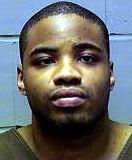
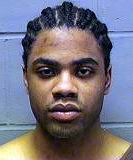
Lawyers for Reginald and Jonathan Carr sought a
life sentence for the two, but failed in their attempt to spare the
Carrs from the death penalty.
In what has been dubbed the "Wichita Massacre," the
brothers, who are black, were found guilty Thursday of robbing and
murdering four white people almost two years ago. The Carrs are also
linked to a fifth murder.
After the sentencing, the two were turned over to
the Kansas Department of Corrections. Death sentences in Kansas
trigger automatic appeals, which can take years to settle.
Since Kansas reinstated the death penalty in 1994,
the state has not executed a single person.
Fox News Channel, which covered the sentencing on
live television, reported both Carr brothers showed no emotion when
Judge Paul Clark announced the sentencing.
The judge also sentenced both to life in prison
with no possibility of parole for 20 years in the death of another
woman. Reginald also was sentenced to 47 years in prison for his
conviction on other crimes, and Jonathan was sentenced to 41 years on
other convictions.
The woman who survived the Dec. 15, 2000, shooting
that left her four friends dead told the court, "The sentence imposed
on them will be a much kinder sentence than they imposed on me, my
friends, and family."
When the jury delivered its verdict Thursday, Mark
Befort, a brother of one of the victims, sarcastically wished Reginald
Carr a "happy birthday," followed by an expletive, as he was being led
away. Carr's response was laced with profanity.
Carr's left hand was heavily bandaged. Authorities
said he broke it Thursday morning while defending himself when a
fellow prisoner attacked him in a holding area.
Some residents in the Wichita area say the murders
would have been prosecuted as "hate crimes" had the skin color of the
gunmen and their victims been reversed.
However, Sedgwick County, Kan., District Attorney
Nola Foulston said she would not charge the suspects with committing "hate
crimes" because she believed the murders were motivated by robbery and
not racial hatred.
The Carr brothers were charged with multiple counts
of murder, robbery, rape and other crimes in a rampage that began Dec.
7, 2000 when they kidnapped a 23-year-old man from a Wichita
convenience store and robbed him.
Several days later, according to prosecutors, the
Carrs shot a female outside her Wichita home. She died several days
later from her injuries.
The Carrs then broke into the home of three young
men who were hosting two female guests. Later that night, prosecutors
said the Carrs drove the five people to a deserted soccer field,
forced them to kneel in the snow and shot each of them in the back of
the head.
Prosecutors said the brothers then drove a truck
over the four dead bodies.
The surviving female, whose name was not released,
testified that she ran naked for more than a mile in freezing
temperatures to the nearest house to get help. She also testified that
a plastic hair clip deflected the bullet and prevented it from
entering her skull.
She identified Jonathan and Reginald Carr as the
armed intruders who attacked her.
Her four friends who died were identified as Jason
Befort, a high school teacher; Brad Heyka, a director of finance with
a financial services company; Heather Muller, a preschool teacher; and
Aaron Sandler, a former financial analyst who had been studying to
become a priest.
The trial sparked debate within the Wichita
citizenry.
"If this had been two white males accused of
killing four black individuals, the media would be on a feeding frenzy
and every satellite news organization would be in Wichita doing live
reports," said Trent Hungate of Wichita in a recent letter to the
Wichita Eagle newspaper.
The Wichita Eagle itself, in a recent editorial,
wrote "reliving horrible crime is hard for the community.
"The randomness of the attacks was especially
chilling. It could have been anyone. But we go on with our work, hold
our loved ones a little closer, and face down our fears as best we
can. The survivors are showing us how," the editorial concluded.
Even Mayor Bob Knight, who has made improving race
relations in Wichita a goal of his administration, said recently that
regardless of race and ethnicity what occurred could be described as "raw,
brutal and evil." Knight generally opposes capital punishment.
"You have innocent people tortured, killed,
humiliated by someone who is little more than an animal.
"I'm not looking at it as a black-and-white issue,"
Knight said. "I am not a big fan of capital punishment, but if
anything deserves people losing their lives, it is this kind of
heinous crime".
The Wichita Massacre
The crime — and motive — the media ignored
By Stephen Webster - Amren.com
On September 9, Reginald Carr and his brother
Jonathan go on trial for what has become known as the Wichita Massacre.
The two black men are accused of a weeklong crime spree that
culminated in the quadruple homicide of four young whites in a snowy
soccer field in Wichita, Kansas. In all, the Carr brothers robbed,
raped or murdered seven people. They face 58 counts each, ranging from
first-degree murder, rape, and robbery to animal cruelty. Prosecutors
will seek the death penalty.
The only survivor of the massacre is a woman whose
identity has been protected, and who is known as H.G. In statements to
police and in testimony at an April 2001 preliminary hearing, the 25-year-old
school teacher offered horrible details of what happened on the night
of Dec. 14, 2000. That evening, a Thursday, H.G. went to spend the
night at the home of her boyfriend, Jason Befort. Mr. Befort, 26, a
science teacher and coach at Augusta High School, lived in a triplex
condo with two college friends: Bradley Heyka, 27, a financial analyst,
and Aaron Sander, 29, who had recently decided to study for the
priesthood.
When H.G. arrived with her pet schnauzer Nikki
around 8:30 p.m., her boyfriend Mr. Befort was not there, but the two
roommates were. A short time later, Mr. Sander’s former girlfriend,
Heather Muller, a 25-year-old graduate student at Wichita State
University who worked as a church preschool teacher, joined them. At
about 9 p.m., H.G. went to her boyfriend’s ground-floor bedroom to
grade papers and watch television. Mr. Befort came home from coaching
a basketball practice around 9:15, and at 10:00, H.G. decided to go to
bed. Before joining H.G in bed, Mr. Befort made sure all the lights in
the house were turned off and all the doors were locked. Mr. Sander
was sleeping on a couch in the living room while his former girlfriend
slept in the second ground-floor bedroom. Mr. Heyka slept in a room in
the basement.
Shortly after 11 p.m., the porch light came back on,
to the surprise of Mr. Befort, who was still awake. H.G. says that
seconds later she heard voices, then shouting. Her boyfriend cried out
in surprise as someone forced open the door to the bedroom. H.G saw “a
tall black male standing in the doorway.” She didn’t know how the man
got into the house, and police investigators have not said how they
think the Carrs got in. She says the man, whom she later identified as
Jonathan Carr, ripped the covers off the bed. Soon, another black man
brought Aaron Sander in from the living room at gunpoint and threw him
onto the bed. H.G. saw that both men were armed. She said they wanted
to know who else was in house, and the terrified whites told them
about Mr. Heyka in the basement and Miss Muller in the other ground-floor
bedroom. The intruders brought them into Mr. Befort’s bedroom.
“We were told to take off all of our clothes,” says
H.G. in her testimony. “They asked if we had any money. We said: ‘Take
our money ... Take whatever you want.’ We
didn’t have any (money).”
The Carrs, however, were not at that point
interested in money. They made the victims get into a bedroom closet,
and for the next hour brought them out to a hall by a wet bar, singly
or in pairs for sex. In the closet-perhaps 12 feet away from the wet-bar
area-the victims were under orders not to talk. H.G. says that when
the Carrs heard whispering they would wave their guns and shout “Shut
the fuck up.”
The Carrs first brought out the two women, H.G and
Heather Muller, and made them have oral sex and penetrate each other
digitally. They then forced Mr. Heyka to have intercourse with H.G.
Then they made Mr. Befort have intercourse with H.G, but ordered him
to stop when they realized he was her boyfriend. Next, they ordered Mr.
Sander to have intercourse with H.G. When the divinity student refused,
they hit him on the back of the head with a pistol butt. They sent H.G.
back to the bedroom closet and brought out Miss Muller, Mr. Sander’s
old girlfriend. H.G. testified she could hear what was going on out by
the wet bar, and when Mr. Sander was unable to get an erection one of
the Carrs beat him with a golf club. Then, she says, the Carr brothers
“told [Aaron] that he had until 11:54 to get hard and they counted
down from 11:52 to 11:53 to 11:54.” The deadline appears to have
brought no further punishment, and Mr. Sanders was returned to the
closet. The Carrs then forced Mr. Befort to have intercourse with
Heather Muller, and then ordered Mr. Heyka to have sex with her. H.G.
says she could hear Miss Muller moaning with pain.
The Carrs asked if the victims had ATM cards.
Reginald Carr then took the victims one at a time to ATM machines in
Mr. Befort’s pickup truck, starting with Mr. Heyka. While Reginald
Carr was away with Mr. Heyka, Jonathan Carr brought H.G. out of the
closet to the wet bar, raped her, and sent her back to the closet.
Reginald Carr returned with Mr. Heyka, and ordered Mr. Befort to go
with him. Mr. Heyka was put back in the closet but said nothing about
his trip to the ATM machine. Mr. Sander asked Mr. Heyka if they should
try to resist, assuming they would be killed anyway, but Mr. Heyka did
not reply. While Reginald Carr was away with Mr. Befort at the cash
machine, Jonathan Carr ordered Heather Muller out of the closet and
raped her.
When Reginald Carr returned with Mr. Befort, H.G.
volunteered to go next. Mr. Carr let her put on a sweater, but nothing
else, and said he liked seeing her with no underwear. He ordered her
to drive the truck to a bank, and told her not to look at him as he
crouched in the back seat. “I asked him if he was going to hurt us and
he said, ‘No,’” she says. “I said, ‘Do you promise you’re not going to
kill us?’ and he said, ‘Yes.’”
H.G. got money from the cash machine and adds, “On
the way back, he said he wished we could’ve met under different
circumstances. He said I was cute, and we probably would’ve hit it off.”
When the two got back to the house, Reginald Carr raped H.G. and
ejaculated in her mouth. Jonathan Carr raped Miss Muller again, and
then he raped H.G. one more time. Afterwards, the intruders ransacked
the house looking for money. They found a coffee can containing an
engagement ring Jason Befort had bought for his girlfriend. “That’s
for you,” he told H.G., “I was going to ask you to marry me.” That is
how H.G. learned her boyfriend planned to propose to her the following
Friday, Dec. 22.
At one point, says H.G., Reginald Carr “said
something that scared me. He said ‘Relax. I’m not going to kill you
yet.’”
The Final Ride
The Carrs led the victims outside into the freezing
night. At midnight it had been 17.6 degrees, and there was snow on the
ground. The Carrs let the women wear a sweater or sweatshirt, but they
were barefoot, and naked from the waist down. The men were marched
into the snow completely naked. The Carrs tried to force all the
victims into the trunk of Aaron Sander’s Honda Accord, but realized
five people would not fit, and made only the men get into the trunk.
Reginald Carr ordered H.G. to join him in Mr. Befort’s truck, and
Jonathan Carr drove the Accord with the three men in the trunk and
Miss Muller inside. As Mr. Carr drove her off, H.G. noted the time: It
was 2:07 a.m., three hours since the ordeal began.
After a short drive, both vehicles stopped in an
empty field. Reginald Carr ordered H.G. to go sit with Miss Muller in
Mr. Sander’s car. A moment later, she saw the men line up in front of
the Honda. In her testimony H.G. said, “I turned to Heather and said,
‘They’re going to shoot us.’”
The Carr brothers ordered H.G. and Miss Muller out
of the car. Miss Muller stood next to Mr. Sander, her former boyfriend,
while H.G. stood beside her boyfriend, Mr. Befort. The Carrs ordered
them to turn away and kneel in the snow. “As I was kneeling, a gun
shot went off,” says H.G. “[Then] I heard Aaron [Sander]...
I could distinguish Aaron’s voice. He said, ‘Please, no sir, please.’
The gun went off.”
H.G. heard three shots before she was hit: “I felt
the bullet hit the back of my head. It went kind of gray with white
like stars. I wasn’t knocked unconscious. I didn’t fall forward. Then
someone kicked me, and I had fallen forward. I was playing dead. I
didn’t move. I didn’t want them to shoot me again.”
As H.G. lay in the snow, the Carrs drove off in
Jason Befort’s pickup, running over the victims as they left. H.G.
says she felt the truck hit her body, too.
“I waited until I couldn’t hear any more,” she says.
“Then I turned my head and saw lights going. I looked at everyone.
Everyone was face down. Jason [Befort] was next to me. I rolled him
over. There was blood squirting everywhere, so I took my sweater off
and tied it around his head to try and stop it. He had blood coming
out of his eyes.”
In the distance, H.G. saw Christmas lights.
Barefoot and naked, with a bullet wound in the head, she managed to
walk more than a mile in the freezing cold, through snow, across a
field and construction site, around a pond, and through the brush,
until she reached the house with the lights. She pounded frantically
on the door and rang the doorbell until the young married couple who
lived there woke up. “Help me, help me, help me,” she pleaded. “We’ve
all been shot. Three of my friends are dead.” (At the time, H.G.
thought her boyfriend was still alive.)
The couple wrapped H.G. in blankets, and reached
for the phone to dial 911, but she would not let them call. She was
afraid she would die, and wanted to tell what had happened. She
described the attackers and what they did, as the couple listened in
amazement at her courage and determination. Only when she was sure
they knew her story did she let them call the police. Still thinking
she would die, she asked them to call her mother-”Tell her I love her”-and
her boyfriend’s parents. She was worried about the children she
teaches, and kept wondering “Who’s going to take care of the kids in
school?”
When the police arrived they questioned H.G.
briefly before paramedics took her to the hospital. From her
description of Mr. Befort’s truck, they were able to get the license
plate number from the vehicle’s registration records, and put out an
alert. As dawn broke, radio and television stations were broadcasting
the plate number.
H.G. did not know that after the Carrs shot her
friends they drove back to the triplex and loaded Mr. Befort’s truck
with everything of value they could find. They also committed their
final killing. The police found H.G.’s pet schnauzer Nikki lying in a
pool of blood on a bed, probably shot.
By 7:30 a.m., police had a report that the missing
truck was outside a downtown apartment building, and that a black man
had been carrying a television set up to one of the apartments. The
police moved in to seal off the area. Two officers knocked on the door
of the apartment, and after several minutes a white woman named
Stephanie Donly opened the door. She was Reginald Carr’s girlfriend,
and shared her apartment with him. Police caught Mr. Carr as he tried
to slip out a window.
The police learned from Miss Donly that Reginald’s
brother Jonathan was driving a late model Plymouth Fury. Shortly after
12:00 p.m. they found the car parked outside a house in a black part
of town. Jonathan Carr was there with his girlfriend of a few days,
Tronda Green. He bolted when he saw the police, but was caught after a
short chase. Fewer than 12 hours after the murders, Reginald and
Jonathan Carr were both in custody.
Other Victims
That night’s quadruple murder was only the most
gruesome of a series of Carr brother attacks. Late on the night of Dec.
7, 2000-just one week earlier-Andrew Schreiber, a 23-year-old white
man, stopped at a Kum and Go convenience store in East Wichita.
Reginald and Jonathan Carr forced themselves into his car at gunpoint
and made Mr. Schreiber drive to various ATM machines and withdraw
money. “I was just hoping if I did what they said, they’d let me live,”
he says. The two split up, and one followed in another car as they
made him drive to a field northeast of town. There they pistol-whipped
him, dumped him out of the car, and fled in the other vehicle after
shooting out Mr. Schreiber’s tires.
Four days later, the Carrs tried to hijack 55-year-old
Linda Walenta’s SUV while she sat in it in the driveway of her
suburban East Wichita home. The Carrs were looking for an SUV in which
to drive people at gunpoint to ATMs. They thought they could keep
their victims out of sight in a large vehicle as they drove through
town. One of the brothers approached Mrs. Walenta, apparently asking
for help of some kind. She was suspicious because she thought a car
had been following her, and rolled her window down just a little to
hear what he was saying. He stuck a gun sideways into the opening, and
shot her several times as she tried to drive away. Mrs. Walenta, a
cellist in the Wichita Symphony Orchestra, survived the shooting but
was paralyzed from the waist down. She was able to help police in
their investigation, but died of her wounds three weeks later, on
January 2, 2001.
Wichita police confirmed the Carr link to all the
crimes when a highway worker found a black .380 caliber Lorcin semi-automatic
handgun along Route 96, a highway near the soccer field where the
massacre took place. The Kansas state crime lab confirmed that it was
the weapon used to kill Mrs. Walenta and H.G.’s friends, and to shoot
out the tires of Andrew Schreiber’s car. No one knows what other
crimes the brothers may have committed, but they certainly appeared
guilty of these.
The Carr trial is scheduled to start on Sept. 9,
but has been delayed by defense maneuvering. On June 13, Judge Paul
Clark denied a motion to move the trial out of Sedgwick County. The
defense cited a poll showing 74 percent of Sedgwick County residents
thought the Carrs were either “definitely guilty” or “probably guilty,”
and argued the brothers could not get a fair trial in Wichita. However,
no trial has been moved from Sedgwick County in more than 40 years,
and this one will stay.
The defense wanted separate trials because the
lawyers for each brother will try to blame the crimes on the other.
The lawyers argued they will both be trying to help convict the other
brother, so it will be like having two prosecutors for each defendant.
Prosecutor Nola Foulston pointed out that many people accused of
committing crimes together are tried together, and since the trial is
expected to last a month and involve 70 witnesses, two trials would be
too much expense and inconvenience.
Jonathan Carr’s lawyers also tried to get him
declared unfit to stand trial, but on April 8, 2002, Judge Clark
reviewed the reports of two mental health experts, and ruled him
competent. The reports are under seal, so the grounds for the motion
are not known.
If the Carr brothers’ lawyers do try to blame each
other’s client, the jury will learn that both have long criminal
records. Jonathan Carr’s appears to be under seal but at least parts
of his brother’s are public. In 1995, Reginald Carr was sentenced to
13 months in prison for theft. He was also ordered to serve six months
each for aggravated assault and subverting the legal process. In 1996,
he was sentenced to 28 months on a drug charge. He was paroled on
March 28, 2000, but that November was booked for drunk driving. A few
days later he was back before a judge, charged with forgery and parole
violation. Police mistakenly let him out six months early on Dec. 5,
2000, just two days before he robbed and beat Andrew Schreiber,
and started his week of crime. Had police followed correct procedures
Jason Befort, Bradley Heyka, Aaron Sander, Heather Muller and Ann
Walenta would probably still be alive.
“Has No Bearing”
Although the perpetrators are black and all their
victims white, the Wichita police have dismissed race as a motive.
Prosecutor Foulston says the Carr brothers chose their victims at
random, not because they were white, and that the motive was robbery.
“It reasonably appears that these were isolated incidents where
individuals ... were chosen at random
... a random act of violence,” she says.
“The fact that the defendants and victims happen to be of different
races has no bearing. Let’s just look at the underlying crimes.” The
Wichita media consistently downplayed the racial angle.
However, as news of the crimes spread across the
Internet, many people began to wonder if the Carrs would be charged
with hate crimes. In fact, it does not appear that Mrs. Foulston or
police investigators even looked for a possible racial motive.
According to the testimony of the April 2001 preliminary hearing, in
which prosecutors determined whether they had enough evidence to
support charges, Mrs. Foulston never asked H.G. or Andrew Schreiber if
the brothers used racial slurs, or expressed hatred of whites.
It is true that Reginald Carr had a white
girlfriend, and it may be that the race of the victims was unimportant
to him. At the same time, Jonathan Carr wore a FUBU sweatshirt, a
brand popular with black rappers that is said to stand for “For Us, By
Us.” Some blacks wear FUBU clothing as a statement of black solidarity
if not outright rejection of whites.
Louis Calabro of the European American Issues Forum
(EAIF) and a former San Francisco police lieutenant, has written to
Mrs. Foulston describing the FBI’s guidelines for suspecting a hate
crime when perpetrator and victim are of different races. Among them
are excessive violence, a pattern of similar attacks, and the cold-bloodedness
of an execution-style killing. Combined with the torture of forcing
people naked into a freezing night, and the degradation the Carrs put
their victims through, there is ample reason at least to suspect a
racial motivation.
Of one thing we can be certain: If whites had done
something this horrible to blacks, it would be universally assumed the
crime was motivated by racial hatred. From the outset, police and
prosecutors would have investigated the friends, habits, reading
matter, and life history of each defendant. If either had ever uttered
the word “nigger,” had a drink with a Klansman, or owned a copy of
American Renaissance, this would be discovered and brandished as
proof of racial hatred. In the Carr case, there appears to have been
no investigation at all. Instead of searching for possible racial
animus, the authorities have simply declared there was none.
Mrs. Foulston dodges the racial question by
pointing out that Kansas does not have a hate crime statute, but the
state does specify harsher penalties for bias crimes. Given that the
Carr brothers face the death penalty, this is a moot point, but Mrs.
Foulston has made no attempt to apply these provisions.
Mrs. Foulston knows some whites are pushing for a
hate crimes investigation, and wants to keep the proceedings secret.
She moved to close the court for the preliminary hearings, saying
“we’d have to let the Aryan Nations come in here if they decided they
had an interest.” At one hearing, reporters heard one of Mrs. Foulston’s
aides tell the judge that the press are “interlopers,” and the public
has no “substantial interest” in the case. Fortunately, Judge Clark
recognizes the public’s right to observe the proceedings, and opened
them to the public. He did, however, agree to Mrs. Foulston’s motion
for a gag order on all lawyers, investigators and witnesses. The order
also prevents release of many records that normally would be public,
including the EMS records, the reports on Jonathan Carr’s mental
competence, and records of police interviews. Mrs. Foulston says
secrecy is necessary to ensure the Carrs get a fair trial, but what is
in notes of police interviews, for example, that is so inflammatory it
could prejudice the public? Evidence of racial hatred, perhaps?
Mrs. Foulston did not ask for a gag order in the
case of another quadruple homicide in Wichita just eight days before
the Carr brothers’ massacre. The DA’s office says that case, in which
murderers and victims were black, did not generate nearly as many
requests for public records, but in an open society, the more interest
the public shows in information the more available it should be. Mrs.
Foulston’s secrecy has led critics to accuse her of covering up
evidence of racial animus. EAIF’s Mr. Calabro believes the assaults
and murders “were racially motivated crimes that the DA and city of
Wichita have no interest in pursuing.” Del Riley, a white Wichita
resident who has followed the case, says of his reaction to the DA’s
secrecy, “I wouldn’t call it outrage, but I’d call it suspicion. This
gag order upsets me."
Once again, we can be certain that if the racial
cast of characters were reversed, there would be no attempt to close
the court, and the media coverage-virtually absent in this case-would
be deafening. A white-on-black crime of this kind would be front-page
news for days, and would probably prompt official condemnation from
the President and Attorney General on down. As we know from the
reaction to the murder of James Byrd, dragged to death behind a truck,
a crime of this sort committed by whites against blacks would put the
nation into an official state of near hysteria.
What if the cast had been all-white? It would still
have been national news. In 1959, drifters Dick Hickock and Perry
Smith murdered the Clutter family in Holcomb, Kansas. Like the Wichita
case, it was a home invasion, apparently motivated by robbery. Even
without spectacular sexual cruelty, the Clutter killings were front-page
news and the story was immortalized in Truman Capote’s novel, In
Cold Blood. Had the Wichita case involved whites only, the heroics
of H.G. alone would have ensured wide coverage. She would have become
a national hero, part of the folklore of strong womanhood.
What if perpetrators and victims had all been black?
Some in the media would have promoted the heroism of the woman who
lived to tell of the crime, but others would have stayed away from the
story because such savagery reflects badly on blacks.
When blacks commit outrages against whites, media
executives not only downplay black misbehavior but believe they must
protect whites from “negative stereotypes” about blacks. If they must
report such crimes, they are likely to link them to editorials calling
for tolerance, and pointing out that the criminals were individuals,
not a race. When whites commit outrages against blacks there are no
such cautions; white society at large is to blame.
The Carr brothers’ crimes were treated to a virtual
media blackout. The Chicago Tribune and the
Washington Times appear to be the only major non-Kansas dailies
ever to mention the story. Their articles briefly described the facts
of the case, and then focused on Internet discussions among whites who
thought the Carr brothers were hate criminals. The Associated Press
ran stories on the crimes, but they do not appear to have been picked
up outside of Kansas. Within the state, the media dutifully promoted
Mrs. Foulston’s categorization of the crimes as “random.” The networks,
of course, were silent.
Were it not for the Internet, the Wichita story
would have disappeared. It was only in chat-rooms and on web pages
that the crimes had a national audience. Several sites, such as www.
NewNation.org and www.JeffsArchive. com, have posted newspaper
articles about the crimes. The main paper that covered the case, the
Wichita Eagle, stores older articles in a fee-charging
archive, so these sites are virtually the only way the public can
learn about the massacre.
It will be surprising if the trial itself gets
national coverage. Kansas permits television in courtrooms, but so far,
the Court TV cable channel shows little interest in the case despite
e-mail requests to its website at www.CourtTV.com. The Wichita
Eagle will probably offer restrained coverage
The police and media reactions to these crimes-a
refusal to think about race, draw larger conclusions, or even express
outrage-are typical of today’s whites, and in stark contrast to the
sustained fury we could expect from blacks if the races were reversed.
Not even the acknowledged error that resulted in
Reginald Carr’s early release seems to upset many people. Bradley
Heyka’s father is angry, saying he is “appalled a mistake like this
could lead to such severe consequences for so many people,” but Aaron
Sander’s father is passive. “It is unfortunate this happened, but we
have to learn to get past that and let those things go and get on with
our life,” he says. “We can’t deal with how things should have been or
could have been, we can only deal with today.”
There were even more cloying sentiments at the
funerals of the young victims. At Jason Befort’s service on Dec. 21,
2000, Rev. James Diecker told the congregation their attitude towards
the killers should be that of Jesus on the cross, when he said
“Forgive them, Father, for they know not what they do.” He went on to
call for “a victory of love over hate ...
a victory of mercy over justice.”
At Heather Muller’s funeral, Rev. Matthew McGinness
struck the same note, saying, “We must be like Christ, who forgave his
enemies.” He told the congregation Heather’s mother felt the same way,
and had told him, “Heather would want us to pray for her murderers,
and Heather was probably praying for them at the moment of her death.”
To what extent does this turn-the-other-cheek
mentality explain why five whites failed to fight back against two
attackers? Three of the whites were young men, surely capable of
serious resistance, and there must have been several opportunities for
it. When one of the Carrs was out at an ATM machine with a woman, it
meant there were three white men in the house with a lone assailant.
While the man was busy raping a woman, how difficult would it have
been to overpower him?
At some point is must have become obvious the Carrs
intended to kill all witnesses. They could have had nothing else in
mind when they marched the group into the snow, and tried to stuff all
five into the trunk of a car. There was no more money to be had from
ATM machines. All that was left was to make sure no one could testify
against them.
Why, therefore, did five young whites-men or women-kneel
obediently in the snow to be shot one by one? Were their spirits
completely broken from hours of humiliation? Were they so stiff from
cold they could hardly move? Or had they simply been denatured by the
anti-white zeitgeist of guilt that implies whites deserve whatever
they get? One does not wish to think ill of the dead, but these three
men showed little manliness.
It is worth noting that in the home of three young
Kansas men there does not appear to have been a single firearm. No
doubt these men believed what they have been told: that guns are nasty
things, best left in the hands of the police, who will always be there
to protect us. H.G., who is clearly a woman of great determination,
testified that at one point, when she was on her hands and knees and
one of the Carr brothers was unzipping his pants, he laid a silver
automatic pistol on the floor two feet away from her. She thought
about making a grab for it but realized she had no idea how to operate
a gun, and instead submitted to rape and attempted murder. Had she
known how to use a weapon, her four friends might be alive today.
As for the question of hate crimes, racially
conscious whites would see bias charges as at least some level of
official outrage at the shocking crimes committed by these two blacks
against a series of exclusively white victims. It is natural for
whites to assume that behavior so vicious and odious must have been
driven by consuming hatred. Most whites cannot imagine treating
another human being the way the Carrs treated their victims unless
there were some terrible underlying animus. Moreover, it is probably
safe to assume that if the races were reversed it could only have been
a crime of racial hatred, and this is probably why so many whites are
furious at authorities who have been so quick to rule out bias.
However, it may be a mistake to project white
sensibilities onto blacks. It may be that trial testimony or unsealed
documents will show a clear racial motive, but it is also possible no
evidence of racial hatred will ever come to light. It may also be that
the Carr brothers are incapable of analyzing and describing their own
motives with enough intelligence to make it possible for others to
judge them.
The angry whites do not seem to realize that what
happened on the night of Dec. 14 may be only a particularly brutal
expression of the savagery that finds daily expression in American
crime statistics and African tribal wars. It may very well be that the
Carr brothers are so depraved they can commit on a whim brutalities
that whites can imagine only as the culmination of the most profound
and sustained hatred. This view, along with whatever it may say about
blacks as a group, is the one the Wichita authorities have tacitly
endorsed — and they may be correct. It is a far darker view of the
Carr brothers to assume that this is simply the way they are, that
they can commit unspeakable acts without any special motivation, that
the Wichita Massacre was nothing more than two black men on a tear
that went wrong.