Murderpedia has thousands of hours of work behind it. To keep creating
new content, we kindly appreciate any donation you can give to help
the Murderpedia project stay alive. We have many
plans and enthusiasm
to keep expanding and making Murderpedia a better site, but we really
need your help for this. Thank you very much in advance.
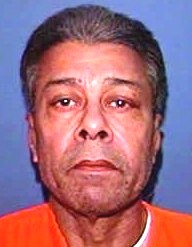
Angel Nieves DIAZ
Classification: Murderer
Characteristics: Robbery
Number of victims: 1 - 3 +
Date of murder: December 22,
1979
Date
of arrest: 1983
Date of birth:
August 31,
1951
Victim profile: Joseph Nagy
(strip
club manager)
Method of murder:
Shooting
Location: Florida, USA
Status: Executed
by lethal injection in Florida on December 13,
2006
Diaz was sentenced to die for the murder of Joseph Nagy, a strip
club manager who was shot with a silencer-equipped gun when Diaz and
two accomplices robbed the Velvet Swing club on December 22, 1979.
No one actually witnessed the shooting death of manager Joseph
Nagy. Most of the patrons and employees had been confined to a
restroom and a dancer hiding under the bar did not see who fired the
shoots which killed Nagy.
The case remained unsolved for four years until 1983, when
Nieves' girlfriend told police he was involved in the crimes. Angel
"Sammy" Toro and Angel Nieves were charged with murder. A third man,
"Willie," was never identified, according to a summary of his case
by the Florida Commission on Capital Crimes.
At his trial, Nieves conducted his own defense, with the
assistance of counsel. Toro cut a deal with prosecutors and was
sentenced to life in prison. The conviction was largely based on the
testimony of a jailhouse informant, Ralph Gajus, who occupied a
nearby cell and said Nieves — who spoke poor English — admitted he
was the triggerman by miming the shooting. The jury recommended he
be sentenced to death by an 8-4 vote.
Nieves' prior record includes a second-degree murder conviction
in his native Puerto Rico and escapes there and in Connecticut.
In 1981, he escaped from the Hartford Correctional Center by
holding one guard at knifepoint while another was beaten as he and
three other inmates escaped, according to court records.
Nieves, 55, was convicted and sentenced to death for killing
Miami topless club manager Joseph Nagy in 1979. The conviction was
largely based on the testimony of a jailhouse informant, Ralph Gajus,
who occupied a nearby cell and said Nieves — who spoke poor English
— admitted he was the triggerman by miming the shooting.
Citations:
Diaz v. State, 513 So.2d 1045 (Fla. 1987) (Direct Appeal). In re Diaz, ___ F.3d ___, 2006 WL 3544824 (11th Cir. 2002) (PCR).
Final/Special Meal:
Diaz did not order a last meal. He was served Wednesday's prison
menu of shredded turkey with taco seasoning, shredded cheese, rice,
pinto beans, tortilla shells, apple crisp and ice tea.
Final Words:
''The state of Florida is killing an innocent person. The state of
Florida is committing a crime, because I am innocent. The death
penalty is not only a form of vengeance, but also a cowardly act by
humans. I'm sorry for what is happening to me and my family who have
been put through this.''
ClarkProsecutor.org
Florida Department of Corrections
DC Number: 101061
Name: DIAZ, ANGEL
Alias: EMILIO BAEZ, ALFREDO DIAZ, ANGEL DIAZ, EMILIO DIAZ, JOSE DIAZ,
OLFREDO DIAZ, ANGLE DIEQUE, PAPO GUADALUPE, ALFREDO GUADALUPE-DIAZ,
ANGLE NIEVES, PAPO, ANGLE OF DE PAPO LA MUERTE SAMMY TORO ANGLE
TORRO
Race: HISPANIC
Sex: MALE
Hair Color: BLACK
Eye Color: BROWN
Height: 6' 00"
Weight: 158
Birth Date: 08/31/1951
Initial Reception: 05/27/83
Current Facility: FLORIDA STATE PRISON
Offense Date: 12/22/1979
Offense/Sentence: 1ST DG MUR/PREMED (Death Sentence), ROBB. GUN/DEADLY
WPN (268 Years), ROBB. GUN/DEADLY WPN - ATTEMPTED (15 Years),
KIDNAP;COMM.OR FAC.FELONY (536 Years), THREATENS TO USE ANY FIREARM
(15 Years)
County of Conviction: MIAMI-DADE
Case #: 8318931
State probes lengthy execution
By Phil Long -
Miami Herald
Fri, Dec. 15, 2006
The state of Florida may not be quite done with executed killer
Angel Nieves Diaz. Both Gov. Jeb Bush and the Florida Supreme Court
took action Thursday to get to the bottom of why Diaz's execution
Wednesday night took 34 minutes and two doses of lethal drugs.
During the long execution at Florida State Prison in Starke, Diaz
squinted his eyes, flexed his jaw, moved his mouth and grimaced. His
movements did not stop early in the process.
According to The Associated Press, lethal injections normally
take about 15 minutes, with the inmate rendered unconscious within
the first three to five minutes. Prison officials said afterward
that Diaz had liver disease that slowed the effects of the drugs, so
they needed to use two doses.
Bush asked the state Department of Corrections to investigate the
execution. ''I think it is appropriate to do so given the unusual
length of time it took for the process to be complete,'' Bush said.
Max Changus, the DOC's assistant general counsel, will lead the
investigation.
The Florida Supreme Court on Thursday granted a request by the
agency that represents other Death Row inmates to preserve evidence
in the Diaz execution and sent the case to a judge in Ocala to
consider, among other things, whether there should be an independent
autopsy in the case.
In an emergency petition filed Thursday morning, a Capital
Collateral Regional Counsel attorney, on behalf of several Death Row
inmates, also asked that Florida's lethal injection process be
declared unconstitutional because it violates protections against
cruel and unusual punishment.
Lethal injection takes 34 minutes to kill inmate
Convicted
murdered Angel Diaz was executed, but his death seemed to take
longer than other lethal-injection executions
By Phil Long and
Marc Caputo -
Miami Herald
Thu, Dec. 14, 2006
STARKE - Angel Nieves Diaz, the self-styled ''Daddy of Death''
for the Machete Men Puerto Rican terror gang who was implicated in
at least three murders and two brutal prison breaks, spent his last
moments Wednesday inveighing against the taking of a life -- his own.
''The state of Florida is killing an innocent person,'' Diaz said
from the gurney on Death Row.
"The state of Florida is committing a crime, because I am
innocent. The death penalty is not only a form of vengeance, but
also a cowardly act by humans. I'm sorry for what is happening to me
and my family who have been put through this.'' What happened to him
next looked agonizing. Grimacing, Diaz took 34 minutes to die from
the drugs pumped through him. At times he seemed to be squinting and
at other times he appeared to be flexing his jaw.
EXPLANATION
A Florida prisons spokeswoman, Gretl Plessinger, said the length
of time it took Diaz to die was not a surprise, and that Diaz did
not suffer any pain. She said prison officials had to give Diaz a
second dose of the lethal chemicals because he had liver disease,
which slowed his metabolism. She said it was not the first execution
in which a second round of drugs had to be administered. Maria
Otero, a niece of Diaz's who was outside the prison with other
family members, asked why it took a second dose of chemicals to
execute her uncle. ''We deserve to know the facts,'' she said.
Diaz's death is likely to reignite the debate over the manner of
executions in a case that already showed troubles with the death
penalty.
After all, one of Diaz's accomplices,
Angel Toro, cut a deal to spare his life. A third suspect has never
been found. And no one is quite sure who shot Joseph Nagy on the
December 1979 night they held up the Velvet Swing topless bar on
Southwest Eighth Street in Miami. But to cops and prosecutors it
doesn't really matter whether Diaz actually pulled the trigger in
1979 or he was merely one of the thugs who corralled patrons and
dancers into a bathroom jammed shut with a cigarette machine.
They're sure that Diaz was complicit in the killing. They know he
had already shot a police officer in Puerto Rico during a robbery,
then stabbed a prison drug-rehabilitation counselor to death before
busting out of prison and maiming a guard. And they suspect he and
Toro killed yet another man in a Northwest Seventh Street high-rise,
said former Metro-Dade Detective Greg Smith, who was a member of the
nation's first cold-case squad. The squad was a must at the time,
Smith said, because Miami was gripped by the cocaine-cowboy wars and
``bodies were piling up.''
ESCAPES
The Velvet Swing killing was the second case the squad solved,
Smith said, thanks to a tip from Boston police investigating a
murder committed by Toro. After Diaz was arrested in Miami, he told
another jailed killer, Ron Gajus, about his role in the killing and
hatched plans for a jail break -- which would have been his third
after escaping in Puerto Rico and Connecticut.
Gajus told on Diaz
when he found out that he wasn't included in the escape plans, which
Diaz planned to commit with a machine gun. And for that and so much
more, Smith said, Diaz deserved the ultimate penalty. ''Don't forget
what he was going to do in the Dade County jail: He was going to get
a Mac-10 machine gun and blast his way out and kill people. He has
no morals whatsoever,'' Smith said.
Florida's 34-minute execution fires up debate
By Michael Peltier -
Reuters News
Dec. 14, 2006
TALLAHASSEE, Florida (Reuters) - Death penalty critics on
Thursday asked the Florida Supreme Court to halt lethal injections
after a convicted killer took 34 minutes to die from the procedure
and witnesses said he appeared to suffer. Angel Diaz, sentenced to
death for the 1979 murder of a Miami strip club manager, died on
Wednesday after receiving a three-drug cocktail used by Florida and
other death penalty states that administer lethal injections.
Prison officials had to give Diaz the drugs twice and witnesses
to the execution reported he appeared to grimace, gasp for breath
and contort as he lay strapped to the gurney during the procedure
that usually brings death in minutes. Florida Department of
Corrections officials said Diaz was unconscious and suffered no pain.
They said the execution took longer than most because Diaz, 55, had
a liver condition that slows the drugs' effects.
Florida lawmakers voted to switch to lethal injection in 2000
following a series of bungled executions using the state's electric
chair, known as "Old Sparky." In the most notorious incident, flames
shot from the head of a prisoner during an execution in 1997. In the
petition filed on Thursday on behalf of death row inmates, lawyers
called on the high court to order an autopsy and to declare lethal
injection unconstitutional because "it involves the unnecessary and
wanton infliction of pain contrary to contemporary standards of
decency."
PROTOCOL BLASTED
Wednesday's execution added fuel to the debate over lethal
injection as states grapple with what critics call an uncertain
science. A U.S. Supreme Court ruling in January held up Florida's
executions until September, when the state resumed capital
punishment after formalizing its procedure. "The execution has
underscored the ineffective protocol that was adopted in August,"
said Martin McClain, an attorney and death penalty critic who has
handled scores of death penalty cases.
Under the protocol, the
inmate is given sodium pentothal to render him unconscious. Next,
pancuronium bromide is given to paralyze the lungs. Potassium
chloride is then injected to stop the heart, but is said to be
painful as it works its way through the circulatory system.
Reporters for Florida media and an attorney representing death
row inmates witnessed the execution and described a scene in which
Diaz appeared to thrash and medical personnel were called in to
administer more drugs. "During the time Mr. Diaz appeared to be
speaking, it was my observation that he was in pain," Neal Dupree of
Capital Collateral Regional Counsel testified in the petition. "His
face was contorted and he grimaced on several occasions. His Adam's
apple bobbed up and down continually, and his jaw was clenched."
Critics say state officials were aware of Diaz's liver condition
and should have modified the procedure to ensure Diaz would be
unconscious when the third drug was given. "It's clear they
inflicted pain on him, and it's clear that they knew ahead of time
about his condition," McClain said. "The only logical conclusion is
there was gross negligence here."
Florida executes strip club killer for 1979 murder
By Michael Peltier -
Reuters News
Wed Dec 13, 2006
TALLAHASSEE, Florida (Reuters) - Florida prison officials
executed a 55-year-old death row inmate by lethal injection on
Wednesday for the 1979 murder of a strip club manager in Miami.
Officials at Florida State Prison near Starke pronounced Angel Diaz,
a Puerto Rican native, dead at 6:36 p.m EST (2336 GMT) after giving
him a deadly cocktail of chemicals that paralyzed his lungs and
stopped his heart, a spokesman for Gov. Jeb Bush said.
The execution came despite last-minute appeals to the U.S.
Supreme Court and letters from Puerto Rican officials to the
governor asking that his life be spared. Diaz was the fourth person
to be put to death in Florida since September despite a national
debate over whether the three-drug cocktail used in the procedure
results in painful death and is therefore unconstitutionally cruel.
Some states have chosen to postpone lethal injections while the
issue travels through the courts.
Diaz spent part of his final day with family members. He later
met with a prison chaplain and received last rights by a Roman
Catholic priest shortly before his execution, according to Florida
Department of Corrections spokeswoman Gretl Plessinger.
Diaz was sentenced to die for the murder of Joseph Nagy, a strip
club manager who was shot with a silencer-equipped gun when Diaz and
two accomplices robbed the Velvet Swing club on December 22, 1979.
Diaz was not convicted until 1984 after a trial in which he
represented himself with the aid of a court-appointed attorney. The
jury recommended death by eight votes to four. A witness, Ralph
Gajus, recently recanted his testimony, saying he lied on the
witness stand in 1984 because he was angry with Diaz. Gajus was
serving a 20-year sentence for second-degree murder.
Diaz became the 64th prisoner executed since Florida resumed
executions in 1979. He was the 21st inmate executed during the
governorship of Jeb Bush -- President George W. Bush's brother --
who leaves office next month.
Diaz did not order a last meal. He was served Wednesday's prison
menu of shredded turkey with taco seasoning, shredded cheese, rice,
pinto beans, tortilla shells, apple crisp and ice tea, Plessinger
said.
Inmate takes 34 minutes to die
By Nathan Crabbe -
Gainesville.com
Dec 14, 2006
Angel Nieves Diaz shuddered and appeared to grimace in pain
during his execution Wednesday, requiring two rounds of lethal drugs
before dying. Diaz, 55, was declared dead 34 minutes after the
process started, about 20 minutes longer than recent executions have
taken. His appeals claimed lethal injection constituted cruel and
unusual punishment, and his execution seems likely to fuel the
debate over the process.
The Puerto Rican native was sentenced to death for the murder of
a Miami topless club manager 27 years ago this month. He professed
his innocence in his last statement, which was spoken in Spanish and
translated by a prison official. "The state of Florida is killing an
innocent person. The state of Florida is committing a crime because
I am innocent," he said.
Observers couldn't recall another execution that required two
rounds of drugs since lethal injection was instituted in 2000.
Inmates are typically given three drugs in the process: the first to
render unconsciousness, the second to cause paralysis and the third
to stop the heart. Department of Corrections spokeswoman Gretl
Plessinger said Diaz had liver disease, slowing the effectiveness of
the drugs and requiring the second round. Plessinger said Diaz
didn't feel pain during the procedure. "Once the first set of drugs
was introduced, he did not recover," she said.
But Diaz's family members and death-penalty advocates assembled
outside Florida State Prison questioned her explanation. Mark
Elliott of Floridians for Alternatives to the Death Penalty said
Diaz would have felt intense pain if he was conscious when the third
drug was administered. "The sensation is supposed to be like being
burned alive from the inside out," he said.
Cousin Maria Otero of Orlando said the family wasn't aware Diaz
had liver disease and demanded more facts about what happened. One
of 16 family members who spent 45 minutes with Diaz earlier in the
day, she said he was calm and professed his innocence. "He asked for
us not to lose the faith, to try to be united," she said. Family
members aren't allowed to witness executions, so they assembled with
protesters in the pasture across the street from the prison.
Relatives cried out in grief during the protests, and two passed out
from what a relative said was anxiety.
The U.S. Supreme Court rejected his last-ditch appeals in the
hour before the execution. Diaz claimed he was not the triggerman in
the killing of Joseph Nagy during a robbery at the Velvet Swing
Lounge.
He was convicted largely on the testimony of a jailhouse
informant who claimed the Spanish-speaking Diaz mimed a confession.
The informant later said he lied. While a co-defendant cut a deal
with prosecutors and was given life in prison, Diaz acted as his own
attorney at trial and was sentenced to death.
Diaz turned down requests for a final meal and was served the
day's standard prison meal of turkey tacos, which he turned down. He
later met with prison chaplain Dale Recinella and received last
rites from Father Jose Maniyangat. He asked that his body be sent to
Puerto Rico for funeral services. Puerto Rican Gov. Acevedo Vila and
other officials had asked Gov. Jeb Bush to stop the execution. The
U.S. territory abolished the death penalty in 1929.
The execution was the fourth this year, the most since 2000 even
with delays caused by challenges to the lethal injection method.
Convicted cop killer Clarence Hill stopped his execution in January
with such a challenge, only to be executed in September when further
appeals were not allowed.
All four inmates executed this year have challenged the lethal
injection procedure as cruel and unusual punishment, claiming
inmates can wake and feel pain during the process. The state has
argued the process is designed to ensure inmates are unconscious
after the first drug is administered. But Diaz's execution would
appear to contradict that claim.
After making his last statement at 6 p.m., Diaz appeared to wince
and mouth words. Over the course of 10 minutes, he grimaced and
shuddered at several junctures. He then moved his mouth in a way
that made it appear he was gasping for air. Diaz stopped moving at
6:24, and was declared dead by prison officials 10 minutes later.
Evidence questioned ahead of execution
By Nathan Crabbe -
Gainesville.com
Dec 13, 2006
Jenny Greenburg didn't mince words when talking about the
execution of Angel Nieves Diaz, scheduled today at Florida State
Prison. "Putting someone to death on the word of a jailhouse snitch
is un-American," said Greenburg, director of the Florida Innocence
Initiative.
Nieves, 55, was convicted and sentenced to death for killing
Miami topless club manager Joseph Nagy in 1979. The conviction was
largely based on the testimony of a jailhouse informant, Ralph Gajus,
who occupied a nearby cell and said Nieves — who spoke poor English
— admitted he was the triggerman by miming the shooting.
Gajus later
said he made up the story. But unless the Supreme Court steps in,
Nieves will be executed at 6 p.m. today in the Bradford County
prison. State and federal appeals courts have found the evidence has
already been considered and also rejected Nieves's claim that lethal
injection is cruel and unusual punishment.
Greenberg, who runs the nonprofit seeking to overturn wrongful
convictions, said the case illustrates that jailhouse informants are
notoriously unreliable. Such informants often trade testimony for
lesser sentences or favorable treatment, she said. Jailhouse
informants are the leading cause of wrongful convictions in U.S.
capital cases, according to a report by the Center on Wrongful
Convictions at Northwestern University. The report found that 51
death row inmates have been exonerated who were initially convicted
on the word of jailhouse informants.
State Attorney Bill Cervone, prosecutor for the six-county
district including Alachua County, said he's reluctant to rely on
the word of a jailhouse informant. He said he'd be unlikely to base
a case on an informant's word if there was no other evidence. "We're
very cautious about it because there are obvious agendas involved,"
he said. In the Nieves case, Gajus said police promised to help him
with his own case. He was later sentenced to 20 years for
second-degree murder.
Greenburg said one of Florida's best known wrongful convictions
was due to a jailhouse informant. Based on the testimony from
convicted murderer Clarence Zacke, Wilton Dedge was sentenced to
life in prison for sexual battery and other changes in Brevard
County. An investigation by the New York-based Innocence Project
found Zacke received a drastic reduction in his sentence by claiming
Dedge confessed while they were being transported together. DNA
evidence proved Dedge didn't do it, leading to his release after 22
years in prison.
Carolyn Snurkowski, who is representing the state in the Nieves
case, said it's up to a jury to decide whether an informant is
reliable. She said she doesn't have a problem with such testimony
being used if jurors are informed of any deals being given. "It's in
their hands to make a credibility determination," she said.
But Greenburg supports allowing judges to determine credibility
before allowing such testimony. "The presumption should be this is
not credible evidence unless the state proves otherwise," she said.
Nieves was convicted of first-degree murder, four counts of
kidnapping, two counts of armed robbery, one count of attempted
robbery and one count of possessing a firearm during the commission
of a felony for a holdup at a bar.
Nieves' prior record includes a second-degree murder conviction
in his native Puerto Rico and escapes there and in Connecticut. In
1981, he escaped from the Hartford Correctional Center by holding
one guard at knifepoint while another was beaten as he and three
other inmates escaped, according to court records.
Gov. Bush suspends executions
By Karen Voyles -
Gainesville.com
Dec 16, 2006
The prolonged execution of Angel Nieves Diaz on Wednesday was
apparently caused by intravenous needles that pierced completely
through veins in both arms. On Friday, Gov. Jeb Bush announced a
moratorium on executions until at least March to allow a specially
appointed panel to study the Diaz case and other issues surrounding
lethal executions. Diaz, 55, was executed at Florida State Prison
near Raiford for the 1979 murder of a Miami topless club manager.
During a telephone news conference Friday afternoon, Dr. William
Hamilton, a 25-year veteran medial examiner who performed an autopsy
on Diaz, said the errant intravenous needles drained the lethal
cocktail of drugs into Diaz's flesh rather than his veins.
The
concoction should have been pumped into Diaz's bloodstream, where it
would have circulated throughout his body faster and would have
worked much more quickly. The misdirected chemicals were injected
near his elbows and by the time the autopsy was conducted on
Thursday, Hamilton said he found chemical burns about a foot long on
both of Diaz's arms.
Also participating in the news conference was Florida Corrections
Secretary James McDonough. He said an internal investigation showed
that no member of the execution team saw swelling or other
indications that the chemicals were not entering Diaz's veins. "It
looked to me for the most part like they did what they were asked to
do," McDonough said. Witnesses did note something unusual.
Of the 19 previous inmates executed by lethal injection, most
stop moving within about five minutes and are pronounced dead within
15 minutes. Witnesses said Diaz was moving for 24 minutes and
required a second round of the deadly drugs. He was pronounced dead
about 10 minutes after his last movements were apparent, a total of
about 34 minutes from the time the first drug was administered.
Hamilton is the medical examiner for the 8th Judicial Circuit and
his office is responsible for performing Death Row autopsies. He
told reporters that the needles were misplaced or dislodged. "More
likely than not, but not to an absolute degree of medical certainty,
the perforation occurred very early in the process," Hamilton said.
Although witnesses said it appeared that Diaz was struggling and
in pain, Hamilton would not say whether he thought the death was
painful. "I am going to defer answers about pain and suffering until
the autopsy is complete," he said. Hamilton said the results
released to reporters Friday were preliminary and other tests may
take several weeks.
Among the factors likely to be considered are Diaz's health
issues, which could have contributed to degradation of his veins.
Earlier in the week, Diaz's state-appointed attorney, Suzanne Myers
Keffer, said Diaz was an intravenous drug user, which doctors said
might have led to problems with inserting the IV. The medical
examiner's findings contradicted an explanation given by prison
officials, who said Diaz needed the second dose because liver
disease caused him to metabolize the lethal drugs more slowly.
Hamilton said his liver appeared normal.
Diaz's attorney was angry about Diaz's final minutes. "This is
complete negligence on the part of the state," she said. "When he
was still moving after the first shot of chemicals, they should have
known there was a problem and they shouldn't have continued. This
shows a complete disregard for Mr. Diaz. This is disgusting."
Following the news conference, McDonough told The Sun that none
of the employees assigned to the execution team were suspended or
otherwise moved from their jobs. "My observations -- on the spot
that night and by our internal review team -- are that people acted
professionally and did their job with every intent of meeting the
standards," McDonough said. "The questions on why there was this
penetration through the veins is still being looked at and at this
time I see no need to change anyone's job, suspend anybody or take
any other personnel action."
Gov. Bush has suspended all executions until an 11-member
commission he created on Friday can evaluate the execution process.
Bush said he wanted to be certain that Florida's system of lethal
injections do not constitute cruel and unusual punishment. The panel
of representatives from Florida's scientific, medical, law
enforcement and legal communities, was directed to complete its
report by March 1, when it is expected to be reviewed by Bush's
replacement, Governor-elect Charlie Crist.
In his executive order, Bush wrote that Diaz's autopsy "indicates
the lethal injection protocols may need to be reviewed to determine
if any additional protocols should be added or whether any existing
protocols should be modified in any way." Lethal injections like
those administered to Diaz and 19 others who have been executed
since 2000 were touted as superior to the state's previous method —
electrocution.
For decades, Florida executed inmates in an electric chair, but
abolished the practice after three botched electrocutions. Two
inmates' heads caught on fire and a third condemned man's nose began
to bleed profusely during his execution. David Elliot, spokesman for
the National Coalition to Abolish the Death Penalty, said, "Florida
has certainly deservedly earned a reputation for being a state that
conducts botched executions, whether it's electrocution or lethal
injection. We just think the Florida death penalty system is broken
from start to finish."
Also on Friday, a federal judge in California imposed a
moratorium on executions, declaring that the state's method of
lethal injection runs the risk of violating the constitutional ban
on cruel and unusual punishment. U.S. District Judge Jeremy Fogel
ruled in San Jose that California's "implementation of lethal
injection is broken."
While the Diaz execution is scrutinized and legal battles fought
over how or if to execute, 374 people remain on Florida's Death Row.
McDonough said the controversial execution did not result in any
control issues among the condemned inmates. "There has been no
manifestation of change of attitude by staff or inmates," McDonough
said. "What's transparent here is that the department went forward
with a difficult job and now we will be scrutinized because of the
amount of time it took to complete this assignment."
Florida Executes Angel Diaz by Lethal Injection
First Coast News
December 14, 2006
RAIFORD, FL (AP) -- Angel Nieves Diaz, who was convicted of
murdering a topless bar manager 27 years ago, was executed by lethal
injection Wednesday despite his protests of innocence and requests
for clemency made by the governor of his native Puerto Rico. Diaz,
55, was pronounced dead at 6:36 p.m., just minutes after an
executioner injected a cocktail of lethal chemicals into IV tubes
leading into his arm.
As his attorney pressed final appeals in the U.S. Supreme Court,
Nieves' family members were gathering at Florida State Prison near
Starke to say their last goodbyes to a man they know as a loving
father, grandfather, brother and uncle. They claim the state is
getting ready to unjustly execute him.
He was later joined by Dale Recinella, a prison chaplain, and was
to receive last rites from a priest, Jose Maniyangat. "He is at
peace with God. He just wants people to know he is innocent," said
Solsirette Otero-Barahona of Orlando, who calls Nieves her uncle,
although he is her father's first cousin. Otero-Barahona said at one
of her last visits with 55-year-old Nieves, he told her "You know
I'm innocent. I know I'm innocent. God knows I'm innocent."
In an interview with Notiseis television broadcast Tuesday
evening in Puerto Rico, Nieves said, "I feel at peace. Yes, nervous,
but without fear because I feel close to God and that helps me feel
good."
Funeral services are being planned for Nieves, who wants his body
returned to his native Puerto Rico. A prayer service was being held
Wednesday evening in front of a church in Old San Juan and family
members celebrated Mass on Tuesday night in Maclenny. "We are just
overwhelmed. We love him so much and we are planning his burial,"
Otero said.
Officials in Puerto Rico, including Gov. Acevedo Vila and Senate
President Kenneth D. McClintock, have written letters to Gov. Jeb
Bush asking him to stop the execution. Puerto Rico, a U.S.
territory, abolished capital punishment in 1929. There are so many
problems with Nieves' trial and appeals that the execution should be
stopped, Otero said.
No one actually witnessed the shooting death of manager Joseph
Nagy. Most of the patrons and employees had been confined to a
restroom and a dancer hiding under the bar did not see who fired the
shoots which killed Nagy, she said. "Everyone has recanted.
Fingerprints were not clear. There were no eyewitnesses and even the
shooter says my uncle is an innocent man," Otero said.
The case remained unsolved for four years until 1983, when
Nieves' girlfriend told police he was involved in the crimes. Angel
"Sammy" Toro and Angel Nieves were charged with murder. A third man,
"Willie," was never identified, according to a summary of his case
by the Florida Commission on Capital Crimes.
At his trial, where he was forced to wear shackles, Nieves
conducted his own defense, with the assistance of counsel. Toro cut
a deal with prosecutors and was sentenced to life in prison. The
jury in Nieves' trial recommended he be sentenced to death by an 8-4
vote.
Nieves is the 21st man executed under the administration of Gov.
Jeb Bush and the 64th inmate to die since Florida resumed executions
in 1979 after a 15-year hiatus. It was the fourth execution this
year. Nieves' prior record includes a second-degree murder
conviction in his native Puerto Rico and escapes there and in
Connecticut.
Nieves did not order a last meal, so he was served Wednesday's
prison of shredded turkey with taco seasoning, shredded cheese,
rice, pinto beans, tortilla shells, apple crisp and ice tea, said
Gretl Plessinger, a Department of Corrections spokeswoman.
The court issues raised by Nieves included a challenge to
Florida's method of lethal injection. The arguments are similar to
those made earlier this year by three other death row inmates who
all lost their appeals and were executed. Each has argued that
Florida's three-chemical method is unconstitutional cruel and
unusual punishment because it results in extreme pain that an inmate
cannot express because one of the drugs is a paralyzing agent.
Doctors: Botched execution painful
By Ron Word -
Bradenton Herald
Associated Press - Dec. 17, 2006
JACKSONVILLE - Death penalty foes have for years warned of a
worst-case scenario in which an inmate being executed by lethal
injection remains conscious, experiencing severe pain as he dies
slowly. That day may finally have come.
Angel Nieves Diaz, a career criminal who was executed Wednesday
for fatally shooting a Miami topless bar manager 27 years ago,
grimaced as he was strapped to a gurney and he was given a rare
second dose of deadly chemicals as he took more than twice the usual
time to succumb. The needles supposed to be inserted in 55-year-old
Diaz's veins were pushed through to soft tissue instead, and doctors
say it could have been a painful mistake as the poisons burned his
arms.
"It really sounds like he was tortured to death," said Jonathan
Groner, associate professor of surgery at the Ohio State Medical
School, who has written several articles on lethal injection. "My
impression is that it would cause an extreme amount of pain." The
error has led Gov. Jeb Bush to suspend all executions; he has said
he'll name a commission to look into the state's lethal injection
process as well.
Cruel, unusual?
It does little to change what Diaz may have experienced, though, as
he was given three drugs to deaden pain, paralyze the body and cause
a fatal heart attack. A study published last year in British medical
journal The Lancet concluded that the painkiller, sodium pentothal,
could wear off before inmates die, subjecting them to excruciating
pain when the potassium chloride causes a heart attack.
That study has been cited in unsuccessful appeals for death row
inmates, who have claimed the pain experienced during lethal
injection violates the Constitution's ban on cruel and unusual
punishment.
Dr. Nik Gravenstein, professor and chairman of anesthesiology at
the University of Florida, said it is impossible to say how much
pain the level of chemicals injected into condemned inmates causes
because they can't be interviewed. But patients who have received
lower levels of the chemicals for various treatments "describe this
as being painful."
Dr. William Hamilton, the Gainesville medical
examiner who performed the autopsy on Diaz, refused to say whether
Diaz died a painful death. Hamilton said IV needles in both of Diaz'
arms punctured the vein. As a result of drugs entering Diaz' body
near his elbows, he has a 12-inch chemical burn on his right arm and
an 11-inch chemical burn on his left arm, Hamilton said.
Officials contradicted
The medical examiner's findings contradicted the explanation given
by prison officials, who claimed the slow process and the second
dose were needed because he had liver disease. Although prison
medical records showed Diaz had hepatitis, his liver appeared
normal, Hamilton said. Department of Corrections Secretary James
McDonough said the execution team, whose identities are carefully
guarded, did not see any swelling of Diaz' arms, which would have
been an indication that chemicals were going into tissues and not
veins.
McDonough said reports that he received indicated Diaz was not in
pain and had fallen asleep and was snoring. But witnesses reported
movement of Diaz as long as 24 minutes after the first injection,
with him grimacing, blinking, licking his lips, blowing and
attempting to mouth words. At one point, about midway through the
process, he turned his head toward witnesses, even though his head
was restrained by a leather strap and prison guard.
All told, it took 34 minutes for Diaz to die. Executions by
lethal injection normally take about 15 minutes, with the inmate
rendered unconscious and motionless within three to five minutes.
McDonough said the execution team, believing Diaz was near death,
somewhat altered the second series of injections, cutting down on
the amount of pancuronium bromide, the second chemical that
paralyzes the inmate.
Gravenstein said it can be difficult to get IV needles in their
proper place. In a hospital setting, it takes on average 1.6 tries
to successfully place the IV. He indicated someone should have
realized what was happening. "To have given somebody many times what
is necessary and then to give them many more times again, it doesn't
pass what one might call the 'red face test.' It just doesn't make
sense," Gravenstein said.
Dr. Philip Lumb, chairman of the anesthesiology department at the
Keck School of Medicine at the University of Southern California,
was critical of the second dosage given to Diaz. "If an IV has to be
given a second time, it is an indication it was not done right the
first time," Lumb said. "The manner at the stage is now becoming
inappropriate for the prisoner."
The 11-member commission that Bush has called for is being
ordered to have a preliminary report to incoming Gov. Charlie Crist
by Feb. 1 and a final report by March 1. Crist takes office on Jan.
2 and has agreed to continue a moratorium on executions until the
commission's report is done. The botched execution has taken a toll
on the family of Diaz, who in his final statement, said he was an
innocent man. Diaz was also convicted of second-degree murder for a
killing in his native Puerto Rico.
D. Todd Doss, an attorney representing Diaz's family, said legal
action was being considered. "We are still grieving. It continues to
get worse and worse, learning the details of what happened," said
Sol Otero, Diaz' niece from Orlando. "The excruciating pain and
torture my uncle went through for 34 minutes. He was literally
crucified."
Ángel Nieves Díaz was executed at the age of 55 on December 13,
2006 in Florida. He was sentenced for murdering the manager of a
Miami topless bar in 1979.[1] His execution became famous because it
took 34 minutes and two injections before he died because of a
mistake by the medical staff.[2] According to authorities, he still
did not suffer but according to the witnesses he did.[3] After the
incident the Governor of Florida Jeb Bush suspended all executions
in Florida.[4]
References:
California, Florida Suspend Executions. Associated Press
(2006-12-16). Retrieved on 2006-12-16.
Blunder forces Fla. to suspend executions after faulty injection.
The News-Press (2006-12-16). Retrieved on 2006-12-16.
Lethal injection of Latino tortuous, not instantaneous. Vivirlatino
(2006-12-15). Retrieved on 2006-12-16.
All Executions Suspended In Florida. NBC10 (2006-12-15). Retrieved
on 2006-12-16.
Wikipedia.org
Angel Nieves Diaz
FADP.org
BACKGROUND INFORMATION
Puerto Rican native Angel Nieves Diaz was convicted of murdering
Joseph Nagy during the robbery of a Miami bar in December, 1979.
Three men robbed the Velvet Swing Lounge. Nagy, the bar manager,
surprised one of the thieves and was shot by him.
Although a thumbprint placed Diaz at the robbery, no evidence was
presented in trial that Diaz was triggerman in the “robbery gone bad.”
The only testimony to Diaz being the shooter came from a jailhouse
snitch, who has now admitted he lied. In fact, far more credible
testimony was presented that another thief was the killer. In a plea
bargain deal, that thief received a life sentence. The third robber
was never found.
Diaz claimed his first court-appointed lawyer was non-responsive.
The new replacement defense counsel spoke no Spanish and Diaz spoke
only very limited English. Diaz’s request to have his trial delayed
2 weeks in order to prepare a proper defense with his attorney was
denied. Diaz was offered the option of representing himself. Through
an interpreter, he struggled to act as his own attorney. He was
forced to wear leg irons at all times in the courtroom.
The only testimony that fingered Diaz as the shooter came from a
local jailhouse snitch who, although he spoke no Spanish, claimed
that Diaz had “inferred” that he shot a man. The jailhouse snitch
recently recanted his testimony, saying he lied at the trial because
he hoped to get a reduced sentence for his own crimes. Further, the
prosecutor stated at trial, “There will be no evidence as to who the
actual shooter of Joseph Nagy was.”
No intent to kill was proven, as
stated in closing arguments from the prosecutor, “I do not believe
the evidence has shown that this defendant went in there with the
intention of killing anyone.” After only a 3 day trial, Diaz was
convicted. Diaz’s history as a violent felon was presented to the
jury as aggravating factors along with no mitigating factors. The
jury voted 8 to 4 for a sentence of death (during jury selection,
two prospective jurors had been dismissed because they opposed the
death penalty).
Diaz v. State, 513 So.2d 1045 (Fla. 1987) (Direct Appeal)
Defendant was convicted in the Circuit Court, Dade County, Amy
Steele Donner, J., of capital murder, and he appealed. The Supreme
Court, Shaw, J., held that: (1) denial of continuance was not abuse
of discretion; (2) security measures taken at trial were minimum
required; (3) defendant competently, knowingly, and voluntarily
waived his right to counsel; (4) culpability requirement was
satisfied; and (5) death sentence was not disproportionate to crime.
Affirmed. Barkett, J., specially concurred and filed opinion.
SHAW, Justice.
One of three Spanish-speaking men shot and killed the bar manager
during the December 29, 1979, holdup of a Miami bar. No one
witnessed the shooting. The majority of the patrons and employees
had been forcibly confined to a restroom. A dancer hiding under the
bar did not see the triggerman.
Angel Diaz was charged with the
crimes and convicted of first-degree murder, four counts of
kidnapping, two counts of armed robbery, one count of attempted
robbery, and one count of possessing a firearm during the commission
of a felony. Diaz conducted his own defense with standby counsel
from the opening statements through conviction. He was represented
by counsel during jury selection and the *1047 sentencing phase. The
trial court sentenced Diaz to a total of 834 years of imprisonment
and imposed the jury's recommended sentence of death. We have
jurisdiction. Art. V, § 3(b)(1), Fla. Const.
Diaz challenges his convictions on several grounds. He first
argues that the court erroneously denied an ore tenus defense motion
for continuance. The defense received notice one week before trial
that the state intended to call Gajus as a witness. Diaz allegedly
discussed the robbery and murder with Gajus who occupied a
neighboring cell during Diaz's pre-trial incarceration.
Defense
counsel immediately deposed Gajus after receiving the state's notice,
but, on the first day of trial, moved for a continuance, claiming
insufficient time to discuss these statements with Diaz or to
investigate their truth. We find no abuse of discretion in the trial
court's denial of Diaz's requested continuance.
Diaz next contends that the court erroneously excused for cause
two jurors who opposed the death penalty creating a conviction-prone
jury. We have previously rejected this argument. Lambrix v. State,
494 So.2d 1143 (Fla.1986); Dougan v. State, 470 So.2d 697
(Fla.1985), cert. denied, 475 U.S. 1098, 106 S.Ct. 1499, 89 L.Ed.2d
900 (1986).
Diaz claims that the security measures at trial and his
appearance in shackles biased the jury. The court's obligation to
maintain safety and security in the courtroom outweighs, under
proper circumstances, the risk that the security measures may impair
the defendant's presumption of innocence. See Illinois v. Allen, 397
U.S. 337, 90 S.Ct. 1057, 25 L.Ed.2d 353 (1970); Dufour v. State, 495
So.2d 154 (Fla.1986), cert. denied, 479 U.S. 1101, 107 S.Ct. 1332,
94 L.Ed.2d 183 (1987).
The court found in the instant case that
sixty to seventy percent of the security personnel were in plain
clothes and blended in with the spectators. The court suggested that
Diaz obstruct the jury's view of the shackles by keeping his pants
legs pulled down over the shackles or by placing a box or briefcase
in front of his feet. Diaz made no effort to hide the shackles. We
find that Diaz's prior murder and armed robbery convictions and his
record of escapes and prior incidents of violence support the
court's decision that the security measures taken were the minimum
required.
Diaz next argues that the court erred in allowing him to proceed
pro se because (1) his request was not timely, (2) he needed an
interpreter, and (3) his movement before the jury during such
representation drew attention to his shackles. Diaz made his request
after jury selection, but before the opening statement. The court
conducted a Faretta inquiry,FN1 warning Diaz of the difficulties of
proceeding pro se, and expressing its opinion that to do so was not
in his best interest. The court emphasized the problems arising from
his need for an interpreter: FN1. Faretta v. California, 422 U.S.
806, 95 S.Ct. 2525, 45 L.Ed.2d 562 (1975).
THE COURT: ··· Mr. Diaz, you heard all the statements that the
Court made and my inquiry into your ability to practice law, to
represent yourself in this courtroom, understanding what you believe
to be the facts of the case as you know them, Mr. Lamons' ability as
a defense attorney, the case the State has against you, your
inability to speak the English language, the necessity of an
interpreter at every stage of this proceeding, and the fact that the
State is requesting the death penalty in this particular case. Do
you, yes or no, desire to represent yourself?
THE DEFENDANT: Yes, ma'am.
The record shows that Diaz competently, knowingly, and
voluntarily waived his right to counsel and exercised his right to
conduct his own defense. He made his choice knowing that he would
proceed in shackles. His claimed ignorance of the fact that such
representation might prejudicially increase the shackles impact on
the jury is untenable. Further, we reject his contention that the
court should have revoked its permission to proceed pro se when Diaz
argued with the witnesses.
Diaz contends that all death sentences are cruel and unusual in
violation of the eighth amendment to the United States Constitution.
This argument was rejected in Proffitt v. Florida, 428 U.S. 242, 96
S.Ct. 2960, 49 L.Ed.2d 913 (1976); State v. Dixon, 283 So.2d 1 (Fla.1973),
cert. denied sub nom., Hunter v. Florida, 416 U.S. 943, 94 S.Ct.
1950, 40 L.Ed.2d 295 (1974), and a multitude of subsequent cases.
Diaz next argues that we must vacate his death sentence because
the court failed to instruct the jury on the intent necessary to
support a sentence of death under Enmund v. Florida, 458 U.S. 782,
102 S.Ct. 3368, 73 L.Ed.2d 1140 (1982). As we recently noted in
Jackson v. State, 502 So.2d 409 (Fla.1986), cert. denied, 482 U.S.
920, 107 S.Ct. 3198, 96 L.Ed.2d 686 (1987), the United States
Constitution does not require a specific jury finding of the
requisite intent. Such findings may be made in an “adequate
proceeding before some appropriate tribunal-be it an appellate court,
a trial judge, or a jury.” Cabana v. Bullock, 474 U.S. 376, 106 S.Ct.
689, 700, 88 L.Ed.2d 704 (1986) (footnote omitted).
The United States Supreme Court recently revisited Enmund in
Tison v. Arizona, 481 U.S. 137, 107 S.Ct. 1676, 1688, 95 L.Ed.2d 127
(1987), stating Enmund held that when “intent to kill” results in
its logical though not inevitable consequence-the taking of human
life-the Eighth Amendment permits the State to exact the death
penalty after a careful weighing of the aggravating and mitigating
circumstances.
Similarly, we hold that the reckless disregard for
human life implicit in knowingly engaging in criminal activities
known to carry a grave risk of death represents a highly culpable
mental state, a mental state that may be taken into account in
making a capital sentencing judgment when that conduct causes its
natural, though also not inevitable, lethal result. The court
concluded that “major participation in the felony committed,
combined with reckless indifference to human life, is sufficient to
satisfy the Enmund culpability requirement.” Id. (footnote omitted).
Turning to the instant case, Candice Braun testified that on the
night of December 29, 1979, Diaz returned to their home and told her
that Angel Toro shot a man during the robbery. Gajus, however, who
occupied the neighboring cell during Diaz's pre-trial incarceration,
provided evidence that Diaz shot the victim. He testified as
follows:
[Diaz] indicated that he shot the man. Q. Where did he indicate
he shot the man? A. In the chest. Q. Did he ever come out and say to
you in the words, “I shot the man in the chest”? A. No, he did not.
Q. You were inferring that from his indications? A. Yes.
We need not determine, however, whether this evidence supports a
finding of intent to kill. As in Tison, Diaz was actively involved
in and present during the commission of the crimes. He and his
fellow robbers each discharged a gun during the robbery. There is
evidence that Diaz's gun had a silencer. Eight to twelve persons
occupied the bar at the time of the robbery. Based on our review of
the record, we find that Diaz was a major participant in the
felonies and at the very least was recklessly indifferent to human
life. The Enmund/Tison culpability requirement is thus satisfied.
FN2
FN2. We recognized in Jackson that an appellate court's factual
findings may be inadequate in some cases. See Cabana. We again
direct the trial courts to instruct juries that, in order to
recommend death, they must make findings satisfying Enmund and now
Tison. Further, we reiterate that the trial courts shall include in
their sentencing orders findings supporting the Enmund/Tison
culpability requirement. See Tison; Enmund; Jackson.
We agree with Diaz that the court erroneously found the
aggravating factor that he knowingly caused great risk of danger to
many persons. This must be based on a high probability, not a mere
possibility or speculation. Lusk v. State, 446 So.2d 1038 (Fla.),
cert. denied, *1049 469 U.S. 873, 105 S.Ct. 229, 83 L.Ed.2d 158
(1984); Francois v. State, 407 So.2d 885 (Fla.1981), cert. denied,
458 U.S. 1122, 102 S.Ct. 3511, 73 L.Ed.2d 1384 (1982).
The court
based its finding on the fact that Diaz carried a gun equipped with
a silencer; that during the robbery he fired the gun over the head
of patron Robbins; that the shot ricocheted off a rotating glass
ball centered over the stage where Petterson was dancing; and that
the bullet then ricocheted off a mirror, and finally became lodged
in the women's dressing area. It is not highly probable that a
single shot fired toward the ceiling will ricochet and, in doing so,
create great risk of danger to many people.
The court also found the following aggravating factors: (1) Diaz
was under sentence of imprisonment at the time of the crime; (2)
Diaz had previously been convicted of another capital felony
involving the use or threat of violence; (3) Diaz committed the
murder during the commission or attempt to commit a capital felony (kidnapping);
and (4) Diaz committed the murder for pecuniary gain. The court
found no mitigating circumstances. “[W]hen there are one or more
valid aggravating factors and none in mitigation, death is presumed
to be the appropriate penalty.” Jackson, 502 So.2d at 413 (citations
omitted).
Diaz contends, however, that his death sentence is
disproportionate to his crimes because there is insufficient
evidence that he shot the victim and his codefendant received a life
sentence. We disagree. We have already determined that death is
appropriate under Enmund and Tison, even assuming insufficient
evidence that Diaz shot the victim.
Further, although a
codefendant's sentence may be relevant to proportionality where, for
instance, one defendant, as the dominant force, is more culpable
than a codefendant follower, see Marek v. State, 492 So.2d 1055 (Fla.1986),
“[p]rosecutorial discretion in plea bargaining with accomplices ···
does not violate the principle of proportionality.” Garcia v. State,
492 So.2d 360, 368 (Fla.), cert. denied, 479 U.S. 1022, 107 S.Ct.
680, 93 L.Ed.2d 730 (1986). We have conducted a review of similar
cases and find that the death sentence is not comparatively
disproportionate. See, e.g., Jackson; Blanco v. State, 452 So.2d 520
(Fla.1984), cert. denied, 469 U.S. 1181, 105 S.Ct. 940, 83 L.Ed.2d
953 (1985).
We reject Diaz's final argument that the court committed
reversible error by making a prejudicial remark during the
sentencing phase. Diaz waived this issue by rejecting the court's
offer to give a curative instruction.
Accordingly, we affirm Diaz's convictions and sentences. It is so
ordered. McDONALD, C.J., and OVERTON, EHRLICH, GRIMES and KOGAN, JJ.,
concur. BARKETT, J., concurs specially with an opinion.
In re Diaz, --- F.3d ----, 2006 WL 3544824 (11th Cir.
2002) (PCR)
Background: State prisoner sentenced to death and scheduled for
execution sought authorization to file a successive habeas petition
and stay of execution. Holdings: The Court of Appeals held that:
(1) prisoner was not entitled to authorization to file successive
habeas petition based on newly discovered evidence in the form of
affidavit of jailhouse informant;
(2) prisoner was not entitled to authorization to file successive
habeas petition on grounds of newly discovered evidence of an
alleged Brady violation; and
(3) Crawford rule could not be asserted as new rule of
constitutional law, justifying authorization for successive federal
habeas petition. Application denied.