Murderpedia has thousands of hours of work behind it. To keep creating
new content, we kindly appreciate any donation you can give to help
the Murderpedia project stay alive. We have many
plans and enthusiasm
to keep expanding and making Murderpedia a better site, but we really
need your help for this. Thank you very much in advance.
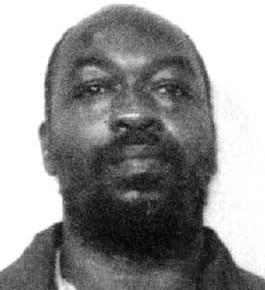
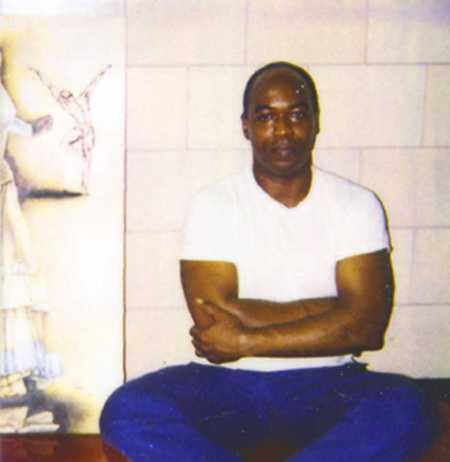
Durlyn EDDMONDS
Classification: Murderer
Characteristics: Rape
Number of victims: 1
Date of murder: October 27,
1977
Date of birth: 1952
Victim profile: Ricky
Miller (9-year-old
boy)
Method of murder:
Suffocating with a pillow
Location: Chicago, Illinois, USA
Status: Executed
by lethal injection in Illinois on November 19,
1997
Durlyn Eddmonds
November 19, 1997 (IL)
The state of Illinois has scheduled Durlyn
Eddmonds to be part of a double execution on November 19, 1997.
Durlyn was sentenced to death in 1980 for the murder of a nine year
old boy that occurred in 1977. The case was pending for three years
because there was serious doubt as to Durlyn's competency to stand
trial.
Durlyn is a diagnosed schizophrenic and was
determined to be under extreme mental and emotional distress at the
time of the crime. Not until 1980, when he was sent to death row,
was Durlyn able to receive medical attention for his mental illness,
despite the fact it had been diagnosed years earlier. In addition to
his lifelong mental illness, Durlyn is the product of a
dysfunctional family. His mother was a violent alcoholic and
committed suicide when Durlyn was only 16 years old. After this
breakdown in his family, Durlyn, himself, turned to drugs and
alcohol. However, all of this failed to be brought out at Durlyn's
trial and sentencing.
Durlyn's execution is also unjust because he was
not provided with competent representation. Durlyn's attorney failed
to request that a fitness hearing be held even though serious doubt
as to Durlyn's mental state kept the case in limbo for three years.
Competence hearings ordered on two different occasions also failed
to take place. As a result, the new judge assigned to Durlyn's case
was never informed that there was ever a question as to fitness.
Durlyn's sentence was later vacated by a post-conviction
judge only to later be overturned by the Illinois Supreme Court. The
United States Court of Appeals admitted that Durlyn's counsel was
ineffective. They even went so far as to say that the one witness
the defense did call most likely did more harm than good.
Nevertheless, the court said that Durlyn's history of mental illness
would not likely have made a difference in the sentencing. The Court
also refused Durlyn's request for a new sentencing hearing. Without
knowing for sure whether or not Durlyn's mental illness would have
played a role in the judge's sentencing decision, it would be a
grave injustice to execute him.
Common sense to die with convict in this case
By Eric Zorn - Chicago Tribune
November 17, 1997
The evidence for the guilt of condemned killer
Durlyn Eddmonds is "completely overwhelming." The 45-year-old
Chicagoan scheduled to be put to death in the early hours Wednesday
morning committed a "horrible, horrible crime," "a horrendous act;
no one would ask you to forgive it or forget it."
And that's according to his attorneys.
Prosecutors add that Eddmonds is "a sociopath...monstrously
bad... a human storm of dark perversions...(in) his dark little
world."
Who can argue? Twenty years ago, Eddmonds looked
out the window of his South Side apartment and saw 9-year-old Ricky
Miller in great distress, having evidently just been raped by two
men. Eddmonds lured the little boy up to his apartment with an offer
of help, then raped him himself. In the process of trying to silence
Ricky's cries of anguish Eddmonds forced the boy's face into a
pillow, suffocating him.
Eddmonds then placed the dead boy head first in a
trash bin and covered his bloody, naked body with cardboard boxes.
The question that prompted the above rhetoric
from dueling advocates at a clemency hearing Thursday in front of
the Illinois Prisoner Review Board is what kind of person did such a
thing? What can we say of a man who methodically took the most
extreme advantage of a child already in profound distress?
Saying he was a monster is an insult to monsters.
He was depraved, twisted, thoroughly, utterly and irredeemably sick.
But prosecutors don't like that kind of talk. "His
crime are sick, but he is not," said Thomas Epach Jr., chief of the
criminal bureau for the Cook County state's attorney's office in
arguing that Eddmonds' death sentence not be commuted to life-without-parole,
as his lawyers are asking. Eddmonds, Epach said, is "an arch-criminal,
and he's made himself that way."
It's a fine distinction -- nearly absurd in light
of Eddmonds' extensive history of mental aberrations and illness
that date back at least to when he attempted at age 12 to sexually
molest his mother while she slept--but one that representatives of
the state need to make in order to give the death penalty to
Eddmonds in good conscience.
He's not sick. Oh, no. We don't do that. We don't
administer the ultimate punishment to people who are so sick -- so
clinically mentally ill -- that they cannot be held to ultimate
moral accountability.
In an informal sense, of course, anyone who kills
a person with malice aforethought -- particularly a child -- is not
right in the head. Such an act virtually defines abnormality and is
evidence on its face of a grave human defect for which "he's made
himself that way" is an inadequate explanation.
But in a legal sense, a murderer's mental
problems mitigate the crime or the punishment only if he is insane
-- unable to distinguish between right and wrong or unable to behave
accordingly -- or suffering from an extreme mental or emotional
disturbance at the time of his crime.
Eddmonds was not insane. But his psychiatric
history -- which includes self-mutilation, reported auditory and
visual hallucinations, more than a dozen medical diagnoses of
schizophrenia or other forms of psychosis as well as instances in
which he has been prescribed anti-psychotic drugs -- suggests very
strongly that his whole life has been one long mental disturbance.
Two psychiatrists who'd treated him said as much
in testimony Thursday, while a pair of veteran former public
defenders swore that Eddmonds was the most mentally disturbed client
either had ever had. Meanwhile, records show that the regimen of
prison life has rendered him physically harmless for the past 17
years.
The state quibbled unpersuasively in response
about inconsistencies in the diagnoses and how they tended to become
less severe as Eddmonds spent more and more time in prison.
In the end, the question really isn't whether
this killer is mentally ill. Overwhelming evidence says he is.
Protestations to the contrary poorly camouflage a hunger for the
kind of blood vengeance one would exact from a mad dog.
The real question -- the one that Gov. Jim Edgar
must answer after he receives the secret and non-binding
recommendation of the review board -- is whether this is what
capital punishment is for.
Perhaps you think so. But make no mistake. The
injection of lethal chemicals into Durlyn Eddmonds will not be an
execution, it will be an extermination.
In Memoriam: Durlyn Eddmonds
Executed by the State of Illinois on
November 19, 1997.
The
following was written by Eileen Bosshart, a friend of Durlyn
Eddmonds:
I met Durlyn Eddmonds through
the Illinois Coalition to Abolish the Death Penalty. He was a
simple, shy man with a gift of saying exactly what was in his heart.
His greatest pain in his eighteen years on Death Row was his
estrangement from his family, except for one sister who wrote
letters to him. According to his friends at Pontiac Prison, Durlyn
was hard to get to know because when the pressures of living there
became too much for him to handle, he simply disappeared into his
cell until the mood swings passed. Diagnosed with mental illness
from an early age, his family never knew how to get him help. Durlyn
came from an all too familiar background of abuse, alcoholism, and
poverty. He felt that he deserved the beatings.
Durlyn once confided in me that
he was grateful to God for bringing him to Death Row because he knew
he would have died out on the streets. He also said that if it was
not for his time on Death Row, he would never have met his six
friends who meant the world to him. He decided that he had to come
to Death Row to learn the meaning of unconditional love. Calling
faithfully once a week for thirteen years, Durlyn became an
extension of my large and loving family. He felt intensely my pain
at the loss of a little granddaughter, a husband, a son, and a
foster son, and experienced such joy when hearing about the
accomplishments of my children.
During his clemency hearing,
the state’s attorney reviled Durlyn as a monster without any shred
of decency that deserved mercy. The truth was that he could never
mention his crime until the last month of his life when he finally
revealed that his crime was so horrible that even God Himself could
not forgive him. He had carried that guilt around for over eighteen
years. Eventually, Durlyn came to believe in a God who was so loving
and merciful that there was nothing that couldn't be forgiven, and
he was able to begin peacefully to prepare for his death. He was
baptized into the Catholic faith by Father Jonas Callanan just three
weeks before his execution.
At the end of my last visit to
him, a week before his death, Durlyn stood up, very formally. I
could tell he had prepared a speech. His last words to me were:"Thank
you Eileen for sharing your family with me."
I am the one who should thank
Durlyn Eddmonds for his loyalty and friendship during those long and
difficult years. I couldn't have found a better friend or brother in
Christ.
Durlyn was sentenced to death under a flawed system:
Durlyn suffered from
schizophrenia, alcoholism, delusions, and desires to mutilate
himself. Six doctors, on 14 occasions, had diagnosed Durlyn with
mental illness, usually schizophrenia. Though a fitness hearing had
been ordered to determine whether Durlyn was mentally fit to stand
trial, it had never been held. Durlyn’s lawyer conducted a one-minute
sentencing hearing in which he told the jury that the law favors a
defendant who has a mental disturbance. But the lawyer never
presented any evidence of Durlyn’s considerable mental illnesses.
Durlyn Eddmonds
By Ken Armstrong - Chicago Tribune
December 16, 2002
Born in 1952, the fourth of
six children, Durlyn Eddmonds was, even as a child, different. His
sisters said he appeared to live in his own world. He was especially
disturbed in matters of sex.
When he was 15, his mother
killed herself with poison. Court records say she left a note
blaming Durlyn and his bizarre behavior.
Eddmonds spent the next 10
years in and out of prison. When out, he drank up to 1 1/2 quarts of
rum daily, rocked back and forth, and stared into space. He also
preyed upon the vulnerable, raping an 11-year-old girl and a woman
eight months pregnant.
In October of 1977, Eddmonds
tricked a 9-year-old boy, Ricky Miller, into entering his Chicago
apartment and raped him. When Ricky whimpered, Eddmonds forced his
face into a pillow to stifle his cries. Eddmonds told police that
when he discovered that the child appeared dead, he tried to breathe
life back into him. When that failed, he put the boy's 55-pound body
into a garbage bin.
The crime occurred four months
after Illinois reinstated the death penalty. In 1980, Eddmonds was
convicted and sentenced to die.
The man assigned to Eddmonds'
appeal was Dick Cunningham, who worked for the State Appellate
Defender. But the first attorney from the office to meet Eddmonds
was Cunningham's boss, Steve Clark.
Sitting at a prison table,
Clark explained how an appeal works. All Eddmonds would say was "OK"
and "Uh huh," and he wouldn't look up.
"I remember thinking, he's
probably brain-damaged. He's afraid of me, he seems very slow. And I
just sat there thinking he was pitiful," Clark says.
"Dick saw him many, many
times, and I think Dick got to know him on some level and I didn't.
. . . All I could say is, this is a pitiful, sad person."
This case defined Cunningham.
It was his longest case, and probably his most frustrating. He
started it drunk and ended it sober. His son Jesse went from a 1st
grader, brilliant and kind, to a mentally ill man with a faraway
look that others saw in Eddmonds' eyes.
Eddmonds was poor, black and
sick, and his court-appointed trial lawyer did a lousy job. Eddmonds
epitomized Cunningham's struggle against the criminal justice system.
Cunningham's family passed
down more than a history of alcoholism. They were New Deal Democrats
who favored equal rights and forbade racial epithets -- setting them
apart in their South Side neighborhood.
"We were what you'd call a
liberal family and political junkies," says Dick's brother Jim. When
Cunningham was in law school at DePaul, a professor made a crass
comment about Martin Luther King Jr. Many students laughed. Dick got
up and left the class, but not before stopping at the door and
giving the professor a hard stare, a fisheye. When Dick took the bar,
one of the essay questions asked something about business law. Dick
told his family that he wrote, "I am not interested." He passed the
bar anyway.
But Cunningham's willingness
to reach out to someone like Eddmonds can also be explained another
way.
Cunningham's life provided a
bridge.
Eddmonds was an alcoholic. So
was Cunningham.
Eddmonds' mother was an
alcoholic. So was Cunningham's father.
Eddmonds suffered from
schizophrenia, at least according to some doctors. So would
Cunningham's son.
Questions surrounding Eddmonds'
mental state dominated his appeal.
In the years before Eddmonds'
trial, six doctors, on 14 occasions, had diagnosed him with mental
illness, usually schizophrenia. Eddmonds heard voices at night. He
saw faces in walls and things crawling on the floor. He tried to
burn himself and cut his finger off.
But the judge who convicted and condemned
Eddmonds knew virtually none of that.
Illinois law says that if a defendant acted under
"extreme mental disturbance," that favors him at sentencing.
But Eddmonds' lawyer barely investigated his
client's psychiatric history, and he made no mention of possible
mental disturbance while arguing for Eddmonds' life -- an argument
he took about one minute to make.
And to compound matters, no hearing was ever held
to determine whether Eddmonds was even fit to stand trial.
A defendant must be able to understand the
charges against him and assist in his defense. If doubt exists with
either, a pre-trial fitness hearing is held.
Such a hearing was ordered early on for Eddmonds,
but then a new judge and defense attorney entered the case.
In a stunning oversight, Eddmonds' new attorney
said he mistakenly thought the fitness hearing had already been held.
(This would not be his last show of incompetence. Years later the
state suspended his law license for botching an immigration case.)
To Cunningham's frustration, the confusion
persisted for years after. Here was a man's life at stake, yet
nobody seemed able to grasp that the system had screwed up. Yes, the
hearing had been ordered. But no, it never was held.
In 1988, eight years after Eddmonds' trial,
Cunningham was before Earl Strayhorn, a Cook County judge assigned
to the second of Eddmonds' capital appeals. Strayhorn was about to
deny the appeal, saying the fitness issue had already been
determined by the trial judge, when Cunningham corrected Strayhorn,
saying the trial judge did no such thing.
There was a finding that he was fit to stand
trial, wasn't there?" Strayhorn asked.
"No, your honor," Cunningham said. "There never
was a hearing on the matter of fitness."
Strayhorn asked the question again.
Cunningham answered it again, saying, "There was
never a fitness hearing, judge."
"That may change my ruling," Strayhorn said.
Twelve days later, it did.
Saying there was no doubt of Eddmonds' guilt,
Strayhorn vacated the death sentence but upheld the conviction.
Strayhorn ordered a fitness hearing to determine Eddmonds' mental
state when he stood trial. If Eddmonds had been fit, Strayhorn would
reimpose the death sentence.
With Strayhorn's words, Cunningham had won and,
at the same time, lost. Strayhorn's ruling didn't make sense. If
evidence showed that Eddmonds had been unfit to stand trial, then he
should get a new trial, not just a new sentencing hearing.
What's more, Strayhorn left something out. A
judge, on appeal, can order a fitness hearing only if he finds there
was substantial doubt about the defendant's fitness before trial.
The law has a phrase for it -- bona fide doubt.
They're like magic words. They must be uttered.
Cunningham needed Strayhorn to say a bona fide
doubt existed. Otherwise, his ruling would be in even greater
jeopardy of getting overturned. But Strayhorn wouldn't do it. All he
would say is that Eddmonds' trial attorney should have done more to
determine whether Eddmonds was competent to stand trial.
Cunningham tried to explain the ruling's hole. He
even put the magic words, bona fide doubt, in a written order for
the judge's signature.
Strayhorn crossed the words out.
Prosecutors appealed Strayhorn's ruling to the
Illinois Supreme Court, and in his gut, Cunningham knew they would
probably win.
93 F.3d 1307
DurlynEddmonds, Petitioner-appellant,
v.
Howard Peters, III, Respondent-appellee
United States Court of Appeals,
Seventh Circuit.
Argued March 12, 1996.
Decided Aug. 23, 1996
Before FLAUM, MANION, and
ROVNER, Circuit Judges.
MANION, Circuit Judge.
DurlynEddmonds was found
guilty of the deviate sexual assault and
murder of a nine-year-old boy and sentenced
to death. After his conviction and sentence
were upheld on appeal and in state post-conviction
proceedings, Eddmonds
petitioned the district court for a writ of
habeas corpus alleging he was denied the
effective assistance of counsel and due
process at trial and sentencing and that the
Illinois death penalty statute is
unconstitutional. The district court denied
the petition. Eddmonds
appeals only the ruling on his ineffective
assistance of counsel claims. We affirm.
The
Illinois Supreme Court gave a detailed
account of the evidence adduced at trial in
People v. Eddmonds,
101 Ill.2d 44, 77 Ill.Dec. 724, 461 N.E.2d
347 (1984) ("Eddmonds
I"). The following are excerpts from that
opinion, supplemented at points with
additional details from the record:1
In a
statement taken by an assistant State's
attorney and transcribed by a court reporter,
defendant, age, 25, said that in the early
morning of October 27, 1977, he called down
to the alley below his apartment and asked
Richard Miller, age 9, to come upstairs. He
had seen the boy with two men, and when
Richard came upstairs defendant noted that
the boy was bleeding from his rectum.
Defendant told Richard that he wanted to
have anal intercourse with him as the other
men had just done.
Id., 77
Ill.Dec. at 727, 461 N.E.2d at 350.
Eddmonds told
Richard to undress. Richard had blood and
feces on him from the prior rape.
Eddmonds cleaned
him with a wet cloth and toilet paper.
Eddmonds put a
sheet of plastic on the bed, laid Richard on
it, and began to sodomize him.
During the act of
intercourse the boy started to cry and asked
defendant to stop because he was hurting him.
In an effort to silence Richard, defendant
pushed the boy's body face down into a
pillow. Defendant later told the police that
he did not want the boy to awaken his
grandmother in the next room. During the act
of intercourse, Richard stopped breathing.
When defendant completed
the act, he noticed "that the boy wasn't
breathing properly." Defendant tried to
revive him and, failing that, looked for a
place to conceal the body. He put the body
in a garbage dumpster in the alley below his
apartment and threw the boy's clothes and
the materials he had used in cleaning him up
into a yellow garbage bag. Defendant
scattered the bag and its contents in a
nearby alley.
A latent
fingerprint examiner for the Chicago police
department testified that there were in
excess of 12 points of comparison between
the impressions found on a newspaper lying
near the yellow garbage bag and defendant's
right palm print. It was his opinion that
the print found on the newspaper was the
same as defendant's right palm print. There
was also testimony, from a microanalyst from
the Chicago police department, that the
garbage bag found in the alley and the bags
retrieved from the defendant's apartment
produced similar results when subjected to
scientific analysis.
The
analyst also testified that a sock found in
the bag had the same fiber content as one
found on the landing of the porch directly
in front of defendant's apartment and above
the garbage dumpster. Dr. Robert Stein,
chief medical examiner of Cook County,
testified that he performed an autopsy and
that the "cause of [Richard Miller's] death
was suffocation in association with
contusions and lacerations of the anus."
Eddmonds I, 77
Ill.Dec. at 727, 461 N.E.2d at 350.
Notwithstanding his recorded confession, at
trial Eddmonds
testified he did not rape Richard Miller:
Defendant
testified that a friend of his, Jerome
Williams, had come to his apartment in a
nervous state. After using the bathroom to
clean up, Williams asked if he could use
some plastic bags which were lying on
defendant's bed. He asked defendant to
obtain some heroin and then left the
apartment. Defendant also left the apartment,
purchased a half ounce of heroin, and gave
it to Williams. Williams returned to
defendant's apartment shortly after midnight.
He was carrying a shopping bag which he took
into defendant's bedroom and left there.
Both men left the apartment. Defendant
returned home at approximately 2:15 a.m. and
went to sleep.
When he
awoke the next morning he discovered the
shopping bag contained a child's clothing,
shoes and a yellow plastic bag. His
grandmother then told him about the body of
the boy which had been found in the alley.
Knowing that there was a child's clothing in
the shopping bag and that Williams had been
arrested for molesting children, defendant
quickly left with the shopping bag. He met
Williams, and Williams said he would get rid
of the bag. They walked to an alley, and
Williams dumped the bag.
Defendant
also related a conversation with Williams in
which Williams told of having sex with the
dead boy and then drowning him in a bathtub
so that he could not carry out his threat to
tell his mother. He also testified to an
episode in which Williams had prepared two
syringes of heroin, one for himself and one
for defendant. He noted that the one
intended for him was darker and, while
Williams was otherwise engaged, he switched
syringes. Thereafter, Williams "shot the
heroin" and in a short period of time began
to shake. Williams died the following day,
apparently of an overdose of heroin.
Defendant
testified that the statements he made
concerning the sexual assault and the death
of the boy were false and were made because
the police "would not let him leave and told
him what to say." He denied each of the
charges against him.
Id. at
727-28, 461 N.E.2d at 350-51.
Eddmonds waived his
right to a jury trial. After a bench trial
before the Honorable Judge John Crowley of
the Circuit Court of Cook County, Illinois,
Eddmonds was found
guilty of deviate sexual assault and murder.
Pursuant to section 9-1(d) of the Criminal
Code of 1961 (Ill.Rev.Stat.1979, ch. 38,
par. 9-1(d); now 720 ILCS 5/9-1(d)), the
State requested a death penalty hearing and
Eddmonds waived his
right to be sentenced by a jury. The court
made initial findings that
Eddmonds was over 18, that the murder
occurred during the commission of the felony
of deviate sexual assault, and that
Eddmonds was
eligible for the death penalty under §
9-1(b)(6). The court then heard evidence of
mitigation and aggravation.
Eddmonds I, 77
Ill.Dec. at 728, 461 N.E.2d at 351.
In
aggravation, the State presented testimony
that Eddmonds had
committed four other rapes, three resulting
in convictions. In mitigation the defense
presented Dr. Robert Reifman, director of
the Psychiatric Institute of the Circuit
Court of Cook County. Dr. Reifman testified
that, based on his examination of
Eddmonds in
December 1977 to determine fitness for trial,
he had concluded that
Eddmonds suffered from schizophrenia,
undifferentiated type, which in his opinion
caused him to be out of contact with reality
and thus unfit for trial. His diagnosis was
based on Eddmonds'
report of hearing voices and his emotional
withdrawal, lethargy, depression, and
inappropriate smiling.
During a
lengthy cross-examination, Dr. Reifman
stated he was unable to render a definitive
opinion whether, at the time the offense was
committed, Eddmonds
was under the influence of an extreme mental
or emotional disturbance.
Eddmonds I, 77 Ill.Dec. at 728, 461
N.E.2d at 351. The court also reviewed the
presentence investigation but found no
mitigating factors sufficient to outweigh
those in aggravation. Id. The court then
sentenced Eddmonds
to death for the murder and to 40 to 80
years' incarceration for the deviate sexual
assault. Id.
On direct
appeal the Illinois Supreme Court affirmed
the convictions and sentences. Id. at 737,
461 N.E.2d at 360. The United States Supreme
Court denied Eddmonds'
petition for writ of certiorari.
Eddmonds v.
Illinois, 469 U.S. 894, 105 S.Ct. 271, 83
L.Ed.2d 207 (1984). On May 28, 1985,
Eddmonds filed a
petition for post-conviction relief alleging
he was denied his right to competent counsel
because his attorney (1) failed to
investigate his fitness to stand trial and
failed to request a fitness hearing, and (2)
failed to investigate and present mitigating
evidence at sentencing. People v.
Eddmonds, 143 Ill.2d
501, 161 Ill.Dec. 306, 578 N.E.2d 952, 955
(1991) ("Eddmonds
II").
The State
moved to dismiss the petition on the ground
that the fitness issue had been resolved on
direct appeal and that
Eddmonds' attorney was not
ineffective at sentencing. Id. Following an
evidentiary hearing, the judge at first
denied relief but later vacated the sentence
and ordered a hearing to determine whether
Eddmonds was fit at
the capital sentencing hearing. Id. On
appeal, the Illinois Supreme Court
reinstated the death sentence, holding that
Eddmonds was not
deprived of his right to competent counsel
or to a fair post-conviction proceeding. Id.,
161 Ill.Dec. at 323, 578 N.E.2d at 969.
On August
24, 1992, Eddmonds
petitioned the district court for a writ of
habeas corpus, again alleging that (1) he
was denied the effective assistance of
counsel when his trial attorney failed to
request a fitness hearing prior to trial;
(2) he was denied due process because his
fitness was not adjudicated; (3) counsel was
ineffective at sentencing in his
presentation of evidence and argument in
mitigation; (4) he was denied due process at
sentencing because of the admission of
testimony calculated to appeal to racial
prejudice; (5) he was denied a full and fair
post-conviction hearing by the court's
limitation of witness testimony; and (6) the
Illinois death penalty statute is
unconstitutional. After extensive
evidentiary hearings, the district court
denied the writ.
Eddmonds raises two
issues on appeal. First, he claims his trial
counsel's failure to request a competency
hearing deprived him of the effective
assistance of counsel. Second, he claims
that counsel's failure during sentencing to
adequately investigate and present available
mitigating evidence of his mental problems
combined with counsel's brief closing
argument deprived him of the effective
assistance of counsel at his capital
sentencing hearing.
The Sixth
Amendment right to counsel is a right with a
function: It "exists 'in order to protect
the fundamental right to a fair trial.' "
Lockhart v. Fretwell, 506 U.S. 364, 368, 113
S.Ct. 838, 842, 122 L.Ed.2d 180 (1993) (quoting
Strickland v. Washington, 466 U.S. 668, 684,
104 S.Ct. 2052, 2062, 80 L.Ed.2d 674
(1984)). "Thus 'the right to the effective
assistance of counsel is recognized not for
its own sake, but because of the effect it
has on the ability of the accused to receive
a fair trial.' " Fretwell, 506 U.S. at 369,
113 S.Ct. at 842 (quoting U.S. v. Cronic,
466 U.S. 648, 658, 104 S.Ct. 2039, 2046, 80
L.Ed.2d 657 (1984)).
The
Supreme Court has "identified two components
to any ineffective assistance claim: (1)
deficient performance and (2) prejudice."
Fretwell, 506 U.S. at 369, 113 S.Ct. at 842
(emphasis added). Both components are
necessary; the lack of either is fatal.
Strickland, 466 U.S. at 697, 104 S.Ct. at
2069 (court need review only one prong of
test in disposing of ineffective assistance
claim). Regarding performance, "[j]udicial
scrutiny of counsel's performance must be
highly deferential." Strickland, 466 U.S. at
689, 104 S.Ct. at 2065. Only those "who can
prove under Strickland that they have been
denied a fair trial by the gross
incompetence of their attorneys will be
granted the writ." Kimmelman v. Morrison,
477 U.S. 365, 382, 106 S.Ct. 2574, 2586-87,
91 L.Ed.2d 305 (1986) (emphasis added). "This
requires showing that counsel made errors so
serious that counsel was not functioning as
the 'counsel' guaranteed the defendant by
the Sixth Amendment." Strickland, 466 U.S.
at 687, 104 S.Ct. at 2064. As for prejudice,
defendant must show that counsel's
unprofessional errors "undermin[ed]
confidence in the outcome." Id. at 694, 104
S.Ct. at 2068. Prejudice in the Strickland
sense refers to "unprofessional errors" so
egregious "that the trial was rendered
unfair and the verdict rendered suspect."
Morrison, 477 U.S. at 374, 106 S.Ct. at
2582. In evaluating the impact of attorney
errors on the verdict, we must keep in mind
that the "ultimate objective [of our legal
system is] that the guilty be convicted and
the innocent go free." Evitts v. Lucey, 469
U.S. 387, 394, 105 S.Ct. 830, 835, 83 L.Ed.2d
821 (1985) (quoting Herring v. New York, 422
U.S. 853, 862, 95 S.Ct. 2550, 2555, 45 L.Ed.2d
593 (1975)).
Eddmonds argues
that his trial counsel was incompetent for
failing to request a fitness hearing, and
that if a hearing had been held, there is a
reasonable probability he would have been
found incompetent. There is no question that
Eddmonds is a
disturbed man, and has been so for some
time; anyone who has committed four other
rapes and who rapes and murders a young boy
is twisted. But that doesn't necessarily
mean he was unfit for trial. If it did then
no one guilty of heinous crimes could be
tried. Fitness for trial is a much narrower
concept than moral or social wellness.
A
defendant has a due process right not to be
tried if he is unable to assist in his own
defense. Pate v. Robinson, 383 U.S. 375,
378, 86 S.Ct. 836, 838, 15 L.Ed.2d 815
(1966). "[T]he prohibition [against trying
the mentally incompetent] is fundamental to
an adversary system of justice." Drope v.
Missouri, 420 U.S. 162, 172, 95 S.Ct. 896,
904, 43 L.Ed.2d 103 (1975). Drope notes that
"[s]ome have viewed th[is] common law
prohibition 'as a by-product of the ban
against trials in absentia; the mentally
incompetent defendant, though physically
present in the courtroom, is in reality
afforded no opportunity to defend himself.'
" Id. at 171, 95 S.Ct. at 903 (quoting Foote,
A Comment on Pre-Trial Commitment of
Criminal Defendants, 108 U.Pa.L.Rev. 832,
834 (1960)).
There is
an important distinction here. The
Constitution forbids trial of one who, for
whatever reason, is unfit to assist in his
own defense because our adversarial system
of justice depends on vigorous defenses. The
Constitution does not necessarily forbid
trial of the mentally ill. "Not every
manifestation of mental illness demonstrates
incompetence to stand trial; rather the
evidence must indicate a present inability
to assist counsel or understand the charges."
United States ex rel. Foster v. DeRobertis,
741 F.2d 1007, 1012 (7th Cir.1984); Galowski
v. Berge, 78 F.3d 1176, 1182 (7th Cir.1996);
Medina v. Singletary, 59 F.3d 1095, 1107
(11th Cir.1995) ("[N]either low intelligence,
mental deficiency, nor bizarre, volatile,
and irrational behavior can be equated with
mental incompetence to stand trial.").
The issue
is not mental illness, but whether the
defendant "has sufficient present ability to
consult with his lawyer with a reasonable
degree of rational understanding--and
whether he has a rational as well as factual
understanding of the proceedings against him."
Dusky v. United States, 362 U.S. 402, 402,
80 S.Ct. 788, 789, 4 L.Ed.2d 824 (1960);
Drope, 420 U.S. at 172, 95 S.Ct. at 904;
DeRobertis, 741 F.2d at 1012. If so, then
regardless of mental illness a defendant
will be deemed competent to stand trial.
Because capacity to assist in one's defense
is the main concern, if fitness for trial is
being challenged post-trial "[e]vidence of a
defendant's behavior and demeanor at trial
are relevant to the ultimate decision of
competency to stand trial." United States v.
Prince, 938 F.2d 1092, 1094 (10th Cir.1991);
cf. Pate v. Robinson, 383 U.S. 375, 386, 86
S.Ct. 836, 842, 15 L.Ed.2d 815 (1966) (demeanor
at trial relevant to sanity determination,
though "it cannot be relied upon to dispense
with a hearing on that very issue"). After
the fact, the fitness determination should
be based on "evidence of [defendant's]
irrational behavior, his demeanor at trial,
and any prior medical opinion." Drope, 420
U.S. at 180, 95 S.Ct. at 908; DeRobertis,
741 F.2d at 1011.
With these
principles in mind, we turn to the evidence
of fitness which existed prior to trial,
when the fitness hearing allegedly should
have been held. Eddmonds
was charged with murder and deviate sexual
assault on November 3, 1977. His assigned
counsel, assistant public defender Todd
Musburger, thought
Eddmonds incapable of assisting in
his defense and requested a psychiatric
examination.
On
December 5, 1977, Eddmonds
was examined by psychiatrist Robert Reifman
and psychologist Michael Rabin of the
Psychiatric Institute of the Circuit Court
of Cook County. Dr. Reifman concluded that
Eddmonds was unable
to assist in his own defense. This
conclusion was in part based on
Eddmonds' statement
that he would prefer the electric chair if
found guilty. Dr. Rabin also questioned
Eddmonds' ability
to cooperate with his attorney due to his
mental illness, but found that
Eddmonds was aware
of court proceedings. Dr. Reifman referred
Eddmonds to the
Illinois State Psychiatric Institute (ISPI)
for a two-week evaluation and the court
ordered a fitness hearing to be held on
January 12, 1978. At the outset, Dr. Jewett
Goldsmith found Eddmonds
to be chronically and severely depressed,
feeling there was nothing he could do to
defend himself against the death penalty.
In an
initial evaluation, Dr. Goldsmith thought
Eddmonds unfit for
trial because of his depression and his lack
of interest in defending himself against a
possible capital charge. Dr. Goldsmith
reported that Eddmonds
considered himself "capable of sitting in a
courtroom and listening to what goes on" and
that he did "not consider himself in need of
mental treatment." After the two-week
evaluation, during which time
Eddmonds ate and
slept well, socialized with the other
patients, and exhibited no bizarre or
unusual behavior, Dr. Goldsmith had changed
his mind.
On January
10, 1978, in his final report detailing the
results of his inquiry and submitted by
defense counsel on the date set for the
fitness hearing, Dr. Goldsmith diagnosed
Eddmonds with
chronic depression, determined there was no
evidence of psychotic behavior, and
concluded Eddmonds
was fit to stand trial and "not in need of
mental treatment at this time." Noting the
conflicting opinions among the doctors,
defense counsel petitioned the court for
another mental examination by a private
psychiatrist.
On January
17, 1978, Eddmonds
was placed on Thorazine, an anti-psychotic,
psychotropic medication, by a psychiatrist
at Cook County Jail. He stayed on Thorazine
approximately six months. On January 25,
1978, Dr. Albert Stipes, a private
psychiatrist, reported that although
Eddmonds understood
the murder charge, he did not understand the
other charges, did not fully understand the
proceedings against him, and felt hopeless
about his defense. He concluded stating, "I
do not believe [Eddmonds]
could cooperate with his attorney in
defending himself because of his
hopelessness." Dr. Stipes was unable to make
a determination as to
Eddmonds' state of mind at the time
of the crime.
In
preparation for his testimony at the
scheduled fitness hearing, Dr. Reifman, the
author of the first psychiatric report
stating that Eddmonds
was unfit, obtained court permission to
reexamine Eddmonds.
On June 6, 1978, Dr. Reifman reexamined
Eddmonds and
concluded that he was "fit to stand trial
with medication. He understands the nature
of the charge, the purpose of the
proceedings and is able to assist counsel in
his own defense." That day Dr. Rabin also
reexamined him and found that
Eddmonds understood
court procedures and had a "good orientation."
Still, Dr. Rabin thought
Eddmonds' mental illness made his
ability to cooperate with counsel "questionable."
On July
14, 1978, Eddmonds
was examined by Dr. Gerson Kaplan, a
psychiatrist at the Psychiatric Institute
for the Circuit Court of Cook County, and
again by Dr. Rabin. Though noting
Eddmonds'
depression and persisting in his diagnosis
of schizophrenia, Dr. Rabin concluded he was
able to cooperate with counsel and was fit
to stand trial. Dr. Kaplan had been asked to
evaluate Eddmonds'
sanity at the time of the crime. He was
unable to render an opinion on this because
Eddmonds denied
committing the crime and denied remembering
his activities around the time of the crime.
However, Dr. Kaplan found that
Eddmonds was fit
for trial because he understood the charges
against him and was able to cooperate in his
own defense. On approximately July 17, 1978,
Eddmonds stopped
taking Thorazine.
On April
10, 1979, Eddmonds
was again examined by Drs. Kaplan and Rabin.
Dr. Kaplan again reported that
Eddmonds was fit to
stand trial and made no mention of any need
for medication. Dr. Kaplan stated that
Eddmonds "came
across as being quite manipulative and
trying to impress this examiner with how
depressed and sick he is." Dr. Kaplan
questioned whether
Eddmonds was really hearing voices
because while Eddmonds
had allegedly heard voices for years he
could not give even one example of what the
voices had said. He changed his previous
diagnosis of schizophrenia to antisocial
personality disorder with depressive
features.
Dr. Kaplan
also doubted that Eddmonds
really felt so hopeless about his trial
since he was "very quick" to point out that
his confession could not be valid because he
was high on drugs when he gave it and
because he denied any memory of the crime.
For his part, Dr. Rabin maintained his
earlier diagnosis of schizophrenia, but
concluded that Eddmonds
was "minimally fit for trial."
On May 2,
1979, Eddmonds
filed a pro se petition for substitution of
counsel. As a result Musburger withdrew as
Eddmonds' counsel
and, in accordance with
Eddmonds' wishes for an attorney not
from the public defender's office, private
defense counsel Thomas McGinnis took on the
case. On September 26, 1979, Dr. Rabin again
interviewed Eddmonds.
He found that Eddmonds
"is manipulative, seeking to gather sympathy
for himself by telling of his woes in jail....
He criticizes the confession, seeking minor
flaws and inconsistencies to prove it false....
He claims to hear voices, but this is seen
as an attempt to malinger." Based on his
observations, Dr. Rabin abandoned his
diagnosis of schizophrenia--as Dr. Kaplan
had earlier--and concluded that
Eddmonds was
suffering from antisocial personality with
depression.
He also
concluded that Eddmonds
was fit for trial: "He is aware of the
nature of the charges and proceedings
pending against him and is capable of
assisting counsel in his defense." On
September 28, 1979, Dr. Kaplan again
examined Eddmonds
pursuant to a court order and concluded he
was legally sane at the time of the crime.
On
November 26, 1979, Dr. Stipes reexamined
Eddmonds and
reported he was in much better contact with
reality than at the time of his last
examination. Dr. Stipes concluded
Eddmonds was sane
at the time of the murder. He did not render
an opinion on fitness to stand trial at this
time. However, Dr. Stipes later testified
that, at the time of this examination,
Eddmonds was able
to cooperate with counsel and to understand
the nature of the charges against him.
In sum,
prior to trial Eddmonds
was found fit for trial five times: (1) on
January 10, 1978, Dr. Goldsmith found
Eddmonds fit after
a two-week evaluation; (2) on June 6, 1978,
Dr. Reifman found Eddmonds
fit with medication; (3) on July 14, 1978,
Dr. Rabin found him fit, though depressed
and schizophrenic; (4) on July 14, 1978, Dr.
Kaplan found him cognizant of the charges
and able to cooperate with counsel; (5) on
April 10, 1979, Dr. Kaplan again found
Eddmonds fit; (6)
on April 10, 1979, Dr. Rabin found him
minimally fit; and (7) on September 26,
1979, Dr. Rabin found him fit.
Therefore,
the last finding of fitness before trial was
on September 26, 1979. The only findings of
unfitness were on December 5, 1977 (Dr.
Reifman) and January 25, 1978 (Dr. Stipes),
more than two years before trial. Dr.
Reifman changed his opinion in June 1978
when he found petitioner to be "fit with
medication." Dr. Stipes later testified that
at the time of his final examination, on
November 26, 1979,
Eddmonds was fit for trial.
Although a
fitness hearing was ordered on December 19,
1977 by Judge Joseph Gordon and again on
February 8, 1978 by Judge James Strunck, the
hearing was repeatedly continued and
ultimately never held. The problem seems to
have been due to new defense counsel and a
new trial judge. When
Eddmonds' new counsel, McGinnis, took
over the case in May 1979, he moved for a
psychiatric examination to determine
Eddmonds' sanity at
the time of the offense, but he never
requested a fitness hearing because he
assumed one had already been held. In March
1980, the case was transferred from Judge
Strunck, who was aware of the fitness
concerns, to Judge Crowley who apparently
was not. The defendant was tried before
Judge Crowley in June 1980 without the
benefit of a fitness hearing.
Assuming
for the sake of argument that counsel's
failure to request a fitness hearing was
constitutional incompetence per Strickland,
Eddmonds suffered
no prejudice as a result.
Eddmonds argues there was a bona fide
doubt of his fitness and that therefore he
was severely prejudiced when his attorney
failed to request a fitness hearing. This
argument assumes that Strickland prejudice
can arise solely because a deserved fitness
hearing was not held. That is incorrect. A
defendant has a right to a fitness hearing
under some circumstances. We have held that
where the trial judge has a "substantial
reason to doubt the defendant's fitness,"
due process obligates the trial judge sua
sponte to order a competency hearing.
Phillips v. Lane, 787 F.2d 208, 216 (7th
Cir.), cert. denied, 479 U.S. 873, 107 S.Ct.
249, 93 L.Ed.2d 173 (1986); DeRobertis, 741
F.2d at 1011. Illinois law entitles a
defendant to a fitness hearing where there
is a bona fide doubt of fitness.
Ill.Rev.Stat.1979, ch. 38, para. 104-11(a) (now
725 ILCS 5/104-11(a)). But a fitness hearing
is not an end in itself. Its function is to
ensure that the defendant is competent to
assist in his own defense at trial. Thus,
the improper denial of a fitness hearing can
be harmless under Strickland. Galowski, 78
F.3d at 1181 ("[I]mproper procedures
utilized at a competency hearing may be
deemed harmless if 'there is no reasonable
possibility that proper procedures would
have produced a finding of incompetency.' ")
(quoting United States ex rel. Lewis v.
Lane, 822 F.2d 703, 706 (7th Cir.1987)).
The
question is not whether there should have
been a fitness hearing, but whether
Eddmonds was fit to
stand trial--whether he was sufficiently
able "to consult with his lawyer with a
reasonable degree of rational understanding--and
whether he ha[d] a rational as well as
factual understanding of the proceedings
against him." Dusky, 362 U.S. at 402, 80
S.Ct. at 789; Drope, 420 U.S. at 172, 95
S.Ct. at 904. Only if there is a reasonable
probability that Eddmonds
was not fit, calling into question the
integrity of the adversarial process, will "confidence
in the outcome" of the trial be deemed
undermined for purposes of an ineffective
assistance claim under Strickland. 466 U.S.
at 694, 104 S.Ct. at 2067.
We agree
with the district court that
Eddmonds was fit
for trial, and "with room to spare."
Galowski, 78 F.3d at 1181. Every evaluation
in the two and a half years prior to the
trial in June 1980 found
Eddmonds fit. Even the initial
doubters came to view him as fit. Dr.
Reifman found Eddmonds
unfit in December 1977 but changed his
opinion in June 1978 to "fit with medication."
Dr. Rabin questioned
Eddmonds' fitness in December 1977
and June 1978 but found him fit in July 1978
and April and September 1979. And Dr. Stipes,
who found Eddmonds
unfit in January 1978, has indicated
Eddmonds was fit in
September 1979. It is not evident that
failure to request a fitness hearing in the
face of such evidence is "gross incompetence"
under Strickland. See Kimmelman, 477 U.S. at
382, 106 S.Ct. at 2587. But if it is, as we
assume arguendo, it was hardly prejudicial.
Given the evidence that would have been
before the court at a fitness hearing, we
have no doubt Eddmonds
would have been found competent. The
evidence indicates
Eddmonds was fit for trial.2
Since we
are considering Eddmonds'
capacity to assist in his defense, Dusky,
362 U.S. at 402, 80 S.Ct. at 788, whether he
in fact assisted in his defense at trial,
while not dispositive, is highly relevant.
Drope, 420 U.S. at 180, 95 S.Ct. at 908;
Pate, 383 U.S. at 386, 86 S.Ct. at 842;
Prince, 938 F.2d at 1094; DeRobertis, 741
F.2d at 1011. Here
Eddmonds' arguments fail.
The record
indicates Eddmonds
was sufficiently able to participate in his
own defense to ensure the integrity of the
adversarial process. When the trial judge
asked if he understood what a jury trial is,
for instance, Eddmonds
responded that it was where "twelve people"
"decide." The judge repeatedly advised
Eddmonds in detail
about the advantages of a jury trial (twelve
average citizens, only one needed to prevent
conviction, etc.) versus a bench trial (one
man would decide), inquiring frequently
about his understanding. Each time
Eddmonds said he
understood, and despite the judge's
persuasive description of the benefits of a
jury, each time he held firm to his decision
to waive a jury trial.
At a post-conviction
evidentiary hearing,
Eddmonds' attorney testified that
Eddmonds understood
the benefit of a jury trial as opposed to a
bench trial, and that he and
Eddmonds together
made the decision to proceed with a bench
trial because they did not think Judge
Crowley would order the death penalty if
convicted. We think that was a valid, if
ultimately unsuccessful, tactical decision.
Given the horrible details of a crime to
which Eddmonds had
already confessed, and given
Eddmonds'
irrefutable connections to the evidence,
there was a substantial risk that juror
outrage at the crime would predispose the
jury to convict and impose the death
penalty. Eddmonds'
decision to trust his fate to the more
experienced and dispassionate judge was not
unreasonable.
Before
trial, Eddmonds
took the initiative to prepare and file a
pro se motion to substitute counsel, which
the trial court granted--something unlikely
to happen if at the time
Eddmonds were totally despondent or
irrational, as he now suggests. At the
suppression hearing,
Eddmonds' testimony was coherent and
very detailed. To take one minor instance,
in the process of establishing the factual
context of the arrest,
Eddmonds' attorney asked him what
happened on the way to his grandmother's
house. The answer, given three years after
the events took place, is revealing for its
detail:
A: I
stopped off at a couple of places, the
liquor store right up under the El at 43rd,
I purchased a pint of Dimitri vodka and from
there I proceeded on to my grandmother's
house.
Q: Where
is that located?
A: 746
East 43rd Street, second floor.
[R.
179-180]
Eddmonds then
described where he had been earlier that
morning:
A: I had
just come in fro[m] a friend's house, Irving
Johnson, he lived at 5937 South LaSalle. We
had been drinking that night because I had
told him I was leaving for Milwaukee
Saturday morning right after I took care of
a little other business at home.
Q: You had
been drinking there also, is that correct?
A: I had.
Q: How
much?
A. I had
brought a fifth of Cutty, a pint of rum, a
six-pak [sic] of Tavern Pale and two six-paks
[sic].
[R. 180]
These are
hardly rantings or incoherent chatter. They
reveal a defendant fully immersed in his
defense, either remembering precisely
intricate details (the brand names of
liquors, exact addresses) from years earlier
or artfully making them up. He went on to
claim with the same precision that at his
interrogation he was high on drugs and
alcohol (the factual foundation for which he
had carefully laid) and that his confession
was the product of police coercion.
Eddmonds described
what allegedly happened during one portion
of the interrogation:
Q: What
happened next?
A: It must
have been a little while before anybody else
started coming in, I don't really estimate
what time it was that Officer Liberty and
his partner, Edison, started coming in to
ask me questions, sometimes I just sat and
just looked at them. I asked them why I was
handcuffed and they just said, they just
told me all I had to do was to answer
questions, and they went on for I don't know
how long before Officer Jordan started
telling me that it was only two ways that I
could do it, I could either say what I had
to say to them voluntarily or they would see
to it that I said it forcefully.
Q: What
did you think he meant by that?
* * * * * *
A: That if
I wanted to I could confess on my own, if I
didn't they would make sure I did it
regardless.
* * * * * *
Q: What
happened next?
A: I
started telling them a story that I felt
might suit what they wanted, with the help
of Officer Jordan, Johnson and Edison. They
began to ask me different questions and I
gave them answers. They asked me once about
a plastic bag, a yellow plastic bag that
they have saw in my grandmother's apartment
as you enter the door, and they asked about
the plastic bag which they found in the
alley....
[R.
188-89]
These
statements, on matters trivial and critical,
disclose a reasonably intelligent man
actively defending his interests. Despite
Eddmonds' claims
before this court that his story was
ultimately unbelievable, something that can
be said of the stories of many defendants,
the testimony was that of a fit defendant
fully engaged in the adversarial process.
The same
is true of his testimony at trial.
Eddmonds told an
intricate tale of how his friend, Jerome
Williams, confessed to raping and killing
Richard and had left a bag filled with the
boy's clothes at Eddmonds'
apartment. Eddmonds
claimed he took the clothes out of the bag
to look at them, thus explaining his palm
print on a newspaper found with the clothes.
He also testified that soon thereafter
Williams attempted to kill him with an
overdose of heroin, but that he suspected
the plot and secretly switched the needles,
causing Williams' death. Blaming the crime
on a dead, drug-addicted friend (who
apparently had been in trouble before for
molesting children) was not a bad strategy,
and Eddmonds told
his story well. He even held his ground
under intense cross-examination. The problem
was not that Eddmonds
was unfit to defend himself. Given the
overwhelming evidence against him, he did
remarkably well. As the prosecutor stated at
closing arguments,
Eddmonds' story was a "very clever"
attempt to "cover each and every aspect of
the evidence that was against him." Rather,
the problem was that his tale, plausible as
it may have first seemed, was not true. It
simply made no sense that
Eddmonds would repeatedly lie to
protect a dead friend who supposedly had
tried to kill him when his own life was on
the line. But failure to tell convincing
lies does not mean a defendant was unfit for
trial.
In sum, by
the time of trial Eddmonds
was able "to consult with his lawyer with a
reasonable degree of rational understanding"
and "ha[d] a rational as well as factual
understanding of the proceedings against him."
Dusky, 362 U.S. at 402, 80 S.Ct. at 789;
Drope, 420 U.S. at 172, 95 S.Ct. at 904;
DeRobertis, 741 F.2d at 1012. His
unquestionable capacity to give detailed and
coherent testimony at the suppression
hearing and at trial and to defend that
testimony on cross-examination demonstrates
this.
The trial
transcripts reveal a man with a good memory,
a good understanding of the facts arrayed
against him, and a firm grasp of his trial
strategy, who deftly responded to the
prosecutor's cross-examination, keeping his
fabricated testimony reasonably consistent
with the facts. Coupled with the numerous
psychiatric and psychological examinations
finding him fit in the months preceding the
trial, this shows that whatever psychoses
may have afflicted him,
Eddmonds was fit to participate
actively and meaningfully in the adversarial
process, and in fact did so. That is all the
Constitution requires. Therefore, the
failure of Eddmonds'
trial counsel to request a fitness hearing
was not prejudicial within the meaning of
Strickland.
Eddmonds also
complains that counsel was ineffective at
his capital sentencing hearing because he
failed to investigate and present mitigating
evidence of long-standing mental problems,
including extreme mental and emotional
disturbance at the time of the offense, of
severe drug and alcohol abuse, and of a
troubled upbringing. He further faults his
attorney for not making a more extensive
closing argument.
A
defendant is entitled to the effective
assistance of counsel at sentencing. Stewart
v. Gramley, 74 F.3d 132, 135 (7th Cir.1996);
see Strickland, 466 U.S. at 690-91, 104 S.Ct.
at 2066. Counsel "must make a 'significant
effort, based on reasonable investigation
and logical argument,' to mitigate his
client's punishment." Gramley, 74 F.3d at
135; Kubat v. Thieret, 867 F.2d 351, 369
(7th Cir.1989). A claim of ineffective
assistance of counsel at sentencing is
reviewed under the same cause and prejudice
standard as a claim of ineffective
assistance in the guilt phase. Gramley, 74
F.3d at 135; Strickland, 466 U.S. at 690-91,
104 S.Ct. at 2066; Funchess v. Wainwright,
772 F.2d 683, 688 (11th Cir.1985). We again
proceed directly to Strickland's prejudice
analysis.
Upon a
defendant's conviction for a capital offense,
Illinois law provides that the state may
request a separate sentencing hearing to
determine whether the death penalty should
be imposed. 720 ILCS 5/9-1(d). The hearing
occurs either before the court or a jury at
the election of the defendant. Id. §
9-1(d)(1)-(3). The hearing proceeds in two
stages. First, the state must prove beyond a
reasonable doubt that (1) the defendant has
been found guilty of murder; (2) he was at
least 18 years old at the time of the crime;
and (3) at least one of the statutory
aggravating factors listed in subsection (b)
is present. Id. § 9-1(e), (f). If the state
has adequately proved these elements, the
judge or jury must then determine in a
second stage whether the individual
defendant merits the death penalty. Id. §
9-1(g), (h).
At this
point, mitigating and additional aggravating
factors may be presented without regard to
the rules of evidence. Id. § 9-1(e). The
statute provides a nonexhaustive list of
mitigating factors. Id. § 9-1(c). If the
judge or jury finds there are no mitigating
factors sufficient to preclude the
imposition of the death sentence, the
defendant is sentenced to death. Id. §
9-1(h), (g). Otherwise the defendant is
sentenced to a term of imprisonment.
At the
mitigation phase, Eddmonds
offered the testimony of Dr. Reifman,
director of the Psychiatric Institute of the
Circuit Court of Cook County, who testified
generally about Eddmonds'
history of mental illness. Dr. Reifman
testified that Eddmonds
had been diagnosed as schizophrenic and that
at one time his mental condition had caused
him to be out of touch with reality and
incompetent to stand trial.
Eddmonds' principal
complaint is that counsel did not ask Dr.
Reifman to evaluate
Eddmonds to determine whether he
acted under the influence of extreme mental
or emotional disturbance. The Illinois death
penalty statute specifies that extreme
mental or emotional disturbance is a
mitigating factor. § 9-1(c)(2). By the time
of sentencing, two psychiatrists had found
Eddmonds sane at
the time of the murder. Dr. Kaplan came to
this conclusion on September 28, 1979 after
an evaluation in which he reported that
Eddmonds had a good
recollection of what happened on the day of
the crime and that his claim that he forgot
was "either a conscious device to extricate
himself from his current legal situation or
is repression that occurred after his
confession."
At a
hearing before the district court, Dr.
Kaplan testified that had he been asked, he
would have said there was no evidence
Eddmonds committed
his crimes under extreme mental or emotional
disturbance. On November 26, 1979, Dr.
Stipes examined Eddmonds
for sanity at the time of the murder. He
found Eddmonds sane
and stated there was no evidence
Eddmonds was unable
to appreciate the criminality of his actions
or to conform his conduct to the
requirements of the law.
Eddmonds claims it
was nevertheless incompetence for his
counsel not to seek additional psychological
evaluations. The concurrence forcefully
argues that counsel had the professional
duty to investigate further
Eddmonds' mental
state and that his failure to do so rises to
the level of "gross incompetence." We need
not decide whether "counsel made errors so
serious that counsel was not functioning as
the 'counsel' guaranteed the defendant by
the Sixth Amendment," Strickland, 466 U.S.
at 687, 104 S.Ct. at 2064, because even if
incompetent, counsel's performance was not
prejudicial.3
The most that can be said is that there
would have been conflicting evidence of
mental and emotional disturbance. Dr. Stipes
would have testified to mental and emotional
disturbance, having changed his opinion in
1985, but his testimony would have been
subject to stern cross-examination given the
inconsistency. Dr. Henry Conroe might have
testified on Eddmonds'
behalf.
As part of
post-conviction proceedings in May 1985, Dr.
Conroe examined Eddmonds
and found he was acting under extreme mental
or emotional disturbance at the time of the
crime. On the other hand, had Dr. Reifman
been asked to conduct a thorough review, he
likely would have come to the opposite
conclusion. He too rendered an opinion in
1985 after considering all of
Eddmonds'
psychiatric reports dating back to 1973 and
concluded there was no extreme mental or
emotional disturbance.
Since the
evidence was inconclusive on the mental/emotional
disturbance question, little (or nothing)
would have been gained by additional
psychiatric testimony; we do not believe the
conflicting opinions of competing
psychiatrists would have altered the judge's
decision. The purpose of mitigation is to
reveal something that "goes to show that [the
defendant] is not as 'bad' a person as one
might have thought from the evidence in the
guilt phase of the proceeding." Gramley, 74
F.3d at 136. Counsel brought out through Dr.
Reifman's testimony that
Eddmonds had been diagnosed with
schizophrenia and had once been out of
contact with reality. That was not proof of
mental/emotional disturbance, but as the
Illinois Supreme Court noted in addressing
this very issue, it did "raise an inference
that the defendant was under extreme
emotional distress at the time of the crime"
without opening the door to positive proof
he was not. Eddmonds
II, 161 Ill.Dec. at 319, 578 N.E.2d at 965.
The
aggravating factors support this conclusion.
As already noted, the state presented
evidence concerning four other rapes
committed by Eddmonds.
On February 19, 1969, 11-year-old Beverly
Mallette was walking to school because she
had missed the bus.
Eddmonds grabbed Beverly, gagged her
with her scarf, forced her into an abandoned
building, and raped her.
On
December 28, 1971, within a month of his
release from custody for raping Beverly,
Eddmonds abducted
Sylvia McClinton from the street, forced her
at knife point into an abandoned building,
and raped her. Nine days later
Eddmonds raped
Susie Jones in the same manner. She was
eight months pregnant. The state introduced
certified copies of
Eddmonds' three convictions for these
crimes.
Michael
McArthur also testified that on November 2,
1978, while he was incarcerated in the Cook
County jail for armed robbery,
Eddmonds used an
ice-pick-type weapon to force him to submit
to anal sex and then, immediately thereafter,
oral sex. This occurred as
Eddmonds was awaiting trial in this
case. It is very unlikely that inconclusive
evidence of mental or emotional disturbance
would have overcome this indisputable
evidence that Eddmonds
is a vicious and rampant sexual predator.
Likewise,
further inquiry into
Eddmonds' family history would not
have shown he was less bad than the rape and
murder suggest. Eddmonds'
opening brief on appeal relates some of the
details of his past (we assume the most
noteworthy), none of them particularly
helpful to his cause. At age 12 he attempted
to get under his mother's dress while she
was sleeping. At age 16 or 17
Eddmonds was
convicted of his first rape; three more rape
convictions would follow. While in prison he
engaged in self-mutilation and attempted to
kill himself. Out of prison
Eddmonds continued
to be violent and sexually deviant. He once
threw a rock through his sister's window and
pulled her door off its hinges after
learning her friend was a lesbian. At a
family picnic Eddmonds
put his hands up his stepmother's dress, had
to be physically removed from the back yard,
and then tried to choke his 21-year-old
niece, saying he had heard bad things about
her in prison. He has been diagnosed at
various times with "immature personality
disorder with antisocial features," in an "early
schizophrenic process" perhaps "concealing
greater psychotic ideation" and as having a
"borderline personality." Much of this
information was found in the formal
presentence investigation detailing
Eddmonds' family
history, educational background and
employment record, all of which the
sentencing judge specifically considered.
Yet none
of this would have helped had counsel
expressly raised it at sentencing. Past
violence and sexual dysfunction are not
mitigating factors, and the evidence of past
mental problems would have added nothing to
Dr. Reifman's testimony that
Eddmonds had been
diagnosed with schizophrenia. Just because a
pattern of violence and sexual misconduct
can be shown to have developed early in a
defendant's life does not make the defendant
unworthy of the death penalty. We cannot
assume Eddmonds'
past compelled him to rape and murder. Thus,
unless counsel omitted evidence that
Eddmonds "is not as
'bad' a person as one might have thought
from the evidence in the guilt phase of the
proceeding," Gramley, 74 F.3d at 136, we
cannot assume his failure to more fully
illuminate Eddmonds'
twisted past was prejudicial. "[C]apital
punishment is not premised on--indeed is
inconsistent with--the view that the only
reason we think that people act 'voluntarily'
is that we have not studied the antecedents
of their actions carefully, and that the
purpose of a death-penalty hearing is to
investigate the defendant's history in
sufficient depth to dispel the illusion that
he was free not to commit the crimes for
which he is being condemned. For then the
sentence of death would be the proof that
the lawyers had not done their job." Id.
Finally,
we cannot forget the crime for which
Eddmonds is being
punished. The purpose of a sentencing
hearing is to determine what punishment the
defendant deserves for the crime he
committed. A defendant's past is relevant
and can be taken into account. But it is the
crime of conviction that is the most
important sentencing factor. Here the crime
was abominable--almost unspeakable. Having
been forcibly sodomized by two men, nine-year-old
Richard heard a man in a nearby apartment
calling to him offering comfort. No doubt
desperate for help, Richard climbed the
stairs to Eddmonds'
apartment only to be told the horror would
begin again. His cries brought no sympathy.
He was told to be quiet and undress.
Eddmonds used a wet
rag and toilet paper to clean off the blood
and feces already covering Richard. A sheet
of plastic was laid on the bed to protect
against further mess.
Eddmonds then placed Richard face
down on the plastic and began to sodomize
him. In pain, Richard cried out.
Eddmonds demanded
silence, but Richard could not comply. (The
record states Eddmonds
told Richard "it wouldn't take much longer.")
Concerned about waking his grandmother in
the next room, Eddmonds
pushed Richard's face into the pillow to
stifle his cries, bearing all his 185 pounds
down on the 55-pound child. When
Eddmonds was
finally sated, Richard was dead.
This was
no crime of anger, no quick burst of
uncontrollable rage immediately regretted.
The lead-up was cold and calculated, at
points terrifyingly clinical. We cannot
fathom what could cause one to desire to
rape a broken and bleeding child. Perhaps
that is what we simply call "evil." But we
are certain counsel's failure to throw a few
more tidbits from the past or one more
diagnosis of mental illness onto the scale
would not have tipped it in
Eddmonds' favor.
In this
context, Eddmonds'
attack on counsel's closing argument for
being too short is meritless. He made the
only argument of any real force--he pleaded
for mercy:
If the
Court please, I realize your Honor that this
has been a long and difficult trial for you
to hear. I have only a few things to say.
You must
now decide whether or not to kill
DurlynEddmonds. I submit
to you that the facts in this case are not
such that DurlynEddmonds should be
killed. This is not a case, Your Honor, of
murder by contract, this [is] not a case,
Your Honor, of premeditation. Mr.
Eddmonds did not
sit down and say to himself I'm going out
and kill Richard Miller and go do it. It is
a case, Your Honor, where something happened
[and] a boy died.
I refer
you to the court reporter's statement, your
Honor, which is the most reliable piece of
evidence of what was said by Mr.
Eddmonds to the
police. In that court reporter's statement,
Mr. Eddmonds said
by putting pressure on the boy I was
smothering him without knowing it. I turned
him over, felt his heartbeat and I gave him
mouth-to-mouth resuscitation. He tried to
save the child's life, Your Honor.
I wish
that the boy was not dead. Mr.
Eddmonds wishes too
the boy was not dead. Truly killing Mr.
Eddmonds will not
bring the boy back.
I know,
Your Honor, you are a good man and I also
know you are a merciful man. You are faced
with a very difficult decision, my heart
goes out to you.
I ask that
you show DurlynEddmonds mercy.
This is
not gross incompetence under Strickland.
Counsel's plea for mercy centered on the one
thing in Eddmonds'
favor: that he never had a specific intent
to kill Richard--it was an accident. A
strategic decision not to clutter such a
plea with a series of excuses based on a
tough childhood and ambiguous claims of
mental illness was not incompetence.
Moreover, we think the judge's poignant
words before sentencing make it clear the
outcome would have been the same no matter
what the closing argument:
The Court
has considered other mitigating factors
including, but not limited to those
contained in the social investigation report
wherein the defendant's family history,
educational background, and employment
record are outlined. Any Judge confronted
with the awesome responsibility of rendering
a death sentence must search for a valid
justification against imposing this penalty
and favoring an alternative punishment.
This Court
has given long and serious reflection to
these matters. The defendant has twice been
convicted of grave offenses against minor
children. His propensity for depraved and
violent behavior present[s] a continuing
danger to society both inside and outside
the prison walls.
This
defendant's act of murder was exceptionally
brutal and heinous indicative of wanton
cruelty.
The Court
further finds there are no mitigating
factors sufficient to preclude the
imposition of the death sentence.
Even if
counsel's closing argument was
constitutionally deficient, which it was not,
Eddmonds was not
prejudiced as a result.
Eddmonds and his counsel elected not
to have a jury for one primary reason--they
did not think Judge Crowley would give him a
death sentence, or at least there would be a
better chance than with a jury. The judge
heard all of the evidence and carefully
reviewed the record. The crime was brutal;
guilt was certain. The aggravating factors
were overwhelming. Counsel's strategy was as
reasonable as any under these facts. We
agree with the district court's conclusion
that Eddmonds was
not denied the effective assistance of
counsel at sentencing.
DurlynEddmonds is an
intelligent but vicious man--a rampaging
sexual predator who poses a danger both in
and outside of prison. Despite a clever
story implicating a dead friend, the
evidence that he killed a nine-year-old boy
while raping him was overwhelming.
Eddmonds' claim
that he was denied the effective assistance
of counsel because his attorney did not
request a fitness hearing cannot prevail.
Before trial the weight of professional
opinion pointed toward fitness. At trial,
Eddmonds actively
and intelligently assisted in his own
defense, thus ensuring the fairness of the
proceedings. Though a fitness hearing should
have been requested,
Eddmonds was not prejudiced as a
result. Nor was Eddmonds
denied the right to effective assistance of
counsel at sentencing. Counsel's failure to
offer proof that Eddmonds
acted under extreme emotional or mental
disturbance was arguably incompetence, but
it was not prejudicial. At best the evidence
of disturbance was inconclusive and would
not have been enough to alter the outcome.
The same is true of various details of
Eddmonds' past that
counsel did not present. None of these facts,
individually or collectively, outweighed the
countervailing aggravating factors and
especially the heinous nature of the crime.
Finally, counsel's brief plea for mercy was
a valid strategic decision in light of the
crime. Therefore we hold that
Eddmonds was not
deprived of the effective assistance of
counsel at trial or sentencing. The decision
of the district court denying the petition
for writ of habeas corpus is AFFIRMED.
I fully
agree with the majority's well-reasoned
conclusions that Eddmonds'
conviction and sentence were ultimately not
affected by his attorney's performance. I
write separately, however, because I would
make the additional finding that defense
counsel's representation during the critical
death penalty stage, while not in the end
prejudicial, was constitutionally deficient.
As the
majority notes, we measure counsel's conduct
during a capital sentencing hearing against
the well-established standard that a "significant
effort, based on reasonable investigation
and logical argument," must be made to
mitigate a client's punishment. Kubat v.
Thieret, 867 F.2d 351, 369 (7th Cir.1989);
see also Stewart v. Gramley, 74 F.3d 132,
135 (7th Cir.1996). Although we have
recognized that the exact parameters of
counsel's duty to investigate and present
mitigating factors may be difficult to
ascertain, see Gramley, 74 F.3d at 135, in
certain situations "it will be apparent from
the evidence concerning the circumstances of
the crime, from conversation with the
defendant, or from other sources of
information not requiring fresh
investigation, that the defendant has some
mental or other condition" that will warrant
further investigation. Id. In such
situations, "the failure to investigate will
be ineffective assistance." Id.
In my view,
it was apparent from the evidence in the
record prior to the sentencing hearing that
an investigation by defense counsel to
determine if Eddmonds
was suffering from an extreme mental and
emotional disturbance ("mental disturbance")
at the time of the crime was required. At
the time of the penalty phase, the file
before defense counsel revealed that
Eddmonds had been
examined more than ten times to determine
his competency to stand trial, a clear
indication that his mental stability was
seriously questionable. While the
evaluations of fitness became increasingly
positive over time, the professional
opinions rendered closest to the time of the
crime (which is the relevant time for a
mental disturbance determination) concluded
that Eddmonds was
mentally unfit to stand trial.1
Additionally, among the numerous
psychological and psychiatric reports
evaluating Eddmonds'
competency to stand trial, at least four
concluded that Eddmonds
suffered from some form of schizophrenia,
while others reported diagnoses of various
borderline and anti-social personality
disorders mixed with depressive features.2
None concluded that
Eddmonds was without psychological
problems. The documents in counsel's
discovery file also revealed that in 1973,
while serving his second sentence for rape,
Eddmonds was
diagnosed with schizophrenia and spent three
months in a psychiatric hospital.3
Further, the record contained evidence that
during his past encounters with the criminal
justice system Eddmonds
had attempted suicide several times and
engaged in self-mutilation. Thus even a
cursory review of Eddmonds'
file would have revealed long-standing,
complex, and often severe mental problems.
Such a well-documented mental health history
would undoubtedly alert the committed
attorney to the existence of possible
mitigation evidence and clearly invoke the
duty of reasonable investigation. We and
other circuits have found a duty to inquire
further with much less abundant and
consistent documentation of mental illness.
See, e.g., Brewer v. Aiken, 935 F.2d 850,
857-58 (7th Cir.1991); Antwine v. Delo, 54
F.3d 1357, 1367 (8th Cir.1995); Hill v.
Lockhart, 28 F.3d 832, 845 (8th Cir.1994);
Stephens v. Kemp, 846 F.2d 642, 652-53 (11th
Cir.1988).
The fact
that there were two findings of sanity
contained in the file before defense counsel
does not make his decision to forego further
investigation a reasonable one. A finding of
sanity is not equivalent to a finding that
the defendant was not influenced by a mental
disturbance. The Illinois death penalty
statute provides that one mitigating factor
to be considered is "whether the murder was
committed while defendant was under the
influence of extreme mental or emotional
disturbance, although not such as to
constitute a defense to prosecution." 720
ILCS 5/9-1(c)(2) (emphasis added). A person
can therefore be declared sane, yet still be
suffering from a mental disturbance. This
certainly follows, because if a person were
insane, his condition would not simply be a
mitigating factor, it would be a shield from
a sentence of death, if not a defense to the
crime itself. See 720 ILCS 5/6-2 (setting
forth insanity defense). For this reason, if
a finding of sanity is sufficient to halt
further investigation, then there would
rarely be a duty to independently
investigate possible mental disturbance,
since presumably only sane criminals are
subject to the death penalty. A
determination of sanity therefore cannot be
a sufficient reason to forego inquiry into
psychological problems for mitigation
purposes. See Stephens, 846 F.2d at 653;
Loyd v. Whitley, 977 F.2d 149, 156-57 (5th
Cir.1992).
Yet
Eddmonds' attorney
essentially abdicated his duty to make
reasonable inquiry of mitigating
circumstances. In fact, he admitted at both
the state court post-conviction hearing and
the district court hearing that he could not
recall taking any investigative steps prior
to the death penalty hearing. There is no
indication in the record that counsel asked
any mental health expert to examine
Eddmonds for
possible mental disturbance at the time of
the murder, nor did he seek to have any of
the experts who had recently evaluated
Eddmonds for
competency and insanity reexamine him in
order to render an opinion on mental
disturbance. There was apparently no
endeavor by counsel to obtain the actual
records and reports documenting
Eddmonds' past
psychological problems, which were clearly
referenced and mentioned in counsel's
discovery file. Counsel also chose not to
interview any of Eddmonds'
family members, who may have had (and as it
turns out did have) anecdotal information
that would have shed light on
Eddmonds' mental
condition. It appears evident that defense
counsel not only neglected to pursue a
meaningful investigation, he attempted, in
effect, no investigation.
The
district court and the government attempt to
cast defense counsel's "choice" to forego
investigation as a strategic maneuver
supported by "reasonable professional
judgment," which we generally afford great
deference. See Strickland v. Washington, 466
U.S. 668, 689, 690-91, 104 S.Ct. 2052, 2065,
2066, 80 L.Ed.2d 674 (1984) ("[S]trategic
choices made after less than complete
investigation are reasonable to the extent
that reasonable professional judgments
support the limitations on investigation.").
466 U.S. at 690-91, 104 S.Ct. at 2066; see
also Antwine, 54 F.3d at 1367. It is
contended that counsel did not seek an
evaluation for possible mental disturbance
because he was concerned that investigation
might result in conclusive proof that
Eddmonds was not
suffering from a mental disturbance, and
then counsel would have been unable to "suggest"
that Eddmonds had
acted under a mental disturbance through Dr.
Reifman's testimony. I am unable to accept
this "strategy" as supporting a decision to
forsake investigation in this case.
First,
counsel never claimed that this creative
reason was his rationale for not pursuing
mitigating evidence, nor did he follow this
strategy, i.e., he never actually "suggested"
mental disturbance to the sentencing judge.
And we are constrained from "construct[ing]
strategic defenses which counsel does not
offer." Harris v. Reed, 894 F.2d 871, 874
(7th Cir.1990); cf. Strickland, 466 U.S. at
673, 699-700, 104 S.Ct. at 2057, 2070-71 (accepting
strategy that counsel stated, explained, and
clearly followed); Burger v. Kemp, 483 U.S.
776, 790-95, 107 S.Ct. 3114, 3123-26, 97
L.Ed.2d 638 (1987) (accepting reasoned
explanations offered by counsel for each
decision).
Second,
and more importantly, this is not a case
where counsel's conversations with the
defendant or a preliminary investigation had
"given counsel reason to believe that
pursuing [or continuing] certain
investigations would be fruitless or even
harmful." Strickland, 466 U.S. at 691, 104
S.Ct. at 2066. In such a case, it may be a
reasonable professional judgment to limit
investigation and rely only on suggestions
or inferences from evidence already in hand.
See, e.g., Strickland, 466 U.S. at 691, 699,
104 S.Ct. at 2066, 2070; Burger, 483 U.S. at
795, 107 S.Ct. at 3126. As just observed,
however, in this case a cursory discussion
with Eddmonds or
his family regarding his mental history, or
any review of his file, would by no means
have led to the judgment that investigation
would be fruitless; but rather should have
spurred inquiry. In other words, on the
record before him, defense counsel had no
solid or reasonable basis for harboring a
fear that new reports on mental disturbance
would be conclusively negative.4
Further, even if the evaluations had
conclusively reported that
Eddmonds was not influenced by a
mental disturbance at the time of the crime,
then at that point counsel could have made
an informed decision not to present the
testimony, and the negative reports could
have remained confidential. See People v.
Knuckles, 165 Ill.2d 125, 140, 209 Ill.Dec.
1, 650 N.E.2d 974 (1995) (defense
psychiatric expert's conclusions privileged
unless called to testify). Thus, the
possibility of uncovering harmful evidence
did not justify totally foregoing
investigation in this case. Full and
complete investigation is absolutely crucial
in a death penalty situation, and on a
record such as this, counsel must be
encouraged to fulfill this duty, rather than
allowed to circumvent the obligation based
on a "fear of what I may find" theory. In my
opinion, counsel's decision not to initiate
an investigation that was clearly called for
by the evidence was not supported by
reasonable professional judgment. Therefore,
his actions should not be shielded from a
label of deficiency under the rubric of
strategy.5
Moreover,
defense counsel did not even effectively "suggest"
the possibility of mental disturbance, as
the government and the district court
claimed it was his "strategy" to do. He did
not present the numerous reports
demonstrating Eddmonds'
history of mental problems (which were
readily available at the time of sentencing),
nor did he submit the reports into evidence.
Counsel did put Dr. Reifman on the stand and
elicit testimony from him based on his 1977
report that at one point
Eddmonds had been diagnosed as
schizophrenic and that his condition had
caused him to be out of touch with reality
and incompetent to stand trial. Counsel did
nothing, however, to prepare Dr. Reifman for
his testimony. He did not ask Dr. Reifman to
review his own reports on
Eddmonds, let alone those of others
concerning Eddmonds'
mental problems, nor did he ask Dr. Reifman
to reevaluate Eddmonds.
Counsel simply asked the doctor to bring his
file to court. Dr. Reifman, therefore, had
no knowledge of the four other schizophrenia
diagnoses or of Eddmonds'
well-documented, long-standing history of
mental illness. Additionally, because
counsel had proceeded no further in this
regard, he was unable to offer any new
reports or testimony supporting Dr.
Reifman's prior schizophrenia diagnosis.
In this
situation it is not surprising that Dr.
Reifman's testimony was severely impeached
and undermined upon cross examination. The
government forced Dr. Reifman to admit that
his conclusions were not verified by any
other source, that the stress of
incarceration for murder may have induced
Eddmonds' mental
condition at the time of Dr. Reifman's
interview, that other evaluators and he
himself at a later date had concluded that
Eddmonds was fit
for trial, and finally that he was unable to
render an opinion on the critical question
of whether Eddmonds
was influenced by a mental disturbance at
the time of the offense (since he had not
been asked to evaluate
Eddmonds for such a purpose). Defense
counsel did not seek to rehabilitate Dr.
Reifman with the reports that were readily
accessible. In fact, he performed no
redirect and rested his case following this
damaging cross examination, thereby
abandoning the witness and the modest
attempt at mitigation. The ultimate import
of Dr. Reifman's testimony was that
Eddmonds' psychotic
condition at the time of Dr. Reifman's 1977
interview was a one-time aberration, and
thus the mitigating value of the testimony
was de minimus, if non-existent. Counsel did
not even mention Dr. Reifman's conclusions
in his short closing argument. Had Dr.
Reifman been adequately prepared, supported,
and rehabilitated, the effort on counsel's
part to fulfill his mitigation duties could
be viewed more approvingly. The manner in
which the witness was managed, however,
rendered Dr. Reifman's testimony possibly
more damaging than helpful and only supports
a finding of deficient performance.
Given
counsel's ill-considered decision to forsake
investigation, his failure to present the
evidence he already possessed, and his
questionable handling of Dr. Reifman's
testimony, I can only conclude that defense
counsel's representation at sentencing "fell
below an objective standard of
reasonableness," Brewer, 935 F.2d at 858,
and therefore was "outside the wide range of
professionally competent assistance."
Strickland, 466 U.S. at 690, 104 S.Ct. at
2066. As we have previously stated:
[D]efense counsel must
make a "significant effort," based on
reasonable investigation and logical
argument to ably present the defendant's
fate to the [judge] and to focus the
attention of the [judge] on any mitigating
factors.... [C]ounsel may not treat the
sentencing phase as nothing more than a mere
post-script to the trial. While the
Strickland threshold of professional
competence is admittedly low, the
defendant's life hangs in the balance at a
capital sentencing hearing. Indeed, in some
cases, this may be the stage of the
proceedings where counsel can do his or her
client the most good.
Kubat, 867
F.2d at 369. Counsel's performance in this
case did not constitute the "significant
effort" at mitigation this court prescribed
in Kubat.
In the end,
however, I must agree with the majority that
defense counsel's deficient performance did
not ultimately prejudice
Eddmonds. We now know that the
results of the investigation that should
have been conducted would have rendered
conflicting results, and I cannot say that
there is a reasonable probability that such
inconclusive results would have been
sufficient to overcome
Eddmonds' serious criminal history
and the horrifying nature of Richard
Miller's death. This concurrence is
proffered mainly to express deep concern
over the absence of a meaningful
investigation in preparation for the
mitigation phase of this matter and in order
to underscore that such a subminimum
performance should not be viewed as an
acceptable benchmark of representation in a
capital case.
Pursuant to 28 U.S.C. §
2254(d), absent evidence in the record to
the contrary, federal courts are to consider
presumptively correct the factual findings
of a state court of competent jurisdiction.
Kavanagh v. Berge, 73 F.3d 733, 735 (7th
Cir.1996)
In fact, the evaluations
of his fitness became increasingly positive
as the trial approached. The record suggests
why. The initial diagnoses of unfitness
referenced Eddmonds'
despair that his defense was hopeless and
that he was headed for execution. Drs.
Reifman and Goldsmith noted this, for
instance. Later evaluations reported a more
upbeat Eddmonds
accompanied by an emerging defense strategy.
It appears that Eddmonds'
fitness was directly related to his ability
to see a plausible way out, a defense
strategy--at least in the way some of his
doctors measured fitness. Of course,
hopelessness born of facing ineluctable
consequences does not make one unfit for
trial. But an increasing willingness to do
battle in the adversarial process certainly
diminishes the concern that a defendant will
not get a fair trial
It is worth noting that
although by today's standards the
performance of Eddmonds'
counsel was inadequate for the reasons the
concurrence explains, the sentencing hearing
was 16 years ago when the standards for
attorneys at capital sentencing hearings
were not nearly as well developed
And, as we now know, Drs.
Conroe and Stipes would have testified that
Eddmonds was indeed
influenced by a mental disturbance at the
time of the offense
The district court also
seemed to suggest that counsel's decision
was strategically reasonable because the
record now reflects that any investigation
would have yielded only conflicting reports.
The government made a similar argument in
defense of counsel's "choice," contending
that "[c]ounsel cannot be faulted for
failing to present evidence that would not
have been helpful to petitioner's case."
However, both of these arguments are
inconsistent with the principle, recognized
by both the district court and the
government, that counsel's actions must be
evaluated in light of the evidence available
at the time of the contested actions. When
defense counsel decided to forego further
inquiry, he did not know that conflicting
reports would be the result, and therefore
this cannot justify his actions. Hindsight
is relevant only to the question of
prejudice, not to that of deficient
performance
469 U.S. 894
105 S.Ct. 271
83 L.Ed.2d 207
Durlyn EDDMONDS v.
ILLINOIS
No. 83-6832
Supreme Court of the
United States
October 9, 1984
Rehearing Denied Dec. 3, 1984.
On
petition for writ of certiorari to the
Supreme Court of Illinois.
The
petition for a writ of certiorari is
denied.
Justice MARSHALL, with whom Justice
BRENNAN joins, dissenting.
I
would grant certiorari to consider the
constitutionality of the Illinois death
penalty statute, which vests in the
prosecutor the unlimited and unguided
discretion to trigger death sentencing
proceedings. Under the statute, a death
sentencing proceeding will follow a
conviction for a crime punishable by
death only "[w]here requested by
the State." Ill.Rev.Stat., ch. 38, ¶
9-1(d) (Supp.1984). If the prosecutor
chooses not to request such a proceeding,
the defendant cannot be sentenced to
death.
Yet
the prosecutor's decision whether to
make this request is not guided by any
legislative standard. Thus, the Illinois
scheme introduces unbridled discretion
at a stage at which "discretion must be
suitably directed and limited so as to
minimize the risk of wholly arbitrary
and capricious action." Gregg v.
Georgia, 428 U.S. 153, 189, 96 S.Ct.
2909, 2932, 49 L.Ed.2d 859 (1976) (joint
opinion announcing the judgment of the
Court). Accordingly, a substantial
question is presented as to the
constitutionality of the statute.
* At
the outset, it is important to state
clearly what this case is not
about. It is not about prosecutorial
discretion in an area traditionally
committed to such discretion. The
discretion at issue here is
fundamentally different from the
discretion a prosecutor exercises in
determining whether to seek an
indictment for an offense punishable by
death, or to accept a plea of guilty to
a lesser included offense. What is at
stake, instead, is standardless
discretion at the postconviction
phase of capital cases—the phase in
which this Court has repeatedly
emphasized that discretion must be
carefully guided.
The
joint opinion announcing the Court's
judgment in Gregg v. Georgia, supra,
carefully distinguishes preconviction
discretion which it deems permissible—from
postconviction discretion—which, it
states, can render a scheme
unconstitutional. That opinion makes
clear that unguided discretion at the
latter stage is impermissible: "[T]he
decision to impose the death sentence on
a specific individual who ha[s] been
convicted of a capital offense" must be
guided by standards and cannot be
imposed on a "capriciously selected
group of offenders." Id., at 199,
96 S.Ct., at 2937 (Stewart, POWELL, and
STEVENS, JJ.).
II
In my
mind, there are serious questions about
the constitutionality of a scheme that
gives the prosecutor the unbridled
discretion to select, from the group of
individuals convicted of an offense
punishable by death, the subgroup that
will be considered for death. The Court
has focused its concern in death penalty
cases on the decision of which
defendants, among the many convicted of
offenses punishable by death, will
actually receive the death penalty. See,
e.g., Pulley v. Harris, 465 U.S.
37, 44, 104 S.Ct. 871, 876, 79 L.Ed.2d
29 (1984); Lockett v. Ohio, 438
U.S. 586, 600-601, 98 S.Ct. 2954,
2962-2963, 57 L.Ed.2d 973 (1978). It is
at this stage—in which the focus of the
proceedings shifts from the nature of
the crime to the nature of the defendant—that
arbitrariness, discrimination, and
irrationality are most likely to infect
the decision whether a defendant will
live or die. To minimize the potential
for these abuses, the Court has
consistently required that, following
conviction of an offense punishable by
death, discretion in determining who
will receive the death penalty be
limited by statutory standards.
The
Illinois scheme differs from schemes
this Court has approved in that capital
sentencing proceedings in Illinois do
not inexorably follow conviction for a
crime punishable by death. Instead, the
prosecutor has the authority—and the
duty—to narrow down the class of
convicted defendants. Yet the Illinois
statute does not set any standards to
guide that decision. Such unguided
discretion cannot help but produce the
sort of arbitrary, capricious, and
discriminatory application of the death
penalty that is simply intolerable under
Furman v. Georgia, 408 U.S. 238,
92 S.Ct. 2726, 33 L.Ed.2d 346 (1972).
Because the prosecutor has no standards
to guide his postconviction decision,
the Illinois scheme eliminates any "meaningful
basis for distinguishing the few cases
in which [the death penalty] is imposed
from the many cases in which it is not."
Id., at 313, 92 S.Ct., at 2764
(WHITE, J., concurring).
The
potential for arbitrariness in the
imposition of the death penalty is
further exacerbated because the
discretion to initiate sentencing
proceedings is not vested in one
individual, but in the State's Attorneys
of each of the State's 102 counties.
Each of these 102 individuals, subject
to the different political pressures of
his own constituency, can establish his
own policy—or no policy at all—on how to
narrow the group of individuals
convicted of crimes punishable by death,
and in this endeavor he is not aided by
any legislatively imposed standard or
limited by any legislatively imposed
constraint. People ex rel. Carey v.
Cousins, 77 Ill.2d 531, 557-558, 34
Ill.Dec. 137, 150, 397 N.E.2d 809, 822
(1979) (Ryan, J., dissenting); see
People v. Lewis, 88 Ill.2d 129, 192,
58 Ill.Dec. 895, 430 N.E.2d 1346,
1376-1377 (1981) (Simon, J., dissenting).
In such a system, there will often be no
rational distinction between an
individual who receives the death
penalty and one who does not.
III
The
postconviction discretion that the
Illinois statute vests in prosecutors is
particularly pernicious because it is
coupled with the absence of a clear
requirement of comparative
proportionality review of death
sentences on appeal. The Illinois death
penalty statute does not mandate such
review, and the Illinois Supreme Court
has been ambiguous about whether it
would ever engage in analysis of this
type. See People v. Kubat, 94 Ill.2d
437, 502-504, 69 Ill.Dec. 30, 60-61, 447
N.E.2d 247, 277-278 (1983); People v.
Brownell, 79 Ill.2d 508, 541-544, 38
Ill.Dec. 757, 774-775, 404 N.E.2d 181,
198-199 (1980). Thus, the scheme does
not at any stage assure that like cases
in Illinois are treated alike, and
provides no mechanism to protect against
arbitrary, capricious, or discriminatory
winnowing of defendants convicted of
crimes punishable by death.
Central to the Court's decision in
Pulley v. Harris, supra, that
comparative proportionality review is
not in all capital cases
constitutionally required was the fact
that the scheme provided adequate
standards to guide the decision whether
individuals convicted of first-degree
murder should be sentenced to death.
Given such standards, the Court did not
see much potential for arbitrary and
capricious action. Id., 465 U.S.,
at 53, 104 S.Ct., at 881. But the Court
did state clearly that comparative
proportionality review is a safeguard,
id., at 50, 104 S.Ct., at 879,
and that it might be constitutionally
required in a scheme that did not
contain sufficient other adequate
safeguards, id., at 51, 104 S.Ct.,
at 880.
Under
the Illinois scheme, there are no
standards to guide an important part of
the decision as to which defendants,
among those convicted of crimes
punishable by death, are actually
sentenced to death. Thus, even if
prosecutors try to act responsibly—whatever
this might mean under the scheme—consistency
is unattainable because they have no
standards to guide their actions. The
safeguards identified in Pulley
might adequately protect the rationality
of the death sentencing process once the
prosecutor has initiated that process,
but they in no way assure consistency
across the spectrum of defendants who
are convicted of offenses punishable by
death. Thus, without comparative
proportionality review, there is
absolutely no guarantee that similarly
situated defendants, charged and
convicted for similar crimes, will not
be treated differently. Irrationality
and arbitrariness, even discrimination,
are likely to be the norm.
IV
I
continue to adhere to my view that the
death penalty is in all circumstances
cruel and unusual punishment forbidden
by the Eighth and the Fourteenth
Amendments. See Gregg v. Georgia,
428 U.S., at 231, 96 S.Ct., at 2973
(MARSHALL, J., dissenting); Furman v.
Georgia, supra, 408 U.S., at 314, 92
S.Ct., at 2764 (MARSHALL, J., concurring).
The issue in this case, however, is such
that I would grant review of the
sentence even if I accepted the
prevailing view that the death penalty
may be constitutionally imposed under
certain circumstances. The Illinois
death penalty statute vests in the
prosecutor unbridled discretion at a
stage in the proceedings at which the
Court has consistently stated that
discretion must be channelled to prevent
the arbitrary, capricious, and
discriminatory application of the death
penalty. The consideration of the
constitutionality of this statute is, I
believe, worthy of the attention of this
Court. For that reason, I respectfully
dissent.