Murderpedia has thousands of hours of work behind it. To keep creating
new content, we kindly appreciate any donation you can give to help
the Murderpedia project stay alive. We have many
plans and enthusiasm
to keep expanding and making Murderpedia a better site, but we really
need your help for this. Thank you very much in advance.
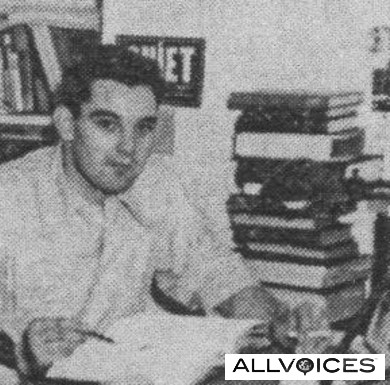
Edward Lester
GIBBS
Classification: Murderer
Characteristics:"Sudden
impulse"
Number of victims: 1
Date of murder: January 10,
1950
Date of birth:December
1, 1924
Victim profile:Marian Louise
Baker, 21
Method of murder:Crushing her skull with a
lug wrench
Location: Lancaster, Pennsylvania, USA
Status:
Executed by
electrocution in Pennsylvania on
April 23, 1951
American homicide; strangled and
bludgeoned a woman to death and hid the body.
A Lancaster, PA college student, he was popular
with good social and academic standing. On 1/10/1950, he gave
secretary Marian Baker a ride on her way to the bank. He made a
detour to park at a scenic view when he acted on his sudden
impulse to strangle her and then bludgeon her to death with a
wrench. There was no sexual assault, however he stole her rings
and purse.
Gibbs put the body in a hole under a summer
cottage and covered it with sheets of corrugated metal. With the
police search, her body was found four days later. Her watch had
been smashed in the struggle and was stopped at 2:36 PM,
establishing the time of the crime. Gibbs was picked up and went
to trial in mid-March. Found guilty of first degree murder and his
appeal turned down, he was electrocuted in April, 1951.
The Truth About The Marian Baker Murder
By Maggie Bonesteel
Hubpages.com
On a cold, gray Tuesday afternoon, south of Lancaster
Pennsylvania, Edward Lester Gibbs invited 21-year-old Marian Louise
Baker to ride with him back to the Franklin and Marshall campus. She
accepted, being rushed to get her work completed back at the Treasurer's
Office and still keep her hair appointment later that afternoon.
What sudden story Edward Gibbs told to Marian we may
never know.
But instead of heading back to the college, he headed
south to the Harnish cottage.
And there, he choked and bludgeoned Marian to death.
The truth about that day has never been revealed.
Gibbs went to the electric chair with the truth still
hidden and concealed.
The murder happened in 1950.
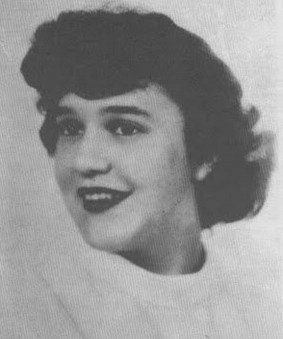
Marian Louise Baker
MurderinLancasterCounty.blogspot.com
I haven't posted much in regard to the Marian Louise Baker murder in
quite a long time. My attention and efforts have been directed to the
current tragedy. I did want to share one comparison in the two cases.
Both of the accused men in the murders are from prominent families.
The Gibbs family, of Pitman, New Jersey was seen as not only
financially well off but as pillars of the community. They were highly
respected in their own right. Those who knew them described them as
affable, friendly and given to respect the law and order in their
communities.
Their son was a "golden child" to the family. He was the pride of
his uncles, as well as his parents.
His mother was quite nervous and her oppressive loving nature toward
Ed Gibbs was a major point to some who reviewed his upbringing.
Ed Gibbs claimed that a feeling "came over" him as he was driving
south, out of Lancaster, with Marian Louise Baker. They were not dating
and he claims to have never made an advance on her.
But he did crush her skull with a lug wrench and drag and hide her
body under the Mylin cottage.
Ed Gibbs eventually raced into one of the offices at Franklin and
Marshall College, confessing to the killing of Miss Baker.
He was forthright and more than willing to offer up most details and
even showed the authorities where had disposed of her purse.
But there was a point he couldn't get past.
He never gave an explanation that was satisfactory to most,
including his own counsel, Hensel Brown, as to why he so brutally killed
Marian Louis Baker.
Some surmise there was something yet not revealed that would have
shamed his family so much that Ed just couldn't utter the words or
describe it.
It was almost as if he was demonstrating that in his world and that
of his family, killing is wrong, killing is horrible, but the events in
the car that day were even more heinous. Some have felt that he spared
his parents and family the ultimate shame, resulting from behavior he
committed that would have devastated his mother even more than the fact
that he actually killed Miss Baker.
It's noteworthy that if indeed he did make a pass at Miss Baker and
she rebuffed him, that misstep in being sexually forward with her would
have shamed him more than the fact that he took her life. In a very odd
way, I get it.
Edward Lester Gibbs went to his death in the electric chair never
revealing more about the events leading up to the attack and murder of
Miss Baker.
Those who knew Hensel Brown said that the Gibbs trial was a marker
in Brown's life. He was never the same man after that case. It wasn't
just the loss of the trial and the execution of Gibbs. It was that Brown
had absolutely no success in having the man reveal the whole truth to
him.
Brown was almost self-tormented by that case. He wondered if only
had he been able to get Gibbs to tell the whole story, maybe he could
have been spared the electric chair.