Murderpedia has thousands of hours of work behind it. To keep creating
new content, we kindly appreciate any donation you can give to help
the Murderpedia project stay alive. We have many
plans and enthusiasm
to keep expanding and making Murderpedia a better site, but we really
need your help for this. Thank you very much in advance.
Joseph
Martin Luther GARDNER
Classification: Murderer
Characteristics: Rape - Torture
Number of victims: 1
Date of murder: December 30,
1992
Date
of arrest:
October 20,
1994
Date of birth: January 15,
1970
Victim profile: Melissa Ann
McLaughlan (female, 25)
Method of murder:
Shooting
Location: Dorchester
County, South Carolina, USA
Status: Executed
by lethal injection in South Carolina on December 5,
2008
Summary:
Gardner was convicted of the murder of 25 year old Melissa Ann
McLaughlan, who was raped, tortured, shot five times in the face,
and left to die by the side of a road.
Gardner and some friends made a New Year's
resolution to rape and kill a white woman as retribution for 400
years of oppression. McLaughlan had an argument with her fiancé at a
nightclub, stormed out, and began to walk home. Police gave her a
ride home, but she apparently set out on foot for another club.
Three black men, Matthew Carl Mack, Matthew
Williams, and Joseph Gardner pulled up alongside in a car and
started a conversation. They returned with Missi to the trailer
where the men lived and raped her. They put out the word within the
trailer park that they had “captured a white woman,” and three other
black men arrived and raped her.
Two black women, girlfriends of some of the
rapists, were present in another room of the trailer, but did
nothing to stop the attack. They soaked her in bleach and hydrogen
peroxide, and scrubbed her under the shower with a nylon brush. They
forced her to scrub out her vagina with the same chemicals. The men
handcuffed her, blindfolded her, and put a heavy coat over her head.
They then took her to a car, and forced her down
onto the floorboards in the back. After they had driven for some
time, she managed to get out of the handcuffs and began to struggle.
Joseph Gardner, who was sitting in the front passenger seat, reached
over the seat, held back her head, and shot her twice in the face.
The driver pulled over to the shoulder 14 miles outside Charleston,
where Gardner shot her three more times in the face and once in the
arm. The men then dumped her on the side of the road. Gardner, who
was AWOL from the Navy, eluded police for nearly two years.
Joseph Martin Luther Gardner (triggerman)(death).
Matthew Carl Mack (life) eligible for parole 30 years. Matthew Paul
Williams (life) eligible for parole 30 years. Danny DeWayne McCall
(6 years). Roger Williams (5 years). Craig Rice (accomplice) did not
participate, but learned about crime, did nothing. Edna Lee Jenkins
(7 years; suspended for time served). Indira Simmons (7 years;
suspended for time served).
Citations:
State v. Gardner, 332 S.C. 389, 505 S.E.2d 338 (S.C. 1998) (Direct
Appeal). Gardner v. Ozmint, 511 F.3d 420 (4th Cir. 2007) (Habeas).
Final Meal:
Declined.
Final Words:
Written statement only: "I would like to apologize to the family and
loved ones of Melissa McLauchlin for taking her from them and
causing them so much pain. I was 22 years old then, and I am 38 now.
While I have always been sorry for what I did, the passage of time
has allowed me to mature, reflect and experience spiritual growth in
ways that were foreign to me as a young man. I have repented for
what I have done, and I am very grateful to the many people who have
prayed with me and for me over the years and in my final days. I
deeply regret that my actions deprived Ms. McLauchlin of the chance
to marry, have children and experience life with God. I have spent
years praying for her, and I encourage all people of faith to do the
same."
ClarkProsecutor.org
South Carolina Department of
Corrections
Inmate: Gardner, Joseph
DOC#: 5027
DOB: 01/15/70
County: Dorchester
Date Received: 12/13/95
Race: Black
Trial Judge: Ralph King Anderson
Killer Gardner executed; Woman was raped,
tortured, shot to death
By Glenn Smith - Charleston Post Courier
Saturday, December 6, 2008
COLUMBIA — Joseph Gardner mouthed "Thank you, I'm
OK" to a relative Friday as a lethal cocktail of chemicals flowed
into his body, putting him to death for the slaying of a young North
Charleston woman 16 years ago. Gardner, 38, was executed shortly
after 6 p.m. for his role in the rape, torture and killing of 25-year-old
Melissa "Missi" McLauchlin in December 1992. Gardner helped
brutalize McLauchlin at a North Charleston home before he shot her
five times in the face and dumped her body along a Dorchester County
road.
Through his attorney, Gardner offered a written
final statement apologizing to McLauchlin's family for causing them
such pain. He spent the day with his lawyer, Keir Weyble, but opted
to forgo a last meal before he met his fate.
About 5:55 p.m., three media witnesses were led
into the state's capital punishment facility at Broad River
Correctional Institute. Already seated in the small brick viewing
room were law enforcement officers, a prosecutor, Weyble and
Gardner's cousin, Norman Ellis. All seats faced a wall with paneled
windows. The room was silent but for the ticking of a clock. From
behind a brown curtain, a muffled voice could be heard saying
something that sounded like "I'm going to pray."
The curtain opened at precisely 6 p.m., revealing
Gardner in the adjoining room, tethered to a cushioned steel table
with straps across his chest and outstretched arms. He wore a green
jumpsuit with a white sheet pulled across the lower half of his body.
An intravenous line snaked from a metal panel in the wall to his
left arm. He raised his head and turned to the left, smiling as he
spotted Ellis sitting in the second row. He raised his head slightly
and mouthed, "Thank you, I'm OK. Thank you, I'm OK" several times.
His eyes began to flutter after about two minutes and he strained to
mouth more words. Finally, he let out a gasp of air and his head
sunk back on the cushion. His mouth hung open and his eyes closed
for the last time. Two men in gray coats stood by the table, their
hands clasped, and waiting as the minutes passed. The IV seemed to
jiggle for a minute or two and then stopped.
A man in a blue coat entered the room. He checked
Gardner's eyes with a flashlight, placed his fingers against the
inmate's throat and listened to his chest with a stethoscope.
Moments later, a voice sounded over the intercom. "The sentence in
the case of South Carolina V. Joseph Gardner was carried out at 6:15
p.m."
Gardner became the 40th inmate put to death in
South Carolina since the death penalty was reinstated in 1976, and
the third inmate executed in the Palmetto State this year.
The execution didn't draw many protesters. Before
the sentence was carried out, four of them paced along the sidewalk
outside. Ron Kaz, a Charleston carpenter, said he was familiar with
case but didn't know Gardner. "I don't believe the state has any
business murdering people," Kaz said.
McLauchlin's parents, who live in Live Oak, Fla.,
chose not to attend the execution but were represented by North
Charleston police Sgt. Ray Garrison, one of the lead investigators
on the case. Her father, Clair McLauchlin, offered this statement: "It's
over for him but not for us. It will never be over for us."
Their ordeal began on the night of Dec. 30, 1992,
when Melissa McLauchlin got into a car with Gardner and other men
after they spotted her walking along Rivers Avenue in North
Charleston. They took her to a mobile home on Stall Road, where
several men raped her. The men later forced McLauchlin to bathe,
bound her with a blindfold and handcuffs and placed her on the
floorboard of a car. Gardner shot her twice in the face after she
freed herself from the handcuffs and tried to escape. He then shot
her three more times and left her to die along the side of a road in
Summerville.
Gardner, who was in the Navy at the time, fled
from the area and remained a fugitive until his arrest in
Philadelphia in October 1994. The case, which involved a white
victim and five black suspects, stoked fears of racial unrest. The
killing occurred just months after the Los Angeles riots following
the acquittal of four white police officers in the videotaped
beating of black motorist Rodney King. Adding to local fears were
revelations from investigators that Gardner and his co-defendants
had decided to kill a white woman to avenge the mistreatment of
blacks during slavery.
Of those charged, Gardner was the only person
sentenced to die in the case. Two men received life sentences for
murder, while two others received less than 10 years in prison as
part of plea deals.
Gardner's statement
"I would like to apologize to the family and
loved ones of Melissa McLauchlin for taking her from them and
causing them so much pain. I was 22 years old then, and I am 38 now.
While I have always been sorry for what I did, the passage of time
has allowed me to mature, reflect and experience spiritual growth in
ways that were foreign to me as a young man. I have repented for
what I have done, and I am very grateful to the many people who have
prayed with me and for me over the years and in my final days. I
deeply regret that my actions deprived Ms. McLauchlin of the chance
to marry, have children and experience life with God. I have spent
years praying for her, and I encourage all people of faith to do the
same."
S.C. executes man who raped, killed woman
By Meg Kinnard -
TheState.com
Saturday, Dec. 06, 200)
A South Carolina man convicted of torturing and
killing a woman 16 years ago was executed by lethal injection Friday.
Joseph M.L. Gardner was pronounced dead at 6:15 p.m. in the state’s
death chamber in Columbia. He did not make a final statement, but
did turn his head to the witness chamber and mouth the words “Thank
you. I’m OK,” to a male cousin before smiling and closing his eyes
for a final time.
Gardner was convicted in the 1992 kidnapping,
rape and slaying of 25-year-old Melissa “Missi” McLauchlin. Police
said at the time that Gardner and his co-defendants decided to kill
a white woman as retribution for slavery, citing a letter found
during the investigation that contained slurs and statements
justifying revenge. But the victim’s family and Gardner’s attorneys
say they don’t think the killing had anything to do with racial
revenge. Gardner, 38, was one of five men convicted in McLauchlin’s
killing. The Detroit native was the only one sentenced to death.
Moments after media witnesses were led into the
viewing area on Friday, a voice saying “I’m going to pray” could be
heard coming from behind a maroon curtain separating witnesses from
the death chamber. When the curtain was drawn at 6 p.m., Gardner
could be seen lying on his back, clad in a dark green jumpsuit, his
arms outstretched. Black straps held down his chest, shoulders and
hands. Several tubes that would administer the lethal chemicals ran
from his left arm to a brick wall behind his head.
When the curtain was drawn, Gardner turned his
head to his left, raising up as much as possible to mouth words to
and smile at the man prison officials identified as his cousin, who
nodded in response. The tubes connected to Gardner’s arm began to
move. Moments later, Gardner took what appeared to be his final
breaths, his mouth falling open after a large gasp, his eyes closing.
Corrections officials pronounced him dead at 6:15 after a doctor did
not feel a pulse or hear a heartbeat.
McLauchlin’s family did not witness Gardner’s
death. Gardner’s attorney, Keir Weyble — who witnessed the execution
and met with him earlier Friday — later provided reporters with a
statement in which his client apologized to McLauchlin’s family and
said he had been praying for her. “While I have always been sorry
for what I did, the passage of time has allowed me to mature,
reflect and experience spiritual growth in ways that were foreign to
me as a young man,” Gardner said in the statement provided by Weyble.
“I deeply regret that my actions deprived Ms. McLauchlin of the
chance to marry, have children and experience life with God. I have
spent years praying for her, and I encourage all people of faith to
do the same.”
The attack on McLauchlin brought worries about
racial unrest just months after the Los Angeles riots stemming from
the acquittals of white police officers accused of beating black
motorist Rodney King. But there was little mention of race at the
trial, and the victim’s father says now that he doesn’t think it had
anything to do with the killing. “We have found over the years
people will use the most convenient excuse that they can find for
their actions if they get caught,” Clair McLauchlin, who lives in
Live Oak, a small town in northern Florida, told The Associated
Press this week. “In this case, the excuse was 400 years of
persecution.”
Prosecutors said several defendants saw Missi
McLauchlin, who was living in North Charleston, walking along a road
near her home on Dec. 30, 1992. Authorities said the men offered her
drugs in exchange for sex, and five men later raped her at gunpoint.
According to prosecutors, they then forced her to bathe, bound her
and blindfolded her. Gardner shot McLauchlin twice when she freed
herself from handcuffs and then three more times by the side of a
road near Summerville where her body was left, authorities said.
During Gardner’s trial, co-defendant Matthew Carl
Mack, serving life for his role in the crime, said the defendants
spent hours before the slaying watching pornographic films, movies
showing executions and a recap of the Rodney King beating story.
Mack testified Gardner said at the time, “That’s 400 years of
oppression. That’s why that could happen.”
Gardner went AWOL from his Charleston-based Navy
ship and was on the FBI’s Most Wanted List before his arrest in
Philadelphia almost two years later.
He was the 40th person executed in South Carolina
since the death penalty was reinstated in 1976, and the third inmate
put to death in the state this year.
"He's getting off free in a way," father says
Killer scheduled to die Friday for murder but
slain woman's parents say pain will always haunt them
By Glenn Smith -
Charleston Post &
Courier
December 2, 2008
Clair and Patricia McLauchlin don't expect a
great burden to be lifted from their lives when the state executes a
man who raped, tortured and murdered their daughter 16 years ago.
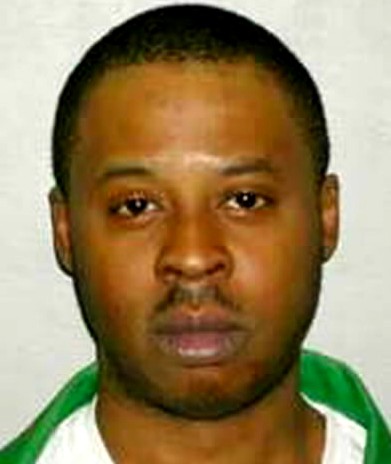
Joseph Gardner (pictured) is scheduled to be
executed Friday for his part in the 1992 rape and murder of Missi
McLauchlin. In some ways, they feel Joseph Gardner will be getting
off easy Friday, when he is scheduled to be put to death for the
racially charged killing of Melissa "Missi" McLauchlin in December
1992.
"What he did in 1992 was a life sentence for us
that is never going to go away. It's always there, and it will
always be there," said Clair McLauchlin, the victim's father. "He's
getting off free in a way. He's not going to have to think about it
anymore. But not a day goes by that we don't think about it."
The McLauchlins, who live in Florida, do not plan
to attend Gardner's execution, set to take place at the prison
system's capital punishment facility in Columbia. They see little to
be gained from witnessing the 38-year-old triggerman's death. "All
it would do is open up another traumatic wound for us," Clair
McLauchlin said.
The couple intend to spend the day much like any
other, ferrying their three grandchildren to school and activities
and immersing themselves in the volunteer work that occupies much of
their free time. But there will be no escaping the significance of
the day as the appointed hour of 6 p.m. draws near. They will stay
near a phone and await word of Gardner's demise.
"It will be a relief to know that justice was
finally carried out," Patricia McLauchlin said. "But we won't ever
see her again, except in our hearts and our minds, and in heaven
someday."
On the night of Dec. 30, 1992, 25-year-old
Melissa McLauchlin got into a car with Gardner and other men after
they spotted her walking along Rivers Avenue in North Charleston.
They took her to a mobile home on Stall Road, where she was raped by
several men.
The men later forced McLauchlin to bathe, bound
her with a blindfold and handcuffs and placed her on the floorboard
of a car. Gardner shot her twice in the face after she freed herself
from the handcuffs and tried to escape. He then shot her three more
times and left her to die along the side of a road in Summerville.
Gardner, who was in the Navy at the time, fled from the area and
remained a fugitive until his arrest in Philadelphia in October
1994.
The case stoked racial tensions after another
suspect, Matthew Carl Mack, told investigators McLauchlin was
brutalized to avenge "400 years of oppression," an apparent
reference to the treatment of blacks since arriving in this country
as slaves in the 1600s. McLauchlin was white while the five men
charged in the case were black.
At his trial, Mack testified that he, Gardner and
another man spent the night before the killing watching movies about
interracial sex and death. They discussed a desire to rape, torture
and kill a white woman, but Mack said the comments were in jest.
Keir Weyble, Gardner's lawyer during his appeals,
said there was scant evidence of a race-based plot in the attack,
but this "red herring" shadowed the case from its inception and
played upon juror fears. He and one of Gardner's original lawyers,
Tim Kulp, suspect the episode resulted from a happenstance meeting
and a series of bad decisions that spiraled out of control.
McLauchlin's parents have no doubts about the
suspects' guilt, but they also don't believe the killing was
racially motivated. "This is not a racial incident," Clair
McLauchlin said. "Someone just tried to make it into one as an
excuse for their behavior."
Of those charged, Gardner was the only person
sentenced to die in the case. Two men, including Mack, received life
sentences for murder, while two other men who prosecutors say raped
McLauchlin each received less than 10 years in prison as part of
plea deals.
The case consumed McLauchlin's family for years,
taking an emotional toll and pushing her parents into bankruptcy as
they worked to ensure justice was done. Still, they tried to find
ways to turn a profoundly painful experience into something
positive.
Touched by the warmth and support they received
from law enforcement and residents in South Carolina, the
McLauchlins have worked to give back to their own community after
moving from Michigan to Florida six years ago. They volunteer with
their local fire department, spearhead an annual holiday toy drive
for needy children and donate their time to other community causes.
They also have gone on national television and
granted countless interviews in hope that sharing Melissa's story
will prevent someone else from enduring a similar tragedy. "The most
we can pray for is that people learn from this," Patricia McLauchlin
said. "There is never a good excuse for taking a person's life. It
hurts too many people."
16 years later, killer of couple's daughter
faces execution
By Vanessa Fultz - Suwannee Democrat
December 03, 2008
When an 11-year-old girl in their hometown of
Belding, Mich., was raped and murdered, her body dumped along the
roadside, Clair and Pat McLauchlin responded by helping start a
neighborhood watch program in the community.
The McLauchlins gave presentations at civic clubs
and other organizations. Their daughter Missy, 10 at the time,
helped get the word out. They'd use a slide show of Missy and her
friend Daphney to illustrate different forms of unsafe behavior. "I'd
get to the one where they were playing on a railroad trestle and I'd
say, 'And then you'll notice these kids on the railroad trestle,'"
Missy's mother, Pat said. "I'd do a double take and say, 'That's my
daughter up there.' I'd get a laugh from the audience and I would
say, 'I've got to talk to her.'"
Fifteen years later Missy would suffer the same
fate as the young girl whose death prompted the McLauchlins to start
the program. On Dec. 30, 1992, Melissa Ann McLauchlin was raped by
five men in North Charleston, then taken to Summerville, S.C., where
she was shot six times and left for dead along the roadside. Joseph
Gardner, the gunman, has been on death row since 1995. Barring last
minute appeals, he will be executed Friday at 6 p.m. by lethal
injection.
The McLauchlins, now of Live Oak, remember well
the day a sheriff's deputy came to their Detroit home with the news.
It was New Year's Day and Clair and Pat were watching the Rose
Parade together on television. It was a family tradition. Their
daughter Mandy, 12, was watching at a friend's house, and their son
Richard, 21, was surely watching as well. After what happened next,
it would be years before Pat could watch the Rose Parade again.
Pat said when the deputy entered her home he said,
"I would rather be watching that parade." "I said ’I'm not going to
like what you have to tell us,' and he said, 'I just wish you'd get
your husband out here,'" she recalls. The deputy handed the couple a
card with the name and number of a coroner in South Carolina.
Pat wanted to see her daughter. "'No,
identification is definite and you really don't want to see her,'"
Pat remembers the deputy saying. Missy's father, Clair, recalls the
coroner recommended cremation. The McLauchlins were in disbelief. "I
wanted to hit that deputy. I knew it wasn't his fault but I wanted
to hit him," Pat said.
Details of the case unfolded over the course of
several days. "Every time the phone rang it was a little more
gruesome," Clair said. Missy had been shot five times in the face
and once in the shoulder. During an interview with a news reporter,
Pat was interrupted by a phone call. It was the girl who had
identified the body. She was relaying even more details about Missy.
"I got up. I raced to the bathroom and started throwing up," Pat
said. "I think that's when it finally hit me." Pat collapsed and her
husband took her to the emergency room.
The McLauchlins worked closely with law
enforcement and the news media in an effort to locate the suspects.
They were interviewed by every major TV station in their area and
also got invitations to Oprah, Montel Williams, Inside Edition and
America's Most Wanted.
Matthew Carl Mack, a co-defendant in the case,
fled to Detroit but was captured six days later. Gardener remained a
fugitive. The case quickly took on racial overtones. Gardner, Mack
and another defendant ’ all black men ’ had been watching movies
about murder and interracial sex the night before the crime.
As details of the case emerged, racial tensions
rose. Black churches in South Carolina were threatened and the KKK
petitioned the McLauchlins to lead a protest. Nonetheless, the
McLauchlins urged residents to remain calm and refrain from any
violence or retaliation.
During the broadcast of the Montel Williams show,
Williams asked Missy's sister Mandy, 13 at the time, how she and her
friends felt about her sister having been murdered by a black man. "She
said, 'We've been brought up to understand people are people, that
color doesn't make any difference,'" Clair recounted his younger
daughter saying. A few days before he turned 62, Pat asked Clair
what he wanted for his birthday. "He said, 'The only thing I want
for my birthday is news that they caught this man,'" Pat recalls
Clair saying.
The Dorchester County sheriff called the day
after Clair's birthday with news that Gardner had been apprehended.
He was arrested in Philadelphia in 1994 after a woman at a post
office saw his photograph. Gardner was arrested the Wednesday before
a segment they had taped for America's Most Wanted was to air.
The McLauchlins sat through two trials --
Gardner's and Mack's. Other co-defendants were given plea deals for
their roles in the crime. "I've still got fingernail prints in my
hand," Clair said of Pat's clenching his hand during trial.
Pat remembers when the jury returned a guilty
verdict for Gardner. "It had been raining," she said. "We were
sitting in court waiting for the verdict. The minute the jury came
in and (read the verdict), it stopped raining and the sun started
shining through the courtroom."
Gardner eventually received the death penalty for
his crimes. "He was given a death sentence ... but when he took
Missy’s life, he gave us a life sentence because it will never be
over for us," Pat said.
The McLauchlins have lasting memories of their
daughter. Clair remembers Missy's boredom on camping trips in
northern Michigan. "She would say, 'Another dirt road? When are we
going to get off this dirt road?'" he remembers. Pat recalls Missy’s
taking her grandfather literally when he told her to shake a leg.
They were at her aunt's house playing cards. "She stood there and
started shaking her leg," Pat said of Missy, who was 7 at the time.
Pat said though Missy didn't like to cook, she
enjoyed guiding her brother Richard through the kitchen. "She'd be
standing around in the kitchen and saying 'You need to do this,' or
'You need to do that,'’ Richard, who lives in North Port, Fla.,
remembered. ’Though she didn't like to cook, she'd say 'Make me
something,' then tell me how to do it." Missy loved to sing in the
choir and she wanted to be a beautician.
Gardner, 38, will be put to death at Broad River
Correctional Institution in Columbia, S.C. Clair and Pat will not
attend the execution, but will be represented by one of the lead
detectives in the case.
"Once the execution is over,’ said Clair,
’justice will have been served."
ProDeathPenalty.com
Joseph Martin Luther Gardner was convicted of the
Dec. 30, 1992, killing of Melissa Ann McLauchlin, who was raped,
tortured, shot five times in the face and left to die by the side of
a road in Summerville. At the time of the shooting, police said
Gardner and some other men made a New Year's resolution to rape and
kill a white woman as retribution for 400 years of oppression of
black people. Gardner, who was later arrested in Philadelphia, was
the trigger man. Gardner was sentenced to death in December 1995.
Missi McLauchlin, 25, was a native of Wixom,
Michigan, living with her fiancé’s family in North Charleston, South
Carolina. On the night she died, she had an argument with her fiancé
at a nightclub. She stormed out of the club and began to walk home.
Police spotted her, obviously drunk, and gave her a ride home, but
she apparently set out on foot for another club.
Three black men, Matthew Carl Mack, Matthew
Williams, and Joseph Gardner pulled up alongside in a car and
started a conversation. The men had spent most of the day drinking
and watching pornographic videos of black men having sex with white
women. At one point Mack had exploded in anger at his white
girlfriend, saying he wanted to “stab her,” but that “it ain’t got
to be her, any white” would do. Williams said he wanted to have sex
with a white woman. Two hours later, the group watched a television
news account of the biggest stories of 1992. When the videotaped
beating and arrest of Rodney King came on the air, the third man,
Gardner, spoke of “four hundred years of oppression,” and made a
“New Year’s resolution” to “kill a white bitch.”
It was in this state of mind that they returned
with Missi to the trailer where the men lived. The men soon began
raping her. They put out the word within the trailer park that they
had “captured a white woman,” and three other black men arrived and
raped her. Two black women, girlfriends of some of the rapists, were
present in another room of the trailer, but did nothing to stop the
attack.
After they had enough, the men decided to get rid
of the evidence—including Missi McLauchlin. They soaked her in
bleach and hydrogen peroxide, and scrubbed her under the shower with
a nylon brush, in the hope of ridding her skin of sperm or other
evidence that could be linked to them. They forced her to scrub out
her vagina with the same chemicals. They also talked openly of
killing her. The men handcuffed her, blindfolded her, and put a
heavy coat over her head. They then took her to a car, and forced
her down onto the floorboards in the back. After they had driven for
some time, she managed to get out of the handcuffs and began to
struggle. Joseph Gardner, who was sitting in the front passenger
seat, reached over the seat, held back her head, and shot her twice
in the face. The driver pulled over to the shoulder 14 miles outside
Charleston, where Gardner shot her three more times in the face and
once in the arm.
The men dumped her on the side of the road, drove
back to Charleston, and went nightclubbing. A passing driver found
Missi McLauchlin, miraculously alive, and he left to get help but
she died before the ambulance arrived. Missi had a blood alcohol
level of .25 at the time of her autopsy. There were no traces of
drugs. It took police four days to identify the body, and a day
later they located the trailer where Missi McLaughlin was raped.
By January 9, 1993, police had arrested seven
people including two of the ringleaders—Matthew Mack and Matthew
Williams—and two women, Edna Williams and Indira Simmons, who were
charged with being accessories to murder and sexual assault. Three
of the rapists were sailors stationed at nearby Charleston Naval
Base. The only suspect not in custody was the triggerman, Joseph
Gardner, who had carried out his New Year’s resolution. Gardner, who
was AWOL from the Navy, eluded police for nearly two years, and
might never have been caught had the FBI not put him on the “ten
most wanted” list. He was living in Philadelphia when someone saw
his picture in the post office and tipped off the police. He was
arrested on October 20, 1994.
Police suspected a racial motivation from the
start, since they found a “crudely-written racial diatribe” in the
trailer, complete with racial epithets about white oppression, which
claimed blacks were “justified in seeking revenge.” Walter Bailey,
the chief prosecutor in the case, said "It was the absolutely most
brutal and senseless crime, one of the worst things I have ever seen.
Totally unprovoked."
Before his sentencing, Gardner told the jury, "Do
what you think is best." Before that, Joe Gardner apologized to
Missi's parents. "I hope it gives you some sense of closure so you
can put this behind you and move on. Yesterday when I was listening
to you talk, it really hurt me. I really hurt you." The seven women
and five men that found him guilty of kidnapping and murdering Missi
thought about it for two hours and decided that the 25-year-old
Detroit native should die in the electric chair or by lethal
injection. "When it came down, the picture in my mind was my
daughter's grave and roses starting to bloom and that she was
finally resting in peace," said Missi's mother, Patricia McLauchlin.
Gardner was the only person sentenced to death in
the case. Mack received a life sentence plus 30 years, which will
allow parole eligibility after 30 years. Williams pleaded guilty to
murder and was sentenced to life in prison with parole eligibility
after 30 years. However, 1st Circuit Solicitor Walter Bailey agreed
that if Williams would help prosecute Gardner, Williams could be
sentenced again under circumstances that would cut parole
eligibility to 20 years.
Another man involved, Roger Williams, served half
of a five-year sentence for third-degree criminal sexual conduct and
being present during the commission of a felony and not reporting it.
He was scheduled to be released in December 1995. Danny Dwayne
McCall was sentenced to nine years for the same charges as Roger
Williams, suspended upon service of six years followed by five years
of probation. He was denied parole in June 1995.
Edna Jenkins, who was dating Gardner at the time,
pleaded guilty to being an accessory after the fact of murder,
illegally buying two handguns within 30 days and lying on a firearms
application. She served 554 days in jail. Indira Simmons, who was
living in the trailer with Matthew Williams, pleaded guilty to
failing to report a felony. She served 572 days, partly in jail and
the remainder under house arrest.
Joseph Martin
Luther Gardner
A man who had been
scheduled to die on April 8, 2005, for the kidnapping and murder of
a Charleston woman 12 years ago, has been granted a stay of
execution so he can pursue federal appeals. The stay for Joseph
Gardner was granted U.S. District Judge Henry Herlong, according to
the South Carolina attorney general's office.
Gardner was
convicted of the Dec. 30, 1992, killing of Melissa "Missi"
McLauchlin, who was raped, tortured, shot five times in the face and
left to die by the side of a road in Summerville.
At the time of the
shooting, police said Gardner and some other men made a New Year's
resolution to rape and kill a white woman as retribution for 400
years of oppression of black people. Gardner, who was later arrested
in Philadelphia, was the trigger man.
Gardner was
sentenced to death in December 1995 by a jury of 10 whites and two
blacks. In March 1999, the U.S. Supreme Court turned aside without
comment an appeal by Gardner. Gardner said his trial should have
been moved elsewhere because of pretrial publicity.
Missy McLauchlin,
25, was a native of Wixom, Michigan, living with her fiancé’s family
in North Charleston, South Carolina. On the night she died, she had
an argument with her fiancé at a nightclub. She stormed out of the
club and began to walk home. Police spotted her, obviously drunk,
and gave her a ride home, but she quickly set out on foot for
another club.
Three black men,
Matthew Mack, Matthew Williams, and Joseph Gardner pulled up
alongside in a car and started a conversation. They offered her
drugs if she would come back to their trailer and have sex with them.
Missi McLauchlin, who had a history of drug problems, foolishly
accepted their offer.
The men had spent
most of the day drinking and watching pornographic videos of black
men having sex with white women. At one point Mack exploded in anger
at his white girlfriend, saying he wanted to “stab her,” but that
“it ain’t got to be her, any white” would do. Williams said he
wanted to have sex with a white woman.
Two hours later,
the group watched a television news account of the biggest stories
of 1992. When the videotaped beating and arrest of Rodney King came
on the air, the third man, Gardner, spoke of “four hundred years of
oppression,” and made a “New Year’s resolution” to “kill a white
bitch.”
It was in this
state of mind that the four returned to the trailer where the three
blacks lived. The men offered Missi McLaughlin no drugs, but she
willingly had sex with them—at first. She began to resist,
especially when the men wanted to sodomize her, and soon the men
were raping her.
They put out the
word within the trailer park that they had “captured a white woman,”
and three other blacks arrived and raped her. Two black women,
girlfriends of some of the rapists, were present in another room of
the trailer, but did nothing to stop the attack.
After they had
enough, the men decided to get rid of the evidence—including Missi
McLauchlin. They soaked her in bleach and hydrogen peroxide, and
scrubbed her under the shower with a nylon brush, in the hope of
ridding her skin of sperm or other evidence that could be linked to
them.
They forced her to
scrub out her vagina with the same chemicals. They also talked
openly of killing her. The men handcuffed her, blindfolded her, and
put a heavy coat over her head. They then took her to a car, and
forced her down onto the floorboards in the back.
After they had
driven for some time, she managed to get out of the handcuffs and
began to struggle. Joseph Gardner, who was sitting in the front
passenger seat, reached over the seat, held back her head, and shot
her twice in the face.
The driver pulled
over 14 miles outside Charleston, where Gardner shot her three more
times in the face and once in the arm. The men dumped her on the
side of the road, drove back to Charleston, and went nightclubbing.
A passing driver
found Missi McLauchlin, miraculously alive, but she died before the
ambulance arrived. It took police four days to identify the body,
and a day later they located the trailer where Missi McLaughlin was
raped.
By January 9, 1993,
police had arrested seven people including two of the ringleaders—Matthew
Mack and Matthew Williams—and two women, Edna Williams and Indira
Simmons, who were charged with being accessories to murder and
sexual assault.
Three of the
rapists were sailors stationed at nearby Charleston Naval Base. The
only suspect not in custody was the triggerman, Joseph Gardner, who
had carried out his New Year’s resolution.
Gardner, who was
AWOL from the Navy, eluded police for nearly two years, and might
never have been caught had the FBI not put him on the “ten most
wanted” list. He was living in Philadelphia when someone saw his
picture in the post office and tipped off the police. He was
arrested on October 20, 1994, and is now on death row.
Police suspected a
racial motivation from the start, since they found a “crudely
written racial diatribe” in the trailer, complete with racial
epithets about white oppression, which claimed blacks were
“justified in seeking revenge.”
Gardner gets death
By Richard Green Jr. - Charleston Post Courier
December 12, 1995
"Do what you think is best," Joe Gardner told a
jury Wednesday after apologizing to Melissa Ann "Missi" McLauchlin's
parents. The seven women and five men that found him guilty Sunday
of kidnapping and murdering Missi on Dec. 30, 1992, thought about it
for two hours and decided it was best that the 25-year-old Detroit
native die in the electric chair or by lethal injection.
"When the (sentence) came down, the picture in my
mind was my daughter's grave and roses starting to bloom and that
she was finally resting in peace," said Missi's mother, Patricia
McLauchlin. Gardner's mother sobbed vehemently as Circuit Judge
Ralph King Anderson imposed the sentence. She was escorted from the
Dorchester County Courthouse under guard. Gardner himself was
whisked away from St. George to an undisclosed location, but Death
Row is located in Columbia at Broad River Correctional Institution.
First Circuit Solicitor Walter Bailey, who has
been working on the case since he took office just days after
Missi's death, said he was relieved to succeed in prosecuting the
last and most serious defendant in the case. "This kind of case is
why you have the death penalty in South Carolina," Bailey said.
Like Bailey, Gardner's court-appointed lawyers,
Tim Kulp and Norbert Cummings, were visibly drained after the trial,
which included two days of jury selection and a dozen days of
testimony. "Tragedies have a way of reproducing themselves," Kulp
said.
"What makes (Gardner) human like you and me burst
through when he was listening to Mr. McLauchlin during the penalty
phase," Kulp said. "We had every hope that the jury would recognize
that to offset the animal that the prosecution argued this man was."
Gardner broke down and sobbed Tuesday when Clair
McLauchlin refused to extend or deny mercy from the witness stand,
leaving that to the jury. After the trial, McLauchlin said, "I can
have sympathy (for Gardner and his mother) because they are human.
... No, I'll never forgive him." Mrs. McLauchlin didn't believe that
Gardner was really sorry. "Maybe he finally realized how serious
this was," she said.
Testimony showed that Missi - who is white - was
taken to a trailer and had sex with several black men after Gardner
yelled at her while holding a gun. Afterward, she was handcuffed and
blindfolded and driven to Summerville, where Gardner fired five .25-caliber
bullets into her mouth. Gardner made a last tearful argument to the
jury Wednesday before it decided his fate, but he never admitted
being the triggerman that two co-defendants said he was. "I don't
want to die. What happened shouldn't have happened, but I don't want
my kids to grow up without me," Gardner told the jury, referring to
his two young sons who live in Detroit.
Turning from the jury to face Missi's parents,
Gardner said he was sorry. "I hope it gives you some sense of
closure so you can put this behind you and move on. Yesterday when I
was listening to you talk, it really hurt me. I really hurt you."
In his closing argument, Bailey made sure the
jurors considered the McLauchlins when choosing a sentence. "Their
lives were ruined too by Joe Gardner. You've got to look into the
eyes of the McLauchlins and let them know justice has been done."
"You cannot show Joe Gardner mercy and do justice
in this case," Bailey said. The prosecutor held up a bloody
photograph of Missi lying on the side of U.S. Highway 78 where
Gardner and two co-defendants left her to die. "This is Joe
Gardner's handiwork. What does he deserve? A life prison sentence or
the death penalty?"
Several of Gardner's co-defendants claimed during
the trial that Missi voluntarily had sex with them in return for the
promise of drugs. But Bailey argued that the only reason she went
along is because Gardner had threatened her. Two of the men who had
sex with her pleaded guilty last year to third-degree criminal
sexual conduct in Charleston County, where those crimes occurred.
Gardner couldn't be tried for rape in Dorchester County where the
kidnapping and murder occurred, but Bailey was allowed to argue rape
as one of the aggravating circumstances required before the death
penalty can be sought.
McLauchlin said he hoped the jury's finding of
criminal sexual conduct would lay to rest allegations that his
daughter voluntarily had sex the night she was killed. There was
testimony that she also got into a car with Gardner of her own free
will. "I'll go to my grave believing that she did not voluntarily
get into that car," McLauchlin said.
State v. Gardner, 332 S.C. 389, 505 S.E.2d
338 (S.C. 1998) (Direct Appeal).
Defendant was convicted in the Circuit Court,
Dorchester Count, Ralph King Anderson, Jr., J., of murder and
kidnaping. Death sentence was imposed after jury found aggravating
circumstances of criminal sexual conduct (CSC), kidnaping, and
physical torture. Defendant appealed. The Supreme Court held that:
(1) defendant was not entitled to change of venue on ground of pre-trial
publicity; (2) close-up color photograph of victim's face was
admissible in sentencing phase; and (3) evidence supported
submission to jury of aggravating circumstance of physical torture.
Affirmed.
PER CURIAM.
This is a death penalty case. Appellant was
convicted of murder and kidnaping and received a death sentence
after the jury found the aggravating circumstances of criminal
sexual conduct (CSC), kidnaping, and physical torture. This opinion
consolidates the direct appeal and our mandatory review pursuant to
S.C.Code Ann. § 16-3-25 (1985). We affirm.
The events leading to these crimes began on the
evening of December 30, 1992, when the victim, an intoxicated young
woman, got into an automobile with three men she did not know. The
men drove to a trailer, where the victim engaged in sex acts with
several different men. While the victim initially voluntarily
participated in these acts, she soon objected, but the assaults
continued. Appellant attempted to sodomize the victim over her
protests. When the men were finished, the victim was instructed to
bathe. She was then placed in handcuffs, blindfolded, and taken from
the trailer to a waiting car with a heavy coat placed over her head.
Three men got in the car: the victim was forced onto the floorboard
area in the backseat, one man sat beside her, and appellant took the
front passenger's seat. The men drove for a period of time, leaving
the county where the trailer was located and entering Dorchester
County.FN1
FN1. This crossing of county and judicial circuit
boundaries explains why appellant was not charged with CSC in this
case.
The victim freed herself from the handcuffs, and
began to struggle. Appellant turned towards the back of the car,
pushed the victim's head back, and shot her twice in the face. The
driver pulled the car onto the shoulder, and appellant shot the
victim three more times. The men then dumped the victim out of the
car, and left her on the roadside. The men returned to the trailer,
and went out nightclubbing. Passersby saw the body on the side of
the highway, and called for help. While the victim was still alive
when the first people stopped, she soon died.
The victim was picked up on December 30, and
killed on December 31, 1992. All persons involved fled the State;
some were arrested in January 1993, but appellant remained at large
until October 1994, when he was arrested in Philadelphia. This case
was tried in December 1995. There was a good deal of publicity
surrounding this trial.
As a result of the pretrial publicity, appellant
made a change of venue motion. He now contends the trial judge erred
in denying this request. We disagree. When a change of venue motion
is predicated on pre-trial publicity, the relevant inquiry is
whether potential jurors have “such fixed opinions that they could
not judge impartially the guilt of the defendant.” State v. Manning,
329 S.C. 1, 495 S.E.2d 191 (1997). The moving party bears the burden
of proving actual juror prejudice, and the trial court's ruling on
the venue motion will not be reversed on appeal absent an abuse of
discretion. Id.
Appellant's argument is that the trial court
erred in finding credible the potential jurors' statements on voir
dire that they could act impartially. We defer to the trial judge's
view of the potential jurors' credibility, since he had the
opportunity to view their demeanor. e.g., Solomon v. State, 313 S.C.
526, 443 S.E.2d 540 (1994). There is no showing of actual juror
prejudice, nor is there a lack of evidentiary support for the trial
judge's ruling. Appellant has failed to demonstrate an abuse of
discretion in the denial of his motion for a change of venue. State
v. Manning, supra.
Appellant next contends the trial judge committed
reversible error in admitting a close-up color photograph of the
victim's face in the sentencing phase of this trial. The photo
accurately depicts the victim's condition after appellant left her,
having shot her in the lower part of her face five times.
Photographs of the victim's body are admissible in the sentencing
phase of a capital trial to show the circumstances of the crime and
the defendant's character. State v. Kornahrens, 290 S.C. 281, 350
S.E.2d 180 (1986), cert. denied, 480 U.S. 940, 107 S.Ct. 1592, 94
L.Ed.2d 781 (1987). While the trial judge is required to balance the
prejudicial effect of a photo against its probative value, the scope
of probative value is much broader in the sentencing phase of a
capital trial than in other proceedings. Id. We find no abuse of
discretion here.
The third issue appellant raises concerns the
solicitor's cross-examination of two witnesses and his closing
argument. Appellant's misconduct in the local jail while awaiting
trial led to his transfer to Broad River Correctional Institution
where he was placed on safe-keeping status, and housed in the death
row area. In an effort to show appellant's adaptability to prison
life, he called two correctional officers to testify to his good
conduct while housed as a safe-keeper. The solicitor rebutted this
evidence by presenting testimony from the jail officials who had
dealt with appellant prior to his transfer to Broad River, and
cross-examined the two correctional officers called by appellant.
The cross-examination focused on two points: (1)
the difference in prison rules and regulations between safe-keepers,
whose daily routine is like those serving a death sentence, and
those in the general prison population, whose routine is more like
appellant's jail experience, to demonstrate appellant was not really
adaptable to prison life; and (2) the “good life” available to those
in the general population, such as access to educational
opportunities, libraries, gyms, and television.
Appellant contends the trial court erred in
permitting the officers to be cross-examined on the particulars of
the “easy life” afforded an inmate housed in the general population,
and in allowing the solicitor to argue in his closing argument that
this easy life was not an appropriate punishment for appellant's
crimes. There was no objection to the closing argument, and
therefore no issue is preserved for our review. State v. Franklin,
318 S.C. 47, 456 S.E.2d 357, cert. denied, 516 U.S. 856, 116 S.Ct.
160, 133 L.Ed.2d 103 (1995).
Further, appellant interposed no objection to the
cross-examination of the first officer, and initially interposed
only a general objection to the cross of the second officer. When he
finally did object, appellant raised different grounds than those he
now asserts on appeal. Appellant simply failed to preserve any
meaningful objection to this line of cross-examination, and we
cannot review it. State v. Motley, 251 S.C. 568, 164 S.E.2d 569
(1968) (no prejudice shown where a different witness testified to
same matter without objection); State v. Nichols, 325 S.C. 111, 481
S.E.2d 118 (1997) (general objection insufficient to preserve issue
for appellate review); State v. Byram, 326 S.C. 107, 485 S.E.2d 360
(1997) (appellant cannot change grounds for objection on appeal).
Finally, appellant contends the trial court erred
in denying his motion to direct a verdict on the aggravating
circumstance of physical torture. We find no error, given the
graphic testimony that the victim was subjected to repeated sexual
assaults, including appellant's attempts to sodomize her. There was
sufficient evidence that the victim was intentionally subjected to
aggravated battery to warrant submission of the aggravating
circumstance of physical torture to the jury. State v. Davis, 309
S.C. 326, 422 S.E.2d 133 (1992); State v. Smith, 298 S.C. 482, 381
S.E.2d 724 (1989).
We have conducted the proportionality review
mandated by S.C.Code Ann. § 16-3-25, and find the sentence in this
case is not the result of passion, prejudice or any other arbitrary
factor, and is neither excessive nor disproportionate. State v.
Davis, supra; State v. Truesdale, 301 S.C. 546, 393 S.E.2d 168
(1990) facts reported in 285 S.C. 13, 328 S.E.2d 53 (1984).
Accordingly, appellant's conviction and sentence are
AFFIRMED.
Gardner v. Ozmint, 511 F.3d 420 (4th
Cir. 2007) (Habeas).
Background: Following affirmance, 505 S.E.2d 338,
of state murder and kidnapping convictions and sentence of death,
and exhaustion of state post-conviction remedies, state prison
inmate sought federal habeas relief. The United States District
Court for the District of South Carolina, Terry L. Wooten, J.,
denied petition, and inmate appealed.
Holdings: The Court of Appeals, Motz, Circuit
Judge, held that: (1) defendant's right to trial by impartial jury
was not violated by seating of juror who failed to reveal during
voir dire her belief that her son had been murdered; (2) defense
counsel's decision not to exercise peremptory challenge against
venireperson whom defendant believed to be biased was not
ineffective assistance; (3) defense counsel did not provide
ineffective assistance by failing to present additional mitigation
evidence during penalty phase; (4) defense counsel's failure to
object to opinion testimony concerning racial motivation for crime
was reasonable trial strategy; (5) defense counsel performed
deficiently by allowing admission of codefendant's pretrial
statements that related racial motivation for crime; but (6) defense
counsel's deficient performance did not prejudice defendant.
Affirmed.
DIANA GRIBBON MOTZ, Circuit Judge:
Joseph Gardner, convicted of murder and
kidnapping and sentenced to death by a South Carolina court, appeals
the district court's denial of his petition for federal habeas
relief. We granted a certificate of appealability on four issues:
(1) did Gardner suffer a violation of his right to a fair trial
before an impartial jury; and was Gardner denied effective
assistance of counsel by the failure of his trial attorneys to (2)
exercise a peremptory challenge to remove a juror; (3) present his
mitigation evidence in a more accurate and compelling manner during
sentencing; or (4) object to, rather than facilitate, the admission
of highly inflammatory testimony that racial animus motivated
Gardner's crimes. For the reasons that follow, we affirm the
district court's denial of habeas relief.
I.
On the basis of strong evidence, including the
detailed testimony of co-defendants, a South Carolina jury convicted
Gardner, an African-American man, of the December 30, 1992,
kidnapping and brutal murder of Melissa McLaughlan, a Caucasian
woman. The jury also found the aggravating circumstances of criminal
sexual conduct, kidnapping, and physical torture and recommended
that Gardner receive a death sentence, which the state court then
imposed. Following Gardner's unsuccessful direct appeal, State v.
Gardner, 332 S.C. 389, 505 S.E.2d 338, 339 (1998), the Supreme Court
denied certiorari, Gardner v. South Carolina, 526 U.S. 1022, 119
S.Ct. 1260, 143 L.Ed.2d 356 (1999).
Gardner next petitioned for post-conviction
relief in state court. The state post-conviction relief court (“PCR
court”) denied his claims for relief, as did the Supreme Court of
South Carolina. Gardner then filed this petition for a writ of
habeas corpus in federal court, pursuant to 28 U.S.C.A. § 2254 (West
2006 & Supp.2007). The district court denied relief without ruling
on Gardner's application for a certificate of appealability. We
granted Gardner a certificate of appealability on the four issues
enumerated above.
The Antiterrorism and Effective Death Penalty Act
of 1996 (“AEDPA”), 28 U.S.C.A. § 2254(d), requires a federal court
to defer to a state court judgment on the merits when considering a
petition for habeas relief. Thus, a federal court cannot grant
habeas relief on any claim adjudicated on the merits by the state
court unless the state decision “was contrary to, or involved an
unreasonable application of, clearly established Federal law, as
determined by the Supreme Court of the United States,” or “was based
on an unreasonable determination of the facts in light of the
evidence presented in the State court proceeding.” Id.
II.
Gardner contends initially that the seating of a
juror, who he claims knowingly withheld disqualifying information,
violated his right to a fair trial before an impartial jury, as
guaranteed by the Sixth and Fourteenth Amendments to the United
States Constitution. Gardner asserts that during voir dire the juror
intentionally withheld her belief that her son had been murdered,
because she knew that disclosure of that belief might have
established cause for her removal from the jury.
The Sixth Amendment provides that “[i]n all
criminal prosecutions, the accused shall enjoy the right to a speedy
and public trial, by an impartial jury.” U.S. Const. amend. VI; see
Irvin v. Dowd, 366 U.S. 717, 721-22, 81 S.Ct. 1639, 6 L.Ed.2d 751
(1961) (holding that the Fourteenth Amendment requires that States
guarantee a fair trial by a panel of impartial jurors). The Supreme
Court has interpreted this text to mean that a criminal defendant
has a constitutional right to a jury free from prejudice and
“capable and willing to decide the case solely on the evidence
before it.” Smith v. Phillips, 455 U.S. 209, 217, 102 S.Ct. 940, 71
L.Ed.2d 78 (1982). To protect that right, a trial judge must be
“ever watchful to prevent prejudicial occurrences,” id., and
therefore must conduct voir dire in a manner that adequately
identifies unqualified or potentially biased jurors, see Morgan v.
Illinois, 504 U.S. 719, 729-34, 112 S.Ct. 2222, 119 L.Ed.2d 492
(1992).
To establish entitlement to a new trial because
of alleged juror dishonesty during voir dire, a defendant “must
first demonstrate that a juror failed to answer honestly a material
question ... and then further show that a correct response would
have provided a valid basis for a challenge for cause.” McDonough
Power Equip., Inc. v. Greenwood, 464 U.S. 548, 556, 104 S.Ct. 845,
78 L.Ed.2d 663 (1984). This test applies “equally to deliberate
concealment and to innocent non-disclosure.” Conner v. Polk, 407
F.3d 198, 205 (4th Cir.2005).
The PCR court rejected Gardner's claim of juror
deceit. The court found that defense counsel could have questioned
the juror about the impact of violent crimes on her life, but did
not do so.FN1 Thus, the juror never “failed to answer honestly a
material question,” as required by McDonough, 464 U.S. at 556, 104
S.Ct. 845. Moreover, relying on the juror's affirmation during voir
dire that she could grant a fair trial to both sides, the PCR court
found her not to be biased against any party. At the PCR hearing,
the juror also testified regarding her earlier statement to defense
investigators that “if [she] had told [the court] about [her] son's
killing ... [she] would not have been allowed on [the] jury.”
Based on her subsequent testimony at the post-conviction
relief hearing and the context of her earlier statement, the PCR
court found that her statement did not “reflect bias or intentional
concealment,” but only “after-the-fact ... surprise” that defense
counsel did not question her on this point. The PCR court found that
the juror's truthful demeanor supported this conclusion. The PCR
court also noted that the juror credibly testified at the PCR
hearing that, if asked, she would have disclosed her views regarding
her son's death at voir dire, but she did not volunteer them because
she did not believe them “important,” as she had no proof to back
them up. On the basis of these findings, the PCR court concluded
that Gardner failed to satisfy the first prong of the McDonough test
and so denied Gardner's request for a new trial.
FN1. The PCR court also denied relief on a claim
of ineffective assistance based on counsel's failure to inquire
about potential bias because Gardner suffered no prejudice from this
failure. Gardner does not appeal that ruling.
We cannot conclude that, in rejecting Gardner's
claim, the PCR court acted contrary to, or unreasonably applied,
clearly established Supreme Court precedent. See 28 U.S.C.A. §
2254(d). Like the state court, we do not believe that the record
demonstrates that the juror failed to answer honestly any voir dire
question. See McDonough, 464 U.S. at 556, 104 S.Ct. 845. Nor does
the record suggest that the juror held any actual or implied bias
against any party such that a “correct response would have provided
a valid basis for a challenge for cause.” Id.; see also Phillips,
455 U.S. at 222, 102 S.Ct. 940 (O'Connor, J., concurring) (explaining
that the doctrine of implied bias should be applied only in limited
and “extreme” circumstances); United States v. Fulks, 454 F.3d 410,
432-33 (4th Cir.2006) (rejecting a claim of implied bias when a
juror inadvertently failed to disclose her husband's murder).
Thus, we must reject Gardner's contention that
the state court unreasonably applied or acted contrary to
established federal law in concluding that Gardner failed to
demonstrate juror bias or partiality.
III.
Gardner's remaining claims all rest on an
asserted denial of his Sixth Amendment right to effective assistance
of counsel.
To prove a Sixth Amendment violation and succeed
on a claim of ineffective assistance, a defendant must first
demonstrate “that counsel's performance was deficient” in that it
“fell below an objective standard of reasonableness.” Strickland v.
Washington, 466 U.S. 668, 687-88, 104 S.Ct. 2052, 80 L.Ed.2d 674
(1984). The defendant must next establish that the “deficient
performance prejudiced the defense.” Id. at 687, 104 S.Ct. 2052. To
demonstrate prejudice, he must show that there is a “reasonable
probability” that, absent the alleged deficiency, “the result of the
proceeding would have been different.” Id. at 694, 104 S.Ct. 2052.
Gardner raises three ineffective assistance
contentions. He challenges the conduct of his lawyers during voir
dire, their preparation of mitigation evidence during the sentencing
phase of his trial, and their handling of the testimony of two
prosecution witnesses who stated that racial animus motivated
Gardner's crimes. The state PCR court adjudicated each of these
claims on the merits and determined in each instance that Gardner
had failed to establish ineffective assistance. We consider each of
these ineffective assistance claims in turn.
A.
The first claim concerns the alleged bias of a
second juror. Gardner contends that defense counsel rendered
constitutionally ineffective assistance by failing to exercise a
peremptory strike to remove this juror after the juror “twice
admitted during voir dire that she could not be completely impartial.”
Brief of Appellant at 32. He characterizes the juror's ultimate
assertion that she could decide the case impartially as mere
“acquiescence” to the demands of the court and trial counsel that
she issue a firm statement of impartiality. Id. at 34.
Although this juror admitted early in voir dire
that she had, “to a certain extent,” formed an opinion about the
case based on television coverage, after apparent hesitation, she
also averred that she could “lay aside any opinion [she had] formed
and decide this case based solely on the evidence and testimony
presented in this courtroom.” When questioned by defense counsel
regarding her initial hesitation, the juror answered, “I can tell
you I would try and I feel like that I could be open-minded, but as
far as 100 percent, I can't.” Defense counsel asked once more
whether the juror could “render a fair and impartial verdict” based
on only the evidence presented in court, to which the juror then
replied, “I feel that for certain that I could.” Following this
exchange, defense counsel challenged that juror for cause, but the
trial judge denied the challenge and held the juror qualified to
serve. Defense counsel did not exercise a peremptory challenge; the
juror therefore served on the jury that convicted Gardner and
recommended the death penalty.
The PCR court examined Gardner's allegations of
counsel's deficiency for failure to exercise a peremptory challenge
to strike the juror and concluded that Gardner had not made the
showing required by Strickland. The court found that counsel's
decision not to use a peremptory challenge “was a tactical decision,”
which neither demonstrated counsel's deficiency nor prejudiced
Gardner. The court noted that only two jurors had been seated when
defense counsel had to decide whether to exercise a peremptory
challenge with respect to this juror, and the defense already had
used three of its ten allotted peremptory challenges. The PCR court
concluded that counsel could reasonably have decided to forego the
peremptory challenge of this juror and reserve its remaining
peremptory challenges for other, potentially more problematic,
jurors.
On habeas review, federal courts generally accord
“particular deference” to the judgment of trial counsel during voir
dire. Hughes v. United States, 258 F.3d 453, 457 (6th Cir.2001). The
record in this case well supports the state PCR court's
determination that Gardner did not satisfy the performance prong of
Strickland. We find entirely plausible the state court's
characterization of defense counsel's choice as “tactical.” Defense
counsel's conduct easily falls within “an objective standard of
reasonableness” and conforms with “prevailing professional norms.”
Strickland, 466 U.S. at 688, 104 S.Ct. 2052.
The PCR court also determined that removal of
this juror would not have changed the outcome of the case. The
record provides equally strong support for this finding. The trial
transcript offers no evidence that counsel's actions resulted in the
seating of a juror biased or otherwise prejudiced against Gardner.
The juror in question unequivocally told the trial judge at voir
dire that she could decide the case based solely on the evidence
presented in court, that she held no bias for or against either
party, and that she would give both sides a fair and impartial trial.
Moreover, in the post-conviction hearing, Gardner
failed to offer any evidence of asserted prejudice resulting from
the juror's service. He simply averred then, as he does before us
now, that the participation of a biased juror is presumptively
prejudicial. FN2 Because we hold that the state court did not err in
concluding that the juror was not biased, Gardner's presumptive
prejudice argument must fail.
FN2. At least one of our sister circuits has so
held. See Hughes, 258 F.3d at 463. We have never reached this
question, and we need not do so here because nothing in the record
indicates that the challenged juror was actually biased.
In sum, we agree with the state court that
counsel's conduct in not exercising a peremptory strike to prevent
service by this juror neither constituted deficient representation
nor resulted in prejudice to Gardner. The state court neither
unreasonably applied nor acted contrary to clearly established
Supreme Court precedent. 28 U.S.C.A. § 2254(d). Therefore, this
claim too fails.
B.
Gardner next contends that his attorneys
presented inadequate mitigation evidence during the sentencing phase
of his trial and that this asserted failure constituted
constitutionally ineffective assistance of counsel. He argues that
his attorneys presented vague and inconsistent mitigation evidence
and expert testimony that inadequately and inaccurately described
his mental condition. He also maintains that defense counsel failed
to present evidence that would have provided a more accurate and
compelling account of his background and mental state.
Criminal defendants have a constitutionally
protected right to provide the jury with mitigating evidence that
may affect the jury's assessment of whether a sentence is “just” and
“appropriate.” See Williams v. Taylor, 529 U.S. 362, 396-97, 120
S.Ct. 1495, 146 L.Ed.2d 389 (2000). For this reason, defense counsel
have an obligation to “conduct a thorough investigation of the
defendant's background” in order to identify and produce mitigation
evidence; failure to do so renders an attorney's performance
deficient. Id. at 395-96, 120 S.Ct. 1495. But when determining
whether counsel has delivered a constitutionally deficient
performance, a state court also may consider a defendant's own
degree of cooperation, even in a capital case. See Frye v. Lee, 235
F.3d 897, 904-05 (4th Cir.2000).
The PCR court rejected Gardner's contention that
his counsel did not adequately investigate and present evidence of
his background for mitigation purposes. The court found that despite
Gardner's lack of cooperation, counsel made diligent attempts to
obtain mitigating information. The court further determined that
virtually all of the evidence that Gardner contends counsel should
have presented to the jury, counsel did in fact present. For example,
the court found that the additional experts who testified at the PCR
hearing offered essentially the same evidence as those who testified
at trial, albeit in a more compelling form.
The state court's holding that defense counsel
investigated and presented mitigation evidence in an objectively
reasonable manner is not unreasonable or contrary to clearly
established Supreme Court precedent. Both defense attorneys
testified before the PCR court, without contradiction, that Gardner
advised his family members not to cooperate with counsel's efforts
to develop mitigating evidence. They also testified that Gardner
refused, until shortly before the beginning of his trial, to provide
medical releases that might have aided counsel in developing
mitigation evidence. Nevertheless, defense counsel continued to seek
mitigating information from Gardner's family, even traveling to
Gardner's home in Detroit to obtain that information. They also
consulted with two medical experts regarding Gardner's mental
condition. In sum, the record reveals that, although burdened by an
uncooperative client, defense counsel made significant efforts to
develop and present mitigation evidence. Given these facts, we
cannot say that the state court acted unreasonably in concluding
that counsel's actions did not fall “below an objective standard of
reasonableness.” Strickland, 466 U.S. at 688, 104 S.Ct. 2052.
The PCR court also concluded that even if Gardner
had established that defense counsel presented a constitutionally
deficient mitigation case, he still could not demonstrate that this
deficiency prejudiced him. In support of this conclusion, the court
found that the abundant evidence introduced during the liability
phase strongly indicated Gardner's guilt, and since the sentence in
a death penalty trial depends “in large part ... [on] what occurred
in the guilt phase,” the strength of this evidence likely provided
the critical reason for the jury's conclusion that Gardner's conduct
warranted a death sentence.
The court also reiterated its prior conclusion
that, during the penalty phase, the defense presented the jury
virtually the same evidence that Gardner believes essential to his
mitigation case, although counsel did so in a less dramatic form
than Gardner now claims was required. The court further found that
even if the defense had offered marginally more persuasive
mitigating evidence, for example, testimony of physicians who could
provide a more dire and detailed portrait of Gardner's mental state,
such evidence would not have materially helped Gardner's mitigation
case.
Finally, the PCR court observed that during the
sentencing phase, the jury found three aggravating factors-kidnapping,
criminal sexual conduct, and physical torture-and the court
concluded that the very substantial evidence establishing these
factors would have outweighed even the more detailed mitigation
evidence now proposed by Gardner.
On the basis of these findings, the state court
held that there was no reasonable probability that, if the jury had
heard the additional, more detailed mitigating evidence now proposed
by Gardner, the jury would have determined that the balance of
aggravating and mitigating factors did not warrant death. Given the
record evidence in this case, we cannot conclude that in so holding
the state court acted unreasonably or contrary to clearly
established Supreme Court precedent. See 28 U.S.C.A. § 2254(d).
Accordingly, this ineffective assistance claim also provides Gardner
no basis for habeas relief.
C.
Finally, Gardner contends that defense counsel
mishandled trial testimony that racial animus motivated his crimes
and thus denied him constitutionally effective assistance of counsel.
Specifically, Gardner asserts that his counsel should have objected
to the admission of testimony by prosecution witness Jerry Ward and
the introduction of out-of-court statements by prosecution witness
Matthew Mack. Gardner claims that the admission of this evidence
left the jurors to conclude that racial animus motivated him to
commit these crimes, and, for this reason, that he deserved more
severe punishment than perpetrators of comparable, non-racially
motivated crimes.
1.
Ward, a jailhouse lawyer, advised Gardner while
Gardner was in jail awaiting trial. At trial, Ward testified that
Gardner “didn't want me to think that it [the murder and kidnapping]
was racially motivated, because he needed my help,” but “obviously
it was.” Ward also testified that he learned from Gardner that
either Gardner or a co-defendant “had problems with a white
girlfriend” and so decided “to kill, torture and rape a white woman
for a New Year's resolution.” Defense counsel did not object to
these statements but did examine Ward effectively with respect to
other aspects of his testimony.
The PCR court found that defense counsel's
failure to object to Ward's testimony reflected a reasonable effort
to avoid drawing attention to the testimony. Such a strategic
decision, reasoned the PCR court, accorded with the defense's stated
trial objective of allowing in much of Ward's testimony so that
counsel could use it to “impeach[ ] him across the board” and
thereby undermine his credibility. For this reason, the state court
found defense counsel did not provide deficient representation with
regard to Ward's testimony.
We cannot conclude that in so holding the PCR
court acted unreasonably or contrary to clearly established Supreme
Court precedent. 28 U.S.C.A. § 2254(d). Ward's two statements
constituted just a small portion of his trial testimony. Moreover,
the first statement simply contained Ward's opinion-not any fact-and
the jurors would have understood from other trial testimony that the
second statement referred not to Gardner but to his co-defendant,
Matthew Mack, who had a white girlfriend. Furthermore, although
defense counsel did not attempt to impeach these statements directly
on cross examination, counsel did effectively damage Ward's overall
credibility. Accordingly, the state court's holding that counsel's
failure to object to these two statements constituted a strategic
judgment, rather than ineffective assistance, finds sufficient
support in the record.FN3
FN3. Having concluded that counsel's performance
was not deficient under Strickland with regard to the Ward testimony,
we need not decide whether that performance prejudiced the defense.
United States v. Roane, 378 F.3d 382, 409 n. 15 (4th Cir.2004) (citing
Williams v. Kelly, 816 F.2d 939, 946-47 (4th Cir.1987)). However,
for the reasons stated regarding the asserted prejudicial effect of
the Mack testimony, we doubt that counsel's handling of the Ward
testimony prejudiced Gardner.
2.
The challenged statements of Matthew Mack present
a more difficult question. In exchange for a sentence of life
imprisonment with a possibility of parole, Mack testified at length
as the chief prosecution witness against Gardner. Mack had
previously provided three statements-two written and one audiotaped-to
law enforcement authorities and had testified in his own trial. In
those prior statements, Mack reported graphic remarks made to him by
Gardner which revealed that a racial animus animated the crimes. At
Gardner's trial, however, Mack did not testify on direct examination
as to any of these remarks or to any racial animus on Gardner's part,
and the prosecutor did not seek to admit Mack's graphic pretrial
statements detailing this animus. On cross examination, however,
defense counsel agreed to the admission of all of Mack's pretrial
statements after the prosecutor objected to defense counsel's
detailed cross-examination of Mack regarding one of those statements.
In fact, Gardner's own defense counsel positively insisted that if
the court were to admit into evidence any of Mack's pretrial
statements, then it must admit all of those statements.
One of the statements contains, in Mack's
handwriting, the following:
On the 28th or 29th of December, 1992, I was
sitting in my trailer with Joe Gardner, Matthew Williams, drinking
beer and talking. I was telling them that I had a fight with my
girlfriend, who is white, and I was mad at her. I said I would like
to “fuck her up.” I kept talking and said it could be any white
bitch, I would fuck up any white bitch. I said I would like to fuck
up a white girl right now. Matthew was saying, I'd be down for
fucking a white girl. Joe said, I'd kill the white bitch. Joe said,
before the end of the year. That's my New Years resolution, before
the end of the year. I understood Joe to mean he meant to kill a
white girl before the end of 1992. Nothing happened the rest of the
night. (Emphasis added).
Mack goes on to recount that on the evening of
December 30, 1992, he, along with Williams and Gardner, picked up a
young white woman and brought her to their trailer. At that time,
Mack relates:
I had already had it in my mind when she got into
the car that she would be fucking us. I was thinking whether this
bitch wants to or not she is giving up her pussy. I was thinking
about the conversation we had on the 29th of December and I thought
this is the white bitch we were going to fuck up, fuck, torture.
Mack then concludes his confession with this
account:
On New Years Eve I asked Matt how many years do
you think this takes off for oppression against the black race. Matt
replied about ten years. I believe the killing of the girl by Joe
was racially motivated due to the conversation we had just a few
days before the incident. I believe the girl was killed to prevent
the girl from testifying against us for what had occurred at the
trailer that night. (Emphasis added).
The state PCR court found that defense counsel's
agreement “to the introduction of prior statements ... in an effort
to impeach [Mack's] credibility was ... entirely consistent with the
strategy and tactics deployed throughout the entirety of Mr. Mack's
cross-examination” to demonstrate “that Mr. Mack was adding and
subtracting testimony as he saw fit.” The PCR court thus rejected
Gardner's contention that counsel's decision to permit the admission
of the Mack statements was one “born out of desperation” rather than
strategy and concluded that defense counsel had not provided
deficient representation.
This conclusion constitutes an unreasonable
application of clearly established Supreme Court precedent, namely
the Strickland command that counsel must perform at or above “an
objective standard of reasonableness.” 466 U.S. at 687-88, 104 S.Ct.
2052. If defense counsel had not acquiesced in their admission, the
jury would never have considered these inflammatory statements.
Moreover, although allowing (indeed, causing) the admission of these
statements, defense counsel did not actually use them to impeach
Mack on cross-examination. That fact effectively undermines the PCR
court's finding that defense counsel's acquiescence in the admission
of the statements constituted a strategic decision. Mack may have
been-as the PCR court concluded-“adding and subtracting testimony as
he saw fit,” but defense counsel utterly failed to establish that
this was so. An attorney's insistence upon the admission of evidence
that significantly damages his client, without using that evidence
in any manner to further his client's interests, cannot be
considered “sound trial strategy” and certainly does not comport
with “prevailing professional norms.” Strickland, 466 U.S. at 689,
688, 104 S.Ct. 2052. Thus, defense counsel was constitutionally
deficient with respect to the admission of the Mack statements and
testimony. See id. at 688-90, 104 S.Ct. 2052. The PCR court's
opposite conclusion is an unreasonable application of the Supreme
Court's holding in Strickland. See 28 U.S.C.A. § 2254(d).
The PCR court also found, however, that Gardner
failed to establish that his lawyer's conduct with respect to the
Mack statements and testimony prejudiced him. In support of this
holding, the PCR court found that the prosecutor did not focus on
race as an issue during the trial; that all jurors testified that
they could view the case without reference to race; that the
circumstances of the crime, even absent any reference to racial
motivation, supported imposition of the death penalty; and that the
jury found evidence of three aggravating circumstances-kidnapping,
criminal sexual conduct, and physical torture-which were present
without regard to any racial motivation. Accordingly, the PCR court
concluded that Gardner failed to show a reasonable probability that
the result of his sentencing proceeding would have been different if
his counsel had handled Mack's testimony in a more effective manner.
We have carefully reviewed the trial record and
find that the state PCR court's prejudice holding was not
unreasonable, given the abundant and damaging evidence presented at
Gardner's trial. See 28 U.S.C.A. § 2254(d); see also Strickland, 466
U.S. at 700, 104 S.Ct. 2052 (finding no prejudice in light of
“overwhelming aggravating factors”). The prosecution placed before
the jury overwhelming evidence of kidnapping, repeated rapes, sodomy,
torture, and rampant disregard for human life, all prior to the
actual murder of an unarmed twenty-five year old woman. Given this
evidence, the state court did not act unreasonably in concluding
that Gardner failed to demonstrate that there was a reasonable
probability that the jury would have issued a more lenient sentence
if counsel had properly handled the Mack testimony. This holding was
neither contrary to, nor an unreasonable application of, established
federal law. Accordingly, this claim for habeas relief also fails.
IV.
For all of these reasons, the judgment of the
district court is AFFIRMED.