Murderpedia has thousands of hours of work behind it. To keep creating
new content, we kindly appreciate any donation you can give to help
the Murderpedia project stay alive. We have many
plans and enthusiasm
to keep expanding and making Murderpedia a better site, but we really
need your help for this. Thank you very much in advance.
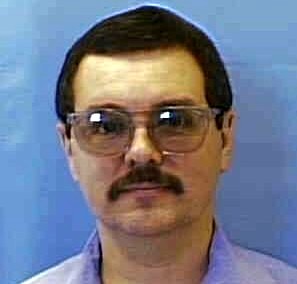
Donald HARVEY
A.K.A.:
"Angel of Death"
Classification:
Serial killer
Characteristics: Self-professed "Angel of Death"
Number of victims: 37 - 87
Date of murders: 1970 - 1987
Date
of arrest:April
1987
Date of birth:
April 15, 1952
Victims profile: Men and women (patients)
Method of murder: Smothering with plastic and pillow / Poisoning
(arsenic, cyanide, demerol, morphine, codeine) / Deprivation of
oxygen using a faulty oxigen tank
Location: Kentucky/Ohio, USA
Status: Sentenced to life
in prison in Ohio in August 1987. Sentenced to life in prison in
Kentucky in November 1987
When John Powell died at the
Drake Memorial Hospital in Cincinatti, Ohio, of cyanide poisining,
police targeted orderly Donald Harvey, who had been present at the
March, 1987 poisoning of Powell and when many other patients had
mysteriously passed away. Under questioning Harvey admitted to killing
more than fifty people throughout his life.
Digging further police found
that the hospitals Harvey had worked at all had very high fatality rates
and that some of his aquaintances and homosexual lovers had also
perished suddenly. For his part, Harvey claimed that he had been simply
putting ill patients out of their misery. He could not offer an
explanation for the other deaths.
Harvey eventually pled
guilty to 24 hospital slayings, recieving 20 years-to-life in prison for
each count, and collected a life sentence for the deadly poisoning of a
neighbor. Tried in Kentucky, Harvey again pled guilty, this time to
eight counts of murder and one count of manslaughter, and was sentenced
to eight life terms and one twenty year term.
Donald Harvey (born in Butler County, Ohio in 1952) is an American
serial killer who claims to have murdered 87 people. The official
estimates of the number of people he murdered range anywhere from 36 to
57 deaths. He is a self-professed "Angel of Death". Harvey is currently
serving four consecutive life sentences at the Southern Ohio
Correctional Facility in Ohio. His inmate number is A-199449.
History
Dating as far back as the age of eighteen, Harvey had
worked in and around the medical profession, beginning his career as an
orderly at the Marymount Hospital in London, Kentucky. He later
confessed that during the ten month period he worked at this hospital,
he killed at least a dozen patients. Harvey is insistent that he killed
purely out of a sense of empathy for the sufferings of those who were
terminally ill. However, he has also admitted that many of the killings
he committed were due to anger at the victim.
Harvey is notable for having kept his crimes from
coming to light for over 17 years. The true extent of his crimes may
never be known, since so many were undetected for so long. Harvey is
also notable for having used numerous methods to kill, such as arsenic;
cyanide; insulin; suffocation; miscellaneous poisons; morphine; turning
off ventilators; administration of fluid tainted with hepatitis B and/or
HIV (which resulted in a hepatitis infection, but no HIV infection, and
illness rather than death); insertion of a coat hanger into a catheter,
causing an abdominal puncture and subsequent peritonitis. Cyanide and
arsenic were his favorite methods, with Harvey administering them via
food, injection, or IV.
The majority of Harvey's crimes took place at the
Marymount Hospital in London, Kentucky, the Cincinnati V.A. Medical
Hospital, and Cincinnati's Drake Memorial Hospital. While working there,
Harvey acquired the nickname "The Angel of Death," as it was noted that
he was present around a number of patients who later died.
Donald Harvey
A homosexual and
self-styled occultist, Don Harvey attached himself to the medical
profession at age eighteen, working as an orderly at Marymount Hospital,
in London, Kentucky, from May 1970 through March 1971.
In 1987, Harvey
would confess to killing off at least a dozen patients in his ten months
on the job, smothering two with pillows and hooking ten others up to
near-empty oxygen tanks, all in an effort to "ease their
suffering."
Arrested for burglary on March 31, he pled guilty to a
reduced charge of petty theft the next day, escaping with a $50 fine.
The judge recommended psychiatric treatment for "his troubled
condition," but Harvey chose the air force instead, serving for ten
months before he was prematurely discharged, in March 1972, on
unspecified grounds.
Back home in Kentucky, Harvey was twice committed
to the Veteran's Administration Medical Center in Lexington, from July
16 to August 25, and again from September 17 to October 17. His mother
ascribed the committals to mental disorders, with Donald kept in
restraints, and his lawyers would later refer to a bungled suicide
attempt. The recipient of 21 electroshock therapy treatments, Harvey
emerged from the VA hospital with no visible improvement in his morbid
condition.
Concealing his record, Harvey found work as a part-time nurse's aide at
Cardinal Hill Hospital, in Lexington, between February and August 1973.
In June, he added a second nursing job, at Lexington's Good Samaritan
Hospital, remaining in that position through January 1974.
Between
August 1974 and September 1975, he worked first as a telephone operator
in Lexington, moving on to a job as a clerk at St. Luke's Hospital in
Fort Thomas, Kentucky. He kept his killing urge in check, somehow, but
it became increasingly more difficult to manage, finally driving him
away from home, across the border into Cincinnati.
From September 1975 through July 1985, Harvey held a variety of
positions at the Cincinnati V.A. Medical Center, working as a nursing
assistant, a housekeeping aide, a cardiac-catheterization technician,
and an autopsy assistant. In the latter position, he sometimes stole
tissue samples from the morgue, taking them home "for study."
On the side, he murdered at least fifteen patients, supplementing his
previous methods with an occasional dose of poison, once joking with
ward nurses after a patient's death that "I got rid of that one for
you." Nor were Harvey's victims limited to suffering patients.
Fuming at neighbor Diane Alexander after a quarrel, he laced her
beverage with hepatitis serum, nearly killing her before the infection
was diagnosed and treated by physicians.
On July 18, 1985, Harvey was
caught leaving work with a suspicious satchel: inside, security guards
found a .38-caliber pistol, hypodermic needles, surgical scissors and
gloves, a cocaine spoon, two books of occult lore, and a biography of
serial killer Charles Sobhraj. Cited by federal officers for bringing a
weapon into the V.A. facility, Donald was fined $50 and forced to resign
from his job.
Seven months later, in February 1986, Harvey was hired as
a part-time nurse's aide at Cincinnati's Drake Memorial Hospital, later
working his way up to a full-time position.
In thirteen months, before
his ultimate arrest, he murdered 23 more patients, disconnecting life
support equipment or injecting them with mixtures of arsenic, cyanide,
and a petroleum-based cleanser. Outside of work, he sometimes practiced
on his live-in lover, one Carl Hoeweler, poisoning Hoeweler after an
argument, then nursing him back to health. Carl's parents were also
poisoned, the father surviving, while Hoeweler's mother was killed.
On
March 7, 1987, patient John Powell's death was ruled a murder, autopsy
results placing lethal doses of cyanide in his system. Donald Harvey was
arrested in April, charged with one count of aggravated murder, and held
under $200,000 bond when he filed a plea of not guilty by reason of
insanity. By August 11, he had confessed to a total of 33 slayings and
bond was revoked two days later, with new charges filed.
As Harvey played the numbers game with prosecutors, adding victims to
the tune of 52 in all, his mental state was questioned, psychiatric
tests employed and scrutinized by experts.
A spokesman for the
Cincinnati prosecutor's office said, "This man is sane, competent,
but is a compulsive killer. He builds up tension in his body, so he
kills people." Harvey, for his part, insisted that most of the
murders were "mercy" killings, admitting that some --
including attacks on friends and acquaintances off the job -- had been
done "out of spite." In televised interviews, Donald discussed
his fascination with black magic, pointedly refusing to discuss his
views on Satanism.
On August 18, 1987, Harvey pled guilty in Cincinnati on 24 counts of
aggravated murder, four counts of attempted murder, and one count of
felonious assault. A twenty-fifth guilty plea, four days later, earned
him a total of four consecutive life sentences, barring parole for the
first 80 years of his term. (For good measure, the court also levied
$270,000 in fines against Harvey, with no realistic hope of collecting a
penny.)
Moving on to Kentucky, Harvey confessed to a dozen Marymount
slayings on September 7, 1987, entering a formal guilty plea on nine
counts of murder in November. In breaking John Wayne Gacy's record for
accumulated victims, Harvey earned another eight life terms plus twenty
years, but he was still not finished.
Back in Cincinnati during February
1988, he entered guilty pleas on three more homicides and three
attempted murders, drawing three life sentences plus three terms of
seven to 25 years on the latter charges.
With 37 confirmed murder victims (and
confessions nearly tripling that body count), Harvey holds the official
record as America's most prolific serial killer.
Michael Newton - An Encyclopedia
of Modern Serial Killers
Donald
Harvey
Donald Harvey (born in Butler County, Ohio in 1952) is
known as one of the most prolific serial killers of all time, claiming
to have murdered 87 people, while the official death toll has ranged
anywhere from 36 to 57 deaths. He is a self-professed "Angel of Death".
Harvey is currently serving four consecutive life sentences at the
Warren Correctional Institution in Ohio.
Early life
Shortly after his birth, Harvey's parents relocated to
Booneville, Kentucky, a small community nestled away on the eastern
slopes of the Appalachian Mountains. In an August 14, 1987, interview
with Cincinnati Post reporter Nadine Louthan, Harvey's mother, Goldie
Harvey, recalled that her son was brought up in a loving family
environment.
"My son has always been a good boy," she said.
Martha D. Turner, who was principal of the elementary
school Harvey attended for eight years, backed up McKinney's comments in
her own interview with the Cincinnati Post:
"Donnie was a very special child to me," she said. He was
always clean and well dressed with his hair trimmed. He was a happy
child, very sociable and well-liked by the other children. He was a
handsome boy with big brown eyes and dark curly hair he always had a
smile for me. There was never any indication of any abnormality."
Former classmates of Harvey described him as a loner and
teacher's pet. He rarely participated in extracurricular activities,
opting instead to read books and dream about the future. Following his
graduation from Sturgeon Elementary School, Harvey entered Booneville
High School in 1968. Earning A's and B's in most classes with little
effort, he became bored with the daily routine and dropped out. Having
no real goals, Harvey was not sure what he wanted to do with his
newfound freedom. For unknown reasons, he eventually decided to relocate
to Cincinnati, Ohio, where he secured a job at a local factory.
In 1970 work began to slow at the plant and Harvey was
eventually laid off. His mother called him a few days later and asked
him to travel to Kentucky and visit his ailing grandfather, who was
recently placed in a hospital there. Harvey agreed and within days set
off for Marymount Hospital in London, Kentucky. Although no one knew it
at the time, this trip would later prove to be the beginning of a long
journey into madness and murder.
The killer emerges
While in Kentucky, Harvey spent much of his time at
Marymount Hospital, and was soon well known and liked by the nuns who
worked there. During one particular conversation, one of the nuns asked
Harvey if he would be interested in working there as an orderly. Since
he was currently unemployed and didn't want another factory job, Harvey
agreed and started work the next day. Although he was not a trained
nurse or doctor, Harvey's duties required him to spend hours alone with
patients. Some of his duties included changing bedpans, inserting
catheters and passing out medications.
Harvey's first few weeks at the hospital were uneventful,
but something snapped within him along the way. To this day, criminal
psychologists are unable to explain what brought out his murderous
tendencies. Whether he was unable to cope with the pain and suffering
around him or simply enjoyed watching his victims die may never be
known. According to Harvey's later confessions, he considered himself an
"angel of death," or mercy killer. But the details he eventually
revealed about his first murder negate that self-serving description.
During an evening shift, just months after starting at
the hospital, Donald Harvey committed his first murder. Years later, in
a 1997 interview with Cincinnati Post reporter Dan Horn, Harvey
described it: When he walked into a private room to check on a stroke
victim, the patient rubbed feces in his face. Harvey became angry and
lost all control.
"The next thing I knew, I'd smothered him," he said. "It
was like it was the last straw. I just lost it. I went in to help the
man and he wants to rub that in my face."
Following the murder, Harvey cleaned up the patient and
hopped into the shower before notifying the nurses.
"No one ever questioned it," he said.
Just three weeks after committing his first murder, he
killed again when he disconnected an oxygen tank at an elderly woman's
bedside. As the weeks went by and no one detected foul play in his first
two murders, Harvey became more brazen. Whether out of boredom,
opportunity or experimentation, his methods varied with each murder. He
used various items, such as plastic bags, morphine and a variety of
drugs, to kill more than a dozen patients in a year. In one case, he
chose an exceptionally brutal method. The patient had an argument with
Harvey because he thought Harvey was trying to kill him, and during the
course of that argument, he reportedly knocked Harvey out with a bedpan.
Upon recovering from the blow, Harvey waited till later that night,
snuck into the patient's room, and stuck a coat hanger through his
catheter. As a result of the puncture, infection set in and the man died
a few days later.
On March 31, 1971, a drunk and disorderly Harvey was
arrested for burglary. While being questioned about the crime, Harvey
began babbling incoherently about the murders he had committed. The
arresting officers looked into his claims and questioned him extensively
about them, but in the end they were unable to find any substantial
evidence to back them up, or charge him with any crime relating to them.
A few weeks later he went to trial for the burglary charges and pleaded
guilty to a reduced charge of petty theft. After paying a small fine for
his indiscretion, Harvey decided it was time for another change of
scenery and enlisted in the United States Air Force.
Modus operandi
Harvey served less than a year in the Air Force before he
received a general discharge in March 1972. His records list unspecified
grounds for the discharge, but it was widely rumored at the time that
his superiors had learned of his confessions to the Kentucky police and
did not want to deal with any similar matters in the future. After his
release from the military, Harvey dealt with several bouts of
depression. By July 1972, he was unable to control his inner demons and
decided to commit himself to the Veteran's Administration Medical Center
in Lexington, Kentucky.
Harvey remained in the mental ward of the facility until
August 25, but then admitted himself again a few weeks later. Following
a bungled suicide attempt in the hospital, Harvey was placed in
restraints and over the course of the next few weeks received 21
electroshock therapy treatments. On October 17, 1972, Harvey was again
released from the hospital. Goldie Harvey later condemned the hospital
for releasing her son so abruptly, feeling that he had shown no apparent
signs of improvement from the time of his admittance.
Harvey spent the next few months trying to get his life
back in order and eventually found work as a part-time nurses' aide at
Cardinal Hill Hospital in Lexington. In June 1973, he started a second
nursing job at Lexington's Good Samaritan Hospital. Harvey kept both
jobs until August 1974, when he took up a job as a telephone operator,
and then secured a clerical job at St. Luke's Hospital in Fort Thomas,
Kentucky. According to his later confessions, Harvey was able to control
his urge to kill during this time. The more feasible explanation would
be that he did not have the same access to the patients as he did at
Marymount Hospital, which could also explain why he shifted from job to
job during this time.
The majority of serial killers are opportunists, and
Donald Harvey was a man with few opportunities. He had not yet evolved
enough to take his urges outside of the place he felt safe in committing
his crimes -- the dimly lit patient rooms -- his killing sanctuaries.
Harvey was a different kind of hunter and in order for him to get hold
of his prey, he had to first find the right environment.
In September 1975, Harvey moved back to Cincinnati, Ohio.
Within weeks he got a job working night shift at the Cincinnati V.A.
Medical Hospital. Harvey's duties varied and he performed several
different tasks, depending on where he was needed at the time. He worked
as a nursing assistant, housekeeping aide, cardiac-catheterization
technician and autopsy assistant. Harvey had found his niche and wasted
little time in starting where he had left off. Since he worked at night,
he had very little supervision and unlimited access to virtually all
areas of the hospital.
Over the next 10 years, Harvey murdered at least 15
patients while working at the hospital. He kept a precise diary of his
crimes and took notes on each victim, detailing how he murdered them --
pressing a plastic bag and wet towel over the mouth and nose; sprinkling
rat poison in a patient's dessert; adding arsenic and cyanide to orange
juice; injecting cyanide into an intravenous tube; injecting cyanide
into a patient's buttocks. All the while Harvey was committing his
crimes, he was refining his techniques by studying medical journals for
underlying hints on how to conceal his crimes.
Over the years, he amassed an astounding 30 pounds of
cyanide, which he had slowly pilfered from the hospital and kept at home
for safekeeping. Typically, Harvey would mix a vial of cyanide or
arsenic at home and then bring it to work. When no one was around, he
would slip the mixture into his victim's food, or pour it directly into
their gastric tube.
Overcoming the boundaries
The early 1980's brought about variations in Harvey's
methods. He moved in with a gay lover, Carl Hoeweler, and soon began
poisoning him out of fear that his mate was cheating on him. Harvey
would slip small doses of arsenic into Hoeweler's food so that he would
be too ill to leave their apartment. Harvey's confidence was hitting
peak levels and he began feeling as though he was unstoppable. On one
occasion, following an argument with a female neighbor, Harvey laced one
of her beverages with hepatitis serum, nearly killing her before the
infection was diagnosed and treated. Another neighbor, Helen Metzger,
was not so lucky. Harvey put arsenic in one of her pies, and she died
later that week at a local hospital.
In April 1983, Harvey had a squabble with Hoeweler's
parents and began to poison their food with arsenic. On May 1, 1983,
Hoeweler's father, Henry, suffered a stroke and was remitted to
Providence Hospital. Harvey visited Henry Hoeweler there and placed
arsenic in his pudding before leaving. Hoeweler died later that night.
Harvey continued to poison Carl's mother, Margaret, off and on for the
next year, but was unsuccessful in his attempts to kill her. In January
1984, Hoeweler broke off the relationship with Harvey and asked him to
move out. Harvey was angry at the rejection and spent the next two years
trying to kill Hoeweler with his poisonous concoctions. At one point he
even tried to kill a female friend of Hoeweler as a way to get his
revenge. While neither attempt worked, he did manage to land Hoeweler in
the hospital at one point, as a result of the poisons he had unknowingly
ingested.
While leaving work on July 18, 1985, security guards
noticed Harvey acting suspiciously and decided to search a gym bag he
was carrying with him. Inside the satchel, the guards discovered a
.38-caliber pistol, hypodermic needles, surgical scissors and gloves, a
cocaine spoon, various medical texts, two occult books, and a biography
of serial killer Charles Sobhraj. Fined $50.00 for carrying a firearm on
federal property, Harvey was then given the option to quietly resign
from his job rather than being fired. Nothing about the incident was
ever noted in his work record and hospital authorities did not open an
investigation to determine if Harvey had committed any other crimes
while working at the hospital.
Seven months later, in February 1986, Harvey once again
got work at a local hospital. This time he was hired as a part-time
nurses' aide at Cincinnati's Drake Memorial Hospital. His new employers
were unaware of the incident at his previous job, and his work folder
said nothing but good things about him. Harvey soon earned a full time
position at the hospital and settled back into his old routine. Over the
next 13 months, Harvey murdered another 23 patients, by disconnecting
life support machines, injecting air into veins, suffocation and
injections of arsenic, cyanide and petroleum-based cleansers.
Authorities became suspicious of Harvey in April 1987,
after the death of John Powell, a patient who was comatose for several
months, but had since started to recover. During the autopsy, an
assistant coroner noticed the faint scent of almonds, the tell tale sign
of cyanide. Authorities were unable to find any evidence or motive
pointing toward any of Powell's friends or family members, so they soon
began to focus on hospital employees, whom had access to Powell's room.
The list was short, and upon learning Donald Harvey's hospital nickname,
"Angel of Death," given to him because he always seemed to be around
when someone died, authorities began to focus their entire investigation
on him.
Capture, trial and sentencing
In April 1987, after securing a search warrant for
Harvey's apartment, investigators found a mountain of evidence against
him: jars of cyanide and arsenic, books on the occult and poisons, and a
detailed account of the murder, which he had written in a diary.
Following this new discovery of evidence, Harvey was arrested on one
count of aggravated murder, and after filing a plea of not guilty by
reason of insanity was held under a $200,000 bond. The evidence against
Harvey was growing rapidly, and investigators were beginning to look
into several other mysterious deaths at the hospital. Harvey realized
that it was only a matter of time before they discovered the full extent
of his crimes, and decided he should try to make a plea bargain to avoid
Ohio's death penalty.
On August 11, 1987, 35-year-old Harvey sat down with
investigators and confessed to committing 33 murders over the past 17
years. As the days went by, that number eventually grew to 70 in all.
Investigators were skeptical of the numbers Harvey was giving them, and
wanted to have his mental state assessed prior to taking his claims as
fact. Following several psychiatric tests by numerous experts, a
spokesman for the Cincinnati prosecutor's office explained the dilemma
to the Cincinnati Post:
"This man is sane, competent, but is a compulsive
killer," he said. "He builds up tension in his body, so he kills
people."
Donald Harvey entered the courtroom on August 18, 1987,
and pled guilty to 24 counts of aggravated murder, four counts of
attempted murder, and one count of felonious assault. Just four days
later, a 25th guilty plea earned him a total of four consecutive
20-years-to-life sentences. In addition to his life terms, Harvey was
fined $270,000.
Harvey was indicted in Kentucky on September 7, 1987,
where he confessed to committing 12 murders while employed at Marymount
Hospital. In November, he pleaded guilty and was sentenced to eight life
terms plus 20 years. In February 1988, he entered guilty pleas on three
additional Cincinnati homicides and three attempted murders, drawing
three life sentences plus three terms of seven to 25 years. Two years
later, the investigation into the remaining deaths was closed after
investigators determined that there was not enough evidence to pursue
them.
In a 1991 interview with a reporter from the Columbus
Dispatch, Harvey gave a rare glimpse into his mindset:
"Why did you kill?" "Well, people controlled me for 18
years, and then I controlled my own destiny. I controlled other people's
lives, whether they lived or died. I had that power to control." "What
right did you have to decide that?" "After I didn't get caught for the
first 15, I thought it was my right. I appointed myself judge,
prosecutor and jury. So I played God."
On July 23, 2001, the Associated Press printed an article
listing the worst serial killers in the United States. Donald Harvey was
rated number one, followed by John Wayne Gacy, Patrick Kearney, Bruce
Davis and Dean Corll.
Donald Harvey's first scheduled parole hearing is set for
2047. He will be 95. His inmate number is A-199449.