Murderpedia has thousands of hours of work behind it. To keep creating
new content, we kindly appreciate any donation you can give to help
the Murderpedia project stay alive. We have many
plans and enthusiasm
to keep expanding and making Murderpedia a better site, but we really
need your help for this. Thank you very much in advance.
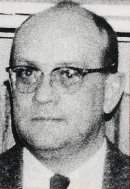
Leo HELD
Classification: Mass murderer
Characteristics: Apparently upset over a dispute with
members of his car pool, his superiors and a neighbour
Number of victims: 6
Date of murder: October 23,
1967
Date of birth: 1928
Victims profile: Allen Barrett Jr.,
45 / Richard Davenport, 32 / Donald V. Walden, 31 / Carmen H. Edwards,
62 /
Elmer Weaver, 37 / Floyd Quiggle, 27
Method of murder:
Shooting
(two pistols: a .45 automatic and a Smith & Wesson
.38)
Location: Lock Haven, Pennsylvania, USA
tatus: Killed
during a shoot-out with the police the same day
On morning in the fall of 1967, Leo, a devout
Christian, woke up and decided to take care of his problems. He drove
his kids to school, dropped his wife at her job and showed up at the
paper mill where he worked packing heat. There he wasted five
supervisors. Then he went to a local airport and wounded a switchboard
operator that was part of his car pool. Next he went home and shot his
neighbors, the Quiggles, while they slept. One died, the other survived.
When he returned home, the police had surrounded his
house and shot him. He died in the hospital but not before saying why he
shot each person. All the victims had irked him in some way or another.
There was one person he couldn't get to, a seventy-year-old neighbor, a
fact which he lamented on his death bed.
Shooting tragedy
October 25, 1967
A berserk paper mill
worker at Lockhaven, Pennsylvania, apparently upset over a dispute with
members of his car pool, his superiors and a neighbour, killed six of
them yesterday in a shooting spree. Seven other people were wounded,
three critically.
The gunman, Leo Held, aged 39, was
later wounded and seized by the police in his near-by Loganton home. He
was rushed to Lockhaven Hospital in critical condition.
Killer of six dies
October 26, 1967
Leo Held, aged 39,
who went on a rampage of death on Tuesday, killing six people and
injuring six others before he was felled by police bullets, died
yesterday at Lockhaven Hospital, Pennsylvania.
Berserk gunman kills 6 friends
October 23, 1967
LOCK HAVEN, Pa., – A crazed laboratory technician opens fire with two pistols in
a crowed paper mill here today, beginning a one-and-a-half-hour shooting
spree that left six dead and six wounded.
The police, family and friends, all at a loss to
explain what made Leo Held go berserk, said that until the 39-year-old
father of four strode into the Hammermill Paper Company plant here with
guns blazing he was known to all as "a quiet, peaceful man devoted to
his family."
The police said Held shot five dead and wounded four
others in the plant. Then he killed a sixth man and wounded two more in
a trail of gunfire that took him to his home in Loganton, 17 miles
southeast of Lock Haven.
An avid hunter and a good shot, he apparently knew
his targets and went for them, the police said. With icy calm, Held used
a .38-caliber revolver and a .44-caliber Magnum while 40 to 50 employees
watched struck dumb by shock.
The shootings, which began shortly after 8 A.M.,
lasted just a few minutes. Then Held, a 21-year employee of the
Hammermill plant, quickly turned and walked out the main door leaving
fellow employees crouching behind machinery and desks in fear.
The six-foot 200-pounder’s next move gave the police
what they thought was their first clue to a motive. The bespectacled,
baldish former school board members climbed into his station wagon at
the plant and drove to Lock Haven Airport.
There he sought out Mrs. Geraldine Ramm, a neighbor
in Loganton. He found her at the switchboard she operates for the Piper
Aircraft Corporation. It was then about 8:15.
He fired several times into the office and managed to
hit Mrs. Ramm twice, wounding her seriously. Her husband, Schuyler Ramm,
told a newsman later that his wife was the driver today in a car pool
that had blackballed Held about three months ago "because of his
reckless driving."
But of the victims at the paper mill, at least two
were not in the car pool or even close friends, according to victim’s
relatives. They were Allen Barrett Jr., 45, a laboratory employee from
Lock Haven, and Richard Davenport, 32, a quality control supervisor from
Woolrich.
The others killed there were Donald V. Walden, 31, of
Lock Haven, paper manufacturing superintendent; Carmen H. Edwards, 62,
of Mill Hall, superintendent of wastes and bacteriological control, and
Elmer Weaver, 37, of Lock Haven, a laboratory employee.
Slain in His Bed
The sixth victim was Floyd Quiggle, 27, Held’s
Loganton neighbor, who was slain in bed. The police said Held apparently
drove directly from the airport to Mr. Quiggle’s home, forced his way in
and shot Mr. Quiggle dead and wounded his wife as they lay asleep.
An investigation by Capt. John Grey of the state
police indicated that Held stayed a while at the Quiggle home, taking
weapons and ammunition from Mr. Quiggle’s gun case. Then he ran outside,
behind his own house and into a field to avoid a police posse waiting
for him.
Scores of shots were fired as Held engaged a dozen
officers in a gun battle. He was hit again and again by the circling
police. Then he sank to the ground but kept firing.
Harold M. Brungard, chief executive officer at the
Loganton National Bank and Held’s brother-in-law, shouted as he crouched
behind police men:
"Please, Leo, give yourself up. Drop the gun. Give
yourself up"
Finally Held crumpled, wounded in the hands, leg and
forehead. It was all over at 9:25 A.M.
"I can’t believe this has happened." Mr. Brungard
said.
Wife Collapses
Held’s wife, Alta, 36, collapsed at her job at the
Plastic-Vac Corporation, in nearby Jersey Shore. She had gone to work
after sending her three young children, Court, Gerald and Barbara, off
to the Sugar Valley School. The oldest son, Larry, is a student at
Pennsylvania State University.
District Attorney Allan Lugg of Clinton County told a
news conference that Held would be charged with murdering "the various
victims involved."
Mr. Lugg said Held had had neither a mental problem
nor a police record and was regarded as "a respected citizen." The
District Attorney said the arresting police "didn’t want to kill him"
and wounded him in the hads and then in the leg and head.
Though Held’s condition was critical, a doctor said,
"I think he’ll make it."
Held and the other wounded are in Lock Haven
Hospital.
Portrait of a killer
October 24, 1967
LOCK HAVEN, Pa., – Leo Held, who inflicted a 90-minute reign of terror on this region yesterday,
suffered some of the classic symptoms of a persecution complex, his
neighbors said today.
Held, a chunky, baldish, 39-year-old laboratory
technician in a paper mill, killed six persons and wounded six others
before he was trapped and disarmed in his backyard in nearby Loganton.
Loganton is a neat, tiny village of 400, lost in a
fold of Appalachians and reached by a winding mountain road. No one
there professed to know the grievance, real or imagined, that sent Held
on his shooting rampage.
Most of the people there said that, until yesterday,
Leo seemed to be a quiet, peaceful citizen, devoted to his wife and four
children, a member of the Sugar Valley School Board, a director of the
Loganton Boy Scout troop, and an ardent deer hunter and woodsmen.
Still, there were other things. They said Leo was
gnawed by suspicions that someone was out to get his job, and that he
felt he had been passed over for promotion.
They said he thought his telephone was being tapped,
and that he feuded with a neighbor over an inconsequential strip of
boundary land.
They said he thought neighbors burned leaves just to
spite him, knowing he hated the smoke, and that some of them unfairly
criticized his driving.
Nonetheless, Sugar Valley residents had not thought
much of their quiet neighbor’s peculiarities. Then they heard the
broadcast.
Leo, a .45-caliber automatic pistol in one hand and a
.38-caliber Magnum revolver in the other, had stalked into the
Hammermill Paper Company, coldly and methodically wiped out four of his
fellow employees, and was now speeding toward Loganton.
The Sugar Valley School, where three of the four Held
children are enrolled, was put under a state of siege. The acting
principal, William Harbach, a math teacher who used to hunt groundhogs
with Held, ran home to fetch a revolver.
Harry Mark, the janitor, and some of the male
teachers rushed to their homes for rifles.
Children are Separated
Shades were drawn on the ground-level classrooms and
children were evacuated from the aisles nearest windows. They were told
that they would have to remain indoors, perhaps even during luncheon
recess. They were not told why.
Then the armed teachers deployed near the school
entrances and waited for Held.
The Held children, Barbara, 12, Gerald, 13, and Curt,
5, were separated from their classmates and taken to an interior hall.
They were told there later that their father had been involved in some
shooting.
Uptown, the Rev. Stephen McKittrick of St. Paul’s
Lutheran Church, heard the news on his car radio. He ran into his house
and armed himself with a recent birthday present from his wife, and over-and-under
shotgun that he hoped to use during the wild turkey season.
A police car from Lock Haven had just arrived and men
were beginning to surround Held’s home, a new story-and-a-half brick
house, where he was believed to be hiding.
They had arrived too late, however, to prevent the
slaying of Held’s sixth and last victim.
Avoiding state police roadblocks by taking a back
road over Pine Mountain, Held had reached Loganton and broken into the
home of his neighbors, the Floyd D. Quiggles. One he had protested to
them about leaf burning.
Mr. Quiggle, a self-employed truck driver, and his
wife, were upstairs in bed. They were sleeping late because Mr. Quiggle
had no trip scheduled.
Held strode into the bedroom and opened fire, killing
Mr. Quiggle instantly and critically wounding Mrs. Quiggle in the face
and neck.
Then he walked downstairs and helped himself to
several rifles from a gun cabinet before crossing the road to his own
home.
He brushed past the Quiggle’s 4½-year-old daughter,
Jody Lynn, whom a neighbor later found crying into the downstairs
telephone.
"Just as clear as though she was reciting a lesson in
classroom," the neighbor said, Jody Lynn was saying:
"Help me, mommy and daddy have been shot."
Held got inside his front door just as the police
arrived.
Lock Haven’s assistant police chief, William B. Ryan,
walked up and knocked on the door. Held parted the curtains on the door
window, stared at Ryan, and then vanished into the interior of the house.
A moment later he came out the back door and started
running across the lawn. He had his pistol and revolver and according to
Chief of Police Domer G. Orndorf, he fired.
Assistant Chief Ryan, who had ducked around the side
of the house, returned the fire, dropping Held with a bullet that
shattered his right thigh.
The police called on Held to surrender.
Spread-eagle on the grass, but snarling defiance,
Held replied:
"Come and get me. I’ve had enough."
When Mr. McKittrick reached the scene, Held was
firing at the police, who now were reinforced by state troopers.
Held’s brother-in-law, Harold M. Brungard, a cashier
at the Loganton National Bank, walked to the edge of the yard, starkly
exposed to the slayer’s guns, and pleaded with Leo to give up.
Held stared at him, but said nothing. Then the
shooting resumed.
"There was a dream-like quality about the whole thing,"
Mr. McKittrick recalled. "Fear didn’t come in until later. Leo already
had been shot and disabled and I could feel only pity for him."
Held was now caught in a cross-fire. The police,
taking pains not to kill him, they said, aimed for his hands. Their
bullets finally shattered both wrists and knocked the guns away.
Muttering incoherently and under deep sedation, Held
remained in critical condition today in Lock Haven Hospital. Not only
his wrists and right thigh had been shattered, he also had been hit in
the left shoulder. The police were unable to question him.
The police are unable to find any convincing reason
why Held selected some of his victims. His last act before leaving Lock
Haven yesterday was to drive from the paper mill to the local airport,
where he shot and seriously wounded Mrs. Geraldine Ramm, an employee of
the Piper Aircraft Company.
Mrs. Ramm, wife of a Loganton undertaker, belonged to
a car pool with Held and other Sugar Valley residents, and there is a
report that Held had been "blackballed" by members of the pool for fast
driving.
The police have found that Mrs. Ramm had criticized
Held’s driving, but they do not think this pressing enough for Held to
kill her. Besides, he has not used the car pool for several weeks, they
said.
Among those shot and killed by Held were supervisors
whose advancement he might have resented. But reports that Held was
fearful of retaining his own job are discounted by company officials.
There had been talk of layoffs at the plant, but Held,
because of seniority, was not likely to lose his job, employees there
said.
Still, to his neighbors, Held had seemed edgy, and
occasionally he had showed a spark of truculence.
W. Edwards Meyer, president of the Loganton National
Bank, recalled:
"He was not a good mixer; he was retiring almost to
the point of being shy. But on the school board he’d take a firm stand
and be obstinate and inflexible."
Mr. Meyer said Held would "pick up an argument" with
neighbors, once complaining that a neighbor was encroaching on his
property line, another time saying that smoke from neighbor’s fires was
drifting onto his lawn.
Many Sugar Valley residents worried today lest the
mass slayings encourage a state crackdown on firearms. Virtually
everyone in the valley seems to have a rifle. This is fine deer country;
even bear are still taken in numbers in the central Pennsylvania
wilderness.
The population of Sugar Valley is long settled, white,
Protestant, and largely of German origin. In about a month many kitchens
in the valley will be smelling of roast venison, red cabbage and
homemade sauerkraut.
Pennsylvania: The Revolt of Leo Held
Time.com
Friday, Nov. 03, 1967
There was almost nothing in Leo Held's life that
could have presaged the end of it. Held, 40, a burly (6 ft., 200 lbs.),
balding lab technician at a Lock Haven, Pa., paper mill, had been a
school-board member, Boy Scout leader, secretary of a fire brigade,
churchgoer and affectionate father.
Certainly he bickered occasionally with his neighbors,
drove too aggressively over the hilly highways between his Loganton home
and the mill, and sometimes fretted about the job that he held for 19
years. But to most of his neighbors and coworkers, he was a paragon of
the responsible, respectable citizen.
That image was shattered in a well-planned hour of
bloodshed last week when Held decided to mount a one-man revolt against
the world he feared and resented.
After seeing his wife off to work and their children
to school, Held, a proficient marksman, pocketed two pistols—a .45
automatic and a Smith & Wesson .38—and drove his station wagon to the
mill. Parking carefully, he gripped a gun in each fist and stalked into
the plant. Then he started shooting with a calculated frenzy that filled
his fellow-worker victims with two and three bullets apiece, at least 30
shots in all. One bullet shattered a transformer, adding darkness to the
sudden panic; yet throughout his ten-minute rampage, Held displayed the
calm proficiency of a man who has mapped his assault in advance. Shot
dead were Supervisors Carmen H. Edwards and Richard Davenport, Lab
Technicians Allen R. Barrett and Elmer E. Weaver, and Superintendent
Donald V. Walden. Picking his targets with care as he strode through the
mill, Held also wounded James Allen, a superintendent; Richard Carter, a
lab technician; David Overdorf, a machine operator, and a manager,
Woodrow Stultz.
No More Bull.
Stopping for a few casual words with incoming workers
as he left the mill, Held next drove to the Lock Haven airport, where he
shot at Switchboard Operator Gerry Ramm four times, wounding her twice.
Thinking it was a prank, the airport manager hustled Held outside
without a protest. Then Held's obsession sent him to the Sugar Valley
School, where three of his own children and some 500 others had been
locked inside after police had notified the principal of Held's rampage.
After circling the school, Held drove home and invaded the house of Mr.
and Mrs. Floyd Quiggle across the street. The Quiggles were still asleep
in bed. Held's shots killed Quiggle instantly and critically wounded Mrs.
Quiggle while their four-year-old daughter cowered under her own bed in
fright. Helping himself to more ammunition and a rifle, Held went home.
A hastily formed posse found him in his doorway,
armed and snarling defiance: "Come and get me. I'm not taking any more
of their bull." Although Held's brother-in-law pleaded with him to
surrender and bullets shattered his shoulder, leg and right wrist, Held
switched the .38 to his left hand, firing until it, too, was smashed.
Taken to a guarded hospital bed, he never regained full consciousness,
dying later from the complications of his many wounds. He left behind a
trail of six people wounded, six others dead.
One to Go.
As news of Held's bloody rampage reverberated across
central Pennsylvania, puzzled officials discovered a tenuous chain of
logic behind his actions. Mrs. Ramm had quit a car pool, complaining of
Held's driving. Many victims at the paper plant either were in authority
over him or had been promoted while he had not. Held and Quiggle had
feuded over smoke from burning leaves, and probers soon found that
Held's stolid surface had masked truculence, resentment and rage. His
doctor, noting that Held had shown paranoid tendencies a year ago, said:
"He felt the people at the plant were talking about him."
Another neighbor, Mrs. Ella Knisely, told of a spat
over a fallen tree limb that so enraged Held he beat the 71-year-old
widow with the branch. She took him to court on assault and battery
charges, but the magistrate threw out her case and Held's cross
complaint. If the jurist "had thought a little more carefully," said Mrs.
Knisely, and seen that "here was a man who was sick and sent him to a
psychiatrist, this thing could have been prevented."
Mrs. Knisely added that she wished Held had slain her
instead of young Quiggle. Indeed, he may well have intended to include
her with the rest. As he lay dying, doctors said, Held thanked a nurse
for a glass of water, asked about his oldest son, and murmured, "I had
one more to go."
Leo HELD
A 39-year-old Lab Technician, Leo Held was not really
thought of a possible murderer. He was married, had four kids, was a
scout leader (it's always the scout leaders), school board member,
churchgoer and volunteer firefighter.
But behind this life he hid his true feelings. he
hated his neighbors, well he hated everyone. They were all out to get
him, so he thought, but it was his next door neighbors who really pissed
him off. They burned leaves in their yard and this was done purely to
spite him. And the cunts at work all got promotions ahead of him. Well
Leo wasn't going to take their shit anymore. And on October 24, 1967, he
decided to take revenge on all those who were plotting against him.
So, he left the house on his way to work. Once there,
well you could say he made a grand entrance. He strode into the building
and quicker than you could say "Holy Fuck" he had started
picking the back stabbing bastards off. He had a .38 revolver in one
hand and a .44 magnum in the other and was putting them to good use. He
got three of his bastard supervisors and two of his lab technician work
mates. He walked through the place at a slow pace picking them off
apparently at random.
Once done at the mill he moved on to Lock Haven
Airport where his slut neighbor, Geraldine Ramm, worked as a switchboard
operator. He stopped off here only long enough to put four bullets in
the scheming bitch, wounding her seriously.
From here he went back home to Loganton where he paid
a visit to his leave burning neighbors, the Quiggles. They were still
asleep at this time so he had to brake in to the house. Once inside he
headed upstairs to the master bedroom where he filled Floyd Quiggle's
head with his bullets. He also put a couple of bullets into his wife,
wounding her. He then went downstairs and stole a few rifles and some
ammo from the Quiggles stash. He then pushed their 4-year-old daughter
out of the way as he left through the front door, where he was greeted
by a shitload of police.
He came out all guns blazing, firing off at anything,
but hitting nothing. Then his leg was smashed by a police bullet, and he
went down. The police called for him to surrender, but Leo answered this
with more bullets and a "Come and get me", followed by more
bullets. This continued until he was finally hit in the head. He stopped
firing then.
He died later in the Lock Haven Hospital unable to
answer any of the questions that police had.