Murderpedia has thousands of hours of work behind it. To keep creating
new content, we kindly appreciate any donation you can give to help
the Murderpedia project stay alive. We have many
plans and enthusiasm
to keep expanding and making Murderpedia a better site, but we really
need your help for this. Thank you very much in advance.
John
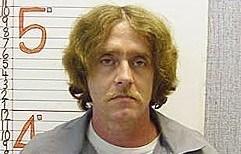
C. MIDDLETON
Classification: Murderer
Characteristics: User and dealer of methamphetamine
-
Revenge
Number of victims: 3
Date of murders: June 11/23, 1995
Date of birth:
November 2,
1959
Victims profile: Randy Hamilton and Stacey Hodge
/ Alfred
Pinegar
Method of murder:
Shooting
Location: Harrison County, Missouri, USA
Status: Sentenced to death on April 24, 1997. Executed
by lethal injection in Missouri on July 16, 2014
Middleton was a small-time meth dealer in sparsely populated northern
Missouri.
After several drug suspects were arrested, Middleton
told friends that "snitches around here are going to start going down,"
and specifically named Randy Hamilton and Alred Pinegar on a "hit list."
The next day, Middleton and his girlfriend, Maggie
Hodges, met Hamilton and Stacey Hodge on a gravel road, killing them
both with SKS rifles and putting their bodies in the trunk. While
driving around in Hamilton's car, Middleton encountered Danny Spurling.
Middleton was covered in blood and told Spurling he
had "taken care" of Hamilton and asked for advice on what to do with the
bodies. Middleton later visited a friend in Iowa, telling him he "done
Happy [Hamilton]," and giving him two SKS rifles. The rifles were later
turned over to police, who matched class characteristics with bullet
fragments taken from Hodge.
Eyewitness testimony revealed Middleton purchasing
ammunition in the hours before Pinegar's death. Accomplice Hodges pled
guilty to second-degree murder in all three deaths and received a life
sentence.
Citations:
State v. Middleton, 995 S.W.2d 443 (Mo. 1999). (Direct Appeal-Pinegar
Murder) State v. Middleton, 998 S.W.2d 520 (Mo. 1999). (Direct
Appeal-Hamilton/Hodge Murders) Middleton v. State, 80 S.W.3d 799 (Mo. 2002). (PCR-Hamilton/Hodge
Murders) Middleton v. State, 103 S.W.3d 726 (Mo. 2003). (PCR-Pinegar
Murder) Middleton v. Roper, 498 F.3d 812 (8th Cir. Mo. 2007). (Federal
Habeas)
Final Meal:
A cheeseburger, a pork steak, french fries, apple pie, and a chocolate
milk shake.
Final Words:
"You are killing an innocent man."
ClarkProsecutor.org
Missouri executes triple murderer after stay is lifted
By Carey Gillam - Reuters.com
Jul 16, 2014
(Reuters) - After a nearly day-long delay amid a
flurry of final appeals, Missouri put to death a triple murderer who had
claimed both that he was innocent and that he suffered from mental
incompetence. John Middleton, 54, was given a lethal injection and
pronounced dead at 7:06 p.m. CST, according to Missouri Department of
Corrections spokesman Mike O'Connell.
Middleton had been scheduled to die by lethal
injection shortly after midnight on Wednesday at a state prison in Bonne
Terre but the execution was called off after a late-night stay of
execution granted by U.S. District Judge Catherine Perry. She ruled that
Middleton met a standard for mental incapacity and should be given a
chance for a new hearing. The U.S. Supreme Court has ruled it
unconstitutional to execute inmates with mental disabilities. That stay
was lifted Wednesday morning by an appellate court but Perry again
issued a stay and the matter went back to the appellate court and to the
Missouri Supreme Court, both of which ordered that the execution could
proceed. The U.S. Supreme Court also refused to issue a stay and the
execution began at 6:58 p.m. local time, prison officials said.
Middleton is a former methamphetamine dealer who was
convicted of the 1995 murders of three people who had ties to the drug
trade and who prosecutors said Middleton feared would inform on him to
police. Apart from claims of mental incapacity, Middleton's lawyers had
also argued that new evidence showed Middleton was innocent of the
killings of Randy Hamilton, Stacey Hodge and Alfred Pinegar in the
summer of 1995. Missouri Attorney General Chris Koster said Middleton's
claims were not valid and justice was done. “Twenty years ago, John
Middleton murdered three people out of fear they would expose him as the
drug dealer he was," Koster said in a statement. "He received the death
penalty for each of his three murders. This evening, Mr. Middleton paid
the ultimate price for his choices.”
Missouri executes man accused of killing 3 people
STLtoday.com
July 17, 2014
BONNE TERRE, Mo. (AP) — A former methamphetamine
dealer was executed Wednesday for killing three people in remote
northern Missouri out of fear that they would report his drug activity
to police. John Middleton, 54, died Wednesday night from an injection of
pentobarbital, the sixth execution in Missouri this year. Only Florida
and Texas, with seven each, have performed more executions.
Middleton was convicted of killing Randy "Happy"
Hamilton and Stacey Hodge in early June 1995, then Alfred Pinegar
several days later. He maintained to the end that someone else was
responsible for the slayings. "You are killing an innocent man,"
Middleton said in his final statement. State officials, including Gov.
Jay Nixon, disagreed. "Tonight has brought a conclusion to a case that
illustrates how methamphetamine can have such a monstrous impact on so
many lives," Nixon said in a statement.
Michael Black, Pinegar's uncle, questioned why it
took so long for the execution to occur. "Nineteen years seems like a
long time to wait for justice," he said following the execution.
Middleton was a small-time meth dealer in sparsely
populated northern Missouri in the mid-1990s. After several drug
suspects were arrested on June 10, 1995, he allegedly told a friend:
"The snitches around here are going to start going down." A day later,
according to court records, Middleton and his girlfriend met Hamilton
and Hodge on a gravel road. Prosecutors said Middleton shot and killed
them both and hid the bodies in the trunk of Hamilton's car. Pinegar,
another meth dealer according to police, was shot in the face on June
23, 1995. His body was found in a field near Bethany. Acquaintances say
Middleton told them he killed all three. Police also had eyewitness
accounts of Middleton purchasing ammunition in the hours before
Pinegar's death. Middleton was convicted in 1997. Middleton's
girlfriend, Maggie Hodges, is serving life in prison after pleading
guilty to second-degree murder in all three deaths.
In February, a man whose name has not been disclosed
because he fears retribution signed an affidavit saying that two rival
meth dealers drove him to a rural area soon after Pinegar's death and
accused him of being a snitch. He said the men showed him Pinegar's
body, saying: "There's already been three people killed. You want to be
number four?" The witness said the two dealers then beat him unconscious
with a baseball bat and raped his girlfriend. Neither police nor the
courts were swayed by the new witness. Harrison County Sheriff Josh
Eckerson agreed to take a new look at the case but said his
investigation found no evidence to back up the claims. He is convinced
that Middleton was the real killer. Several court appeals claiming
innocence were turned away.
Concerns about whether Middleton was mentally fit for
execution, though, spurred a long delay in the execution, which occurred
19 hours after it was originally scheduled, at 12:01 a.m. A federal
judge granted a stay of execution late Tuesday, citing a need for a
hearing to determine if Middleton was mentally ill. Courts have held it
is unconstitutional to execute the mentally ill. A federal appeals court
overturned the stay later Wednesday and neither the U.S. Supreme Court
nor the Missouri Supreme Court would halt the execution.
Missouri has executed one man each month since
November, with the exception of May, when the U.S. Supreme Court halted
the execution of Russell Bucklew. Bucklew suffers from a rare congenital
condition that causes weakened and malformed blood vessels as well as
tumors in his nose and throat. The 8th U.S. Circuit Court of Appeals
plans a hearing on Sept. 9 to determine if lethal injection could cause
him to suffer because of his medical condition. Another execution is
scheduled for Aug. 6, when Michael Shane Worthington is scheduled to be
put to death for the rape and killing of a suburban St. Louis neighbor
in 1995.
Missouri executes man for killing 3 people
By Jim Salter - News-Leader.com
July 17, 2014
BONNE TERRE – A former methamphetamine dealer was
executed Wednesday for killing three people in remote northern Missouri
out of fear that they would report his drug activity to police. John
Midddleton, 54, died Wednesday night from an injection of pentobarbital,
the sixth execution in Missouri this year. Only Florida and Texas, with
seven each, have performed more executions. Middleton was convicted of
killing Randy "Happy" Hamilton and Stacey Hodge in early June 1995, then
Alfred Pinegar several days later. He maintained to the end that someone
else was responsible for the slayings. "You are killing an innocent
man," Middleton said in his final statement. State officials, including
Gov. Jay Nixon, disagreed. "Tonight has brought a conclusion to a case
that illustrates how methamphetamine can have such a monstrous impact on
so many lives," Nixon said in a statement.
Michael Black, Pinegar's uncle, questioned why it
took so long for the execution to occur. "Nineteen years seems like a
long time to wait for justice," he said following the execution.
Middleton was a small-time meth dealer in sparsely
populated northern Missouri in the mid-1990s. After several drug
suspects were arrested on June 10, 1995, he allegedly told a friend:
"The snitches around here are going to start going down." A day later,
according to court records, Middleton and his girlfriend met Hamilton
and Hodge on a gravel road. Prosecutors said Middleton shot and killed
them both and hid the bodies in the trunk of Hamilton's car. Pinegar,
another meth dealer according to police, was shot in the face on June
23, 1995. His body was found in a field near Bethany. Acquaintances say
Middleton told them he killed all three. Police also had eyewitness
accounts of Middleton purchasing ammunition in the hours before
Pinegar's death. Middleton was convicted in 1997. Middleton's
girlfriend, Maggie Hodges, is serving life in prison after pleading
guilty to second-degree murder in all three deaths.
In February, a man whose name has not been disclosed
because he fears retribution signed an affidavit saying that two rival
meth dealers drove him to a rural area soon after Pinegar's death and
accused him of being a snitch. He said the men showed him Pinegar's
body, saying: "There's already been three people killed. You want to be
number four?" The witness said the two dealers then beat him unconscious
with a baseball bat and raped his girlfriend. Neither police nor the
courts were swayed by the new witness. Harrison County Sheriff Josh
Eckerson agreed to take a new look at the case but said his
investigation found no evidence to back up the claims. He is convinced
that Middleton was the real killer. Several court appeals claiming
innocence were turned away.
Concerns about whether Middleton was mentally fit for
execution, though, spurred a long delay in the execution, which occurred
19 hours after it was originally scheduled, at 12:01 a.m. A federal
judge granted a stay of execution late Tuesday, citing a need for a
hearing to determine if Middleton was mentally ill. Courts have held it
is unconstitutional to execute the mentally ill. A federal appeals court
overturned the stay later Wednesday and neither the U.S. Supreme Court
nor the Missouri Supreme Court would halt the execution.
Missouri has executed one man each month since
November, with the exception of May, when the U.S. Supreme Court halted
the execution of Russell Bucklew. Bucklew suffers from a rare congenital
condition that causes weakened and malformed blood vessels as well as
tumors in his nose and throat. The 8th U.S. Circuit Court of Appeals
plans a hearing on Sept. 9 to determine if lethal injection could cause
him to suffer because of his medical condition. Another execution is
scheduled for Aug. 6, when Michael Shane Worthington is scheduled to be
put to death for the rape and killing of a suburban St. Louis neighbor
in 1995.
Missouri executes man convicted of killing 3 people
By Jim Salter - KansasCity.com
July 16, 2014
BONNE TERRE, Mo. — A former methamphetamine dealer
was executed Wednesday for killing three people in rural northern
Missouri out of fear that they would report his drug activity to police.
John Middleton, 54, died from an injection of pentobarbital, the sixth
execution in Missouri this year. Only Florida and Texas, with seven
each, have performed more executions.
Middleton was convicted of killing Randy “Happy”
Hamilton and Stacey Hodge in early June 1995, then Alfred Pinegar
several days later. Middleton was a small-time meth dealer in sparsely
populated northern Missouri in the mid-1990s. After several drug
suspects were arrested on June 10, 1995, he allegedly told a friend:
“The snitches around here are going to start going down.” A day later,
according to court records, Middleton and his girlfriend met Hamilton
and Hodge on a gravel road. Prosecutors said Middleton shot and killed
them both and hid the bodies in the trunk of Hamilton’s car. Pinegar,
another meth dealer, was shot in the face on June 23, 1995. His body was
found in a field near Bethany. Acquaintances say Middleton told them he
killed all three. Police also had eyewitness accounts of Middleton
purchasing ammunition in the hours before Pinegar’s death. Middleton was
convicted in 1997. Middleton’s girlfriend, Maggie Hodges, is serving
life in prison after pleading guilty to second-degree murder in all
three deaths.
In February, a man whose name has not been disclosed
because he fears retribution signed an affidavit saying that two rival
meth dealers drove him to a rural area soon after Pinegar’s death and
accused him of being a snitch. He said the men showed him Pinegar’s
body, saying: “There’s already been three people killed. You want to be
number four?” The witness said the two dealers then beat him unconscious
with a baseball bat and raped his girlfriend. Harrison County Sheriff
Josh Eckerson agreed to take a new look at the case but said his
investigation found no evidence to back up the claims. He is convinced
that Middleton was the real killer.
The execution Wednesday evening occurred several
hours after it was originally scheduled, at 12:01 a.m. A federal judge
granted a stay of execution late Tuesday, citing a need for a hearing to
determine if Middleton was mentally ill. A federal appeals court
overturned the stay and neither the U.S. Supreme Court nor the Missouri
Supreme Court would halt the execution. Middleton’s appeals on claims
that he was innocent were also turned away, and Gov. Jay Nixon denied a
request for clemency.
Missouri has executed one man each month since
November, with the exception of May, when the U.S. Supreme Court halted
the execution of Russell Bucklew. Bucklew suffers from a rare congenital
condition that causes weakened and malformed blood vessels as well as
tumors in his nose and throat. The 8th U.S. Circuit Court of Appeals
plans a hearing on Sept. 9 to determine if lethal injection could cause
him to suffer because of his medical condition.
John Middleton
ProDeathPenalty.com
On June 10, 1995, several drug dealers were arrested
in Cainsville, Missouri. John A. Middleton, a drug dealer who was not
arrested, worried informants would implicate him. That afternoon,
Middleton told another individual there were "some snitches that should
be taken care of," because Middleton did not want to return to prison.
Middleton mentioned several names, including Randy "Happy" Hamilton.
On June 11, Middleton and his girlfriend met Hamilton
and Stacey Hodge, Hamilton's girlfriend, on a gravel road. Middleton
shot Hamilton in the back once with an SKS rifle and shot Hodge in the
back three times. Middleton then killed Hamilton with a shot to the
head. Middleton's girlfriend shot Hodge in the head with another SKS
rifle. Middleton and his girlfriend placed both bodies in the trunk of
Hamilton's car. Middleton drove Hamilton's car, looking for a place to
dispose of the bodies, with Middleton's girlfriend following in a truck.
While driving around in Hamilton's car, Middleton
encountered Danny Spurling. Middleton, covered in blood, told Spurling
he had "taken care" of Hamilton. Middleton then asked Spurling for
advice on what to do with the bodies. Middleton indicated he might burn
the bodies in Hamilton's old house. The next morning, Middleton gave
Spurling the car stereo from Hamilton's car and said "they were really
going to freak out when they found those two."
Middleton also showed Spurling a written list of
names and asked if Spurling knew anyone on the list. About a week and a
half later, Middleton told Richard Pardun "there was a narc around and
they were going to take care of it." Middleton said he had a "hit list"
and mentioned several names on it, including Hamilton, Alfred Pinegar,
and William Worley. Middleton offered Pardun $3,500 to set up a meeting
with Worley.
On June 25, John Thomas and Middleton discussed
informants at Middleton's house. Middleton named several people who
"needed to be taken care of," including Hamilton, Pinegar, and Worley.
While at Middleton's house, Thomas noticed two SKS rifles as well as a
box belonging to Hamilton. When Thomas inquired about the box, Middleton
replied "the guy who owned that box wouldn't be needing it no more."
Around the same time, Middleton visited Dennis
Rickert in Iowa. Middleton told Rickert, "I'd knowed `Happy' for 15
years. He knew enough to put me away for life. I done `Happy.'"
Middleton then gave Rickert several guns, including two SKS rifles,
which Rickert later turned over to the police.
Pinegar was found murdered on June 26, 1995, and
Middleton was arrested for Pinegar's murder shortly thereafter. On July
10, Hamilton's car was discovered abandoned in the woods. Hamilton's and
Hodge's decomposed bodies were found in the trunk, and the car stereo
was missing. Bullet fragments taken from Hodge's body displayed class
characteristics consistent with the SKS rifles Middleton gave to Rickert.
While awaiting trial, Middleton confessed to fellow
jail inmate Douglas Stallsworth, who testified Middleton described the
murders, admitted killing Hamilton and Hodge because they were
informants, and acknowledged hiding their bodies and taking the rifles
to Iowa. Following a jury trial in the Circuit Court of Callaway County,
Missouri, Middleton was convicted of two counts of first-degree murder
and two counts of armed criminal action. He was sentenced to death for
each of the two murders and given consecutive ten-year sentences on the
armed criminal action counts.
State of Missouri v. John Middleton
Missouri Supreme Court Case Number
80043
Case Facts:
John Middleton was a user and dealer of methamphetamine. On June 10,
1995, police arrested several people in Harrison County, Missouri, for
possession and sale of the drug. Middleton was not one of the people
arrested.
About ten days after
the Harrison County arrests, Middleton told a friend that "the snitches
around here are going to start going down." Middleton stated that he had
a "hit list" and that Alfred Pinegar was on it.
Two days after making
these statements, Middleton told the same friend that he was "on his way
to Ridgeway, Missouri, to take Alfred Pinegar fishing."
Alfred Pinegar was also
a dealer of methamphetamine and was associated with Middleton as a
fellow drug dealer. Pinegar lived with his fiancé Priscilla Hobbs in
Davis City, Iowa, just north of Harrison County, Missouri.
On June 23, 1995, the
day of Pinegar's murder, Hobbs was driving toward her home in Davis City
when she saw Middleton and his girlfriend Maggie Hodges in a white
Chevrolet 4x4 pickup traveling in the opposite direction. Hobbs noticed
that Hodges was sitting in the middle of the truck seat instead of in
the right passenger's seat.
When Hobbs reached her
home, Pinegar was not there and the yard had been partly mowed, as if
Pinegar stopped in the middle of the job. Pinegar habitually carried a
twelve-gauge shotgun, and that shotgun and about two hundred dollars
were missing from the home.
Around noon that same
day, Wesley Booth was working in the sporting goods department of a Wal-Mart
store in Bethany, Missouri. He was approached by Hodges, Middleton, and
another man, presumably Pinegar.
Middleton asked Booth
for six boxes of nine-millimeter shells and two boxes of twelve-gauge "double-ought"
buckshot. Middleton paid cash for the ammunition. During the entire
transaction Middleton was standing at the counter across from Booth.
Middleton, Hodges, and
Pinegar left Wal-Mart and drove several miles northeast of Bethany near
the town of Ridgeway where they parked in a field. Pinegar got out of
the truck and began to run when he saw Middleton raise the twelve-gauge
shotgun. Middleton shot Pinegar twice in the back. Middleton then
delivered the fatal wound to Pinegar, shooting him in the face.
Middleton dumped Pinegar's body over a fence.
After committing the
murder, Middleton and Hodges went back to the Wal-Mart store in Bethany
to return the nine-millimeter ammunition.
John Middleton - Missouri Death Row
Scheduled Execution for July 30, 2008
Execution
stayed
Victims:
Randy Hamilton and Stacey Hodge and Iowa resident Alfred Pinegar
The Crime: Victim Alfred
Pinegar
John Middleton was a user and dealer of
methamphetamine. On June 10, 1995, police arrested several people in
Harrison County, Missouri, for possession and sale of the drug.
Middleton was not one of the people arrested. About ten days after the
Harrison County arrests, Middleton told a friend that "the snitches
around here are going to start going down." Middleton stated that he had
a "hit list" and that Alfred Pinegar was on it. Two days after making
these statements, Middleton told the same friend that he was "on his way
to Ridgeway, Missouri, to take Alfred Pinegar fishing."
Alfred Pinegar was also a dealer of methamphetamine
and was associated with Middleton as a fellow drug dealer. Pinegar lived
with his fiancé Priscilla Hobbs in Davis City, Iowa, just north of
Harrison County, Missouri. On June 23, 1995, the day of Pinegar's murder,
Hobbs was driving toward her home in Davis City when she saw Middleton
and his girlfriend Maggie Hodges in a white Chevrolet 4x4 pickup
traveling in the opposite direction. Hobbs noticed that Hodges was
sitting in the middle of the truck seat instead of in the right
passenger's seat. When Hobbs reached her home, Pinegar was not there and
the yard had been partly mowed, as if Pinegar stopped in the middle of
the job. Pinegar habitually carried a twelve-gauge shotgun, and that
shotgun and about two hundred dollars were missing from the home.
Around noon that same day, Wesley Booth was working
in the sporting goods department of a Wal-Mart store in Bethany,
Missouri. He was approached by Hodges, Middleton, and another man,
presumably Pinegar. Middleton asked Booth for six boxes of nine-millimeter
shells and two boxes of twelve-gauge "double-ought" buckshot. Middleton
paid cash for the ammunition. During the entire transaction Middleton
was standing at the counter across from Booth.
Middleton, Hodges, and Pinegar left Wal-Mart and
drove several miles northeast of Bethany near the town of Ridgeway where
they parked in a field. Pinegar got out of the truck and began to run
when he saw Middleton raise the twelve-gauge shotgun. Middleton shot
Pinegar twice in the back. Middleton then delivered the fatal wound to
Pinegar, shooting him in the face. Middleton dumped Pinegar's body over
a fence. After committing the murder, Middleton and Hodges went back to
the Wal-Mart store in Bethany to return the nine-millimeter ammunition.
The Crime:
Victims Randy Hamilton and Stacey Hodge
On June 10, 1995, several drug dealers were arrested
in Cainsville, Missouri. Middleton, a drug dealer, worried that
informants would implicate him as well. That afternoon, he told Tom
Constable that there were "some snitches that should be taken care of,"
because he did not want to go back to prison. He mentioned several names,
including Randy "Happy" Hamilton.
The next day, Middleton and his girlfriend, Maggie
Hodges, met Hamilton and Stacey Hodge on a gravel road. Stacey Hodge was
Hamilton's girlfriend. Middleton shot Hamilton in the back once with an
SKS rifle, and shot Stacey Hodge in the back three times. Middleton then
shot Hamilton in the head, killing him. Maggie Hodges killed Stacy Hodge
by shooting her in the head with another SKS rifle. Both bodies were
placed in the trunk of Hamilton's car. Middleton drove the car, looking
for a place to dispose of the bodies. Hodges followed in a truck.
While driving around, Middleton saw Danny Spurling.
Middleton -- covered in blood and driving Hamilton's car -- said that he
had "taken care" of Hamilton. He asked Spurling what to do with the
bodies, indicating that he might burn them in Hamilton's old house. The
next morning, Middleton gave Spurling the car stereo from Hamilton's car,
and said that "they were really going to freak out when they found those
two." Middleton had a written list of names, and asked if Spurling knew
anyone on the list.
About a week and a half later, Middleton told Richard
Pardun that "there was a narc around and they were going to take care of
it." He said that he had a "hit list," mentioning several names on it,
including Hamilton, Alfred Pinegar, (FN1) and William Worley. Middleton
offered Pardun $3,500 to set up a meeting with Worley.
On June 25, 1995, John Thomas was at Middleton's
house, discussing informants. Middleton listed several people who "needed
to be taken care of," including Hamilton, Pinegar, and Worley. Thomas
noticed two SKS rifles and a box belonging to Hamilton. When Thomas
asked about the box, Middleton replied, "the guy who owned that box
wouldn't be needing it no more."
About the same time, Middleton visited Dennis Rickert
in Iowa. Middleton told Rickert: "I'd knowed 'Happy' for 15 [years]. He
knew enough to put me away for life. I done 'Happy.'" Middleton also
gave Rickert several guns, including two SKS rifles, which Rickert later
turned over to the police.
Middleton was arrested for another murder (Pinegar's)
in late June 1995. On July 10, 1995, Hamilton's car was discovered in
the woods where it had been abandoned. The car stereo was missing. The
victims' decomposed bodies were in the trunk. Bullet fragments taken
from Stacy Hodge's body displayed class characteristics consistent with
the SKS rifles that Middleton gave Rickert.
While awaiting trial in the Harrison County jail,
Middleton confessed to fellow inmate Douglas Stallsworth. Stallsworth
testified that Middleton described the murders, admitted killing
Hamilton and Hodge because they were informants, and acknowledged hiding
their bodies and taking the rifles to Iowa.
News:
The Missouri Supreme Court has postponed what would
have been the state's first execution in nearly three years, to allow
further legal challenges to its lethal-injection protocol.
The court last month set a July 30 execution date for
John Middleton, but issued a stay of execution Friday after learning
that Middleton was seeking to join a federal lawsuit by five other death-row
inmates.
That suit challenges Missouri's execution protocol as
unconstitutional, alleging that the state has a history of using unfit,
unscreened personnel.
Missouri has not executed an inmate since Marlin Gray,
a convicted killer, was put to death in October 2005. Another killer,
Michael Taylor, was to be next, but the court granted a last-minute stay
in February 2006.
Nationwide, executions were on hold while Taylor and
other inmates challenged constitutionality of the lethal injection. In
Taylor's suit, the surgeon who supervised Missouri's lethal injection
testified that he was dyslexic.
A Post-Dispatch investigation revealed that the
surgeon, Alan R. Doerhoff, had been sued for malpractice more than 20
times and publicly reprimanded by the State Board of Healing Arts.
In April, the U.S. Supreme Court upheld the
constitutionality of Kentucky's lethal injection protocol, opening the
door for states to resume executions.
But challenges continued in Missouri, where a federal
judge in Kansas City ruled that the Supreme Court's ruling in the
Kentucky case did not address the concerns raised about the fitness of
Missouri's execution team.
State v. Middleton, 995 S.W.2d 443 (Mo. 1999). (Direct Appeal-Pinegar
Murder)
Defendant was convicted in the Circuit Court,
Adair County, Bruce Normile, J., of first-degree murder and
sentenced to death. Defendant appealed. The Supreme Court,
Price, Jr., J., held that: (1) identification procedure did not
render store clerk's identification of defendant as man to whom
he sold ammunition unreliable, even if identification procedure
was impermissibly suggestive; (2) witness's mental health
records were not material to guilt or punishment, and thus,
defendant was not entitled to review them; (3) affidavit in
support of search warrant established that the information
received from confidential informant was corroborated by facts
previously discovered by police, and thus, warrant was justified
by probable cause; (4) leather jacket was properly seized under
the automobile exception to warrant requirement; (5) direct
examination of defense psychiatric expert concerning defendant's
truthfulness about methamphetamine use opened door to state's
cross-examination concerning expert's opinion on defendant's
truthfulness about murders; and (6) evidence that defendant's
girlfriend had “a really big influence” over him was not
sufficient to warrant instruction on statutory mitigating
circumstance of extreme duress or substantial domination.
Affirmed.
WILLIAM RAY PRICE, Jr., Judge.
A jury convicted John Middleton of first-degree
murder for killing Alfred Pinegar. The jury recommended, and the trial
court imposed, a death sentence. Middleton now appeals his conviction
and sentence. This Court has exclusive jurisdiction over the appeal
because Middleton was sentenced to death. Mo. Const. art. V, section 3.
We affirm the judgment.
I. RELEVANT FACTS
John Middleton was a user and dealer of
methamphetamine. On June 10, 1995, police arrested several people in
Harrison County, Missouri, for possession and sale of the drug.
Middleton was not one of the people arrested. About ten days after the
Harrison County arrests, Middleton told a friend that “the snitches
around here are going to start going down.” Middleton stated that he had
a “hit list” and that Alfred Pinegar was on it. Two days after making
these statements, Middleton told the same friend that he was “on his way
to Ridgeway, Missouri, to take Alfred Pinegar fishing.”
Alfred Pinegar was also a dealer of methamphetamine
and was associated with Middleton as a fellow drug dealer. Pinegar lived
with his fiancé Priscilla Hobbs in Davis City, Iowa, just north of
Harrison County, Missouri. On June 23, 1995, the day of Pinegar's
murder, Hobbs was driving toward her home in Davis City when she saw
Middleton and his girlfriend Maggie Hodges in a white Chevrolet 4x4
pickup traveling in the opposite direction. Hobbs noticed that Hodges
was sitting in the middle of the truck seat instead of in the right
passenger's seat. When Hobbs reached her home, Pinegar was not there and
the yard had been partly mowed, as if Pinegar stopped in the middle of
the job. Pinegar habitually carried a twelve-gauge shotgun, and that
shotgun and about two hundred dollars were missing from the home.
Around noon that same day, Wesley Booth was working
in the sporting goods department of a Wal–Mart store in Bethany,
Missouri. He was approached by Hodges, Middleton, and another man,
presumably Pinegar. Middleton asked Booth for six boxes of
nine-millimeter shells and two boxes of twelve-gauge “double-ought”
buckshot. Middleton paid cash for the ammunition. During the entire
transaction Middleton was standing at the counter across from Booth.
Middleton, Hodges, and Pinegar left Wal–Mart and drove several miles
northeast of Bethany near the town of Ridgeway where they parked in a
field. Pinegar got out of the truck and began to run when he saw
Middleton raise the twelve-gauge shotgun. Middleton shot Pinegar twice
in the back. Middleton then delivered the fatal wound to Pinegar,
shooting him in the face. Middleton dumped Pinegar's body over a fence.
After committing the murder, Middleton and Hodges went back to the Wal–Mart
store in Bethany to return the nine-millimeter ammunition. They did not
return the twelve-gauge “double-ought” shotgun shells. Booth walked with
Middleton to the sporting goods department, where he exchanged the
nine-millimeter shells for ammunition of another caliber. The two men
then walked back to the service desk to complete the exchange.
Later that afternoon, Gerald Parkhurst saw Middleton
and Hodges standing next to their pickup on the side of a road north of
Bethany. Claiming their pickup had broken down, Hodges asked Parkhurst
if he would give them a ride. When Parkhurst agreed to give them a ride,
Hodges and Middleton transferred five or six firearms to the trunk of
Parkhurst's car, including the twelve-gauge shotgun Middleton had used
to kill Pinegar. Parkhurst took Hodges and Middleton to Spickard,
Missouri, where they unloaded the weapons.
Two days after the murder, John Thomas visited
Middleton at his home. Middleton and Thomas discussed possible
undercover drug informants, and Middleton stated that “something had to
be done about them.” Middleton also told Thomas that he had acquired
Pinegar's twelve-gauge shotgun and that Pinegar “wouldn't be needing it
no more.” Thomas drove Middleton to the place were the pickup truck had
broken down, helped him remove a defective part, and then Middleton
drove the truck away. The next day, on June 26, Pinegar's body was
found. At the murder scene, police found a piece of leather fringe, an
empty box of twelve-gauge shotgun shells, two expended twelve-gauge
shells, a pair of sunglasses with a missing lens, and a small plastic
clock with an adhesive square on the back of it.
Later, on September 11, while Middleton was in jail,
Middleton told Stallsworth, a fellow inmate, that he killed Pinegar
because he was afraid that Pinegar was going to “snitch” on him about
his methamphetamine dealing. Middleton described the details of
Pinegar's murder. He also told Stallsworth that some fringe was missing
from his leather jacket and he was worried that it had been left at the
murder scene.
Middleton was charged by information with
first-degree murder and armed criminal action on October 18, 1995, in
the Circuit Court of Harrison County. The prosecutor later voluntarily
withdrew the charge of armed criminal action. Following a change of
venue to the Circuit Court of Adair County, the case went to trial on
February 24, 1997. Middleton did not testify at his trial and offered no
evidence in his defense. The jury found him guilty of first-degree
murder. In the punishment phase of the trial the state presented, among
other things, evidence that Middleton had also murdered two others,
Randy Hamilton and Stacey Hodge, as part of his plan to eliminate
“snitches.” The jury recommended a death sentence.
II. STANDARDS OF REVIEW
We review the evidence presented at trial in the
light most favorable to the verdict. State v. Storey, 901 S.W.2d 886,
891 (Mo. banc 1995). The trial court is vested with broad discretion to
admit and exclude evidence at trial. Error will be found only if this
discretion was clearly abused. State v. Simmons, 955 S.W.2d 729, 737
(Mo. banc 1997), cert. denied, 522 U.S. 1129, 118 S.Ct. 1081, 140
L.Ed.2d 138 (1998).
On direct appeal we review the trial court “for
prejudice, not mere error, and will reverse only if the error was so
prejudicial that it deprived the defendant of a fair trial.” State v.
Morrow, 968 S.W.2d 100, 106 (Mo. banc 1998), cert. denied, 525 U.S. 896,
119 S.Ct. 222, 142 L.Ed.2d 182; State v. Hutchison, 957 S.W.2d 757, 761
(Mo. banc 1997); State v. Skillicorn, 944 S.W.2d 877, 884 (Mo. banc
1997), cert. denied, 522 U.S. 999, 118 S.Ct. 568, 139 L.Ed.2d 407
(1997). Issues that were not preserved may be reviewed for plain error
only, requiring the court to find that manifest injustice or miscarriage
of justice has resulted from the trial court error. Simmons, 955 S.W.2d
at 737.
III. ISSUES ON APPEAL
On appeal, Middleton alleges twenty-six issues of
error. We address his claims as follows: Middleton claims the trial
court erred by 1) admitting the identification testimony of Wesley
Booth; 2) refusing to disclose the mental health records of state's
witness Douglas Stallsworth; 3) allowing certain statements by the
prosecutor during guilt-phase closing arguments; 4) admitting evidence
seized during a search of Middleton's home pursuant to a search warrant;
5) admitting evidence seized in search of Middleton's vehicle without a
search warrant; 6) allowing certain questions during cross-examination
of defense witness Dr. Murphy; 7) denying a motion for a directed
verdict of life in prison when a juror was excused after the guilt
phase; 8) refusing to use Middleton's proposed penalty phase instruction
adding one statutory mitigating circumstance; 9) striking two
venirepersons for cause; 10) limiting questioning of prospective jurors;
11) (Middleton's points 11 & 12) admitting a crime scene video, a
photograph of the victim's body, and fragments of the victim's jaw bone
and teeth during the guilt phase; 12) (Middleton's point 13) admitting
expert opinion testimony; 13) (Middleton's point 14) refusing to grant a
second change of venue; 14) (Middleton's point 15) admitting
penalty-phase evidence of a crime scene video of two other murders
committed by Middleton; 15) (Middleton's points 16 & 17) admitting
testimony of Pinegar's mother and a photograph of Pinegar and his
daughter at the penalty phase; 16) (Middleton's point 18) refusing
Middleton's proposed penalty phase instructions on mitigating
circumstances; 17) (Middleton's point 21) refusing to grant a second
continuance; 18) (Middleton's point 23) refusing to grant a motion to
dismiss on the grounds that the definition of first-degree murder is
unconstitutionally vague; 19) (Middleton's point 24) refusing to quash
the venire panel because it did not include persons between the ages of
18 and 21; 20) (Middleton's point 25) refusing to grant Middleton's
motion to dismiss on the grounds of improper prosecutorial discretion;
and 21) (Middleton's point 26) admitting an improper reasonable doubt
instruction.
Middleton further argues that: 1) (Middleton's point
22) he is entitled to a reversal of his conviction and sentence because
the transcript of his trial contains defects and therefore hampers his
ability to bring an effective appeal; 2) (Middleton's point 20) his
death sentence must be set aside because Missouri's proportionality
review under section 565.035.3(3) provides no meaningful review in
violation of his due process rights; and 3) (Middleton's point 19) his
death sentence must be set aside because it is disproportionate to the
punishment imposed in similar cases. We first address the issues of
alleged trial court error and then address Middleton's three additional
challenges to his conviction and sentence.
A. ISSUES OF ALLEGED TRIAL COURT ERROR
1. Identification Testimony of Wesley Booth
(Middleton's Point 1)
Middleton claims the trial court erred by overruling
his motion to suppress the identification testimony of Wesley Booth.
Middleton asserts that Booth's identification was the result of an
improperly suggestive procedure. Identification testimony is admissible
unless the pretrial identification procedure was unnecessarily
suggestive and the suggestive procedure made the identification
unreliable. State v. Vinson, 800 S.W.2d 444, 446 (Mo. banc 1990); State
v. Hornbuckle, 769 S.W.2d 89, 93 (Mo. banc 1989), cert. denied, 493 U.S.
860, 110 S.Ct. 171, 107 L.Ed.2d 128 (1989). “The linchpin of due process
in identification procedures is reliability, not suggestiveness.” State
v. Weaver, 912 S.W.2d 499, 520 (Mo. banc 1995), cert. denied, 519 U.S.
856, 117 S.Ct. 153, 136 L.Ed.2d 98 (1996) (citing Manson v. Brathwaite,
432 U.S. 98, 114, 97 S.Ct. 2243, 53 L.Ed.2d 140 (1977)).
In determining the reliability of a witness's
identification, we consider 1) the opportunity of the witness to view
the subject; 2) the witness's degree of attention; 3) the accuracy of
any prior description given by the witness; 4) the level of certainty
demonstrated by the witness in making the identification; and 5) the
interval between the event and the identification procedure. State v.
Littleton, 649 S.W.2d 225, 227 (Mo. banc 1983). Identification testimony
is usually admissible because “courts rely upon the good sense and
judgment of jurors for determining the trustworthiness of the
identification.” Weaver, 912 S.W.2d at 521.
a. The Identification Procedure
Three days after the murder, police interviewed Booth
about his encounters with Middleton at the Wal–Mart store in Bethany.
Booth described Middleton as being slender and of medium height, with
“sandy colored bushy straight hair.” He was shown fifteen to twenty
photographs of men, including a photo of Middleton sitting in a chair.
Booth picked out Middleton's photograph as resembling the man he had
sold ammunition to, but he did not believe it was the right man because
the hair of the man in the photograph looked shorter and he seemed
slightly heavier.
About three months after the murder, Booth was
subpoenaed to appear at Middleton's preliminary hearing. While at the
courthouse, a prosecutor asked Booth to step into the hall to see if he
could identify the man who had purchased ammunition from him on the day
of the murder. According to Booth's testimony, approximately ten to
fifteen people were in the hallway. Middleton was not then in the
hallway; he arrived a few minutes later. When Middleton came into view,
Booth immediately recognized him as the man who had bought the
ammunition. Booth's testimony regarding his identification clearly
demonstrates that he identified Middleton based on the recall of his
first-hand observations of Middleton, not because of the influence of
the identification procedure:
Q: Did [the prosecutors] have to tell you who to look
at? A: No. Q: Why didn't they have to tell you who to look at? A: I
recognized him. * * * Q: How was [Middleton] dressed? A: Had a
short-sleeve shirt. I don't really remember exactly how he was dressed;
I was looking at his face. * * * Q: [O]nce the prosecutors asked you ...
to look in the hallway to see if you saw the person ... [d]id they give
you any description about the person you were to look for in the
hallway? A: No. Q: Did they tell you to look at the guy with handcuffs
on? A: No. Q: When you saw this person, ... what was your first
impression that made you recognize him? A: Again, the eyes, the hair,
even though it was shorter, was the same color, it was the same kind of
dry hair. Q: Do you recall if you made these observations before you saw
the handcuffs? A: I don't know.
b. Reliability of the Identification
Assuming arguendo that the identification procedure
was impermissibly suggestive, a conclusion we do not reach, we find the
procedure itself did not render Booth's identification unreliable. Booth
had ample opportunity to view Middleton when he waited on him at Wal–Mart.
He stood directly opposite Middleton at the store counter while
Middleton purchased the ammunition. Booth also saw Middleton a few hours
later when he came back to Wal–Mart to return some unused ammunition.
Booth's degree of attention was quite high because, as he testified,
Middleton purchased an unusually high quantity of ammunition and the
shotgun ammunition was rarely requested at that time of year. Further,
Booth described the man he later identified as Middleton as slender and
of medium height, with “sandy colored bushy straight hair.” A comparison
of this description to the photograph of Middleton admitted at trial
reveals that Booth's description of Middleton's size, build, and hair
color and style was accurate.
Booth was certain about Middleton's identity,
identifying him immediately upon seeing him in the courthouse hallway.
His testimony established that the identification was reliable and not
the result of the situation. Although three months had passed between
the time Booth waited on Middleton at Wal–Mart and the time he
identified Middleton in the courthouse hallway, longer intervals have
been held not to render identifications unreliable. See, e.g.,
Littleton, 649 S.W.2d at 227 (four months); State v. Charles, 612 S.W.2d
778, 780 (Mo. banc 1981), cert. denied, 454 U.S. 972, 102 S.Ct. 522, 70
L.Ed.2d 392 (1981) (eight months). Even though Booth could not
conclusively identify Middleton from the photograph police showed him
after the murder, he did indicate that the photo resembled Middleton.
The fact that Booth could not conclusively identify Middleton from a
photograph does not necessarily diminish the reliability of his
identification of Middleton upon actually seeing him. A photograph and a
face to face meeting are two different things. The trial court did not
err by overruling Middleton's motion to suppress the identification
testimony. Point 1 is denied.
2. Mental Health Records of Douglas Stallsworth
(Middleton's Point 2)
Middleton claims the trial court erred by denying his
request to review the mental health records of Douglas Stallsworth. A
pretrial hearing was held to determine whether Stallsworth was mentally
competent to testify. The state presented the testimony of two
psychiatrists who stated that Stallsworth was competent to testify. The
court found him competent, and he testified at trial. Before trial,
Middleton requested disclosure of all mental health records concerning
Stallsworth.
The state must disclose evidence favorable to the
accused when the evidence is material to guilt or to punishment. Rule
25.03(5). “[E]vidence is material only if there is a reasonable
probability that, had the evidence been disclosed to the defense, the
result of the proceeding would have been different.” State v. Shafer,
969 S.W.2d 719, 740–41 (Mo. banc 1998) cert. denied, 525 U.S. 969, 119
S.Ct. 419, 142 L.Ed.2d 340 (1998). The trial judge conducted an in
camera review of the department of mental health's records and
determined that these records need not be produced. This Court also has
reviewed the department of mental health's records. The trial court did
not err by refusing to order the disclosure of Stallsworth's mental
health records. Nor was Middleton prejudiced by the failure to have
access to these records. Point 2 is denied.
3. Prosecutor's Guilt–Phase Closing Argument
(Middleton's Point 3)
Middleton claims the trial court erred by overruling
two objections made during the state's guilt-phase closing argument. The
court did overrule one of Middleton's objections. However, in response
to the other objection the court asked the jury to recall the evidence.
Middleton did not object to the court's remedy to this second objection;
we, therefore, review his appeal on this issue under plain error.
Middleton also appears to argue in this appeal that the entire closing
argument was inappropriate. All three issues arise from inferences the
State argued from the evidence admitted at trial.
Both the state and the defense are entitled to argue
reasonable inferences from the evidence. State v. Kenley, 952 S.W.2d
250, 272 (Mo. banc 1997), cert. denied, 522 U.S. 1095, 118 S.Ct. 892,
139 L.Ed.2d 878 (1998); State v. Barton, 936 S.W.2d 781, 783 (Mo. banc
1996). A trial court maintains broad discretion in the control of
closing arguments. Barton, 936 S.W.2d at 783. An argument does not
require reversal unless it amounted to prejudicial error. State v.
Johnston, 957 S.W.2d 734, 750 (Mo. banc 1997); see, e.g., Shurn v. Delo,
177 F.3d 662 (8th Cir.1999).
a. Preserved Claim of Improper Closing Argument
At trial, defense counsel objected to two statements
made by the prosecutor during the guilt-phase closing argument. The
first relates to the prosecutor's suggestion that Pinegar was in
Middleton's pickup truck when Middleton drove past Pinegar's fiancé
Priscilla Hobbs: Prissy is heading home and she comes across this white
4x4 only a mile away leaving the area of her residence, and John
Middleton is ... driving and there is someone in the middle seat. Al
Pinegar is leaning down on the passenger side. Middleton's counsel
objected that there was no evidence that Pinegar was in the truck. The
trial judge overruled the objection. The statement is a reasonable
inference from the evidence. Based on the evidence at trial, Pinegar
could have been transported from his home in Davis City, Iowa, to the
site of his murder near Ridgeway, Missouri, in Middleton's truck. A
further reasonable inference could be that Pinegar was ducking down in
the truck to hide from his fiancé Hobbs, because Hobbs had told Pinegar
that he would have to choose between family and drugs and she associated
Middleton with drugs. Further, Hodges was in the truck sitting in the
center, not on the passenger's side. This allows an inference that she
was making room for Pinegar. The trial court did not err.
b. Unpreserved Claim of Improper Closing Argument
The second statement that was the subject of a
defense objection concerns the fact that Pinegar was shot once with
“number five” shotgun pellets and twice with “double-ought” shotgun
pellets: [Pinegar is] running and the defendant gets out of the vehicle,
and he shoots [Pinegar] in the back with a shot gun .... it's a
transiential wound to the upper right shoulder, it's the bird shot, the
number five—the ammunition that Al previously had in his gun. Middleton
objected and the trial judge asked the jury to recall the evidence on
this issue. Middleton did not object to the trial court's remedy; we,
therefore, review this statement under plain error . Rule 30.20. “
‘[R]elief should be rarely granted on assertion of plain error to
matters contained in closing argument, for trial strategy looms as an
important consideration and such assertions are generally denied without
explication.’ ” State v. Clay, 975 S.W.2d 121, 134 (Mo. banc 1998),
cert. denied, 525 U.S. 1085, 119 S.Ct. 834, 142 L.Ed.2d 690 (1999)
(quoting State v. Wood, 719 S.W.2d 756, 759 (Mo. banc 1986)) (emphasis
in original). Under plain error review, a conviction will be reversed
for improper arguments only when it is established that the argument had
a decisive effect on the outcome of trial and amounts to manifest
injustice. State v. Lyons, 951 S.W.2d 584, 596 (Mo. banc 1997), cert.
denied, 522 U.S. 1130, 118 S.Ct. 1082, 140 L.Ed.2d 140 (1998). The
evidence indicated that Pinegar's shotgun was the murder weapon. Also in
evidence was the fact that Pinegar brought his shotgun with him
everywhere he went. The jury could infer that the gun was already loaded
and that Middleton first fired the gun before reloading with the “double
ought” shot he had purchased from Booth. Even if the argument was an
unreasonable inference, it did not create a manifest injustice to
Middleton's defense. The trial court did not err.
c. Unpreserved Claim As to the Entire Argument
In his brief on appeal, Middleton quotes lengthy
excerpts from the closing argument and appears to argue that the entire
closing argument was improper. The remaining statements of the state's
closing argument are reviewed under plain error review since no
objection was made at trial nor were the issues preserved in any other
manner. The closing argument did not contain unreasonable inferences
based on the facts at trial and did not cause any manifest injustice to
Middleton. See, e.g., State v. Carter, 955 S.W.2d 548, 558 (Mo. banc
1997); State v. Roberts, 948 S.W.2d 577, 592 (Mo. banc 1997), cert.
denied, 522 U.S. 1056, 118 S.Ct. 711, 139 L.Ed.2d 652 (1998). Point 3 is
denied.
4. Evidence Seized by Search Warrant (Middleton's
Point 4)
Middleton asserts that the trial judge erred by
refusing to suppress evidence seized at Middleton's residence through a
search warrant. The evidence Middleton sought to suppress included a
leather jacket, a broken sunglass lens, a bill of sale for a pickup
truck, and a list of local law enforcement officers and their radio
frequencies. Middleton challenges the existence of probable cause to
support the warrant and the validity of seizures of property made
pursuant to the warrant.
a. Validity of the Search Warrant
Middleton argues that the affidavit supporting the
warrant contains information received from a “confidential informant”
who was not independently verified as a reliable source and, therefore,
information provided by that informant should have been disregarded when
considering whether probable cause existed to issue the warrant. This
Court gives “great deference on review to the initial judicial
determination of probable cause made at the time of the issuance of the
warrant, and we reverse only if that determination is clearly
erroneous.” State v. Berry, 801 S.W.2d 64, 66 (Mo. banc 1990). The
presence or absence of probable cause is determined by reviewing the
affidavit in support of the application for the warrant. State v. Laws,
801 S.W.2d 68, 70 (Mo. banc 1990). “[T]he veracity and basis of
knowledge of informants need no longer be established, ... the judge
issuing the warrant ‘is simply to make a practical, common-sense
decision whether, given all the circumstances set forth in the affidavit
before him, ... there is a fair probability that contraband or evidence
of a crime will be found in a particular place.’ ” Laws, 801 S.W.2d at
69. “[P]ersonal knowledge of the informant corroborated through other
sources is enough to establish probable cause.' ” Berry, 801 S.W.2d at
66.
The affidavit presented to the court established that
the information received from the confidential informant was extensively
corroborated by facts previously discovered by the police during the
murder investigation. For example, the informant's statement that he saw
Pinegar's shotgun, a twelve-gauge Mossberg with a pistol grip, at
Middleton's residence matched the description of the shotgun given to
police by Pinegar's fiancé. The informant's description of the white
pickup truck parked at Middleton's residence matched the description of
the truck Pinegar's fiancé saw Middleton driving on the day Pinegar
disappeared. Additionally, the informant's report that Middleton's
girlfriend was named “Maggie” was consistent with the fact that the
woman Booth waited on at Wal–Mart signed the name “Maggie States” on the
return form. Middleton's statement, recounted by the informant, that his
pickup broke down “near Ridgeway” was consistent with the fact that
Pinegar's body was discovered near Ridgeway. Probable cause existed to
justify the issuance of a search warrant.
b. Validity of Seizures Made Pursuant to the
Warrant
Middleton claims the seizures of the sunglass lens,
leather jacket, bill of sale, and list of officer frequencies were the
result of a search that exceeded the scope of the warrant. The warrant
directed the officers to search Middleton's residence. It listed the
items subject to seizure as “one box 12 gauge pump shotgun with pistol
grip; one box of Federal Premium shotgun shells ... four Federal Premium
12 ga., 00 buck shotgun shells; methamphetamine; and marijuana.” While
walking up the driveway leading to Middelton's house, an officer found
and seized a broken sunglass lens that was lying on the ground. This
officer knew that a broken pair of sunglasses had been found at the
murder scene. In the yard outside the house was a light blue Ford LTD.
Officers saw through the window of the LTD a brown leather jacket that
matched a piece of brown leather discovered at the murder scene. The
officers seized the jacket. Inside Middleton's house, officers found a
bill of sale for the white pickup truck and a list of officer's names
and their radio frequencies. “[A]n officer who is lawfully located in a
place from which the object can plainly be seen may seize the object so
long as there is probable cause to believe that the object is connected
to the crime.” State v. Johnston, 957 S.W.2d 734, 742 (Mo. banc 1997),
cert. denied, 522 U.S. 1150, 118 S.Ct. 1171, 140 L.Ed.2d 181 (1998). The
bill of sale, list of officer frequencies, and sunglass lens were
properly seized pursuant to the search warrant.
Under the automobile exception to the warrant
requirement, police may search a vehicle and seize contraband found if
there is probable cause to believe that the vehicle contains contraband
and exigent circumstances necessitate the search. State v. Lane, 937
S.W.2d 721, 722 (Mo. banc 1997); State v. Milliorn, 794 S.W.2d 181, 183
(Mo. banc 1990). “As a practical matter, exigent circumstances exist
whenever an automobile is involved; the mere possibility that the
vehicle can be moved is generally sufficient justification for a
warrantless search.” Milliorn, 794 S.W.2d at 183 (citing Cady v.
Dombrowski, 413 U.S. 433, 441–42, 93 S.Ct. 2523, 37 L.Ed.2d 706 (1973)).
The leather jacket was properly seized under the automobile exception to
the warrant requirement. The trial court did not err by overruling
Middleton's motion to suppress this evidence. Point 4 is denied.
5. Evidence Seized without a Search Warrant
(Middleton's Point 5)
While the search of Middleton's house was in
progress, one of the officers walked to a field across the road from the
house. He found a white pickup truck that matched the description of a
vehicle described in the warrant affidavit. The truck was stuck in mud,
and the officer noticed signs that someone had been trying to get it out
of the mud. The officer looked into the window of the truck and saw a
small square of adhesive on the dashboard that appeared to match the
adhesive on the back of a small plastic clock that had been discovered
at the murder scene. The officer opened the door of the truck and
removed a piece of the dashboard containing the adhesive square.
Middleton claims that the adhesive square should not have been admitted
into evidence because it was unlawful for the officer to open the door
and remove the adhesive square without obtaining a warrant. Again, the
automobile exception to the warrant requirement allows an officer to
search a vehicle and seize contraband when probable cause exists. Lane,
937 S.W.2d at 722. The fact that this vehicle was stuck in mud does not
render the exception inapplicable. The searching officer testified that
it was apparent that someone had been in the process of trying to remove
the vehicle from the mud. The truck was parked in an open field and was
vulnerable to any person who chose to enter it and remove possible
evidence. Under these circumstances, the seizure of the adhesive square
was proper. Point 5 is denied.
6. State's Cross–Examination of Dr. Murphy
(Middleton's Point 6)
During the penalty phase Middleton called Dr. Murphy,
who testified that Middleton's mental responsibility for Pinegar's
murder and for the murders of Randy Hamilton and Stacey Hodge was
reduced as a result of methamphetamine use. In reaching this conclusion,
Dr. Murphy substantially relied on statements given to him by Middleton.
During direct examination, Dr. Murphy testified that he believed that
Middleton had been truthful in many of his responses: Q: ... how do we
know that when Mr. Middleton, or anybody else for that matter, is
answering those questions that they are answering truthfully? A: You
really don't know.... In all of the tests there was no indication that
Mr. Middleton was trying to fake anything. * * * Q: ... In all the tests
you did with Mr. Middleton, did you see any signs of malingering, or
faking bad, or not being motivated to do well? A: Right. None of that.
On cross-examination, the state sought to impeach Dr.
Murphy's conclusion that Middleton had been truthful with him. Q: And
throughout the course of your evaluating [Middleton], the credibility of
what the defendant is telling you and whether or not he is malingering,
did you also evaluate the credibility of his denial of these three
murders? A: I certainly did. * * * Q: Doctor, when the defendant denied
to you having murdered Alfred Pinegar, did you believe that he was being
truthful with you at the time? A: No, I did not. Q: When the defendant
denied killing Randy Hamilton, did you believe he was being truthful at
that time? A: No. Q: When the defendant denied killing Stacey Hodge, did
you believe the defendant was being truthful with you at that time? A:
No. Middleton claims the trial court erred by overruling his objection
to the state's questions.FN1 FN1. In the Table of Contents section of
Middleton's brief, he states that the trial court erred by overruling
his objections to the questioning of Dr. Jonathan Lipman. However, in
the argument portion of his brief Middleton makes no mention of Dr.
Lipman.
“Generally, expert testimony is inadmissible if it
relates to the credibility of witnesses because this constitutes an
invasion of the province of the jury.” State v. Whitmill, 780 S.W.2d 45,
47 (Mo. banc 1989). However, Dr. Murphy was not asked to give his
opinion about Middleton's credibility as a witness. Middleton did not
testify at his trial. Dr. Murphy was asked for his evaluation of the
truthfulness of Middleton's statements made to him during psychiatric
testing. “Wide latitude is afforded the cross-examination of witnesses
to test qualifications, credibility, skill or knowledge, and the value
and accuracy of the expert's opinion.” State v. Brooks, 960 S.W.2d 479,
493 (Mo. banc 1997), cert. denied, 524 U.S. 957, 118 S.Ct. 2379, 141
L.Ed.2d 746 (1998). This is especially true in the cross-examination of
mental health experts, because “the factual basis for psychiatric
testimony is particularly important.” State v. Parker, 886 S.W.2d 908,
927 (Mo. banc 1994), cert. denied 514 U.S. 1098, 115 S.Ct. 1827, 131
L.Ed.2d 748 (1995). Moreover, having opened the door by asking Dr.
Murphy his opinion about Middleton's truthfulness concerning
methamphetamine use, Middleton cannot now complain about the state's
cross-examination of Dr. Murphy about his opinion as to Middleton's
truthfulness concerning whether he murdered Pinegar, Hodge, and
Hamilton. See State v. Barnett, 980 S.W.2d 297, 307 (Mo. banc 1998). The
trial court did not err by overruling Middleton's objections to the
State's questioning of Dr. Murphy. Point 6 is denied.
7. Request of Directed Sentence of Life Without
Parole (Middleton's Point 7)
Middleton claims the trial court erred by overruling
his motion for a directed sentence of life without parole when a juror
was excused during the penalty phase. During the presentation of
evidence in the penalty phase, Juror Gray asked to be excused because of
family difficulties. Gray was replaced by an alternate juror who had
been sequestered throughout the trial. In State v. Johnson, 968 S.W.2d
123, 132 (Mo. banc 1998), this Court approved the replacement of a juror
with an alternate in the penalty phase. We found that section 494.485,
RSMo 1994, allows such a substitution. Section 565.030.2, which requires
that a first-degree murder defendant receive a guilt phase and a penalty
phase “before the same trier,” does not prohibit the use of an alternate
juror before deliberations begin. Johnson, 968 S.W.2d at 132 (“The only
statutory exception to the use of alternate jurors applies when
deliberations have already begun.”). The trial court did not err by
overruling Middleton's motion for a directed sentence. Point 7 is
denied.
8. Proposed Jury Instruction 17B (Middleton's
Point 8)
Middleton argues that the trial court erred by
rejecting his proposed penalty phase Instruction 17B. Middleton's
Instruction 17B contained one statutory mitigating circumstance that was
not submitted to the jury in Instruction 17. That circumstance was
“[w]hether John Middleton acted under extreme duress or under
substantial domination of another person.” Middleton put on evidence
that his girlfriend Hodges had “a really big influence” over him. This
evidence, however, is not sufficient to establish that Middleton acted
under “extreme duress” or “substantial domination” in trying to cause
Middleton to kill Pinegar . See State v. Clemons, 946 S.W.2d 206, 222
(Mo. banc 1997); State v. Copeland, 928 S.W.2d 828, 853–54 (Mo. banc
1996). The trial court did not err by rejecting Middleton's Instruction
17B. Point 8 is denied.
9. Venirepersons Stricken for Cause (Middleton's
Point 9)
Middleton alleges that the trial court erred by
sustaining the state's challenge for cause to venirepersons Vineyard and
Schnirch. Venirepersons may be excluded from the jury when their views
would prevent or substantially impair their ability to perform their
duties as jurors in accordance with the court's instructions and their
oath. Wainwright v. Witt, 469 U.S. 412, 424, 105 S.Ct. 844, 83 L.Ed.2d
841 (1985); State v. Rousan, 961 S.W.2d 831, 839 (Mo. banc 1998), cert.
denied, 524 U.S. 961, 118 S.Ct. 2387, 141 L.Ed.2d 753 (1998). A juror
may be stricken for cause if it appears that he or she “cannot consider
the entire range of punishment, apply the proper burden of proof, or
otherwise follow the court's instructions in a first degree murder
case.” Rousan, 961 S.W.2d at 839; State v. Debler, 856 S.W.2d 641,
645–46 (Mo. banc 1993).
“The qualifications of a prospective juror are not
determined conclusively by a single response, ‘but are made on the basis
of the entire examination.’ ” State v. Kreutzer, 928 S.W.2d 854, 866
(Mo. banc 1996), cert. denied, 519 U.S. 1083, 117 S.Ct. 752, 136 L.Ed.2d
689 (1997) (quoting State v. Brown, 902 S.W.2d 278, 285 (Mo. banc 1995),
cert. denied, 516 U.S. 1031, 116 S.Ct. 679, 133 L.Ed.2d 527 (1995)). The
trial court is in the best position to evaluate a venireperson's
commitment to follow the law and is vested with broad discretion in
determining the qualifications of prospective jurors. Rousan, 961 S.W.2d
at 839; Kreutzer, 928 S.W.2d at 866. A trial court's “ruling on a
challenge for cause will not be disturbed on appeal unless it is clearly
against the evidence and constitutes a clear abuse of discretion.”
Kreutzer, 928 S.W.2d at 866.
a. Venireperson Vineyard
During voir dire by both the state and the defense,
Vineyard testified that he could not follow the law requiring that the
state prove guilt and statutory aggravating circumstances beyond a
reasonable doubt. Instead, he stated that he would require proof beyond
all doubt. In response to the state's question about aggravating
circumstances, Vineyard said: “I'm not so sure there doesn't have to be
extra weight besides reasonable doubt of an aggravating circumstance for
me to live with that—that I in my mind killed a man.... I have to be
absolutely sure, not just beyond a reasonable doubt.” In answer to the
defense's question of whether he could follow the judge's instructions
on the burden of proof in deciding Middleton's guilt, Vineyard answered:
“I don't think so. I think I've got to have something beyond that.... I
don't think I could give somebody the death penalty unless I was
absolutely sure.” The record supports the trial court's ruling.
Vineyard's statements provided a basis for the trial court to conclude
that Vineyard's views on the burden of proof would substantially impair
his ability to follow the court's instructions. See Rousan, 961 S.W.2d
at 839–40.
b. Venireperson Schnirch
During the state's voir dire, Schnirch expressed her
agreement with another venireperson who had said she was unable to
impose the death sentence. When examined by the defense, Schnirch said:
“It would be very difficult for me to consider, I guess, the death
penalty, if I was one of those who had to determine that. I could go
through the guilt or innocence phase, and that would be very difficult
for me. That's about as good as I can do.” The record supports the trial
court's ruling. “A juror's equivocation about his ability to follow the
law in a capital case together with an unequivocal statement that he
could not sign a verdict of death can provide a basis for the trial
court to exclude the venireperson from the jury.” Rousan, 961 S.W.2d at
840; see also State v. Smith, 944 S.W.2d 901, 914 (Mo. banc 1997), cert.
denied, 522 U.S. 954, 118 S.Ct. 377, 139 L.Ed.2d 294 (1997). The trial
court did not abuse its discretion by striking venireperson Schnirch for
cause. Point 9 is denied.
10. Questioning of Prospective Jurors (Middleton's
Point 10)
Middleton argues that the trial court erred by
sustaining the state's objections to defense voir dire questions about
the feelings and opinions of certain venirepersons on various issues of
law. “A trial court's ruling on whether to allow a voir dire question
will be reversed only for an abuse of discretion.” State v. Hall, 955
S.W.2d 198, 203 (Mo. banc 1997), cert. denied, 523 U.S. 1053, 118 S.Ct.
1375, 140 L.Ed.2d 523 (1998). In order to demonstrate an abuse of
discretion in the conduct of voir dire, the complaining party must show
a real probability of prejudice. Kreutzer, 928 S.W.2d at 861. “It is
permissible for a court to prohibit broad questioning about how a juror
thinks or feels.” State v. Chaney, 967 S.W.2d 47, 57 (Mo. banc 1998).
Errors in the limitation of voir dire questions are cured if the
questions were not directed to a prospective juror who actually sat on
the jury. State v. Skillicorn, 944 S.W.2d 877, 893 (Mo. banc 1997).
During the voir dire, the court sustained the state's objections to
questions asked of Venireperson Gray and Venireperson Bailey, who both
ultimately served as jurors. First, Venireperson Maloney stated that he
believed the criminal justice system could be manipulated. Counsel then
asked Venireperson Gray whether he had “any feelings like Mr. Maloney
about the court system and the criminal justice system,” and whether
there are “particular instances that [he] feel[s] like the death penalty
should be the punishment.” Counsel also asked Venireperson Bailey, “Are
you someone who feels that the death penalty is a just punishment?” and
“Have your opinions about the death penalty changed over the years?”
These questions were open-ended and were not relevant
to the question of whether a venireperson can serve as a fair and
impartial juror. They focused upon the venirepersons' “feelings.” “The
relevant inquiry [during voir dire] is whether a prospective juror can
follow the law.” Chaney, 967 S.W.2d at 57. We decline Middleton's
invitation to reexamine Kreutzer, 928 S.W.2d at 864, which controls this
issue. The trial court did not abuse its discretion by sustaining the
state's objections to these questions. Point 10 is denied.
Middleton complains that the trial court erred by
overruling his objection to the admission of a videotape of the crime
scene, a photograph of Pinegar's partially decomposed body, and
fragments of teeth and jaw bone found next to Pinegar's body. Middleton
claims the evidence was highly prejudicial and only marginally
probative. The trial court is vested with broad discretion in
determining the admissibility of photographs and other evidence. State
v. Hampton, 959 S.W.2d 444, 453 (Mo. banc 1997); State v. Murray, 744
S.W.2d 762, 772 (Mo. banc 1988) cert. denied, 488 U.S. 871, 109 S.Ct.
181, 102 L.Ed.2d 150 (1988). “Photographs, although gruesome, may be
admitted where they show the nature and location of wounds, where they
enable the jury to better understand the testimony, and where they aid
in establishing any element of the state's case.” Murray, 744 S.W.2d at
772; see also State v. Ervin, 979 S.W.2d 149, 161 (Mo. banc 1998). A
photograph is admissible if it accurately depicts the crime scene,
including issues of identity and condition and location of the body.
State v. Schneider, 736 S.W.2d 392, 403 (Mo. banc 1987), cert. denied,
484 U.S. 1047, 108 S.Ct. 786, 98 L.Ed.2d 871 (1988). The same
considerations pertain to video evidence. Skillicorn, 944 S.W.2d at 886.
Jaw bone and teeth fragments are admissible to establish that the victim
was shot in the face. See State v. Davis, 814 S.W.2d 593, 597 (Mo. banc
1991), cert. denied, 502 U.S. 1047, 112 S.Ct. 911, 116 L.Ed.2d 812
(1992).
The crime scene video demonstrated the position of
Pinegar's body, which was lying next to a fence with one arm pointing
away from the fence. This position corroborated the testimony of Douglas
Stallsworth that Middleton told him he had shot Pinegar and thrown his
body over a fence. The police officer used the photograph of Pinegar's
body to describe to the jury the injuries he observed on Pinegar's body
at the time he discovered it. Testimony that Pinegar died of a gunshot
wound to the face and the presence and location of the teeth and bone
were used by the state in closing argument to offer a reasonable
inference that Pinegar had been lying helpless when he was shot. The
crime scene was in a field of very tall grass, and the teeth and bone
could not be seen from the photograph or video of the crime scene. While
it is true that the evidence was grisly, “[d]efendants may not so easily
escape the brutality of their own actions; gruesome crimes produce
gruesome, yet probative, photographs.” State v. Feltrop, 803 S.W.2d 1,
11 (Mo. banc 1991), cert. denied, 501 U.S. 1262, 111 S.Ct. 2918, 115
L.Ed.2d 1081 (1991). The trial court did not abuse its discretion by
overruling Middleton's objections to the evidence. Middleton's Points 11
& 12 are denied.
12. Expert Opinion Testimony (Middleton's Point
13)
Middleton claims that the state's expert witness
Kathleen Green, a trace evidence specialist, should not have been
allowed to testify about certain physical evidence. Green's testimony
concerned “physical match identification,” which involves a microscopic
visual examination of pieces of evidence. Green testified that a strip
of brown leather fringe found at the crime scene could possibly have
come from a jacket found at Middleton's residence. She also testified
that a broken pair of sunglasses found at the crime scene could possibly
match a sunglass lens found at Middleton's residence. She further
testified that adhesive on a plastic dashboard clock at the murder seen
matched a square of adhesive found in Middleton's pickup truck.
Middleton does not challenge Green's expertise or any foundational
matter, see for example, Frye v. United States, 293 F. 1013 (1923);
Daubert v. Merrell Dow Pharmaceuticals, Inc., 509 U.S. 579, 113 S.Ct.
2786, 125 L.Ed.2d 469 (1993), but simply that this was an inappropriate
subject matter for expert testimony. Expert testimony is admissible
unless the subject of that testimony is “within the realm of the jury's
common experience.” Skillicorn, 944 S.W.2d at 892. Green's testimony
involved her expert opinion as a criminalist employed by the forensic
laboratory of the Missouri State Highway Patrol regarding technical
matters that exceed the experience of jurors. The trial court did not
err by admitting Green's testimony. Middleton's Point 13 is denied.
13. Motion for a Second Change of Venue
(Middleton's Point 14)
Middleton contends that the trial court erred by
denying his motion for a second change of venue prior to trial. He
argues that an article published in a local newspaper prior to trial
created a substantial risk that the jury could not be impartial. Rule
32.04(a)(1) provides that a change of venue may be ordered in a criminal
jury trial if the inhabitants of the county in which the trial is to
take place are prejudiced against the defendant. “The decision to grant
or deny a change of venue for cause is a matter of trial court
discretion, and its ruling will not be reversed absent an abuse of
discretion.... A trial court abuses its discretion when the record shows
that the inhabitants of the county are so prejudiced against the
defendant that a fair trial cannot occur there.” State v. Kinder, 942
S.W.2d 313, 323 (Mo. banc 1996), cert. denied, 522 U.S. 854, 118 S.Ct.
149, 139 L.Ed.2d 95 (1997). “In assessing the impact of potentially
prejudicial publicity on prospective jurors, the critical question is
not whether they remember the case, but whether they have such fixed
opinions regarding the case that they could not impartially determine
the guilt or innocence of the defendant.” State v. Barton, 1999 WL
562151 (Mo. banc 1999) (No. 80931).
The record reflects that each venireperson who had
heard of the case in the media was carefully questioned. Five
venirepersons were removed for cause because their answers reflected
that they had formed an opinion about Middleton's guilt because of their
exposure to the media reports. Middleton has not established that any
specific juror had fixed opinions about his guilt and threatened his
right to a fair trial or that he was prejudiced in any identifiable way
in the jury selection process. See Kinder, 942 S.W.2d at 323–24.
Pretrial publicity, alone, does not require a change of venue. The trial
court did not abuse its discretion by denying Middleton a second change
of venue. Middleton's Point 14 is denied.
Penalty Phase Evidence of Other Crimes
(Middleton's Point 15)
Middleton claims the trial court erred by admitting a
videotape of the crime scene where the bodies of Stacey Hodge and Randy
Hamilton were found and a photograph of Stacy Hodge's body. He asserts
that because this evidence was offered in connection with a collateral
crime, its prejudicial effect outweighed its probative value. In the
penalty phase of a capital trial, the character and history of the
defendant, including prior crimes committed by that defendant, are
admissible as relevant to the sentencing. State v. Nicklasson, 967
S.W.2d 596, 618 (Mo. banc 1998); State v. Chambers, 891 S.W.2d 93,
106–07 (Mo. banc 1994). Middleton had not yet been convicted for the
murders of Hamilton and Hodge at the time of the penalty phase of this
trial. The sole account of their murders came from the testimony of
Stallsworth. Stallsworth testified that Middleton had told him that he
killed Hamilton and Hodge. He recounted Middleton's detailing of how he
shot the victims and then placed their bodies in the trunk of a car. The
videotape showing the discovery of the two bodies and the photographs
used by Dr. Jay Dix to describe the victims' wounds corroborated
Stallsworth's testimony. The evidence in question was used to help the
jury to understand the prior acts of Middleton for the purpose of
determining his punishment for the murder of Pinegar. See Parker, 886
S.W.2d at 924; State v. Leisure, 749 S.W.2d 366, 378–379 (Mo. banc
1988). The trial court did not abuse its discretion by admitting this
evidence. Middleton's Point 15 is denied.
15. Penalty Phase Evidence of Pinegar's Family
(Middleton's Points 16 & 17)
Middleton complains that the testimony of Pinegar's
mother and the introduction of a photograph of Pinegar and his daughter
during the penalty phase were so prejudicial that they caused the jury
to sentence Middleton to death on the basis of passion rather than
reason. There is no categorical prohibition on the presentation of
victim impact testimony in capital cases. Payne v. Tennessee, 501 U.S.
808, 824, 111 S.Ct. 2597, 115 L.Ed.2d 720 (1991). Only when the victim
impact evidence “is so unduly prejudicial that it renders the trial
fundamentally unfair,” does the Due Process Clause mandate relief.
Payne, 501 U.S. at 824, 111 S.Ct. 2597. Middleton's counsel did not
object to the testimony of Pinegar's mother at trial, and we review that
claim for manifest injustice. Middleton's counsel did object to the
photograph of Pinegar and his daughter, and we review that claim for
prejudicial error. Pinegar's mother testified that Pinegar's death left
a very big hole in her heart. She showed the jury a photograph of
Pinegar with his daughter. She then began to weep and was escorted from
the courtroom. She was not recalled for questioning by either party. The
testimony of Pinegar's mother was not inflammatory and did not cause
manifest injustice to Middleton. See Simmons, 955 S.W.2d at 741;
Roberts, 948 S.W.2d at 604.
We have considered Middleton's motion for production
of the photograph of Pinegar and his daughter. In his motion Middleton
claims that this Court cannot properly render an opinion on this point
without viewing the photograph. The briefs on appeal provide a
description of the photograph. Middleton describes the photograph as a
picture “of Pinegar with his young daughter.” This Court need not look
at the actual photograph to determine whether it was unduly
inflammatory. Victim-impact testimony offered at Middleton's penalty
phase consisted only of that photograph and brief testimony by his
mother. Far more extensive and graphic victim-impact testimony has been
found not to be so unduly prejudicial that it renders the trial
fundamentally unfair. The trial court did not err by admitting the
photograph. See State v. Basile, 942 S.W.2d 342, 358 (Mo. banc 1997),
cert. denied, 522 U.S. 883, 118 S.Ct. 213, 139 L.Ed.2d 148 (1997).
Middleton's Points 16 & 17 are denied.
16. Proposed Penalty Phase Instructions
(Middleton's Point 18)
Middleton claims the trial court erred by refusing
his requested penalty phase instructions A, B, C, D, and E. These
instructions attempted to provide general guidance to the jury in its
consideration of mitigating factors. He asserts that only these
instructions would have ensured that the jury was given the opportunity
to give full consideration to mitigating evidence. This Court has
repeatedly rejected claims like Middleton's. See Rousan, 961 S.W.2d at
849; Roberts, 948 S.W.2d at 603–04; Chambers, 891 S.W.2d at 109. The
jury was given approved instruction MAI–CR 3d 313.44A, which included
all of the statutory mitigating circumstances to which Middleton was
entitled. The instruction also included a catch-all paragraph stating
“[y]ou should also consider any other facts or circumstances which you
find from the evidence in mitigation of punishment.” The trial court did
not err by refusing Middleton's instructions A, B, C, D, and E. See
State v. Copeland, 928 S.W.2d 828, 854 (Mo. banc 1996), cert. denied,
519 U.S. 1126, 117 S.Ct. 981, 136 L.Ed.2d 864 (1997). Middleton's Point
18 is denied.
17. Request for an Additional Continuance
(Middleton's Point 21)
Middleton claims the trial court erred by denying his
repeated requests for a second continuance on the grounds that his
counsel had inadequate time to prepare. The decision to grant or deny a
continuance is within the sound discretion of the trial court. State v.
Schaal, 806 S.W.2d 659, 666 (Mo. banc 1991), cert. denied, 502 U.S.
1075, 112 S.Ct. 976, 117 L.Ed.2d 140 (1992). To receive relief on this
issue Middleton must present “a very strong showing of abuse and
prejudice.” State v. Taylor, 944 S.W.2d 925, 930 (Mo. banc 1997).
Inadequate preparation does not justify a continuance where counsel had
ample opportunity to prepare. Taylor, 944 S.W.2d at 930. Middleton's
case went to trial about one year and four months after the information
was filed against him. His counsel received one six-month continuance in
which trial was rescheduled from October 7, 1996 to February 24, 1997.
Three attorneys represented Middleton. One of those attorneys began to
represent him the day after the information had been filed against him.
The second attorney entered the case approximately eight months before
trial, and the third attorney approximately five months before trial.
This is not a case where the state failed to disclose key evidence to
the defense until the morning of trial such as in the cases cited by
Middleton. See State v. Whitfield, 837 S.W.2d 503, 506–08 (Mo. banc
1992); State v. Childers, 852 S.W.2d 390, 391–92 (Mo.App.1993).
Although the state endorsed twenty-three witnesses
only three weeks prior to trial, many of these were simply
“chain-of-custody” witnesses verifying the proper handling of physical
evidence. Others had already been deposed by the defense or had
testified in pretrial proceedings. Still others had previously been
endorsed by the state or the defense or their identities were revealed
in police reports. Middleton has not established that the trial court
erred or that he was prejudiced by the trial court's denial of his
continuance request. Middleton's Point 21 is denied.
18. Definition of First–Degree Murder (Middleton's
Point 23)
Middleton claims the trial court erred by overruling
his motion to dismiss the charge of first-degree murder. Middleton
asserts that he received constitutionally inadequate notice that his
actions constituted first-degree murder because there is no meaningful
distinction between the mental state required for first-degree murder
and that required for second-degree murder either in the statutory
definitions contained in sections 565.020.1 and 562.016.3 or in this
Court's decisions. This Court dealt with this same issue in Rousan,
where we held that “the statutory language of chapter 565 and this
Court's decisions clearly distinguish first from second degree murder.”
Rousan, 961 S.W.2d at 851–52. Middleton's Point 23 is denied.
19. Age of Jurors (Middleton's Point 24)
Middleton claims the trial court erred by overruling
his motion to quash the petit jury panel. He argues that section
494.425's exclusion of people between the ages of 18 and 21 from the
jury panel deprived him of a jury of his peers. This Court has
consistently upheld the validity of this statute. See, e.g., State v.
Blankenship, 830 S.W.2d 1, 16 (Mo. banc 1992); State ex. rel. McNary v.
Stussie, 518 S.W.2d 630, 637 (Mo. banc 1974). This is because “it is
highly speculative that the outlook of the allegedly excluded persons
would be different from those a few years older.” Blankenship, 830
S.W.2d at 16. Middleton's Point 24 is denied.
20. Prosecutorial Discretion to Seek the Death
Penalty (Middleton's Point 25)
Middleton argues that the trial court erred by
overruling his motion to dismiss the information against him. He claims
that prosecutorial discretion to choose whether to seek the death
penalty resulted in an arbitrary and capricious imposition of the death
sentence in this case. The existence of prosecutorial discretion in
seeking the death penalty did not render capital punishment
unconstitutional in this case. Carter, 955 S.W.2d at 562; Smith, 944
S.W.2d at 923; Simmons, 944 S.W.2d at 190–91. Middleton's Point 25 is
denied.
21. Reasonable Doubt Instruction (Middleton's
Point 26)
Middleton complains that the trial court erred by
refusing to modify the reasonable doubt jury instruction. He claims that
the instruction given to the jury regarding reasonable doubt lessened
the state's burden of proof. The trial court gave approved jury
instructions MAI–CR3d 300.02 and 302.04. The appropriateness of these
instructions has been upheld by this Court. Johnson, 968 S.W.2d at 133;
State v. Owsley, 959 S.W.2d 789, 796 (Mo. banc 1997). Middleton's Point
26 is denied.
B. OTHER ISSUES ON APPEAL
1. Alleged Defects in the Trial Transcript
(Middleton's Point 22)
Middleton asserts that he is entitled to a reversal
of his conviction and sentence because the transcript of his trial
contains defects and is incomplete. An appealing party is entitled to a
full and complete transcript for the appellate court's review. However,
a record that is incomplete or inaccurate does not automatically warrant
a reversal of the appellant's conviction. Jackson v. State, 514 S.W.2d
532, 533 (Mo.1974). Middleton is entitled to relief on this point only
if he exercised due diligence to correct the deficiency in the record
and he was prejudiced by the incompleteness of the record. State v.
Borden, 605 S.W.2d 88, 92 (Mo. banc 1980).
a. Due Diligence
Rule 30.04(h) allows an appellant to request a
stipulation of the parties or an order by the appellate court to
supplement the file in order to cure omissions. “Nothing suggests an
attempt [by Middleton] to obtain by stipulation or motion the substance
of the missing testimony.” Borden, 605 S.W.2d at 92.
b. Prejudice
Further, Middleton failed to establish that the
alleged trial record omissions or inaccuracies prejudice his appeal. See
State v. Dunn, 817 S.W.2d 241, 244 (Mo. banc 1991), cert. denied, 503
U.S. 992, 112 S.Ct. 1689, 118 L.Ed.2d 403 (1992); Borden, 605 S.W.2d at
92. Middleton's trial lasted three weeks and his transcript is nearly
four thousand pages long. Middleton cites thirty-four instances of
omission in the transcript. During the pretrial proceedings and the
trial, participants made statements that were inaudible to the court
reporter. Often, the court reporter immediately stopped the proceedings
and asked for a clarification for the record. We will not address every
omission cited by Middleton as many of them were corrected by the court
reporter at the time of trial and even more of them are trivial and
clearly immaterial to his appeal. In a few instances, during voir dire
and pretrial proceedings, the reporter did not request clarification and
no correction was made. One incident involved questioning of a
venireperson who sat on the jury. Three incidents involved trial
testimony. An examination of those instances reveals that they did not
prejudice Middleton's appeal.
Venireperson Anielak was questioned about his
relationship with his brother, who is a lawyer. Anielak testified that
his brother practices corporate law and that he has never discussed
criminal law with his brother. He also said: “I don't ___________
[unintelligible] my brother. [Laughter in the courtroom].” On
cross-examination of state's witness John Thomas the following question
and answer took place: Q: You also have told a police officer that you
knew about a Jack Lewis being over at Middleton's at one time around
that period? A: I believe [unintelligible] mentioned that. Another
omission occurred during the cross-examination of state's witness Gary
Moore, who identified the body of Pinegar from fingerprints taken at the
autopsy. Moore was asked to give the name of the previous examiner who
had left her employment with the crime lab. The record reflects that
Moore gave the name “Rosella B______ [unverified name].” One further
incomplete statement in the transcript of the trial comes during the
testimony of Dr. Suthikant, who testified that he was “certified by
[unintelligible] of Psychiatry in general psychiatry, child and adult
psychiatry and forensic psychiatry.” In his brief on appeal, Middleton
concedes that the evidence at trial established Dr. Suthikant's
competency. Middleton's Point 22 is denied.
2. Proportionality Review (Middleton's Point 19)
Section 565.035 requires us to independently review
the sentence of death to determine (1) whether it was imposed under the
influence of passion or prejudice, or any other arbitrary factor; (2)
whether there was sufficient evidence to support the finding of a
statutory aggravating circumstance and any other circumstance found; and
(3) whether the sentence was excessive or disproportionate to the
penalty imposed in similar cases. There is no evidence that the sentence
of death was imposed under the influence of passion, prejudice, or any
other arbitrary factor. See Carter, 955 S.W.2d at 562; Simmons, 944
S.W.2d at 190. We review the trial court's findings to determine if the
evidence supports–beyond a reasonable doubt—the existence of an
aggravating circumstance and any other circumstance found. Section
565.035.3(2); Brown, 902 S.W.2d at 294. The jury found two statutory
aggravating circumstances as a basis for considering the death sentence.
It found that the murder committed was wantonly vile, horrible or
inhuman in that it involved depravity of mind. Section 565.032.2(7). The
jury also found that Middleton murdered Pinegar for the purpose of
attempting to conceal his dealing of methamphetamine. Section
565.032.2(15).
The evidence supports, beyond a reasonable doubt,
that Pinegar's murder was wantonly vile, horrible or inhuman in that it
involved depravity of mind. See State v. Barnett, 980 S.W.2d 297, 309–10
(Mo. banc 1998); State v. Tokar, 918 S.W.2d 753, 773 (Mo. banc 1996).
The jury was instructed that it could made a determination of depravity
of mind “only if you find that the defendant killed Alfred Pinegar as a
part of defendant's plan to kill more than one person and thereby
exhibited a callous disregard for the sanctity of human life.” The
evidence supports a finding that Middleton killed Pinegar as part of a
plan to eliminate all of the police informants on his “hit list.” Only
ten days before he killed Pinegar, Middleton killed Stacey Hodge and
Randy Hamilton, again to eliminate all those who could be a potential
“snitch.”
The evidence also supports, beyond a reasonable
doubt, that Middleton killed Pinegar in an attempt to conceal his felony
offense of drug dealing. See State v. Roll, 942 S.W.2d 370, 379 (Mo.
banc 1997), cert. denied, 522 U.S. 954, 118 S.Ct. 378, 139 L.Ed.2d 295
(1997). Stallsworth testified that Middleton told him that he killed
Pinegar because he was worried that Pinegar may be a drug informant who
would turn Middleton in to the police. Thomas testified that Middleton
told him that something had to be done to the potential drug informants.
Middleton told another acquaintance that Pinegar was on his “hit list”
as being a potential drug informant. In determining whether the sentence
of death is excessive or disproportionate, we are to consider “the
crime, the strength of the evidence and the defendant.” Section
565.035.3(3). We have found a sentence of death appropriate where the
murder was committed to prevent the victim from serving as a potential
witness against the murderer. See, e.g., State v. Taylor, 929 S.W.2d
209, 223 (Mo. banc 1996); Parker, 886 S.W.2d at 934; State v. Shurn, 866
S.W.2d 447, 467 (Mo. banc 1993). We have also found the death sentence
appropriate when the fatal blow is dealt to the victim while the victim
is lying injured and helpless, which the facts seem to indicate here.
See, e.g., Tokar, 918 S.W.2d at 773.
The strength of the evidence and Middleton's violent
behavior support a sentence of death. Physical evidence found at the
crime scene, such as the leather fringe, the broken sunglasses, and the
plastic clock, link Middleton to Pinegar's murder. Booth's testimony
concerning Middleton's purchase of certain types of ammunition also link
Middleton to the murder. Hobbs' testimony that she saw Middleton driving
away from Pinegar's home on the day of the murder further implicate
Middleton. The testimony of Stallsworth and Thomas indicate that
Middleton admitted to them that he killed Pinegar. Penalty phase
evidence also established that Middleton committed a virtually identical
pair of murders ten days prior to killing Pinegar. This means that
within two weeks' time Middleton killed three people because he believed
that two of them might give evidence to the police about his drug
dealing. The third victim, Stacey Hodge, was killed simply because of
her association with one of the potential informants. The circumstances
surrounding Middleton's murder of Pinegar reveal Middleton's depraved
character. Middleton walked into Wal–Mart, with the man he planned to
murder, and bought the ammunition used to murder him. Only two hours
after the murder, he returned to the Wal–Mart to exchange the unused
portion of the ammunition. These facts reveal that Middleton rationally
and methodically planned and executed the murder of Pinegar. Middleton's
sentence is neither excessive nor disproportionate. Middleton's Point 19
is denied.
3. Meaningful Review under 565.035.3(3)
(Middleton's Point 20)
Middleton complains that the proportionality review
mandated by section 565.035.3(3) fails to provide meaningful review and
violates his procedural due process rights. This Court has recently
rejected this argument. See Johnson, 968 S.W.2d at 134–35; Owsley, 959
S.W.2d at 799; Weaver, 912 S.W.2d at 522. Missouri's system of death
sentence review is not unconstitutional. Ramsey v. Bowersox, 149 F.3d
749, 754 (8th Cir.1998) ( “Missouri's proportionality review does not
violate the Eighth Amendment, due process, or equal protection of the
laws.”). Middleton's Point 20 is denied.
IV. CONCLUSION
The judgment is affirmed. All concur.
State v. Middleton, 998 S.W.2d 520 (Mo. 1999). (Direct
Appeal-Hamilton/Hodge Murders)
Defendant was convicted in the Circuit Court,
Callaway County, Frank Conley, J., of two counts of first-degree murder
and two counts of armed criminal action, and was sentenced to death.
Defendant appealed. The Supreme Court, Benton, J., held that: (1)
defendant's absence from three pretrial hearings did not constitute
plain error in violation of his statutory and constitutional rights to
be present during trial; (2) testimony of state's expert did not
constitute an improper expert opinion regarding witness' credibility;
(3) curative admissibility doctrine permitted admission of sheriff's
hearsay testimony; (4) sufficient evidence supported finding of
statutory aggravating circumstances; and (5) death sentence was not
disproportionate. Affirmed.
DUANE BENTON, Judge.
A jury convicted appellant John J. Middleton of two
counts of murder in the first degree and two counts of armed criminal
action, for shooting Randy Hamilton and Stacey Hodge. The jury assessed
two death sentences, which the circuit court imposed. This Court has
exclusive jurisdiction of the appeal. Mo. Const. art. V, sec. 3.
Affirmed.
I. Facts
This Court reviews the facts in the light most
favorable to the verdict. State v. Shurn, 866 S.W.2d 447, 455 (Mo. banc
1993), cert. denied, 513 U.S. 837, 115 S.Ct. 118, 130 L.Ed.2d 64 (1994).
On June 10, 1995, several drug dealers were arrested in Cainsville,
Missouri. Appellant, a drug dealer, worried that informants would
implicate him as well. That afternoon, he told Tom Constable that there
were “some snitches that should be taken care of,” because he did not
want to go back to prison. He mentioned several names, including Randy
“Happy” Hamilton. The next day, appellant and his girlfriend, Maggie
Hodges, met Hamilton and Stacey Hodge on a gravel road. Stacey Hodge was
Hamilton's girlfriend. Appellant shot Hamilton in the back once with an
SKS rifle, and shot Stacey Hodge in the back three times. Appellant then
shot Hamilton in the head, killing him. Maggie Hodges killed Stacy Hodge
by shooting her in the head with another SKS rifle. Both bodies were
placed in the trunk of Hamilton's car. Appellant drove the car, looking
for a place to dispose of the bodies. Hodges followed in a truck. While
driving around, appellant saw Danny Spurling. Appellant – covered in
blood and driving Hamilton's car – said that he had “taken care” of
Hamilton. He asked Spurling what to do with the bodies, indicating that
he might burn them in Hamilton's old house. The next morning, appellant
gave Spurling the car stereo from Hamilton's car, and said that “they
were really going to freak out when they found those two.” Appellant had
a written list of names, and asked if Spurling knew anyone on the list.
About a week and a half later, appellant told Richard
Pardun that “there was a narc around and they were going to take care of
it.” He said that he had a “hit list,” mentioning several names on it,
including Hamilton, Alfred Pinegar, FN1 and William Worley. Appellant
offered Pardun $3,500 to set up a meeting with Worley. FN1. Appellant
was convicted of the murder of Pinegar in 1997. For the appeal in that
case, see State v. Middleton, 995 S.W.2d 443 (Mo. banc 1999).
On June 25, 1995, John Thomas was at appellant's
house, discussing informants. Appellant listed several people who
“needed to be taken care of,” including Hamilton, Pinegar, and Worley.
Thomas noticed two SKS rifles and a box belonging to Hamilton. When
Thomas asked about the box, appellant replied, “the guy who owned that
box wouldn't be needing it no more.”
About the same time, appellant visited Dennis Rickert
in Iowa. Appellant told Rickert: “I'd knowed ‘Happy’ for 15 [years]. He
knew enough to put me away for life. I done ‘Happy.’ ” Appellant also
gave Rickert several guns, including two SKS rifles, which Rickert later
turned over to the police.
Appellant was arrested for another murder (Pinegar's)
in late June 1995. On July 10, 1995, Hamilton's car was discovered in
the woods where it had been abandoned. The car stereo was missing. The
victims' decomposed bodies were in the trunk. Bullet fragments taken
from Stacy Hodge's body displayed class characteristics consistent with
the SKS rifles that appellant gave Rickert. While awaiting trial in the
Harrison County jail, appellant confessed to fellow inmate Douglas
Stallsworth. Stallsworth testified that appellant described the murders,
admitted killing Hamilton and Hodge because they were informants, and
acknowledged hiding their bodies and taking the rifles to Iowa.
II. Pretrial Matters
A.
Appellant asserts that the trial court erred in
overruling his pretrial motion to quash the information or estop the
court from imposing the death sentence. Appellant argues that the State
exercises unconstitutional discretion in seeking the death penalty. This
point is again denied. E.g., State v. Smith, 944 S.W.2d 901, 923 (Mo.
banc), cert. denied, 522 U.S. 954, 118 S.Ct. 377, 139 L.Ed.2d 294
(1997).
B.
Appellant alleges that the circuit court should have
sustained his pretrial motion to dismiss the charge of murder in the
first degree. Appellant contends that first- and second-degree murder
are indistinguishable because the definition of “deliberation” is devoid
of meaning and provides inadequate notice of the crime charged. To the
contrary, first- and second-degree murder are distinguishable. State v.
Rousan, 961 S.W.2d 831, 851–52 (Mo. banc), cert. denied, 524 U.S. 961,
118 S.Ct. 2387, 141 L.Ed.2d 753 (1998). First-degree murder requires
sufficient evidence of deliberation, defined by statute as “cool
reflection for any length of time no matter how brief.” Section
565.002(3).FN2 The trial court properly overruled appellant's motion to
dismiss. FN2. All statutory citations are to RSMo 1994.
C.
Appellant next argues that his absence at three
pretrial hearings violated his statutory and constitutional rights to be
present at trial. Appellant was absent from hearings on October 24,
1997; February 13, 1998; and March 13, 1998. At the hearing on October
24, the trial court scheduled several pretrial hearings, and the defense
withdrew its “Notice of Intent to Rely on the Defense of Mental Disease
or Defect.” The notice was re-filed on December 8, and appellant was
present on December 19, when defense counsel, the prosecutor, and the
court specifically discussed the notice and the court ordered a mental
examination under section 552.030.3. At the February 13 hearing, the
trial court scheduled another pretrial hearing. Also on February 13, the
prosecutor mentioned that appellant had, “refused to talk to [the
court-appointed psychiatrist] when he met with him on ... January 21st
of 1998.” Defense counsel responded that appellant “has agreed that he
will meet with [the psychiatrist] and cooperate with him.” The court set
a two-week deadline for the mental examination.
Finally, at the hearing on March 13, the court ruled
on 41 defense motions. It also granted the State leave to file a First
Amended Information. Appellant contends that his absence at these three
hearings violated his right to be present under section 546.030; article
I, section 18(a) of the Missouri Constitution; and the Due Process
Clause of the Fifth Amendment. He stresses that the trial court: ruled
on the majority of the pretrial motions at these settings. The court's
rulings on these motions were material to the way in which the trial was
ultimately conducted and therefore to the defense strategy at that
trial. Moreover, appellant notes that he was absent when the prosecutor
said he refused to submit to the court-ordered mental examination. He
argues: “This strongly suggests his disagreement with his counsel's
decision to present a mental illness defense.” This claim was not raised
in appellant's motion for new trial. Rule 29.11(d) ; see State v. Neal,
350 Mo. 1002, 169 S.W.2d 686, 692 (1943). Accordingly, this Court
reviews for plain error. Rule 30.20. Relief will be granted only if
substantial rights are involved and the Court finds a manifest injustice
or miscarriage of justice. Id.; State v. Davidson, 982 S.W.2d 238, 242
(Mo. banc 1998).
1. Statutory Right to Be Present
“No person indicted for a felony can be tried unless
he be personally present, during the trial.” Section 546.030 ; see also
Rule 31.03(a). Under the statute: “The trial does not embrace every
procedural and administrative step and judicial examination of every
issue of fact and law.” State v. Durham, 416 S.W.2d 79, 83 (Mo.1967). A
defendant's presence is not required at preliminary or formal
proceedings or motions that do not affect guilt or innocence. Id. In
this case, the proceedings at issue were all pretrial. Appellant
concedes that no evidence was adduced during these hearings. Defense
counsel explicitly acknowledged at the March 13 hearing: “These are all
our legal motions, Judge, they're not evidentiary.” Nor does appellant
contend that any rulings affected his guilt or innocence. Rather, he
says that the “motions were clearly material to the trial of the case.”
Appellant's statutory claim to be present for all motions affecting the
trial is without merit. The statute requires a defendant's presence only
“during the trial.” Section 546.030. Appellant's absence at the pretrial
hearings was not plain error amounting to a manifest injustice.
2. State Constitutional Right to Be Present
The Missouri Constitution provides: “That in criminal
prosecutions the accused shall have the right to appear and defend, in
person and by counsel.” Mo. Const. art. I, sec. 18(a). This right is
broader than that in section 546.030, but can be waived. Neal, 169
S.W.2d at 694. Waiver occurs when neither defendant nor defense counsel
requests the defendant's presence. Id.; Durham, 416 S.W.2d at 83 (“There
was no request by defendant's counsel that defendant be brought from
confinement to the courtroom or that the hearing on the motion be
postponed until defendant could be present.”); State v. Bizzle, 500
S.W.2d 259, 263 (Mo.App.1973). Here, defense counsel expressly waived
appellant's presence at all three pretrial hearings. At the end of the
October 24 hearing, defense counsel stated: “We were here on behalf of
our client. Our client was not present in court. That was with the
consent of the client.” On February 13, 1998, defense counsel stated: “I
did not request the court to writ in my client this morning….
Voluntarily waive my client's presence.” Finally, on March 13, 1998,
defense counsel began: “Judge, for the record I would note that I did
not writ my client in for this hearing.” Under the Missouri
Constitution, appellant's absence was not plain error.
3. Federal Right to Be Present
The United States Constitution secures the right to
be present “in some situations where the defendant is not actually
confronting witnesses or evidence against him.” United States v. Gagnon,
470 U.S. 522, 526, 105 S.Ct. 1482, 1484, 84 L.Ed.2d 486 (1985); State v.
Smulls, 935 S.W.2d 9, 17 (Mo. banc 1996), cert. denied, 520 U.S. 1254,
117 S.Ct. 2415, 138 L.Ed.2d 180 (1997). A defendant has a “due process
right to be present at a proceeding ‘whenever his presence has a
relation, reasonably substantial, to the fullness of his opportunity to
defend against the charge.’ ” Gagnon, 470 U.S. at 526, 105 S.Ct. 1482
(quoting Snyder v. Massachusetts, 291 U.S. 97, 105–06, 54 S.Ct. 330,
332, 78 L.Ed. 674 (1934)); Smulls, 935 S.W.2d at 17. The focus is
whether, on the whole record, the defendant could have done or gained
anything by attending. Gagnon, 470 U.S. at 527, 105 S.Ct. 1482; Smulls,
935 S.W.2d at 17. Aside from the State's Motion for Leave to File the
First Amended Information – which the State could do as of right, Rule
23.08 – all motions at the March 13 hearing were defense motions. Most
involved discovery, instructional, and other legal issues. Every defense
motion about specific evidence was either sustained or taken with the
case – with one exception: the court overruled the Motion to Exclude
Victim Impact Evidence at Penalty Phase. See State v. Roberts, 948
S.W.2d 577, 604 (Mo. banc 1997), cert. denied, 522 U.S. 1056, 118 S.Ct.
711, 139 L.Ed.2d 652 (1998) (victim impact evidence is generally
admissible in the penalty phase). Defense counsel, however, next moved
to “limit victim impact evidence,” which motion was taken with the case.
The trial court's rulings on the pretrial motions did not require
appellant's input nor call for any decision or reaction from him. Smulls,
935 S.W.2d at 17. He “had nothing to do or gain from his presence
there.” Id.
Further, the record does not show that a defense of
mental disease or defect was presented against appellant's will. Even if
a defendant properly raises the defense of not guilty by reason of
mental disease or defect excluding responsibility, that defense can be
abandoned at trial. See State v. Coleman, 460 S.W.2d 719, 726 (Mo. banc
1970). Here, this defense was never mentioned after the February 13
hearing. Appellant presented no evidence of a mental disease or defect
at trial. Further, appellant neither requested nor did the court submit
any jury instructions on that defense. See MAI–CR 3d 306.02A. Therefore,
even if defense counsel intended to present a defense of mental disease
or defect on February 13, it was ultimately abandoned. The fact that
appellant was absent when the prosecutor mentioned his refusal to submit
to the court-ordered mental examination was not plain error amounting to
a manifest injustice.
III. Guilt Phase
A.
Appellant argues that the trial court improperly
admitted testimony from Dr. Deja Suthikant, an expert witness,
concerning the credibility of State's witness Douglas Stallsworth. At
the time of trial, Stallsworth was a patient of Dr. Suthikant at a
mental hospital. During cross-examination of Stallsworth, defense
counsel repeatedly elicited that Stallsworth was committed after being
found not guilty “by reason of insanity,” or “by reason of mental
disease or defect,” on a forgery charge, because he suffered from
“bipolar disorder.” Defense counsel continued:
MS. TURLINGTON [defense counsel]: Mr. Stallsworth,
didn't you initially say that you could not remember writing the check
that got you into the Harrison County jail? A: Yes. * * * Q: Couldn't
remember that, but you can remember what happened to Mr. Middleton? A:
Yes.
In response to the defense cross-examination of
Stallsworth, the State called Dr. Suthikant to testify: MS. KOCH
[prosecutor]: And what mental disease or defect does [Stallsworth]
suffer from? A: He has been diagnosed as bipolar two disorder. Q: And
does that prevent him from understanding his oath in front of the jury?
A: No. Q: Does that prevent him from being able to recall ... MS.
TURLINGTON: Judge I'm going to Q: ... and observe events? MS. TURLINGTON:
I'm going to object to this line of questioning. That issue is for the
court to decide. THE COURT: That objection will be overruled. Let's
proceed. Q: Does that prevent him from being able to understand things
that he hears and be able to later testify about? A: No, that wouldn't.
Appellant argues that this testimony was inadmissible under State v.
Taylor, 663 S.W.2d 235, 239[7] (Mo. banc 1984), and State v. Williams,
858 S.W.2d 796, 801 (Mo.App.1993).
Generally, experts may not give opinions on the
credibility of witnesses. Taylor, 663 S.W.2d at 239. Unlike the expert
in Taylor, however, Dr. Suthikant did not “buttress” or “vouch too much
for” Stallsworth's credibility. Id. at 240. In fact, Dr. Suthikant never
expressed an expert opinion on the credibility of the witness. He stated
that bipolar disorder has no effect – one way or the other – on
Stallsworth's memory and ability to testify. This testimony is not
prohibited by Taylor. Id. at 240, 241. See also Beishir v. State, 522
S.W.2d 761, 765 (Mo. banc 1975), cert. denied, 423 U.S. 946, 96 S.Ct.
361, 46 L.Ed.2d 280 (1975); Williams, 858 S.W.2d at 801. Rather, Dr.
Suthikant's testimony assisted the jurors on an issue outside of their
understanding. State v. Lawhorn, 762 S.W.2d 820, 822 (Mo. banc 1988).
Thus, the State properly rehabilitated Stallsworth after appellant
raised the inference that Stallsworth's bipolar disorder affected his
ability to remember.
B.
Appellant next contends that the trial court should
have excluded the testimony of sheriff George Martz. After appellant's
arrest, Danny Spurling faced charges for several crimes in Iowa, which
were dismissed. On cross-examination of Spurling, defense counsel
elicited that the charges were dismissed after a meeting between sheriff
Martz, Spurling, and Spurling's attorney. During cross-examination of
sheriff Martz, defense counsel questioned him about a conversation with
the Iowa prosecutor: MS. TURLINGTON [defense counsel]: ... At some point
you called the prosecutor's office in Iowa? A: I had a conversation with
the prosecutor. I don't recall whether it was on the phone or how it was
done, but I had a conversation. Q: That was in regards to Mr. Spurling's
cases pending in Iowa? A: Yes. Q: And those cases were subsequently
dismissed? A: That is correct.
The State recalled sheriff Martz to rebut the
inference that he asked the Iowa prosecutor to drop the charges. On
cross-examination, defense counsel again emphasized that the charges
were dismissed after he talked to the prosecutor: MS. TURLINGTON:
Sheriff Martz, you did ask the prosecutor in Iowa if they could just go
easy on Mr. Spurling? A: I never said that. Q: You discussed the cases
with her though? A: Yes. Q: And part of that discussion was to see what
kind of treatment he would receive on those cases? A: I don't recall
that. Q: Well, you did call Iowa and talk to the prosecutor about his
cases? A: I talked to the prosecutor in Iowa, yes. Q: Because you knew
Mr. Spurling had pending cases in Iowa? A: I knew he'd been arrested,
yes. Q: And those cases ultimately were dismissed against Mr. Spurling?
A: They were. On redirect, the State questioned sheriff Martz about his
conversation with the Iowa prosecutor. Over defense objection, he
testified that the prosecutor “indicated the strength of the case
[against Spurling] was weak.” Appellant argues that the State cannot
introduce inadmissible evidence to rebut evidence properly admitted on
cross-examination.
The scope of redirect examination is limited to
subjects covered in cross-examination. See State v. Crawford, 619 S.W.2d
735, 739–40 (Mo.1981). On redirect, a party may examine a witness on
matters that tend to refute, weaken or remove negative inferences
resulting from cross-examination. Id.; State v. Copeland, 928 S.W.2d
828, 845 (Mo. banc 1996), cert. denied, 519 U.S. 1126, 117 S.Ct. 981,
136 L.Ed.2d 864 (1997). A party may not, however, introduce inadmissible
evidence to rebut inferences raised by the introduction of admissible
evidence during cross-examination. State v. Shurn, 866 S.W.2d 447, 458
(Mo. banc 1993), cert. denied, 513 U.S. 837, 115 S.Ct. 118, 130 L.Ed.2d
64 (1994). See State v. Chambers, 891 S.W.2d 93, 103 (Mo. banc 1994)
(irrelevant evidence, which would otherwise be inadmissible, can become
relevant and admissible if an issue is raised on cross-examination).
Absent an exception, hearsay testimony cannot be used to rebut
inferences drawn from admissible evidence adduced during
cross-examination. Chambers, 891 S.W.2d at 103. See also Shurn, 866
S.W.2d at 458; State v. Weaver, 912 S.W.2d 499, 510 (Mo. banc 1995),
cert. denied, 519 U.S. 856, 117 S.Ct. 153, 136 L.Ed.2d 98 (1996);
Copeland, 928 S.W.2d at 845.
The “curative admissibility doctrine” applies after
one party introduces inadmissible evidence. State v. Shurn, 866 S.W.2d
447, 458 (Mo. banc 1993). In that situation, the opposing party may
introduce otherwise inadmissible evidence of its own to rebut or explain
inferences raised by the first party's evidence. Id. State v. Lingar,
726 S.W.2d 728, 734–35 (Mo. banc 1987). Thus, where one party repeatedly
refers to a hearsay statement, the opposing party may introduce that
statement to refute any negative inferences. State v. Debler, 856 S.W.2d
641, 648–49 (Mo. banc 1993). Here, defense counsel twice questioned
sheriff Martz about the content of his conversation with the Iowa
prosecutor, both times emphasizing the inference that the charges
against Spurling were dropped at Martz's request. Therefore, the hearsay
was properly admitted in rebuttal.
C.
Appellant next asserts that the trial court
erroneously allowed evidence of his escape from jail while awaiting
trial in this case. On September 14, 1995, trooper Christopher Forck was
in the Highway Patrol office on the second floor of the Harrison County
courthouse. Forck heard a noise from the jail on the third floor.
Investigating, he discovered appellant standing outside the locked cell
area. Appellant claims that because he was also awaiting trial for the
murder of Alfred Pinegar, his escape does not evidence a consciousness
of guilt in this case. He notes that he might have been trying to visit
Maggie Hodges, who was incarcerated in the women's side of the jail.
“Proof of escape from jail is generally admissible to show a
consciousness of guilt.” State v. Thompson, 985 S.W.2d 779, 789 (Mo.
banc 1999). Such evidence is admissible even where the defendant is
being held on multiple charges at the time of the escape. State v.
Hughes, 596 S.W.2d 723, 728–30 (Mo. banc 1980). Whether the escape was
motivated by a consciousness of guilt or another reason is for the jury.
Thompson, 985 S.W.2d at 789. This point is denied.
IV. Penalty Phase
A.
Appellant alleges that the trial court should have
admitted part of the testimony of penalty-phase witness William Worley.
Appellant's theory in the penalty phase was that at the time of the
murders, he was under a severe mental or emotional disturbance resulting
from chronic methamphetamine use. See section 565.032.3(2). Three
penalty-phase witnesses, including Worley, and one expert witness
described appellant's paranoid delusions and hallucinations.
Cross-examining Worley, defense counsel tried to ask: “What else did
John Middleton say to you that causes you to say he was acting weird?”
The State objected on hearsay grounds, which the trial court sustained.
Appellant argues that the requested testimony was not hearsay, and its
exclusion violated his right to present mitigating evidence. Appellant
did not make an offer of proof nor raise this in his motion for new
trial. See State v. Clay, 975 S.W.2d 121, 131 (Mo. banc 1998).
Therefore, this Court reviews for plain error. Rule 30.20. The
challenged ruling was not plain error resulting in manifest injustice or
miscarriage of justice. Id.
B.
Appellant next says that the trial court should have
sustained his objection to part of the State's penalty-phase argument.
Before this trial, appellant had been convicted and sentenced to death
for the murder of Alfred Pinegar. In penalty-phase closing argument,
defense counsel stated: MS. DAVIS [defense counsel]: The fact of the
matter is John Middleton can only be killed once. And he's already under
a sentence of death.... And it might be said that you should impose two
more sentences of death to make a total of three sentences of death
because maybe he won't be executed the first time around. Missouri is a
killing state. We're right up there behind Texas and Florida. We kill
our killers. We do that in Missouri. * * * In those rare occasions when
you might have heard somebody under a sentence of death has had their
life spared, chalk it up to a higher intervention. In response, the
State argued in its penalty-phase rebuttal argument: MS. KOCH
[prosecutor]: Ms. Davis may be real sure that this defendant isn't going
to get out, but I'm not. * * * Ms. Davis mentioned to you about those
few occasions where a person's life is spared. She didn't talk to you
about the many appeals that people go through. * * * She didn't talk
about the many different levels of appeals that these cases go through.
She didn't talk to you about the federal court of appeals and how often
those cases get overturned on appeal because they're death penalty
cases. She didn't talk to you about any of that, did she? Appellant
alleges that this argument diminished the responsibility of the jury,
contrary to Caldwell v. Mississippi, 472 U.S. 320, 105 S.Ct. 2633, 86
L.Ed.2d 231 (1985) (finding reversible error where the prosecutor
“minimize[d] the jury's sense of responsibility for determining the
appropriateness of death”).
“A prosecutor has considerable leeway to make
retaliatory arguments in closing. A defendant may not provoke a reply
and then assert error.” State v. Roll, 942 S.W.2d 370, 378 (Mo. banc
1997) (citing State v. Parker, 886 S.W.2d 908, 922 (Mo. banc 1994)).
Here, the prosecutor responded to the defense argument that appellant
would be killed whether or not this jury returned a sentence of death.
The prosecutor did not minimize the jury's responsibility in this case.
Rather, her comments addressed the finality of appellant's sentence in a
different case. Caldwell, therefore, is inapposite. This point is
denied.
C.
Appellant next contends that the trial court
submitted an improper aggravating circumstance. Although appellant
murdered Alfred Pinegar two weeks after he murdered Hamilton and Hodge,
appellant was tried and convicted of Pinegar's murder before the trial
in this case. Over appellant's objection, the court submitted and the
jury found the following statutory aggravating circumstance: “The
offense was committed by a person with a prior record of conviction for
murder in the first degree....” Section 565.032.2(1). Appellant argues
that, to submit this aggravator, the prior conviction must have occurred
before the commission of the offense charged.
This Court, however, will affirm if “there is a
finding of one valid aggravating circumstance beyond a reasonable
doubt.” State v. Jones, 979 S.W.2d 171, 186 (Mo. banc 1998). Here, the
jury found three aggravating circumstances. Only one is challenged by
appellant. This point is denied. FN3 FN3. Neither party mentions State
v. Harris, 870 S.W.2d 798, 813 (Mo. banc 1994). This Court need not
address the dicta in that case on section 565.032.2(1).
D.
Appellant next alleges that the trial court
erroneously overruled his objections to Instructions 22 and 27,
patterned after MAI–CR 3d 313.41A. Instruction 22 reads: As to Count I,
if you have found beyond a reasonable doubt that one or more of the
statutory aggravating circumstances submitted in Instruction 21 exists,
then you must decide whether there are facts and circumstances in
aggravation of punishment which, taken as a whole, warrant the
imposition of a sentence of death upon the defendant.FN4 FN4.
Instruction 27 is identical to Instruction 22 except that it refers to
Count II, instead of Count I, and it refers to Instruction No. 26,
instead of Instruction 21. If the jury finds that aggravating
circumstances warrant the death sentence, then it considers mitigating
evidence. See section 565.030.4. Appellant argues that this scheme
violates his constitutional rights to due process and freedom from cruel
and unusual punishment. “As we have explained in previous cases,
however, the jury's decision that the death penalty is warranted is not
the same as deciding that it shall be imposed.” State v. Simmons, 955
S.W.2d 729, 743[31] (Mo. banc 1997), cert. denied, 522 U.S. 1129, 118
S.Ct. 1081, 140 L.Ed.2d 138 (1998) (emphasis in original).
V. Proportionality Review
A.
According to appellant, this Court's proportionality
review violates his constitutional right to due process and effective
assistance of counsel. This claim has been repeatedly denied. Clay, 975
S.W.2d at 146; Rousan, 961 S.W.2d at 854–55.
B.
This Court conducts an independent review of all
death sentences. Section 565.035.3. Three factors are considered. First,
this Court determines: “Whether the sentence of death was imposed under
the influence of passion, prejudice, or any other arbitrary factor.”
Section 565.035.3(1). As previously discussed, appellant's specific
allegations are without merit. In addition, an independent review of the
record reveals that the death sentences were not imposed under the
influence of passion, prejudice, or any other arbitrary factor. Second,
this Court assesses: “Whether the evidence supports the jury's or
judge's finding of a statutory aggravating circumstance….” Section
565.035.3(2). For both first-degree murder convictions, the court
submitted and the jury found three statutory aggravating circumstances:
(1) appellant had a prior conviction of murder in the first degree; (2)
appellant murdered the victim while engaged in the attempted commission
of another unlawful homicide; and (3) the murder involved depravity of
mind, because appellant killed the victim as part of a plan to kill more
than one person, exhibiting a callous disregard for the sanctity of all
human life. Appellant does not attack any aggravating circumstance as
unsupported by evidence. A certified copy of appellant's prior
first-degree murder conviction was admitted, and physical evidence and
witness testimony established the commission of a double homicide. The
evidence was sufficient to support all aggravating circumstances.
Finally, this Court weighs: “Whether the sentence of
death is excessive or disproportionate to the penalty imposed in similar
cases, considering both the crime, the strength of the evidence and the
defendant.” Section 565.035.3(3). The death sentence is frequently
imposed where the defendant murdered more than one person. E.g., State
v. Johnson, 968 S.W.2d 123, 135 (Mo. banc 1998), cert. denied, 525 U.S.
935, 119 S.Ct. 348, 142 L.Ed.2d 287 (1998) (citing authority); State v.
Hutchison, 957 S.W.2d 757, 767 (Mo. banc 1997). Moreover, the death
sentence has been imposed where the defendant murdered potential
witnesses. E.g., State v. Parker, 886 S.W.2d 908, 934 (Mo. banc 1994),
cert. denied, 514 U.S. 1098, 115 S.Ct. 1827, 131 L.Ed.2d 748 (1995)
(citing authority). Here, the evidence established that appellant had a
list of suspected informants, whom he planned to murder in order to
avoid going back to prison. To this end, he killed three people. Under
the facts and circumstances at trial, the death sentences in this case
are neither excessive nor disproportionate.
VI. Conclusion
The judgment is affirmed. All concur.
Middleton v. State, 80 S.W.3d 799 (Mo. 2002). (PCR-Hamilton/Hodge
Murders)
Movant, whose conviction for first-degree murder and
armed criminal action and his death sentence was affirmed on direct
appeal by Supreme Court, 998 S.W.2d 520, filed motion for
post-conviction relief. After evidentiary hearing, the Circuit Court,
Callaway County, Frank Conley, J., denied motion. Movant appealed. The
Supreme Court, Benton, J., held that: (1) state did not violate its duty
to disclose evidence; (2) neither trial nor appellate counsel was
ineffective as to guilt phase; and (3) counsel was not ineffective at
penalty phase. Affirmed.
DUANE BENTON, Judge.
A jury convicted John J. Middleton of two counts of
first-degree murder and two counts of armed criminal action, for
shooting Randy Hamilton and Stacey Hodge. The jury assessed two death
sentences, which the circuit court imposed. This Court affirmed on
direct appeal. State v. Middleton, 998 S.W.2d 520 (Mo. banc 1999), cert.
denied, 528 U.S. 1167, 120 S.Ct. 1189, 145 L.Ed.2d 1094 (2000).
Defendant then moved for post-conviction relief, which was denied after
an evidentiary hearing. Rule 29.15. This Court has exclusive
jurisdiction of the appeal. Mo. Const. art. V, sec. 10; order of June
16, 1988. Affirmed.
I. Facts
On direct appeal, this Court stated the following
facts. In 1995, several drug dealers were arrested in northern Missouri.
Defendant, also a drug dealer, worried that informants would implicate
him. He said there were “some snitches that should be taken care of,”
because he did not want to go back to prison. He mentioned several
names, including Randy “Happy” Hamilton.
The next day, defendant and his friend, Maggie
Hodges, met the two victims on a gravel road. Defendant shot Randy
Hamilton in the back once with an SKS rifle. Defendant shot Stacey Hodge
in the back three times. Defendant then shot Hamilton in the head,
killing him. Defendant's friend killed Hodge by shooting her in the head
with another SKS rifle. Both bodies were placed in the trunk of
Hamilton's car. Defendant drove the car, looking for a place to dispose
of the bodies. Defendant's friend followed in a truck. Driving around,
defendant saw Danny Spurling. Defendant—covered in blood and driving
Hamilton's car—said that he had “taken care” of Hamilton. He asked
Spurling what to do with the bodies, indicating that he might burn them
in Hamilton's old house. The next morning, defendant gave Spurling the
stereo from Hamilton's car, saying “they were really going to freak out
when they found those two.” Defendant had a written list of names, and
asked if Spurling knew anyone on the list.
A week and a half later, defendant stated “there was
a narc around and they were going to take care of it.” He mentioned his
“hit list,” and several names on it, including Hamilton, Alfred
Pinegar,FN1 and William Worley. Defendant offered a mutual acquaintance
$3,500 to set up a meeting with Worley. FN1. Defendant was convicted of
the murder of Pinegar in 1997. State v. Middleton, 995 S.W.2d 443 (Mo.
banc), cert. denied, 528 U.S. 1054, 120 S.Ct. 598, 145 L.Ed.2d 497
(1999).
On June 25, 1995, John Thomas and defendant discussed
informants at defendant's home. Defendant listed several people who
“needed to be taken care of,” including Hamilton, Pinegar, and Worley.
Thomas noticed two SKS rifles and a box belonging to Hamilton. When
Thomas asked about the box, defendant replied: “the guy who owned that
box wouldn't be needing it no more.” About the same time, defendant told
an Iowa friend: “I'd knowed ‘Happy’ for 15 [years]. He knew enough to
put me away for life. I done ‘Happy.’ ” Defendant also gave the Iowa
friend several guns, including two SKS rifles, which the police later
recovered.
Defendant was arrested for another murder (Pinegar's)
in late June 1995. In July, Hamilton's car was found in the woods where
it had been abandoned. The car stereo was missing. In the trunk were the
victims' bodies. Bullet fragments from Stacy Hodge's body displayed
class characteristics consistent with the SKS rifles that defendant gave
away. Awaiting trial in the county jail, defendant confessed to a fellow
inmate. The inmate testified that defendant described the murders,
admitted killing Hamilton and Hodge because they were informants, and
acknowledged hiding their bodies and taking the rifles to Iowa.
II. Standard of Review
In this Rule 29.15 case, defendant must prove his
claims by a preponderance of the evidence. Rule 29.15(i). This Court
reviews, for clear error, the motion court's findings of fact and
conclusions of law. Rule 29.15(k); Moss v. State, 10 S.W.3d 508, 511
(Mo. banc 2000). “Findings and conclusions are clearly erroneous if,
after a review of the entire record, the court is left with the definite
and firm impression that a mistake has been made.” Moss, 10 S.W.3d at
511.
For ineffective assistance of counsel, defendant must
show (1) his attorney's conduct was not reasonable, and (2) prejudice:
“a reasonable probability that, but for counsel's unprofessional errors,
the result of the proceeding would have been different.” Strickland v.
Washington, 466 U.S. 668, 687, 698, 104 S.Ct. 2052, 80 L.Ed.2d 674
(1984). Courts should defer to trial counsel, and not second-guess with
the benefit of hindsight. Id. at 689, 104 S.Ct. 2052. Reasonable trial
strategy cannot be ineffective assistance of counsel. Clayton v. State,
63 S.W.3d 201, 206 (Mo. banc 2001).
III. Guilt Phase
A. Undisclosed Deals
Defendant claims that the prosecution did not
disclose deals made for the testimony of John Thomas and Danny Spurling.
“Prosecutors must disclose, even without a request, exculpatory
evidence, including evidence that may be used to impeach a government
witness.” State v. Robinson, 835 S.W.2d 303, 306 (Mo. banc 1992). See
also Brady v. Maryland, 373 U.S. 83, 87, 83 S.Ct. 1194, 10 L.Ed.2d 215
(1963); Rule 25.03. “Deals”—including plea agreements negotiated with
witnesses—must be disclosed. Hutchison v. State, 59 S.W.3d 494, 496 (Mo.
banc 2001).
1. John Thomas
On June 8, 1995, Thomas was charged with selling
drugs, a class B felony. On February 27, 1998, the associate circuit
judge wrote this docket entry: ? appears with counsel, Mr. Gary Allen,
and waives preliminary hearing in open court. State appears by Ms. Chris
Stallings, and state advises delay in prosecution due to ?'s
participation as witness in companion proceedings. ? band [ sic ] over
to Div. I and to appear at 9 a.m., March 17, 1998, and file to be
certified to said division.
On March 17, Thomas waived arraignment and pled not
guilty, with the case continued to April 21. On March 31, he testified
in the trial of this case. On April 21, Thomas pled guilty to attempting
to sell drugs, a class C felony. On September 10, 1998, the court
suspended imposition of sentence, placing him on five years of
supervised probation.
Defendant's trial counsel knew of Thomas's pending
charge, questioning him about it at trial (as recorded on six transcript
pages). Thomas denied making a deal, and blamed the local prosecutor for
the delay. FN2. Defendant moves this Court to take judicial notice of
evidence from the Pinegar post-conviction hearing. Specifically,
defendant's trial counsel testified that, when asked about the delay,
the local prosecutor gave “speculation” as to the reason, but made “no
real response.” This evidence was not before the motion court, and
cannot be considered in this appeal. State v. Tokar, 918 S.W.2d 753, 762
(Mo. banc) (“This evidence is not properly a part of the record before
us and will not be considered because it involves matters not raised or
considered at trial, or at the post-conviction relief hearing.”), cert.
denied, 519 U.S. 933, 117 S.Ct. 307, 136 L.Ed.2d 224 (1996). The motion
is overruled.
Defendant contends that the circumstantial evidence
shows that Thomas had an undisclosed deal to testify against him. In
Commonwealth v. Strong, an exchange of letters showed pre-trial plea
negotiations. 563 Pa. 455, 761 A.2d 1167, 1170, 1174 (2000). The witness
offered to plead guilty for a 36–month sentence. Id. at 1174. The state
and the witness never reached an “ironclad” agreement. Id. But, after
testifying, the witness received a 40–month sentence for murder and
kidnapping. Id. Based on all the facts, the court found an
“understanding,” which should have been disclosed. Id. at 1174–75. Here,
defendant did not prove any understanding between any prosecutor and
Thomas. The motion court did not clearly err.
2. Danny Spurling
When defendant was charged with the two murders,
Spurling had eight pending criminal charges in Missouri. Two of the
charges were dismissed in 1996, nineteen months before Spurling
testified in defendant's trial. Fourteen months before testifying, he
negotiated a plea agreement, pleading guilty to two charges. Twelve
months before testifying, the other four charges were dismissed. No
charges were pending when Spurling testified against defendant.
Defendant argues, in effect, that the pleas and dismissals can be
explained only as an undisclosed deal. Defendant must, however, do more
than speculate. He must show that the plea was more than the common
method to resolve charges. He must demonstrate why the other charges
were dismissed. Moreover, Spurling testified that he did not have a
deal. Given the paucity of supporting evidence, the motion court did not
clearly err in concluding there was no deal.
Alternatively, defendant claims that the dismissals
should have been disclosed. This claim also fails. The dismissals
resolved the charges, removing Spurling's incentive to lie in order to
obtain favorable treatment. State v. Simmons, 944 S.W.2d 165, 180 (Mo.
banc), cert. denied, 522 U.S. 953, 118 S.Ct. 376, 139 L.Ed.2d 293
(1997). Absent evidence of an understanding, the prosecutor was not
required to disclose the dismissals.
B. Ineffectiveness of Trial Counsel
1. Required Mental State for First–Degree Murder
Defendant claims his attorneys were ineffective for
not arguing that he lacked the mental state required for first-degree
murder. During guilt phase, defendant called no witnesses, instead
attacking the credibility of the State's witnesses. In closing, his
attorney emphasized that the State did not prove the murders beyond a
reasonable doubt. During penalty phase, Dr. Lipman—a neuropharmacologist—testified
that defendant's chronic methamphetamine abuse caused symptoms
(delusions, hallucinations, and paranoia) functionally identical to
paranoid schizophrenia. In penalty closing, defendant's attorney argued
that he should not get the death penalty, invoking (1) the excessiveness
of imposing additional death sentences, when he already had one (for the
Pinegar murder), (2) mercy, (3) the weak evidence against him, and (4)
the corrosive effect of drug use on his thought processes.
Defendant now argues that counsel was ineffective for
presenting inconsistent guilt and penalty theories. He contends counsel
should have asserted that he lacked the required mental state, by
calling Dr. Lipman and also Drs. Murphy (a psychologist) and Daniel (a
psychiatrist), who would have testified that he had brain damage and was
incapable of coolly deliberating. Defendant's attorneys actually
investigated diminished-capacity and not-guilty-by-reason-of-insanity
defenses. They knew of Drs. Lipman and Murphy, and their probable
testimony. Counsel chose not to offer those defenses.
Counsel's selection of defense theories was
reasonable. Sometimes, maintaining a consistent theory throughout trial
is best. See State v. Harris, 870 S.W.2d 798, 816 (Mo. banc), cert.
denied, 513 U.S. 953, 115 S.Ct. 371, 130 L.Ed.2d 323 (1994). Other
times, two theories, or changes to accommodate trial developments, are
prudent. See Clayton, 63 S.W.3d at 206–07. Trial counsel is in the best
position to assess tradeoffs. Where counsel has investigated possible
theories, courts should rarely second-guess counsel's actual choices.
See Lyons v. State, 39 S.W.3d 32, 39 (Mo. banc) (“Strategic choices made
after thorough investigation are virtually unchallengeable.”), cert.
denied, 534 U.S. 976, 122 S.Ct. 402, 151 L.Ed.2d 305 (2001).
Here, counsel reasonably chose not to assert that
defendant lacked the required mental state during guilt phase.
Defendant's trial attorney testified that defendant (1) did not want to
present that defense, and (2) asserted his innocence. His attorneys
feared that innocence and lack-of-required-mental-state were inherently
inconsistent. Moreover, the argument that defendant's voluntary drug use
“diminished” his capacity or rendered him insane may have offended the
jury. Cf. sec. 562.076 RSMo 1994FN3; State v. Nicklasson, 967 S.W.2d
596, 617 (Mo. banc), cert. denied, 525 U.S. 1021, 119 S.Ct. 549, 142
L.Ed.2d 457 (1998). In this case, counsel testified that the jury
“hated” Dr. Lipman's penalty-phase testimony: FN3. All statutory
references are to RSMo 1994, unless otherwise indicated.
Lipman did a thorough job of explaining to the jury
in what I thought were good anecdotal explanations about the effects of
methamphetamine on a person's brain. When I look at this jury, and I
remember this very clearly during Dr. Lipman's testimony, they hated us.
They hated the defense. They hated Lipman. They hated the whole idea of
any sort of psychological defense or any sort of psychological reason or
anything having to do with the use of drugs bringing about psychological
issues. It was my decision not to compound what I thought was a really
bad feeling I was getting from this jury by calling a second doctor to
the stand. On cross-examination, trial counsel added: I didn't call [Dr.
Murphy] because quite frankly the jury ..., they hated us. I could look
at them and see that. I thought if I put on one more expert witness to
talk about this for another, you know, lengthy period of time they would
have come over the bench at us. In sum, counsel reasonably investigated
the defense that defendant lacked the required mental state. Rejecting
that defense during guilt phase was reasonable trial strategy. Counsel
was not ineffective.
2. Not Presenting Evidence Implicating Spurling
Defendant asserts trial counsel was ineffective for
not presenting the testimony of Dan Smith and Jeremy Wyatt. Smith—a
firearms expert—would have testified that the bullet that killed Stacey
Hodge could have come from a Winchester 30–30 model rifle. Defendant
contends this implicates Spurling, who was arrested 11 months later for
threatening a woman with a Winchester 30–30.
Wyatt—accomplice Maggie Hodges's son—testified at the
post-conviction hearing that, while they were in jail together, Spurling
threatened to kill him for what his mother and defendant did to the
victims. Then, Spurling admitted he committed the murders. Wyatt said he
reported Spurling's confession to a deputy. However, he told no one else
until after defendant's trial. Counsel was not ineffective for not
presenting these witnesses. Smith and the State's firearms expert agreed
that the bullet could have come from a number of rifles. Smith's
testimony suggested a possibility, which the State's expert did not
foreclose.
Smith's testimony could have aided defendant only if
other evidence showed Spurling had a Winchester 30–30 at the time of the
murder. At most, Spurling had a Winchester 30–30 eleven months later.
The motion court did not clearly err, because there was not a reasonable
probability of acquittal, or a life sentence, if Smith testified.
Wyatt's testimony is even less helpful. First, according to Wyatt,
Spurling wanted to kill him for defendant's and his mother's roles in
the murders, but then immediately admitted killing the victims himself.
The motion court did not clearly err in finding that Wyatt was
unbelievable, and that reasonable counsel would not have used him.
Second, Wyatt testified that he told a deputy, but no one else. Nothing
indicates that counsel should have known about Spurling's alleged
confession to Wyatt. Thus, he did not prove that counsel should have
discovered Wyatt's testimony. Morrow v. State, 21 S.W.3d 819, 823 (Mo.
banc 2000), cert. denied, 531 U.S. 1171, 121 S.Ct. 1140, 148 L.Ed.2d
1004 (2001).
C. Ineffectiveness of Appellate Counsel
Cross-examining Thomas at trial, defense counsel
asked if he immediately notified the police after seeing Hamilton's box
in defendant's home. Thomas responded, “No.” After defense
cross-examination, the prosecutor, at a bench conference, requested
permission to ask: “Why didn't you go to the police at that time,” and
“When did you go the police and why?” The court allowed the questions,
over defense objection. The prosecutor then elicited that Thomas was not
initially concerned, thinking Hamilton had traded the box to defendant
for drugs. However, he later heard that Pinegar—who defendant listed as
a snitch to kill—was dead. Then, he told the police about seeing
Hamilton's box in defendant's home.
In closing, the prosecutor argued that the defendant
was boasting that he killed Hamilton to intimidate other informants. She
noted that the disappearance of Hamilton and Pinegar corroborated his
boast. The trial court overruled defense's objection “to this line of
argument.” Though counsel's objections were preserved for review,
appellate counsel did not brief the issue. She considered Thomas's
testimony not egregious, because he did not describe the murder. She
also thought defense counsel opened the door to it. She did not
challenge the closing argument, because the objection was not specific.
Defendant believes appellate counsel was ineffective.
The standard for such claims is high: To support a [Rule 29.15] motion
due to ineffective assistance of appellate counsel, strong grounds must
exist showing that counsel failed to assert a claim of error which would
have required reversal had it been asserted and which was so obvious
from the record that a competent and effective lawyer would have
recognized it and asserted it. The right to relief ... due to
ineffective assistance of appellate counsel inevitably tracks the plain
error rule; i.e., the error that was not raised on appeal was so
substantial as to amount to a manifest injustice or a miscarriage of
justice. Moss, 10 S.W.3d at 514–15 (quoting Reuscher v. State, 887
S.W.2d 588, 591 (Mo. banc 1994), cert. denied, 514 U.S. 1119, 115 S.Ct.
1982, 131 L.Ed.2d 869 (1995)).
Contrary to defendant's contentions, Thomas's
testimony was proper rebuttal. The discovery of Pinegar's body explained
Thomas's observations and actions. When Pinegar's body was discovered,
Thomas connected the snitch list with Hamilton's box. Then, he became
concerned and went to the police. Defendant claims that the prosecutor
should have responded to defense's cross-examination without mentioning
Pinegar. In State v. Collins, this Court held that, in general, other
crimes should be admitted only out of “strict necessity.” 669 S.W.2d
933, 938 (Mo. banc 1984). Collins is distinguishable. First, Thomas did
not mention a crime, but testified only that Pinegar's body was found.
Second, when defense intimated that defendant's possession of the box
was meaningless, the discovery of Pinegar's body was strictly necessary
to explain Thomas's change of mind. Defense counsel opened the door to
this admissible evidence. The prosecutor may 809 argue the evidence in
closing. Appellate counsel was not ineffective.
III. Penalty Phase
A. Mitigating Evidence
1. Employer and Family
Defendant's attorneys did not contact four former
employers, and two family members—an aunt and an uncle. They would have
testified that defendant always had limited intellect, even before his
heavy drug use. In addition, the former employers would have testified
that defendant was a good worker. His aunt and uncle would add that his
mother inhaled gas fumes as a child, his father was incarcerated for
stealing, and his mother and her boyfriend took him to bars as a child.
Defendant contends that, by a reasonable investigation, his attorneys
would have discovered these witnesses, whose testimony would persuade
the jury not to impose a death sentence. By not contacting them and
presenting their testimony, he concludes his attorneys were ineffective.
Counsel is not ineffective as long as the
investigation is reasonable. Strickland, 466 U.S. at 691, 104 S.Ct.
2052. Defendant's cases are distinguishable. In both cases, counsel
delayed preparing for penalty phase. Williams v. Taylor, 529 U.S. 362,
395, 120 S.Ct. 1495, 146 L.Ed.2d 389 (2000) (one week before trial);
Jermyn v. Horn, 266 F.3d 257, 308 (3rd Cir.2001) (the night before
penalty phase). In Williams, the attorneys did not investigate records
of a “nightmarish childhood,” incorrectly assuming state law barred
access. 529 U.S. at 395, 120 S.Ct. 1495. They did not return the phone
call of a volunteer witness. Id. at 396, 120 S.Ct. 1495. In Jermyn,
counsel knew that defendant had been severely abused, but did not search
for witnesses. 266 F.3d at 306–07. The investigation was so bad that
counsel did not propound any particular mitigating theory. Id. at 308
(“counsel presented two witnesses during the penalty phase who offered
the jury with little reason to spare Jermyn's life”).
Here, the investigation was reasonable. Defendant's
attorneys reviewed 12 boxes of materials his former attorneys gathered.
These materials included deposition transcripts, some hearing
transcripts, notes from witnesses, photographs, police reports, coroner
reports, and forensic reports. The attorneys also reviewed his work
history, engaged two mental health experts, and talked to Department of
Corrections employees. Further, at the post-conviction hearing,
defendant did not ask lead counsel—responsible for family matters—which
relatives she did contact, or how she determined whom to contact.
Finally, this investigation culminated in a reasonable penalty phase
defense. Defendant did not prove ineffectiveness.
2. Defendant's Mother
In the Pinegar trial, defendant's mother testified
more than in this trial, including these additional facts: defendant had
a blood condition at birth and during childhood; his alcoholic and often
unemployed father spent time in prison, did not want a family, abused
his mother, and had affairs; when defendant was five years old, he and
his sister fired a gun at their father (superficially wounding him) to
stop abuse of their mother; as a teenager, his mother's boyfriend, his
sister's husband, and a cousin gave him alcohol and marijuana; and he
once stopped a boyfriend from abusing his mother by involving a
neighbor. Defendant claims his counsel was ineffective for not eliciting
these facts.
The motion court found that defendant did not present
any evidence on this issue. In fact, defendant introduced the transcript
of his mother's testimony in the Pinegar trial, and questioned defense
counsel, who did not remember reading it. Despite the motion court's
oversight, an “appellate court will not order a useless remand to direct
the motion court to enter a proper conclusion of law on an isolated
issue overlooked by the motion court where it is clear that movant is
entitled to no relief as a matter of law ....” State v. Hall, 982 S.W.2d
675, 689 (Mo.banc 1998) (quoting White v. State, 939 S.W.2d 887, 903
(Mo. banc 1997)), cert. denied, 526 U.S. 1151 (1999).
This evidence—that trial counsel did not read
mother's Pinegar testimony—proves only that counsel did not learn these
facts from the Pinegar trial. Defendant did not question defense counsel
about her knowledge and why she chose not to elicit these facts.
Defendant did not prove unreasonableness. Even if his mother had
testified to the additional facts, it is not reasonably probable that
defendant would have received a life sentence. After all, the jury in
the Pinegar trial sentenced him to death, despite hearing more testimony
from defendant's mother. See State v. Simmons, 955 S.W.2d 752, 775–76
(Mo. banc 1997), cert. denied, 522 U.S. 1129, 118 S.Ct. 1081, 140 L.Ed.
139 (1998).
3. Prior Confinement
Defendant was previously imprisoned in Iowa. His
corrections counselor there would have testified that he behaved well in
prison. Defendant contends counsel was ineffective for not contacting
the counselor and not introducing his Iowa corrections records.
Defendant claims this evidence would (1) rebut the implication he was an
escape risk and (2) ameliorate the negative inference from his Iowa
offenses. His attorneys introduced evidence of good conduct at a
Missouri correctional facility, through two witnesses, a unit manager
and a psychologist. They chose not to offer the Iowa evidence, believing
the Missouri evidence sufficient. Counsel was not ineffective. The Iowa
evidence mirrored the Missouri evidence, which showed that defendant can
behave in prison. Also, the Iowa evidence would have emphasized his Iowa
convictions. Counsel reasonably chose not to introduce cumulative
evidence of defendant's good behavior in prison.
4. Brian Fifer
The husband of defendant's sister testified that she
received a letter from defendant.FN4 According to brother-in-law, the
postscript said: “if she doesn't write I'll sell this address.”
Brother-in-law and sister understood “sell this address” meant “he was
going to put a hit on us.” FN4. Defendant moves this Court to take
judicial notice of the letter, which was admitted as an exhibit in the
Pinegar trial, but not in the present trial. The letter was not
introduced at the post-conviction hearing, and cannot be considered in
this appeal. Tokar, 918 S.W.2d at 762. The motion is overruled.
Defendant claims his counsel should have contacted
Brian Fifer—an Iowa cellmate, who would testify that “sell this address”
is prison slang for “stop writing you.” According to defendant, counsel
could find Fifer through defendant's Iowa prison records, and should
have known about the issue from the Pinegar trial. As with defendant's
mother, the motion court overstated by concluding he did not present any
evidence. Defendant introduced Fifer's deposition. Even so, a remand is
useless if the movant is clearly not entitled to relief as a matter of
law. See Hall, 982 S.W.2d at 689. Defendant introduced no evidence that
he told, or that his counsel should have known, that “sell this address”
was not a threat. Without knowing (or being told by defendant) that the
phrase had unique meaning among prisoners, counsel had no reason to
question other prisoners. Counsel was not ineffective for not finding
this witness.
B. Pinegar Murder
Defendant argues that counsel ineffectively handled
the Pinegar murder during penalty phase. The State submitted the Pinegar
murder as an aggravating circumstance under section 565.032.2(1).
Defendant argues that the Pinegar murder was not a proper aggravator
because it occurred after these murders. See Harris, 870 S.W.2d at 813.
The jury found two other aggravators. Therefore, the death sentence is
valid, with or without the Pinegar aggravator. Middleton, 998 S.W.2d at
530 & n. 3; State v. Jones, 979 S.W.2d 171, 186 (Mo. banc 1998), cert.
denied, 525 U.S. 1112, 119 S.Ct. 886, 142 L.Ed.2d 785 (1999).
Further, the Pinegar evidence was admissible, whether
or not it was an aggravator. In considering capital punishment, the jury
is entitled to any helpful information. State v. Morrow, 968 S.W.2d 100,
114–15 (Mo. banc), cert. denied, 525 U.S. 896, 119 S.Ct. 222, 142
L.Ed.2d 182 (1998); see also State v. Gilyard, 979 S.W.2d 138, 143 (Mo.
banc 1998). “The decision to impose the death penalty, whether by a jury
or a judge, is the most serious decision society makes about an
individual, and the decision-maker is entitled to any evidence that
assists in that determination.” State v. Debler, 856 S.W.2d 641, 656
(Mo. banc 1993).
A capital defendant's character is relevant in
penalty phase, and may be proved with prior convictions. E.g.,
Middleton, 995 S.W.2d at 465; Simmons, 955 S.W.2d at 740. Defendant's
conviction for a crime warranting the death penalty is relevant to his
character. Also, the details of the Pinegar murder show that the
Hamilton and Hodge murders were not isolated, but steps in a common
plan. Defendant listed “snitches” he intended to kill before they turned
him in to the police. Pinegar and Hamilton were named. Both the plan
(systematic murder) and its purpose (eliminating snitches) were relevant
to the punishment decision. Middleton, 995 S.W.2d at 465 (Hamilton and
Hodge murders were relevant to the appropriate punishment for the
Pinegar murder); see also Middleton, 998 S.W.2d at 531. Defendant also
claims counsel should not have introduced evidence of or discussed the
Pinegar murder. However, because the State could introduce the murder,
counsel reasonably sought to preempt this evidence. Counsel was not
ineffective.
C. Closing Argument
1. The Excessiveness Argument
Defendant argues counsel ineffectively argued his
case to the jury. Defense counsel began her opening statement by noting
the jurors would hear important new evidence: Defendant already had a
death sentence. Counsel concluded by saying: “ladies and gentlemen, as
ironic as you may think it seems, I'm going to come back and I'm going
to ask you to spare the life of this man who's already on death row.” In
closing argument, defense counsel began: Never have had to ask a jury to
spare the life of a man who's already on death row. That's exactly what
I'm asking you to do. And it might be said why? Why does it matter? And
it might be said why weren't we told about this when we all came
together on Monday? When it might be said that, you know, any decision
you make here is going to be kind of scratched off the list by what's
already gone before you as jurors. And I'd like to talk to you about
that. Defense counsel then argued that sentencing defendant to death was
wrong for various reasons, including excessiveness: The fact of the
matter is John Middleton can only be killed once. And he's already under
a sentence of death. ... Three sentences of death is excessive. Three
sentences of death is wrong. ... He's already a condemned man and you're
being asked to condemn him again and again. And that's excessive. And
it's wrong. ... We're asking you to impose no additional death
sentences. Additional sentences of death, it's such a waste. And to
sentence a man to death three times, I will make this argument to you,
it shows the same disregard for the sanctity of all human life that they
claim. ... Asking for a man to be condemned again and again and again
shows disregard for the sanctity of all human life that they are
claiming John showed for Al, for Randy and for Stacey. ... You're never
required to sentence someone to death. Never. And the jury instruction
tells you that. Three sentences of death is excessive. He's a condemned
man, ladies and gentlemen. You don't need to condemn him any further. As
it is, he never gets out. ... Ladies and gentlemen, that's evidence to
support a sentence of life no matter how ironic it sounds to you, he's
still a man who is loved. He's still a man who has some value. He's
adjusted well to the prison in which he's going to spend the rest of his
days, however limited they are. And you don't have to take any further
steps to condemn this man, ladies and gentlemen.
Questioned about her strategy, counsel testified that
she thought about it a lot. She found it “ironic” that a person could
receive multiple death sentences. She tried to convey that repeated
death sentences serve no function, because defendant can only be killed
once. “Excessiveness” was one of her themes. Defendant claims that the
excessiveness argument asked the jury to spare defendant regardless of
the law. He believes this constitutes ineffectiveness. See Hall v.
Washington, 106 F.3d 742, 750 (7th Cir.), cert. denied, 522 U.S. 907,
118 S.Ct. 264, 139 L.Ed.2d 190 (1997). In Hall, counsel's penalty-phase
argument attacked the death penalty generally, with few references to
the facts of the case. Id. The court concluded the argument was
unreasonable, “given its total lack of focus on Hall's individual
character and record and its reliance on irrelevant religious claims.”
Id.
This case is not like Hall. Here, counsel adapted the
excessiveness argument to particular facts. Counsel worried that the
jurors would think their penalty decision was immaterial. Therefore, she
addressed the “irony” of assessing multiple death sentences. She argued
that additional death penalties serve no purpose. The jurors would be
showing only that defendant's life was worthless to them. In her words,
it was “excessive.” In addition to excessiveness, defense counsel
offered other reasons not to impose additional death sentences. She
invoked mercy, weaknesses in the State's evidence, and the effect of
drugs on defendant and communities generally. Counsel reasonably
challenged the excessiveness of additional death penalties. She was not
ineffective.
2. Appeals Process Argument
In closing, the defense argued: And it might be said
that you should impose two more sentences of death to make a total of
three sentences of death because maybe he won't be executed the first
time around. Missouri is a killing state. We're right up there behind
Texas and Florida. We kill our killers. We do that in Missouri. ... In
those rare instances where you might have heard somebody under sentence
of death has had their life spared, chalk it up to a higher
intervention. The prosecutor responded: Ms. Davis may be real sure that
this defendant isn't going to get out, but I'm not. MS. DAVIS [Defense
Counsel]: Objection, personalization. Calls for speculation, Judge. THE
COURT: The objection will be overruled. MS. KOCH [Prosecutor]: Ms. Davis
mentioned to you about those few occasions where a person's life is
spared. She didn't talk to you about the many appeals that people go
through. MS. DAVIS [Defense Counsel]: Judge, I'm going to object to the
levels of appeal. That's not relevant and not been in evidence in this
trial. THE COURT: The objection will be overruled. Proceed. MS. KOCH
[Prosecutor]: She didn't talk to you about the many different levels of
appeals that these cases go through. She didn't talk to you about the
Federal Court of Appeals and how often those cases get overturned on
appeal because they're death penalty cases. She didn't talk to you about
any of that, did she? And she didn't talk to you about escape. You heard
the testimony of the unit caseworker that came in here and testified in
front of you. There has been one escape from Potosi in the last three
years. And what did John Middleton do when he had the opportunity in the
Harrison County Jail? He tried to escape.
Defendant contends trial counsel was ineffective for
opening the door to the prosecutor's response, and for not objecting on
additional grounds. He also claims direct appeal counsel was ineffective
for only challenging the response under Caldwell v. Mississippi, 472
U.S. 320, 105 S.Ct. 2633, 86 L.Ed.2d 231 (1985). See Middleton, 998
S.W.2d at 529–30. First, defense counsel's argument reasonably
complemented her excessiveness theme. She assured the jurors that
defendant would probably be executed for his prior murder conviction.
The prosecutor's response properly noted that executions do not
inexorably follow death sentences. Defendant contends counsel should
have objected—and appellate counsel should have argued based on the
objection actually made—that the prosecutor argued facts outside the
record. The prosecutor, however, did not explicitly argue a fact outside
the record. Instead, she alerted the jurors to the possibility that an
appellate court could reverse the conviction—a correct statement of the
law in response to defendant's argument. See State v. Richardson, 923
S.W.2d 301, 321 (Mo. banc), cert. denied, 519 U.S. 972, 117 S.Ct. 403,
136 L.Ed.2d 317 (1996).
Defendant further asserts that the prosecutor implied
an untrue fact—that federal courts frequently overturn death penalty
convictions—when she said: “She didn't talk to you about the Federal
Court of Appeals and how often those cases get overturned on appeal
because they're death penalty cases.” The frequency of appellate
reversal is a fact outside the record, which the prosecutor should not
reference. See State v. Storey, 901 S.W.2d 886, 900–01 (Mo. banc 1995).
Even so, defendant was not prejudiced. The prosecutor referred to the
appellate reversal rate obliquely, if at all. If the argument had been
challenged, it is not reasonably probable that defendant would have
received a life sentence.
Finally, defendant argues that the prosecutor
improperly suggested that he could be released if not sentenced to
death. The prosecutor began her rebuttal: “Ms. Davis may be real sure
that this defendant isn't going to get out, but I'm not.” In context,
this preface refers to the possibility of appellate reversal—a correct
statement of the law—and the possibility of escape—a reference to
defendant's future dangerousness. Richardson, 923 S.W.2d at 321; State
v. Chambers, 891 S.W.2d 93, 107 (Mo. banc 1994). The prosecutor could
invoke these possibilities in responding to the defense. Middleton, 998
S.W.2d at 530 (“A prosecutor has considerable leeway to make retaliatory
arguments in closing. A defendant may not provoke a reply and then
assert error.”); State v. Roll, 942 S.W.2d 370, 378 (Mo. banc), cert.
denied, 522 U.S. 954, 118 S.Ct. 378, 139 L.Ed.2d 295 (1997). In sum, the
prosecutor's argument was proper rebuttal. Neither trial nor appellate
counsel was ineffective for not challenging it. To the extent that the
prosecutor implied federal courts frequently reverse death sentences,
Defendant was not prejudiced.
3. Impose Death for the Pinegar murder
In closing, the prosecutor argued that defendant
should be held accountable for all three murders. Defendant claims this
encouraged jurors to impose death for the Pinegar murder, a different
crime. Therefore, he concludes counsel was ineffective in not objecting.
The prosecutor properly responded to the argument that additional death
sentences were excessive, by asserting that defendant should receive a
death penalty for each murder. He already had a death sentence for the
Pinegar murder. The prosecutor urged two more death penalties for the
murders of Hamilton and Hodge. Counsel was not ineffective for not
objecting.
D. Other Ineffectiveness Claims
1. Not Preserving an Objection to a Question about
Defendant's Truthfulness
Dr. Lipman interviewed defendant, to evaluate his
mental state. During cross-examination, the State asked him if he
thought defendant lied during the interview. Dr. Lipman responded “I
formed the impression that he was not being entirely truthful,” and “I
believe so.... But I don't know that.” Defense counsel objected, but did
not include the issue in the motion for new trial. Therefore, the issue
was not preserved for appeal. Defendant claims counsel was ineffective
for not preserving the issue, citing State v. Link, 25 S.W.3d 136, 143
(Mo. banc), cert. denied, 531 U.S. 1040, 121 S.Ct. 634, 148 L.Ed.2d 542
(2000). In Link, this Court noted that a witness should not generally
comment on the credibility of another witness. Id. Here, defendant was
not a witness—he was the subject of expert testimony. Dr. Lipman
testified that personal history was “very important” to the evaluation.
The State could explore the validity and weight of Lipman's opinion by
inquiring whether defendant was untruthful during the interview. See
State v. Brooks, 960 S.W.2d 479, 493 (Mo. banc 1997), cert. denied, 524
U.S. 957, 118 S.Ct. 2379, 141 L.Ed.2d 746 (1998). The issue has no
merit. Counsel was not ineffective for not preserving it. Morrow, 21
S.W.3d at 826.
2. Not Eliciting an Opinion about Defendant's
Mental State from Dr. Lipman
Defense counsel did not ask Dr. Lipman if defendant
could appreciate the criminality of his conduct or conform his conduct
to the law. Defendant claims Dr. Lipman would have testified that he
could not. This testimony could have supported another mitigating
circumstance. See sec. 565.032.3(6). Thus, defendant asserts counsel was
ineffective for not asking Dr. Lipman his opinion. At the
post-conviction hearing, defendant's junior attorney testified that lead
counsel decided which mitigators to prove. Defendant, however, never
asked lead counsel why she did not pursue the section 565.032.3(6)
mitigator. Thus, defendant did not prove that counsel was ineffective.
3. Asking William Worley about a Grave
On cross-examination, defense counsel asked William
Worley if he had seen a “freshly dug grave” on defendant's property.
Worley responded that he saw “what looked like one,” covered by boards.
Defendant believes this evidence prejudiced him, suggesting he prepared
to dispose of the bodies on his property. First, during guilt phase, the
sheriff testified about a short trench on defendant's property, where
someone was working on the sewer line. Asked if it could be a grave, the
sheriff said “a short one,” and for “a short pygmy.” Thus, the jury
heard that the trench was not a grave. Second, defendant takes Worley's
testimony out of context. Defense counsel elicited the information while
requesting that Worley tell weird things defendant did. For example,
defendant talked about “people out in the woods” (who Worley never saw),
and defendant walked around his yard picking up cellophane drug packages
(which were not there). Unlike the evidence in United States v.
Villalpando, 259 F.3d 934, 939 (8th Cir.2001), and State v. McCarter,
883 S.W.2d 75, 79 (Mo.App.1994), this information either was innocuous,
or supported defendant's mitigation theory. If the jury believed the
sheriff, the “grave” was repair work. If the jury believed Worley, the
“grave” supported counsel's argument—elaborated in closing—that drugs
had made defendant “weird” and “bizarre.” Counsel was not ineffective in
eliciting this information.
4. Not Objecting to Question Suggesting Defendant
Escaped from Jail Twice
In cross-examining defendant's prison case-worker,
the prosecutor asked: “And are you aware that [defendant] had two escape
attempts while he was in Harrison County jail?” The case-worker replied
“No.” Defendant contends counsel was ineffective for not objecting,
because the evidence showed only one escape attempt. Although the
evidence indicated one attempt, defendant was not prejudiced. The errant
reference to a second escape attempt was isolated. If counsel had
objected, it is not reasonably probable that defendant would have
received a life sentence.
5. Not Objecting to Closing Argument about
Society's Drug Problem
In closing, the prosecutor argued: Another reason you
need to give him the death penalty for both of these crimes is because
you have heard a lot about drugs, not only in this trial about
methamphetamine but you've probably heard on the news how bad the
methamphetamine problem is. Hear all the time about labs getting shut
down and how the problem keeps growing. Well, what kind of message do
you send to those drug dealers out there— The court overruled defense
counsel's objection that the argument improperly invaded the province of
the jury. The prosecutor continued: What kind of message do you send to
those drug dealers out there who are [ sic ] keeling methamphetamine who
are afraid of going to jail, afraid of getting caught when you give
somebody life without parole? Not a very strong message. But you know
something? When you give them the highest punishment this state has to
offer, which is the death penalty, you send a message. You send a
message clear and loud. We're not going to tolerate drugs and we're not
going to tolerate anybody who kills because of drugs. And that's why you
need to give this man, not one, but finish that circle and give him two
more death penalties. Do it as an insurance policy and do it so that
everybody in the northeast Missouri will know that the people of
Missouri are not going to tolerate people killing to save themselves
from going to jail. Because that's exactly what this man did. Exactly
what he did.
Defendant asserts this argument invited the jury to
sentence him to death for drug dealing—a non-capital crime. He claims
counsel should have objected throughout this argument. By objecting only
once, counsel was ineffective. This claim fails. First, the court
overruled counsel's first objection. Repeated objections may alienate
jurors, or highlight the complained-of argument. See State v. Tokar, 918
S.W.2d 753, 768 (Mo. banc), cert. denied, 519 U.S. 933, 117 S.Ct. 307,
136 L.Ed.2d 224 (1996). Second, the overruled objection was not
appealed. Middleton, 998 S.W.2d at 529–30. Since defendant chose not to
pursue the issue on appeal, additional objections would not have helped.
Finally, although the prosecutor initially inferred that mere drug
dealing warranted capital punishment, the prosecutor soon clarified that
persons who murder to facilitate drug dealing, or to avoid going to
jail, deserve the death penalty. See secs. 565.032.2(10), (14), (15),
(16). Thus, as a whole, the argument was proper. In sum, counsel was not
ineffective for not objecting throughout the quoted portion of closing
argument.
6. Not Objecting to the End of the Prosecutor's
Closing Argument
The prosecutor finished her closing argument by
saying: It's your decision, ladies and gentlemen, but justice here
absolutely demands that these two people's deaths are avenged and that
they, this defendant get the death penalty for it, the highest
punishment you can give for a crime like this. If you can't give the
death penalty for this crime, what kind of crimes are you going to give
the death penalty for? Defendant contends this argument relied on facts
outside the record, and counsel was ineffective for not objecting. In
State v. Storey, this Court concluded that a prosecutor improperly
called a crime “the most brutal slaying in the history of this county.”
901 S.W.2d at 900–01. That argument was improper because “[t]here was no
evidence about the brutality of other murders in the county.” Id. at
901. Here, the prosecutor asked an open-ended question, inviting the
jurors to consider the appropriate punishment for the crime. The
prosecutor did not, however, compare this crime to other, unproven
crimes. The prosecutor did not refer to facts outside the record.
Therefore, counsel was not ineffective for not objecting. See Simmons,
955 S.W.2d at 774 (counsel was not ineffective for not objecting to
similar arguments: “if all these decisions aren't cool reflection on you
want this person to die, then let me tell you nothing ever is”; and “If
not in this brutal murder case, if not with this piece of evidence, then
when?”).
IV. Clemency
Defendant claims Missouri's clemency process is
arbitrary and capricious. However, he has not yet requested clemency.
His challenge is not ripe for review. See Missouri Health Care Ass'n v.
Attorney General, 953 S.W.2d 617, 621 (Mo. banc 1997).
V. Conclusion
The judgment is affirmed. LIMBAUGH, C.J., WOLFF,
LAURA DENVIR STITH, PRICE, and TEITELMAN, JJ., and JAMES R. DOWD, Sp.J.,
concur. WHITE, J., not participating.
Middleton v. State, 103 S.W.3d 726 (Mo. 2003). (PCR-Pinegar Murder)
After the affirmance of his conviction for
first-degree murder and death sentence, 995 S.W.2d 443, defendant
brought motion for postconviction relief. The Circuit Court, Adair
County, Russell E. Steele, J., denied the motion. Defendant appealed.
The Supreme Court, Laura Denvir Stith, J., held that: (1) defendant did
not establish the prosecution's failure to disclose its “deal” with
prosecution witness; (2) disqualification of prospective juror for cause
was not warranted; (3) counsel was not ineffective in failing to present
mental health defense at guilt phase or in presenting mitigation
evidence at penalty phase; and (4) prosecutor's closing argument at
penalty phase was proper. Affirmed.
LAURA DENVIR STITH, Judge.
John J. Middleton appeals from the denial of
post-conviction relief from his conviction and death sentence for the
first-degree murder of Alfred Pinegar. He alleges the state had an
undisclosed deal with one of the key witnesses for the prosecution. He
further alleges that trial counsel were ineffective in failing to
challenge a juror during voir dire, in choosing not to present a
diminished capacity defense in the guilt phase, in failing to present
certain mitigating evidence, and in failing to object (1) to the
admission of certain evidence, (2) to certain statements in closing
argument, and (3) to certain jury instructions. Finally, he alleges that
appellate counsel were ineffective in failing to raise an alleged
conflict of interest on the part of one of his early trial counsel whom
he claimed also represented a witness against him and in failing to
object to the omission of the word “knowingly” from the portion of the
penalty phase instructions that submitted that the killing of Mr.
Pinegar was part of an attempt by Mr. Middleton to conceal his
activities as a drug dealer. For the reasons set out below, this Court
finds that the motion court did not err in denying post-conviction
relief. Affirmed.
I. BACKGROUND FACTS
FN1. The facts concerning the murder of Alfred
Pinegar were set out in detail in this Court's opinion on direct appeal
of Mr. Middleton's conviction and death sentence, State v. Middleton,
995 S.W.2d 443 (Mo. banc 1999), cert. denied, 528 U.S. 1054, 120 S.Ct.
598, 145 L.Ed.2d 497 (1999). The Court repeats these facts here without
quotation marks and with only minor stylistic changes and the addition
of factual and procedural developments since the direct appeal was
decided.
John Middleton was a user and dealer of
methamphetamine. On June 10, 1995, police arrested several people in
Harrison County, Missouri, for possession and sale of the drug. Mr.
Middleton was not one of the people arrested. About ten days after the
Harrison County arrests, Mr. Middleton told a friend that “the snitches
around here are going to start going down.” Mr. Middleton stated that he
had a “hit list” and that Mr. Pinegar was on it. Two days after making
these statements, Mr. Middleton told the same friend that he was “on his
way to Ridgeway, Missouri, to take Alfred Pinegar fishing.”
Alfred Pinegar was also a dealer of methamphetamine
and was associated with Mr. Middleton as a fellow drug dealer. He lived
with his fiancée, Priscilla Hobbs, in Davis City, Iowa, just north of
Harrison County, Missouri. On June 23, 1995, the day of Mr. Pinegar's
murder, Ms. Hobbs was driving toward her home in Davis City when she saw
Mr. Middleton and his girlfriend Maggie Hodges in a white Chevrolet 4x4
pickup traveling in the opposite direction. Priscilla Hobbs noticed that
Maggie Hodges was sitting in the middle of the truck seat instead of in
the right passenger's seat. When Ms. Hobbs reached her home, Mr. Pinegar
was not there and the yard had been partly mowed, as if he stopped in
the middle of the job. Mr. Pinegar habitually carried a twelve-gauge
shotgun, and that shotgun and about $200 were missing from the home.
Around noon that same day, Wesley Booth was working
in the sporting goods department of a Wal–Mart store in Bethany,
Missouri. He was approached by Ms. Hodges, Mr. Middleton, and another
man, presumably Mr. Pinegar. Mr. Middleton asked Mr. Booth for six boxes
of nine-millimeter shells and two boxes of twelve-gauge “double-ought”
buckshot. Mr. Middleton paid cash for the ammunition. During the entire
transaction, Mr. Middleton was standing at the counter across from Mr.
Booth. Mr. Middleton, Ms. Hodges, and Mr. Pinegar left Wal–Mart and
drove several miles northeast of Bethany near the town of Ridgeway where
they parked in a field. Mr. Pinegar got out of the truck and began to
run when he saw Mr. Middleton raise the twelve-gauge shotgun. Mr.
Middleton shot Mr. Pinegar twice in the back. Mr. Middleton then
delivered the fatal wound to Mr. Pinegar, shooting him in the face. Mr.
Middleton dumped Mr. Pinegar's body over a fence. After committing the
murder, Mr. Middleton and Ms. Hodges went back to the Wal–Mart store in
Bethany to return the nine-millimeter ammunition. They did not return
the twelve-gauge “double-ought” shotgun shells. Mr. Booth walked with
Mr. Middleton to the sporting goods department, where he exchanged the
nine-millimeter shells for ammunition of another caliber. The two then
walked back to the service desk to complete the exchange.
Later that afternoon, Gerald Parkhurst saw Mr.
Middleton and Ms. Hodges standing next to their pickup on the side of a
road north of Bethany. Claiming their pickup had broken down, Ms. Hodges
asked Mr. Parkhurst if he would give them a ride. When Mr. Parkhurst
agreed to give them a ride, they transferred five or six firearms to the
trunk of Mr. Parkhurst's car, including the twelve-gauge shotgun Mr.
Middleton had used to kill Pinegar. Mr. Parkhurst took the two to
Spickard, Missouri, where they unloaded the weapons.
Two days after the murder, John Thomas visited Mr.
Middleton at his home. Mr. Middleton and Mr. Thomas discussed possible
undercover drug informants, and Mr. Middleton stated that “something had
to be done about them.” Mr. Middleton also told Mr. Thomas that he had
acquired Mr. Pinegar's twelve-gauge shotgun and that Mr. Pinegar
“wouldn't be needing it no more.” Mr. Thomas drove Mr. Middleton to the
place were the pickup truck had broken down, helped him remove a
defective part, and then Mr. Middleton drove the truck away. The next
day, on June 26, 1995, Mr. Pinegar's body was found. At the murder
scene, police found a piece of leather fringe, an empty box of
twelve-gauge shotgun shells, two expended twelve-gauge shells, a pair of
sunglasses with a missing lens, and a small plastic clock with an
adhesive square on the back of it.
Later, on September 11, 1995, while Mr. Middleton was
in jail, Mr. Middleton told Douglas Stallsworth, a fellow inmate, that
he killed Mr. Pinegar because he was afraid that Mr. Pinegar was going
to “snitch” on him about his methamphetamine dealing. Mr. Middleton
described the details of Mr. Pinegar's murder. He also told Mr.
Stallsworth that some fringe was missing from his leather jacket and he
was worried that it had been left at the murder scene.
Mr. Middleton was charged by information with
first-degree murder and armed criminal action on October 18, 1995, in
the Circuit Court of Harrison County. The prosecutor later voluntarily
withdrew the charge of armed criminal action. Following a change of
venue to Adair County, the case went to trial on February 24, 1997. Mr.
Middleton did not testify at his trial and offered no evidence in his
defense. The state presented evidence that Mr. Middleton killed Alfred
Pinegar in order to keep him quiet about Mr. Middleton's drug activity.
Its evidence included the testimony of John Thomas and Doug Stallsworth,
that Mr. Middleton admitted the murder. The jury found Mr. Middleton
guilty of first-degree murder.
In the punishment phase of the trial the state
presented evidence that Mr. Middleton had also murdered Randy Hamilton
and Stacey Hodge, as part of his plan to eliminate “snitches” and that
Mr. Pinegar's murder was wantonly vile, horrible, and inhuman, involving
depravity of mind. The jury recommended a death sentence. The circuit
court sentenced Mr. Middleton to death in accordance with the jury
recommendation.
A few weeks later, Mr. Middleton was tried in
Callaway County on two counts of first-degree murder and two counts of
armed criminal action for killing Randy Hamilton and Stacey Hodge. He
was convicted of both murders and received death sentences for those
murders also. This Court affirmed Mr. Middleton's conviction of the
murder of Mr. Pinegar on direct appeal in State v. Middleton, 995 S.W.2d
443 (Mo. banc 1999), cert. denied, 528 U.S. 1054, 120 S.Ct. 598, 145
L.Ed.2d 497 (1999). This Court also affirmed Mr. Middleton's capital
murder convictions arising out of the Callaway County case, see State v.
Middleton, 998 S.W.2d 520 (Mo. banc 1999), cert. denied, 528 U.S. 1167,
120 S.Ct. 1189, 145 L.Ed.2d 1094 (2000) (Callaway County case). Last
year this Court denied Middleton's post-conviction relief claims in the
Callaway County case in Middleton v. State, 80 S.W.3d 799 (Mo. banc
2002). In the instant case, Mr. Middleton is appealing the motion
court's denial of post-conviction relief under Rule 29.15, after an
evidentiary hearing, from his conviction for the murder of Mr. Pinegar.
This Court has exclusive jurisdiction. Mo. Const. art. V, sec. 10; Order
of June 16, 1988.
II. STANDARDS FOR GRANT AND REVIEW OF
POST–CONVICTION RELIEF
To be entitled to post-conviction relief, Mr.
Middleton was required to show by a preponderance of the evidence that:
(1) trial counsel failed to exercise the customary skill and diligence
of a reasonably competent attorney under similar circumstances, and (2)
counsel's deficient performance prejudiced the defense. Deck v. State,
68 S.W.3d 418, 425 (Mo. banc 2002), citing, Strickland v. Washington,
466 U.S. 668, 687–88, 104 S.Ct. 2052, 80 L.Ed.2d 674 (1984).
Mr. Middleton bears a heavy burden in establishing
the first prong of the standard by a preponderance of the evidence, for
he must overcome a strong presumption that counsel provided competent
assistance. Rule 29.15(i); Leisure v. State, 828 S.W.2d 872, 874 (Mo.
banc 1992), cert. denied, 506 U.S. 923, 113 S.Ct. 343, 121 L.Ed.2d 259
(1992). He must show “that counsel's representation fell below an
objective standard of reasonableness.” Strickland, 466 U.S. at 688, 104
S.Ct. 2052. To do this, Mr. Middleton must identify specific acts or
omissions of counsel that resulted from unreasonable professional
judgment, and the “court must determine whether, in light of all the
circumstances, the identified acts or omissions were outside the wide
range of professional competent assistance.” Id. at 690, 104 S.Ct. 2052.
In regard to the second prong of the Strickland test,
an “error by counsel, even if professionally unreasonable, does not
warrant setting aside the judgment of a criminal proceeding if the error
had no effect on the judgment.” Id. at 691, 104 S.Ct. 2052. For this
reason, Mr. Middleton must show “there is a reasonable probability that,
but for counsel's unprofessional errors, the result of the proceeding
would have been different.” Id. at 694, 104 S.Ct. 2052. “A reasonable
probability is a probability sufficient to undermine confidence in the
outcome.” Id. at 694, 104 S.Ct. 2052. This Court reviews the motion
court's findings and conclusions for clear error. Rule 29.15(k); Moss v.
State, 10 S.W.3d 508, 511 (Mo. banc 2000). “Findings and conclusions are
clearly erroneous if, after a review of the entire record, the court is
left with the definite and firm impression that a mistake has been
made.” Id. at 511.
III. GUILT PHASE ERRORS
Mr. Middleton alleges that a number of errors
occurred in the guilt phase of the trial that merit post-conviction
relief.
A. Undisclosed Deal
Mr. Middleton asserts that the prosecution had an
undisclosed and unwritten “deal” that one of the prosecution witnesses,
John Thomas, would receive lenient treatment on certain charges pending
in Harrison County, Missouri, in return for testimony implicating Mr.
Middleton. He further asserts that the prosecution failed to disclose
this deal to the defense as required under Missouri and federal law. The
state says the defense was aware that Mr. Thomas had pending charges at
the time he testified and denies the existence of an undisclosed deal.
“Prosecutors must disclose, even without a request, exculpatory
evidence, including evidence that may be used to impeach a government
witness.” State v. Robinson, 835 S.W.2d 303, 306 (Mo. banc 1992). See
also Brady v. Maryland, 373 U.S. 83, 87, 83 S.Ct. 1194, 10 L.Ed.2d 215
(1963); Rule 25.03. Promises of leniency or other “deals” with witnesses
are among the types of evidence that must be disclosed under these
rules. Hutchison v. State, 59 S.W.3d 494, 496 (Mo. banc 2001).
The record does not support Mr. Middleton's assertion
that the motion court clearly erred in failing to find the existence of
an undisclosed deal with John Thomas in return for his testimony. The
record shows that, on June 8, 1995, Mr. Thomas was charged with selling
methamphetamine, a class B felony, in Harrison County. A February 27,
1998, docket entry in that case recites: ¨A appears with counsel, Mr.
Gary Allen, and waives preliminary hearing in open court. State appears
by Ms. Chris Stallings, and state advises delay in prosecution due to
Ä's participation as witness in companion proceedings. Ä band [sic] over
to Div. I and to appear at 9 a.m., March 17, 1998, and file to be
certified to said division. On March 4, 1997, Mr. Thomas testified as a
witness for the state in Mr. Middleton's murder trial. At trial, defense
counsel was aware of and cross-examined Mr. Thomas about these charges
and about the existence of any deal. Mr. Thomas denied that such a deal
existed. Mr. Middleton was convicted.
In support of his motion for post-conviction relief,
Mr. Middleton offered additional evidence that on March 17, 1998, two
weeks after his trial testimony, Mr. Thomas waived arraignment and pled
not guilty to the pending charges against him, including the Class B
felony charge of selling methamphetamine. Two weeks later, on March 31,
1998, Mr. Thomas testified in Mr. Middleton's separate Callaway County
trial for the murders of Randy Hamilton and Stacey Hodge. The next
month, Mr. Thomas pled guilty to a lesser charge of attempting to sell
drugs, a class C felony. On September 10, 1998, the court suspended
imposition of sentence, placing Mr. Thomas on five years of supervised
probation. Mr. Middleton also offered evidence that the Harrison County
prosecutor's office did not give defense counsel an answer when counsel
asked why Mr. Thomas's case was still pending after two years.
Mr. Middleton says this evidence was sufficient to
show the existence of an undisclosed deal by which the charges against
Mr. Thomas and his punishment would be reduced in return for his
testimony against Mr. Middleton. But, assuming that Mr. Middleton is
correct that the motion court could have drawn such an inference from
this evidence, Mr. Middleton has failed to show that the motion court
erred in drawing a contrary inference that the evidence, while showing
that Mr. Thomas received a light sentence and that the Harrison County
prosecutor might have been more forthcoming, did not reach the level of
showing an undisclosed deal existed. FN2. On appeal of denial of
post-conviction relief in the Callaway County case, Middleton v. State,
80 S.W.3d 799, 805 (Mo. banc 2002), this Court also rejected Mr.
Middleton's very similar claim regarding the state's alleged failure to
reveal a deal with Mr. Thomas, finding, as the Court does here, that the
record did not support Mr. Middleton's claim that there was an
“understanding” between prosecutors and Mr. Thomas that he would receive
leniency for testifying against Mr. Middleton in Mr. Middleton's
Callaway County murder trial. The only evidence offered here that was
not offered in that case is the evidence of the Harrison County
prosecutor's silence when asked why Mr. Thomas' sentencing was delayed
for two years. This additional evidence does not require a different
result.
B. Ineffectiveness of Trial Counsel
1. Juror Carol Holt
Mr. Middleton claims that his trial counsel knew
during voir dire that his penalty phase strategy would be based on his
claim that he was suffering from a methamphetamine psychosis at the time
he murdered Mr. Pinegar. He claims that trial counsel was ineffective
for failing to move to strike for cause or peremptorily remove juror
Carol Holt based on her answers to voir dire questions that he alleges
indicated that she was unwilling to consider mental health evidence as
mitigating evidence.
A prospective juror may be excluded for cause only if
the juror's views would prevent or substantially impair the performance
of his or her duties as a juror in accordance with the instructions and
oath. State v. Rousan, 961 S.W.2d 831, 839 (Mo. banc 1998), cert.
denied, 524 U.S. 961, 118 S.Ct. 2387, 141 L.Ed.2d 753 (1998). The
qualifications of a prospective juror are not determined conclusively by
focusing on a single response, but are considered in the context of the
entire examination. Middleton, 995 S.W.2d at 460. Mr. Middleton points
to the following exchange between defense counsel and Ms. Holt in
support of his argument: Q. Is your view of the death penalty—do you
have strong views on the death penalty? A. Yes. I think that I agree
with this lady here in the green pants. Q. Ms. Adams? A. Yeah. We're
talking in generalities right now, and we haven't discussed exactly what
we're talking about. And I think sometimes we have to view what the
circumstances are before we can say what we would choose to do. Q. We're
not asking you to tell us what you would choose to do. And I understand,
it's frustrating. And I understand your frustration. And it's a
difficult thing to question people about, but we need to have an idea of
people's views on this issue. A. I understand. You've had some really
difficult questions and we're talking about something very serious. It's
a tremendous responsibility. And to just say what I think I would do in
that situation would be you can't really know until you view all of
those things. And there are certain situations, certain circumstances
that don't warrant the death penalty and I think there are some that do.
Q. Do you think—And I'll ask you some of the questions I've asked others
about mitigating factors. Do you think if you were asked to evaluate
mitigating factors, that mental health type of evidence is something you
could consider? A. Yes. I think I could, but I also think that sometimes
it's used by lawyers to manipulate the system. You know what I'm saying?
And I think that you have to really look at all the evidence and all of
the things that are posed to you. But I think, yes, there are some.
There are not as many as what we allow, I think. Q. And it sounds like
you're saying what you said earlier, that sometimes you need to really
evaluate something before you can know how you can react? A. Yes. Q. Do
you think if you were asked to consider, as mitigation, issues of drug
and alcohol use, is that something you could consider? A. I can't say
for sure. I can't say—I can say “yes” but I just don't know. Mr.
Middleton contends that this exchange shows that Juror Holt was
unwilling to or unsure she could consider evidence supporting his
defense that he was not fully responsible for his acts because he was
suffering from methamphetamine psychosis at the time of the crime. But,
the exchange does not so demonstrate.
Defense counsel first asked Juror Holt generally
about whether she could consider mental health evidence as a mitigating
factor. She said she could, but some uses of it she believed went too
far. Counsel then asked whether she could consider drug and alcohol use
in particular as evidence in mitigation, and she said she could not say
for sure. If general use of drugs and alcohol was itself a statutory
mitigating circumstance, this would be a cause for concern. But, drug or
alcohol use constitutes a statutory mitigating circumstance only if it
rises to the level of causing a psychosis. See sec. 565.032. Juror Holt
was not asked, and did not state, that she would not consider the fact
defendant suffered from drug or alcohol psychosis as a mitigating factor
if the law so required, or that she would not follow the law in this
regard. “The relevant inquiry is whether a prospective juror can follow
the law.” State v. Chaney, 967 S.W.2d 47, 57 (Mo. banc 1998), cert.
denied, 525 U.S. 1021, 119 S.Ct. 551, 142 L.Ed.2d 458 (1998). In effect,
defense counsel suggests that, because defendant planned to argue that
his use of alcohol and drugs should be considered as mitigating,
therefore he had a right to ask each juror to commit that they would in
fact consider such drug or alcohol use to be mitigating. But, the
relevant law and penalty phase jury instructions only require that a
juror “shall consider any evidence which he considers to be aggravating
or mitigating.” FN3 They do not require the juror to specify, in advance
of the evidence, which evidence he thinks he will consider to be
aggravating or mitigating. Juror Holt was not required to commit at the
voir dire stage that she would consider evidence of alcohol and drug use
in mitigation of punishment. Counsel was not ineffective for failing to
move to strike her for cause. FN3. Sec. 565.032.1(2)
Because Juror Holt was qualified, Mr. Middleton
cannot show that he was prejudiced by counsel's decision not to
peremptorily remove her from the jury. Mr. Middleton was only entitled
to a panel of jurors who were qualified, not to his favorite jurors
among those who were qualified. Ham v. State, 7 S.W.3d 433, 438–440 (Mo.App.
W.D.1999). He has not shown that it is reasonably probable that the
result of the trial would have been different had another venire member
sat on the jury in the place of Juror Holt.
2. Required Mental State for First–Degree Murder
In the guilt phase, Mr. Middleton's defense focused
on a claim that he was innocent of the killings. Once he was convicted,
in the penalty phase his counsel relied on the testimony of Dr. Lipman,
a neuropharmacologist, and Dr. Murphy, a psychologist. Dr. Lipman
testified that Mr. Middleton's chronic methamphetamine abuse caused
symptoms functionally identical to paranoid schizophrenia. Dr. Murphy
testified that Mr. Middleton's methamphetamine use caused an organic
paranoid thought disorder that caused him to be psychotic. Mr. Middleton
claims that his attorneys were ineffective for not also calling Dr.
Lipman and Dr. Murphy, as well as Dr. Daniel, a psychiatrist, in the
guilt phase in support of an argument that, due to his drug use and
resulting brain damage, he lacked the deliberative capacity required for
first-degree murder. He also alleges they were ineffective for
presenting different, and inconsistent, theories in the guilt and
penalty phases. The record at the post-conviction hearing showed that
defense counsel knew of Dr. Lipman and Dr. Murphy and their probable
testimony and investigated using diminished capacity and
not-guilty-by-reason-of-insanity defenses in the guilt phase, but made a
specific strategic decision not to offer these defenses, and to instead
attempt to win an acquittal by attacking the credibility of the state's
witnesses and arguing the insufficiency of the evidence.
Where counsel has investigated possible strategies,
courts should rarely second-guess counsel's actual choices. Trial
counsel is normally in the best position to assess the tradeoffs
involved in selecting particular defenses. Thus, while maintaining a
consistent theory throughout trial may often be the best approach, see
State v. Harris, 870 S.W.2d 798, 816 (Mo. banc), cert. denied, 513 U.S.
953, 115 S.Ct. 371, 130 L.Ed.2d 323 (1994), at other times it may be
prudent to change strategies to accommodate trial developments. See
Clayton v. State, 63 S.W.3d 201, 206–07 (Mo. banc 2001), cert. denied,
535 U.S. 1118, 122 S.Ct. 2341, 153 L.Ed.2d 169 (2002). These types of
strategic choices, “made after thorough investigation are virtually
unchallengeable.” See Lyons v. State, 39 S.W.3d 32, 39 (Mo. banc), cert.
denied, 534 U.S. 976, 122 S.Ct. 402, 151 L.Ed.2d 305 (2001).
Here, the motion court did not err in concluding that
trial counsel did not act unreasonably in making the strategy decision
not to assert that Mr. Middleton lacked the required mental state during
the guilt phase. Defense counsel testified that Mr. Middleton did not
want them to present either a diminished capacity or a
not-guilty-by-reason-of-insanity defense in the guilt phase and that he
was adamant about his innocence. They testified that Mr. Middleton
threatened to act up if they ever attempted to tell the jury he was
responsible for Mr. Pinegar's death during the guilt phase. Counsel
further testified that they did not present these defenses in the guilt
phase because they believed that arguing innocence might be effective
and feared that use of a lack-of-mental-state defense would distract
from and might be inherently inconsistent with Mr. Middleton's
insistence on an innocence defense. Finally, the Court notes that, after
reviewing possible trial strategies, and for similar reasons, Mr.
Middleton's independent counsel in the Callaway County case determined
that the approach taken in the instant case was the best approach to
take in that case also. See Middleton, 80 S.W.3d at 806. Defense counsel
were not ineffective in choosing this defense just because the jury came
back with a guilty verdict. The court did not err in rejecting this
ground for post-conviction relief.
C. Ineffectiveness of Appellate Counsel
Prior to trial, Mr. Middleton unsuccessfully sought
to exclude the testimony of state witness Doug Stallsworth on the basis
that public defender Darren Wallace of the Chillicothe Public Defender's
Office allegedly represented both Mr. Middleton and Mr. Stallsworth when
Mr. Stallsworth furnished the state with evidence that incriminated Mr.
Middleton. Mr. Middleton claims appellate counsel was ineffective for
not raising this claim of error on direct appeal.FN4 FN4. Mr.
Middleton's in limine motion to exclude the testimony of Bobby Henderson
and Danny Spurling on the same basis was also unsuccessful, but Mr.
Stallsworth was the only one of the three that actually testified at
trial.
Here, the record does not support Mr. Middleton's
claim that Mr. Wallace was representing Mr. Middleton at the time Mr.
Stallsworth furnished the state with evidence that incriminated Mr.
Middleton. Rather, it reveals that Mr. Wallace was permitted to withdraw
as Mr. Middleton's counsel on July 27, 1995. That same day, new counsel
from the central unit capital division office of the public defender
entered an appearance for Mr. Middleton. So far as the record shows, Mr.
Stallsworth did not furnish law enforcement with the incriminating
evidence until September 19, 1995, almost two months later. For this
reason, appellate counsel would not have been successful in arguing that
the trial court erred in admitting the testimony of Mr. Stallsworth.
Thus, counsel was not ineffective in choosing not to raise this point on
appeal.
IV. PENALTY PHASE
A. Failure of Trial Counsel to Present Mitigating
Evidence
1. Mitigating Evidence Testimony of Employer and
Family.
Mr. Middleton claims that counsel was ineffective for
not contacting and presenting the testimony of four former employers and
two family members, an aunt and an uncle. Counsel are not ineffective so
long as their investigation is reasonable. Strickland, 466 U.S. at 691,
104 S.Ct. 2052. Here, counsel conducted a reasonable investigation that
culminated in a reasonable penalty phase defense. Not only did counsel
speak with Mr. Middleton on several occasions prior to trial, they
contacted his mother, contacted several of Mr. Middleton's recent
friends and acquaintances, engaged the aid of two mental health experts,
and contacted the sheriff of Adair County, where Mr. Middleton was held
during the course of the trial.
Based upon this investigation, counsel determined
that their best strategy in the penalty phase was to elicit testimony
that would establish Mr. Middleton was under a methamphetamine-induced
psychosis at the time of the killing. To this end, counsel presented the
testimony of two mental health experts, Mr. Middleton's mother, his
brother-in-law, and a friend, all providing testimony to support Mr.
Middleton's drug-induced psychosis defense. In an attempt to show that
Mr. Middleton was amenable to incarceration, counsel elicited testimony
from the sheriff of Adair County, who, having supervised Mr. Middleton
during the course of his trial, testified to his ability to adjust to
incarceration. The additional witnesses that Mr. Middleton says should
have been contacted and called to testify would have stated that Mr.
Middleton always had limited cognitive abilities, even before his heavy
drug use. In addition, the former employers would have testified that he
was a good worker. Mr. Middleton's aunt and uncle would have added that
his mother had a habit of inhaling gas fumes when she was a child and
that his mother and her boyfriend took him to bars as a child.
Defense counsels' decision not to present this
additional evidence did not require a finding by the motion court that
counsel were ineffective. Counsel testified that because their strategy
was to present evidence supporting a defense of methamphetamine-induced
psychosis, they were not interested in “good employee” evidence. Counsel
cannot be said to have been ineffective in making reasonable strategic
choices and decisions as to what evidence to present. See Lyons, 39
S.W.3d at 39. The testimony that Mr. Middleton's aunt and uncle would
have provided largely would have duplicated much of Mr. Middleton's
mother's and Dr. Lipman's testimony regarding Mr. Middleton's childhood
and mental slowness. For this reason, the cases cited by appellant in
which counsel did little or no investigation and presented little or no
mitigating evidence are not on point. Counsel in Mr. Middleton's case
cannot be said to be ineffective for not presenting cumulative evidence
about Mr. Middleton's childhood and mental condition. Skillicorn v.
State, 22 S.W.3d 678, 683 (Mo. banc 2000), cert. denied, 531 U.S. 1039,
121 S.Ct. 630, 148 L.Ed.2d 538 (2000). FN5. For similar reasons, this
Court rejected Mr. Middleton's augment in the Callaway County case,
Middleton, 80 S.W.3d at 809, that defense counsel were ineffective for
failing to present similar testimony. The Court further notes that here,
unlike in the Callaway County case, defense counsel did present
testimony from Mr. Middleton's mother. In both cases, the jury came back
with a recommendation that the death penalty be imposed.
2. Good Conduct During Prior Confinement.
Mr. Middleton argues that counsel was ineffective for
not contacting Mr. Middleton's Iowa corrections counselor and for not
introducing his Iowa corrections records because this would have shown
good conduct in Iowa prisons and, thus, would have supported the
argument that life imprisonment rather than death would be an
appropriate punishment. Counsel in Mr. Middleton's Callaway County trial
for the murders of Mr. Hamilton and Ms. Hodge also failed to introduce
evidence concerning Mr. Middleton's conduct while imprisoned in Iowa.
What this Court said in that case on appeal in affirming denial of
post-conviction relief is equally applicable here. In both cases,
counsel chose to introduce evidence of Mr. Middleton's good conduct at a
Missouri correctional facility. Such evidence was more recent in time
than the Iowa evidence and made the same point. For this reason: Counsel
was not ineffective. The Iowa evidence mirrored the Missouri evidence,
which showed that defendant can behave in prison. Also, the Iowa
evidence would have emphasized his Iowa convictions. Counsel reasonably
chose not to introduce cumulative evidence of defendant's good behavior
in prison. Middleton, 80 S.W.3d at 810. This same analysis applies here.
Counsel was not ineffective in failing to introduce the evidence of
defendant's behavior while in prison in Iowa. Skillicorn, 22 S.W.3d at
683.
B. Failure to Object of Trial Counsel and Related
Errors
1. “P.S. She'll write or I'll sell this address.”
During the penalty phase, defense counsel called Mr.
Middleton's brother-in-law, Paul Oglesbee, who was married to Mr.
Middleton's sister Rose, to describe the symptoms that he observed Mr.
Middleton display when Mr. Middleton was a user of methamphetamine. On
cross-examination, the state, attempting to show that Mr. Middleton
continued to be aggressive even after he stopped using methamphetamine,
questioned Mr. Oglesbee about a letter that Mr. Middleton wrote the
Oglesbees that contained the phrase, “P.S. She'll write or I'll sell
this address.” During cross-examination, Mr. Oglesbee testified that he
believed that Mr. Middleton meant this phrase to be a threat—that he was
“putting a contract on us for a hit.”
Mr. Middleton contends that the motion court clearly
erred in denying multiple claims related to the prosecution's use of the
letter. First, he argues that counsel was ineffective for failing to
object to Mr. Oglesbee's testimony that he and his wife thought the
phrase meant that Mr. Middleton was going to place a hit on them. Much
of his argument presupposes that the phrase did not constitute a threat.
Clearly, however, Mr. Oglesbee believed it was a threat. In considering
capital punishment, the jury is entitled to a wide range of helpful
information. State v. Morrow, 968 S.W.2d 100, 114–15 (Mo. banc), cert.
denied, 525 U.S. 896, 119 S.Ct. 222, 142 L.Ed.2d 182 (1998). See also
State v. Gilyard, 979 S.W.2d 138, 143 (Mo. banc 1998). “The decision to
impose the death penalty ... is the most serious decision society makes
about an individual, and the decision-maker is entitled to any evidence
that assists in that determination.” State v. Debler, 856 S.W.2d 641,
656 (Mo. banc 1993). Evidence that Mr. Middleton made such a threat was
relevant and admissible on the issue of defendant's character. See State
v. Clay, 975 S.W.2d 121, 132 (Mo. banc 1998), cert. denied, 525 U.S.
1085, 119 S.Ct. 834, 142 L.Ed.2d 690 (1999).
Second, Mr. Middleton alleges counsel was ineffective
for failing to refute Mr. Oglesbee's testimony by calling Brian Fifer,
who was a fellow inmate of Mr. Middleton's when Mr. Middleton was
incarcerated in Iowa. He alleges that Mr. Fifer would have testified
that the phrase “I'll sell this address” is not a threat, but is merely
jailhouse slang for “if you don't write me back, I will not continue to
write you.” This claim is also without merit. As this Court ruled in
rejecting an identical claim on appeal of denial of relief in the
Callaway County case: Defendant [Mr. Middleton] introduced no evidence
that he told, or that his counsel should have known, that “sell this
address” was not a threat. Without knowing (or being told by defendant)
that the phrase had unique meaning among prisoners, counsel had no
reason to question other prisoners. Counsel was not ineffective for not
finding this witness [Brian Fifer]. Middleton, 80 S.W.3d at 810. Here,
also, Mr. Middleton has offered no evidence that he told counsel that
“sell this address” was not a threat or that he informed counsel about
the existence of Mr. Fifer and the latter's ability and willingness to
testify. Accordingly, the court did not err in finding counsel was not
ineffective in failing to call Mr. Fifer.
Third, Mr. Middleton claims that the letter
constituted non-statutory aggravating circumstances that he should have
had prior notice of, but was not informed of until the day of Mr.
Oglesbee's testimony, and therefore it should not have been admitted.
This constitutes a claim of trial error in admission of the document.
Such claims must be raised on direct appeal and are not cognizable in a
post-conviction motion. State v. Carter, 955 S.W.2d 548, 555 (Mo. banc
1997), cert. denied, 523 U.S. 1052, 118 S.Ct. 1374, 140 L.Ed.2d 522
(1998). Finally, perhaps because he is aware of this rule, Mr. Middleton
also alleges that appellate counsel was ineffective for failing to argue
on appeal that he was prejudiced by the prosecution's late disclosure of
the letter. But, the trial judge addressed this issue and determined
that the letter was timely disclosed as soon as the prosecution received
it and that defense counsel had been made aware of the letter and its
contents during the Oglesbees' depositions. Mr. Middleton offers no
reason why the trial judge's determination of timely disclosure was
erroneous and, if raised, would have led to reversal.
2. Evidence of Other Murders.
Mr. Middleton claims that counsel was ineffective for
failing to object to certain statements by the prosecution in penalty
phase opening statement and closing argument, and to the testimony of
certain penalty phase witnesses, that referred to the murders of Mr.
Hamilton and Ms. Hodge. He argued that this argument and testimony was
inadmissible and improper because he had not yet been convicted of the
Hamilton and Hodge murders at the time of his trial for the murder of
Mr. Pinegar. On direct appeal, Mr. Middleton claimed error in overruling
his counsels' objection to admission of other evidence of the Hamilton
and Hodge murders. FN6 This Court rejected that argument, holding: “The
evidence in question was used to help the jury to understand the prior
acts of Middleton for the purpose of determining punishment for the
murder of Pinegar. See [ State v.] Parker, 886 S.W.2d [908] at 924 [
(Mo. banc 1994) ]; State v. Leisure, 749 S.W.2d 366, 378–79 (Mo. banc
1988). The trial court did not abuse its discretion by admitting this
evidence.” Middleton, 995 S.W.2d at 463. Similarly, here, the evidence
that Mr. Middleton now says counsel should have objected to was relevant
to defendant's character and was admissible on that basis. See, e.g.,
Morrow, 968 S.W.2d at 114–15. Counsel cannot be deemed ineffective for
failing to make a meritless objection. Clay, 975 S.W.2d at 136. FN6.
Specifically, Mr. Middleton objected to the admission of a videotape of
the crime scene where the bodies of Stacey Hodge and Randy Hamilton were
found and a photograph of Stacy Hodge's body.
3. Credibility Evidence.
Mr. Middleton also argues trial counsel was
ineffective in failing to object to a series of answers given by defense
expert Dr. Lipman during cross-examination by the prosecutor, relating
to whether Dr. Lipman believed defendant's statements made to him during
an interview Dr. Lipman conducted during psychiatric testing of Mr.
Middleton, because they required the expert to usurp the role of the
jury in determining witness credibility. Dr. Lipman said that he
believed that “He was lying about—in my opinion—the things that he was
doing at the times those killings occurred....”
While counsel did not object to admission of this
testimony at trial, counsel did object to similar testimony by another
expert, Dr. Murphy, that the doctor thought Mr. Middleton was lying when
discussing the murders. This Court found no error in admission of this
evidence because it concerned Mr. Middleton's truthfulness in answering
the doctor's questions, not his truthfulness at trial. This Court noted
that counsel for defendant had opened the door to this testimony by
eliciting testimony on direct examination that Dr. Murphy did not see
any evidence of malingering or faking when interviewing Mr. Middleton.
The judge, therefore, properly permitted the state to explore the
doctor's opinions about Mr. Middleton's truthfulness on
cross-examination. Middleton, 995 S.W.2d at 458–59.
Here, counsel did not object to the admission of
similar cross-examination of Dr. Lipman, but had counsel done so the
result would have been the same. Because the testimony did not concern
Mr. Middleton's veracity at trial but rather Dr. Lipman's assessment of
whether he believed what he was told during psychological testing, and
because defense counsel opened the door to such evidence by asking about
Mr. Middleton's credibility, it was a proper subject of
cross-examination, and counsel was not ineffective in failing to object
to it. Id.; State v. Barnett, 980 S.W.2d 297, 307 (Mo. banc 1998), cert.
denied, 525 U.S. 1161, 119 S.Ct. 1074, 143 L.Ed.2d 77 (1999). “Wide
latitude is afforded the cross-examination of witnesses to test
qualifications, credibility, skill or knowledge, and the value and
accuracy of the expert's opinion.” State v. Brooks, 960 S.W.2d 479, 493
(Mo. banc 1997), cert. denied, 524 U.S. 957, 118 S.Ct. 2379, 141 L.Ed.2d
746 (1998).
C. Failure to Object to Closing Argument
Mr. Middleton also contends that counsel was
ineffective for failing to object to comments the prosecution made
during its closing argument during the penalty phase of the trial.
First, he contends that the following is an improper personalization and
implies special knowledge: Paranoia is fear; it is fear. And did this
defendant have or act paranoid, think paranoid things? Yes. Was he as
paranoid as he led these doctors to believe? I doubt it, and I think you
should doubt it. I think you should read the letters, recall the letters
that he wrote to his sister from jail—fairly sophisticated
manipulations, fairly sophisticated manipulations. “People are trying to
frame me”; “I don't know why you won't come to see me”; “I found Jesus
Christ now.” That is manipulation. This argument was not improper. The
prosecution was permitted to argue reasonable inferences from the
evidence. Here, the evidence that the prosecutor cited could be
interpreted as evidence of manipulation, and the prosecutor did not go
beyond appropriate bounds in so arguing to the jury. Cf. State v. Kenley,
952 S.W.2d 250, 272 (Mo. banc 1997), cert. denied, 522 U.S. 1095, 118
S.Ct. 892, 139 L.Ed.2d 878 (1998) (prosecutor may make statements drawn
from evidence).
Mr. Middleton also contends that there was no
evidence to support the prosecutor's statement in closing argument that
Stacey Hodge was “moaning in agony before she [was] finally finished off
by Maggie.” Again, however, the evidence did support this inference.
Doug Stallsworth testified during the penalty phase that when Ms. Hodge
got out of the car, Mr. Middleton shot her and “[t]hen when she fell
down and was kind of suffering, and moaning, and stuff they walked over
and Maggie shot her in the head.” Counsel did not improperly use this
argument to suggest a personal danger to the jury or their families.
State v. Rhodes, 988 S.W.2d 521, 528 (Mo. banc 1999).
D. Failure to Object to Penalty Phase Instructions
1. Failure to Submit “Knowingly”.
Mr. Middleton contends that counsel failed to object
that Instruction No. 15 in the penalty phase did not properly define the
crime of delivery of a controlled substance, as MAI–CR 3d 325.04.1
requires a jury to find defendant “knowingly” delivered a controlled
substance. Instruction 15, provided, in relevant part: In determining
the punishment to be assessed against the defendant for the murder of
Alfred Pinegar, you must first unanimously determine whether one or more
of the following statutory aggravating circumstances exists: .... 2.
Whether the defendant murdered Alfred Pinegar for the purpose of
concealing or attempting to conceal the defendant's delivery of
methamphetamine, a controlled substance. A person commits the crime of
delivery of a controlled substance when he delivers a controlled
substance knowing that the substance is a controlled substance....
While Mr. Middleton is correct that the last-quoted
sentence of the instruction should have placed the word “knowingly”
before the words “delivers a controlled substance,” he was not
prejudiced by counsel's failure to object to this instruction. Here, the
fact that Mr. Middleton used and sold methamphetamine was conceded in
the penalty phase and evidence to this effect was even elicited by
defense counsel to support the claim of methamphetamine psychosis.
Accordingly, prejudice did not result from omission of the word
“knowingly” and Mr. Middleton's claim is without merit. State v.
Roberts, 948 S.W.2d 577, 588 (Mo. banc 1997), cert. denied, 522 U.S.
1056, 118 S.Ct. 711, 139 L.Ed.2d 652 (1998) (“When a defendant makes a
voluntary judicial admission of fact before a jury, it serves as a
substitute for evidence and dispenses with proof of the actual fact and
the admission is conclusive on him”). FN7. Mr. Middleton also contends
that appellate counsel was ineffective for not raising as plain error
the failure to submit the mental element of acting knowingly in
Instruction No. 15. As this Court has found no prejudice resulted from
the failure to include this element in the instruction, counsel cannot
be found ineffective in failing to raise this issue on appeal.
Skillicorn, 22 S.W.3d at 689.
2. Juror Inability to Understand Penalty Phase
Instructions.
Mr. Middleton also claims that trial counsel was
ineffective for failing to challenge the penalty phase instructions by
presenting the studies of Dr. Richard Wiener, which purportedly
demonstrate that jurors have difficulty understanding Missouri's penalty
phase instructions and, as a result, are more likely to recommend death.
For the reasons stated in Lyons v. State, 39 S.W.3d at 43–44; State v.
Deck, 994 S.W.2d 527, 542–43 (Mo. banc 1999), cert. denied, 528 U.S.
1009, 120 S.Ct. 508, 145 L.Ed.2d 393 (1999); and State v. Jones, 979
S.W.2d 171, 181 (Mo. banc 1998), cert. denied, 525 U.S. 1112, 119 S.Ct.
886, 142 L.Ed.2d 785 (1999), in which nearly identical arguments were
raised, this argument is rejected.
V. CLEMENCY
Mr. Middleton claims Missouri's clemency process is
arbitrary and capricious. For the reasons stated in Middleton, 80 S.W.3d
at 817 (Mo. banc 2002), this claim is rejected also.
VI. CONCLUSION
For the reasons set out above, the judgment is
affirmed. All concur.
United States Court of Appeals for
the Eighth Circuit
No. 06-2907
John Middleton, Appellant v.
Don Roper, Appellee
August 18, 2007
Appeal from the United States District Court for the
Eastern District of Missouri.
Submitted: June 14, 2007
Filed: August 17, 2007
Before LOKEN, Chief Judge, ARNOLD and
COLLOTON, Circuit Judges.
COLLOTON, Circuit Judge.
John Middleton was convicted of the
first-degree murder of Alfred Pinegar and sentenced to death by a
Missouri trial court. The Supreme Court of Missouri affirmed the
conviction and sentence on direct appeal, State v. Middleton ,
995 S.W.2d 443 (Mo. 1999) (" Middleton I "), and subsequently
affirmed the denial of his motion for post- conviction relief.
Middleton v. State , 103 S.W.3d 726 (Mo. 2003) ( Middleton II
). Middleton applied for a writ of habeas corpus in federal court under
28 U.S.C. § 2254. The district court1 denied relief on all
thirty-two grounds claimed, but granted a certification of appealability
on four issues. We affirm.
I.
We recite the facts as set forth by
the Supreme Court of Missouri in its opinion affirming the denial of
post-conviction relief. See 28 U.S.C. § 2254(e). On June 10,
1995, police arrested several individuals in Harrison County, Missouri,
on methamphetamine-related charges. John Middleton, a local
methamphetamine user and dealer, was not arrested at that time. About
ten days later, he told a friend that "the snitches around here are
going to start going down." He said he had a "hit list," which included
Alfred Pinegar, another methamphetamine dealer and an associate of
Middleton's. Two days after making these comments, Middleton told the
same friend that he was "on his way to Ridgeway, Missouri, to take
Alfred Pinegar fishing."
Pinegar lived with his fiance,
Priscilla Hobbs, in Davis City, Iowa, just north of Harrison County. On
June 23, 1995, Hobbs passed Middleton on the road on her way to Davis
City. Middleton and his girlfriend were in a white Chevrolet pickup
truck. When Hobbs arrived at home, Pinegar was gone, and the yard had
been only partly mowed. Also missing were about $200 and a twelve-gauge
shotgun that Pinegar habitually carried.
Around noon of that day, Middleton
entered a Wal-Mart in Bethany, Missouri, with his girlfriend, Maggie
Hodges, and a man believed to be Pinegar. They approached the sporting
goods department where Middleton purchased six boxes of nine-millimeter
ammunition and two boxes of twelve-gauge buckshot.
After leaving Wal-Mart, the three
drove several miles to the vicinity of Ridgeway, where they parked in a
field. When Middleton brandished Pinegar's shotgun, Pinegar fled.
Middleton shot him twice in the back and then killed him with a shot to
the face. Middleton dumped Pinegar's body over a fence.
Middleton and Hodges then returned to
the Bethany Wal-Mart, where Middleton exchanged the nine-millimeter
rounds for ammunition of another caliber. Later in the afternoon, Gerald
Parkhurst saw Middleton and Hodges standing beside their pickup on a
road near Bethany. Explaining that the truck had broken down, Middleton
and Hodges asked for a ride. Parkhurst agreed. The couple took five or
six guns, including the shotgun, out of the pickup truck and placed them
in Parkhurst's car. Parkhurst drove them to Spickard, Missouri, where
they took the guns and left.
On June 25, 1995, John Thomas visited
Middleton to discuss possible drug informants. Middleton said that "something
had to be done about them." He told Thomas that he had Pinegar's shotgun
and that Pinegar "wouldn't be needing it no more." The following day,
Pinegar's body was discovered. Police also found at the crime scene a
piece of leather fringe, an empty box of twelve-gauge shells, a pair of
sunglasses with a missing lens, and a small plastic clock.
Several months later, while in jail,
Middleton admitted to a fellow inmate that he killed Pinegar out of fear
that Pinegar would "snitch" on him. Middleton described the murder to
the other inmate, and said he was worried that he may have left some
fringe from his leather jacket at the scene.
Middleton was tried and convicted of
the first-degree murder of Pinegar. He presented no evidence in his
defense in the guilt phase of the trial. In the punishment phase, the
State presented evidence that he had subsequently murdered one Randy
Hamilton and his girlfriend, Stacey Hodge, as part of his effort to
eliminate informants. The jury recommended a death sentence, and the
circuit court imposed it. Later, in a separate trial, Middleton was also
sentenced to death for the other two murders. See Middleton v. Roper
, 455 F.3d 838 (8th Cir. 2006), cert. denied , 127 S. Ct. 980
(2007).
II.
Under the Antiterrorism and Effective
Death Penalty Act of 1996 ("AEDPA"), 28 U.S.C. § 2254(d), a federal
court may grant a writ of habeas corpus only if the state court's
determination:
(1) resulted in a decision that was contrary to, or
involved an unreasonable application of, clearly established Federal
law, as determined by the Supreme Court of the United States; or (2)
resulted in a decision that was based on an unreasonable determination
of the facts in light of the evidence presented in the State court
proceeding. "A decision is 'contrary to' federal law . . . if a state
court has arrived 'at a
conclusion opposite to that reached by
[the Supreme Court] on a question of law' or if it 'confront[ed] facts
that are materially indistinguishable from a relevant Supreme Court
precedent' but arrived at an opposite result." Davis v. Norris ,
423 F.3d 868, 874 (8th Cir. 2005) (quoting Williams v. Taylor ,
529 U.S. 362, 405 (2000)). "A state court unreasonably applies clearly
established federal law when it 'identifies the correct governing legal
principle from [the Supreme] Court's decisions but unreasonably applies
that principle to the facts of the prisoner's case.'" Id. (quoting
Williams , 529 U.S. at 413). The factual findings of the state
courts are presumed correct, and the applicant has the burden to rebut
this presumption by clear and convincing evidence. 28 U.S.C. §
2254(e)(1).
A.
Middleton first claims that he was
denied his right to effective assistance of counsel and to due process
of law when the state trial court refused to grant his requests for a
continuance of the trial. Middleton complains that the State endorsed
twenty-three new witnesses only three weeks prior to trial, and that as
a result, his counsel were unable adequately to prepare his defense. He
contends that counsel were forced to conduct depositions in the evening
during the trial instead of readying themselves for the following day's
cross examinations, and that their effectiveness at trial suffered as a
consequence.
By the time Middleton went to trial,
about a year and four months had elapsed since an information was filed
against him. His first counsel entered her appearance the day after the
information was filed. In June 1996, eight months after the information
was filed, his counsel requested and received a continuance from October
7, 1996, to February 24, 1997. Two more attorneys joined Middleton's
team in the summer or early fall of 1996. Middleton moved for a
continuance several times during the final three weeks before trial, but
the trial court adhered to the scheduled trial date in February 1997.
Middleton's first request for a
continuance, made three weeks before the February trial date, argued
that counsel were unable to complete their preparation due to the
unexpected length of depositions, the need to defend against accusations
of two additional murders in the penalty phase, the recent discovery of
additional reports and evidence, and the fact that some of the witnesses
were difficult to locate. The trial court denied the motion, saying that
"this is the kind of case that never would be ready for trial," because
"there are always other witnesses to find or discovery or some new facet
that comes up or something." (T. Tr. 615).
The court also reasoned that it was
required to recognize the speedy trial rights of the defendant, who had
been in confinement for an extended period of time. After the State
endorsed its new witnesses, the trial court found that the defense would
not be prejudiced by the endorsement and denied a second motion to
continue, but granted Middleton leave to object to the presentation of
the witnesses if unforeseen discovery problems arose. In a third motion
to continue that was filed five days before trial, Middleton's lawyers
argued that they were still not prepared to go to trial, citing a
potential conflict of interest over the representation of a prosecution
witness, the asserted unavailability of their own recently-endorsed
penalty phase expert witness, continuing efforts to obtain discovery
materials and other information from the State, and the need to have
certain fiber evidence analyzed.
The court denied the motion saying
that "even if we continued it for six months, right before trial there
are always those crises and problems and things that arise, and no
matter how you went, six months or a year, you would have problems of
that kind and that nature." (T. Tr. 758). The court concluded that "the
case is in the stage that it can be tried with fairness to Mr. Middleton,"
but pledged to consider "additional protections" if Middleton raised
"particular instances where relief is required from the Court" to ensure
a fair trial. ( Id. ).
At trial, the State eventually called
eleven of the twenty-three late-endorsed witnesses to testify. Middleton
did not renew an objection to several of these witnesses, and others
testified only briefly regarding perfunctory matters, such as the chain
of custody of physical evidence. The court eventually granted
Middleton's motion to exclude the testimony of the witness with the
asserted conflict of interest. The court denied objections to the
testimony of the remaining late-endorsed witnesses.
On direct appeal, the Supreme Court of
Missouri held that the trial court did not abuse its discretion by
denying the motions to continue. The court observed that many of the
twenty-three witnesses endorsed shortly before trial were "chain-of-
custody" witnesses who verified the proper handling of physical evidence,
that others already had been deposed by the defense or had testified in
pre-trial proceedings, and that still others had been endorsed
previously by the prosecution or the defense, or at least had been
identified in police reports. The court distinguished its precedents in
which the State failed to disclose key evidence until the morning of
trial, and determined that in this case, Middleton had not established
that he was prejudiced by the denial of his requests for a continuance.
Middleton argues that the trial
court's decisions resulted in a violation of his rights under the Sixth
and Fourteenth Amendments, and that the state supreme court unreasonably
applied clearly established law in denying relief. Two Supreme Court
precedents principally govern an accused's constitutional right to a
continuance. In Ungar v. Sarafite , 376 U.S. 575 (1964), a case
involving a criminal contempt proceeding against a witness in a criminal
trial, the Court opined that "[t]here are no mechanical tests for
deciding when a denial of a continuance is so arbitrary as to violate
due process," indicating that "[t]he answer must be found in the
circumstances present in every case, particularly in the reasons
presented to the trial judge at the time the request is denied." Id
. at 589.
The Court explained that not every
denial of a request for more time violates due process, even if the
consequence of the ruling is that a party fails to offer evidence or is
compelled to defend without counsel. On the other hand, the Court
allowed that "a myopic insistence upon expeditiousness in the face of a
justifiable request for delay can render the right to defend with
counsel an empty formality." Id . In Ungar , the Court
held that the trial court's denial of a motion for continuance on the
day of the scheduled contempt hearing did not deprive the defendant of
due process, even though counsel said that he was contacted only three
days earlier and was unfamiliar with the case. Id . at 590.
Subsequently, in Morris v. Slappy
, 461 U.S. 1 (1983), the Court again emphasized that "[t]rial judges
necessarily require a great deal of latitude in scheduling trials," and
explained that "[n]ot every restriction on counsel's time or opportunity
to investigate or to consult with his client or otherwise to prepare for
trial violates a defendant's Sixth Amendment right to counsel." Id
. at 11. The governing standard for the Sixth Amendment, the Court
declared, is that "only an unreasoning and arbitrary 'insistence upon
expeditiousness in the face of a justifiable request for delay' violates
the right to the assistance of counsel." Id. at 11-12 (quoting
Ungar , 376 U.S. at 589).
These decisions of the Supreme Court
state the governing constitutional rule at a high level of generality.
In applying the deferential standard of AEDPA, "[t]he more general the
rule, the more leeway courts have in reaching outcomes in case-by- case
determinations." Yarborough v. Alvarado, 541 U.S. 652, 664
(2004); see alsoCarey v. Musladin , 127 S. Ct. 649, 654
(2006). Granting that leeway to the state supreme court, we agree with
the district court that the resolution of Middleton's claim was not an
unreasonable application of Supreme Court precedent.
The Supreme Court of Missouri
reasonably could conclude that the decisions of the state trial court
recounted above were not an "unreasoning and arbitrary" insistence on
proceeding to trial in the face of a justifiable request for delay.
SeeSlappy , 461 U.S. at 11. The trial court determined that
Middleton could receive a fair trial without a continuance, and the
state supreme court provided an expanded rationale for this conclusion,
based on the nature of the witnesses who were endorsed by the
prosecution three weeks before trial. As to six late-endorsed witnesses
about whom the defense raised objections during trial, the prosecution
argued either that the witnesses were perfunctory or that defense
counsel already had information about the witnesses through previous
hearings and police reports, and the trial court overruled the
objections.
The state supreme court accepted the
State's contention, finding that the disputed witnesses were simply "chain
of custody" witnesses, had already been deposed, had testified in
pretrial proceedings, or had been identified in police reports.
Middleton II , 995 S.W.2d at 465. Middleton has not rebutted that
factual determination. See 28 U.S.C. § 2254(e)(1). Middleton now
advances general arguments that his counsel were hampered in their
ability to prepare by the late disclosure of witnesses for the
prosecution, but he has identified no specific instance in which
additional time for preparation would have improved the performance of
counsel or the fairness of the trial. See Wise v. Bowersox, 136
F.3d 1197, 1207 (8th Cir. 1998) (holding that "inadequate preparation in
itself does not prejudice a defendant," and that a habeas applicant must
show that counsel's poor preparation resulted in substandard and
prejudicial performance). We agree with the district court that "counsel
vigorously and competently" represented Middleton throughout the trial,
and that the Supreme Court of Missouri reasonably concluded that the
trial court's denial of a continuance did not deprive Middleton of a
fair trial or effective assistance of counsel.
B.
Middleton's second claim is that the
trial court, by reciting the Missouri Approved Jury Instructions at the
penalty phase rather than a set of instructions requested by Middleton,
precluded the jury from giving consideration to mitigating evidence, as
required by the Eighth Amendment. The instructions employed by the trial
court first asked the jury to determine whether any statutory
aggravating factors had been proven beyond a reasonable doubt. (App. at
903). If so, then the jury was instructed to determine "whether there
are facts and circumstances in aggravation of punishment which, taken as
a whole, warrant the imposition of a sentence of death upon the
defendant." ( Id . at 904). Next, the jury was advised that if it
found that the aggravating circumstances "warrant the imposition of a
sentence of death," then it "must determine whether there are facts or
circumstances in mitigation of punishment which are sufficient to
outweigh the facts and circumstances in aggravation of punishment." (
Id . at 905). This instruction required the jury to consider two
statutory mitigating factors, as well as "any other facts or
circumstances which you find from the evidence in mitigation of
punishment." ( Id .).
Middleton contends that the jury was
likely to misunderstand these instructions, and that his "simple, clear,
and understandable" alternatives should have been given instead. He
argues that the court's instructions were structured in a way that
precluded the jury from giving effect to mitigating evidence. In
addition to a general argument of confusion, he asserts that the
instruction on aggravating circumstances called upon the jury to make
the "death decision in isolation, solely on the basis of aggravating
circumstances," and that the jury was not told until the next
instruction, "after they have already decided that death is the
appropriate punishment," that they should consider mitigating
circumstances.
On direct appeal, the Supreme Court of
Missouri held that the trial court did not err by using the Missouri
Approved Instructions rather than Middleton's proposed alternatives. The
court concluded that the catch-all paragraph on mitigating circumstances
was sufficient to permit the jury to give effect to any mitigating
evidence. Middleton I , 995 S.W.2d at 464.
We have held previously, even without
the deferential lens of AEDPA, that the Missouri Approved Instructions
are consistent with the Eighth Amendment. In Ramsey v. Bowersox ,
149 F.3d 749, 757 (8th Cir. 1998), we held that the approved
instructions did not improperly limit the jury's consideration of
mitigating evidence, and observed that the Supreme Court had approved a
similar set of instructions in Buchanan v. Angelone , 522 U.S.
269, 276-77 (1998). In Bolder v. Armontrout , 921 F.2d 1359, 1367
(8th Cir. 1990), we rejected an argument that the order and phrasing of
the instructions on aggravating and mitigating circumstances improperly
shifted the burden of proof to the defendant to present mitigating
evidence to avoid the death penalty.
Middleton's argument is phrased a bit
differently, but we again perceive no constitutional flaw in the
instructions, and thus no unreasonable application of established law.
Viewing the instructions as a whole rather than in artificial isolation,
see Boyde v. California , 494 U.S. 370, 378 (1990), we see no
reasonable likelihood that the jury was precluded from considering
mitigating evidence. Although the jury was asked first to determine
whether aggravating circumstances existed and whether they were
sufficient to warrant the death penalty, that was a permissible step to
narrow the class of defendants eligible for the death penalty. See
Lowenfield v. Phelps , 484 U.S. 231, 244-46 (1988). The instructions
were clear that the decision on aggravating circumstances did not
constitute the ultimate selection of the appropriate punishment for this
defendant. See Tuilaepa v. California , 512 U.S. 967, 972 (1994).
Rather, the jury was then required to
consider mitigating evidence, and to impose a term of life imprisonment
if the mitigating circumstances were sufficient to outweigh the
aggravating circumstances. This is a permissible means of allowing the
jury to give effect to mitigating evidence. See Kansas v. Marsh ,
126 S. Ct. 2516, 2522-24 (2006). Another instruction, moreover,
specifically explained that the jury was not compelled to fix
death as the punishment, even if the mitigating circumstances did not
outweigh the aggravating circumstances. (App. at 907). We conclude that
the state supreme court did not unreasonably apply Supreme Court
precedent in rejecting Middleton's Eighth Amendment claim.
In a related argument, Middleton
contends that his trial counsel were ineffective because they failed to
object to the pattern instructions and to present evidence of scientific
studies by Dr. Richard Wiener, a psychologist. According to Dr. Wiener,
his studies show that jurors do not understand the standard Missouri
instructions, that it is possible to improve juror comprehension by
rewriting the instructions, and that jurors who do not comprehend the
instructions may be more likely to impose the death penalty.
The state post-conviction trial court
found that Dr. Wiener's findings and conclusions were "not persuasive"
and did not establish that the Missouri pattern instructions were
confusing or misleading to the jury. Accordingly, the court ruled that
trial counsel were not ineffective for declining to object to the
pattern instructions or in failing to present Dr. Wiener's studies. The
Supreme Court of Missouri summarily affirmed the trial court's ruling,
citing several decisions in which it had rejected similar arguments
based on Dr. Wiener's studies. Middleton II , 103 S.W.3d at 743 (citing
Lyons v. State , 39 S.W.3d 32, 43-44 (Mo. 2001); State v. Deck
, 994 S.W.2d 527, 542-43 (Mo. 1999); State v. Jones , 979 S.W.2d
171, 181 (Mo. 1998)). In Deck, for example, the state supreme
court rejected Dr. Wiener's conclusion that jurors were unlikely to
understand the concept of mitigation, reasoning that "the term 'mitigating'
is always contrasted with the term 'aggravating' so that no reasonable
person could fail to understand that 'mitigating' is the opposite of 'aggravating.'"
994 S.W.2d at 542-43. In Lyons , the court concluded that the
language of the pattern instructions is "plainly understandable." 39 S.W.3d
at 43.
We conclude that the Supreme Court of
Missouri did not unreasonably apply Strickland v. Washington ,
466 U.S. 668 (1984), in holding that trial counsel were not ineffective
for failing to rely on the Wiener studies. We already have explained
that the Missouri pattern instructions give the jury an adequate
opportunity to give effect to mitigating evidence, and we agree with the
state supreme court that when the instructions are viewed as a whole,
they are understandable. Because reliance on the Wiener studies would
have been unavailing, it was reasonable for the state court to hold that
counsel reasonably declined to present the studies and that Middleton
suffered no prejudice.
C.
Middleton's third contention is that
the trial court's admission of a videotape and photograph showing the
bodies of Middleton's murder victims in an uncharged case was so
unfairly prejudicial that it violated his rights under the Due Process
Clause. The disputed videotape shows the scene where the bodies of
Stacey Hodge and Randy Hamilton were discovered in the trunk of a car.
The district court found that the videotape was "admittedly gruesome,
showing the two victims' skeletized remains found a month after they had
been killed." Middleton v. Roper , No. 4:03CV543, 2005 WL
2298203, at * 35 (E.D. Mo. 2005).
On direct appeal, the Supreme Court of
Missouri held the trial court did not abuse its discretion in admitting
this evidence. Middleton I , 995 S.W.2d at 463. The court ruled
that the character and history of the defendant, including prior crimes
committed by the defendant, is admissible as relevant evidence in the
penalty phase of a capital trial. The court reasoned that the sole
account of how Hodge and Hamilton were murdered came from Stallsworth,
the jailhouse informant, and that the videotape and photograph
corroborated his testimony and helped the jury to understand Middleton's
prior acts for the purpose of determining his punishment for Pinegar's
murder. Id.
The only Supreme Court precedent on
which Middleton relies is Donnelly v.DeChristoforo, 416
U.S. 637 (1974). In that case, the Court rejected a habeas petitioner's
claim for relief based on allegedly improper remark by a prosecuting
attorney, but established some general principles for application of the
Due Process Clause. The Court explained that the "process of
constitutional line drawing in this regard is necessarily imprecise,"
id . at 645, but emphasized that courts should observe the
distinction between "ordinary trial error of a prosecutor" and "egregious
misconduct" that amounts to a denial of constitutional due process.
Id . at 647-48.
The ultimate standard, as later
applied to determine whether the admission of disputed evidence at a
sentencing hearing violates the Due Process Clause, is whether the
evidence "so infected the sentencing proceeding with unfairness as to
render the jury's imposition of the death penalty a denial of due
process." Romano v. Oklahoma , 512 U.S. 1, 12 (1994). Under
AEDPA's habeas review, we consider whether the state supreme court's
rejection of Middleton's claim was an objectively unreasonable
application of Supreme Court precedent concerning the Due Process Clause.
Whether the evidence was properly admissible under Missouri law is "no
part" of our review, because habeas review does not lie to correct
alleged errors of state law. Estelle v.McGuire , 502 U.S.
62, 67-68 (1991).
The disputed videotape and photograph
in this case were relevant to prove Middleton's other criminal acts.
These acts, in turn, were relevant to the sentencing decision. See
Zant v. Stephens , 462 U.S. 862, 888 (1983); Wise v. Bowersox
, 136 F.3d at 1205-06. The photograph of Hodge's body was used by an
expert witness in describing her fatal injuries and corroborated
Stallsworth's testimony. The videotape of the bodies in the trunk
corroborated Stallsworth's account of Middleton's admissions.
Middleton contends that the videotape,
in particular, was cumulative of testimony from law enforcement officers,
but the Supreme Court has never held that the admission of indisputably
relevant evidence amounts to a denial of due process. Our own precedents,
which have upheld the admission of similar evidence against due process
challenges prior to AEDPA, provide support for the view that the state
court's application of Supreme Court precedent was at least objectively
reasonable. See Clarkv. Wood , 823 F.2d 1241, 1246-47
(8th Cir. 1987) (holding no due process violation where trial court
admitted "graphic and detailed pictures" of a victim in an uncharged
murder, in addition to testimony of witnesses who described the scene
"in detail," because photographs were relevant to show circumstances or
background of the charged murder); Kuntzelman v. Black , 774 F.2d
291, 292 (8th Cir. 1985) (per curiam) (affirming denial of habeas relief
where trial court admitted "particularly gruesome" photographs of a
murder victim's body and body parts from an autopsy, because they were "arguably
relevant and probative" in showing the identity and condition of the
deceased, the location of the wound, and the defendant's intent);
Walle v. Sigler , 456 F.2d 1153, 1155 (8th Cir. 1972) (holding no
due process violation in trial court's admission of "gruesome"
photographs of uncleansed corpse, saying "it must be noted that this
condition is an inherent and inseparable part of the crime with which
this defendant was charged"). The Supreme Court's guidance in this area
is quite general, and we do not think the state supreme court
unreasonably applied those precedents in holding that the trial court's
evidentiary decisions did not amount to a denial of due process.
D.
Middleton's final claims concern the
proportionality of his punishment. He contends that his sentence of
death is not proportionate to the punishment imposed in similar Missouri
cases, and that Missouri's system of proportionality review fails to
provide an appropriate comparison among cases. The Supreme Court of
Missouri rejected Middleton's challenges to proportionality review,
citing this court's decision that "Missouri's proportionality review
does not violate the Eighth Amendment, due process, or equal protection
of the laws." Middleton I , 995 S.W.2d at 468 (quoting Ramsey
, 149 F.3d at 754).
The Eighth Amendment does not require
proportionality analysis, Pulley v.Harris , 465 U.S. 37,
50-51 (1984), but we have said that once a State creates a right to
proportionality review, as Missouri has done, see Mo. Rev. Stat.
§ 565.035, then the State may not arbitrarily deny that right to a
particular defendant. Foster v. Delo , 39 F.3d 873, 882 (8th Cir.
1994). In this case, the Supreme Court of Missouri performed the
prescribed review, see Middleton I , 995 S.W.2d 467-68, and the
Constitution does not call for us to look behind that review. Walton
v. Arizona , 497 U.S. 639, 656 (1990), overruled on other grounds
by Ring v. Arizona , 536 U.S. 584, 589 (2002); Kilgore v.
Bowersox , 124 F.3d 985, 996 (8th Cir. 1997). Middleton contends
that the state supreme court should be required to compare similar cases
in which the death penalty was rejected or was not sought, and that it
should engage in a statistical or scientific comparison of cases. But we
may not consider whether the state court misinterpreted the relevant
state statute, McGuire , 502 U.S. at 67-68; Kilgore , 124
F.3d at 996, and "a defendant cannot 'prove a constitutional violation
by demonstrating that other defendants who may be similarly situated did
not receive the death penalty.'" United States v. Johnson
, No. 06-1001, 2007 WL 2163002, at *4 (8th Cir. July 30, 2007) (quoting
McClesky v. Kemp , 481 U.S. 279, 306-07 (1987)); see also
Getsy v. Mitchell , No. 03-3200, 2007 WL 2118956, at *7 (6th Cir.
July 25, 2007) (en banc). Accordingly, we hold that the state supreme
court's decision on proportionality review did not unreasonably apply
clearly established federal law as determined by the Supreme Court.
The judgment of the district court is
affirmed.
* * *
1 The Honorable Catherine D.
Perry, United States District Judge for the Eastern District of
Missouri.