Murderpedia has thousands of hours of work behind it. To keep creating
new content, we kindly appreciate any donation you can give to help
the Murderpedia project stay alive. We have many
plans and enthusiasm
to keep expanding and making Murderpedia a better site, but we really
need your help for this. Thank you very much in advance.
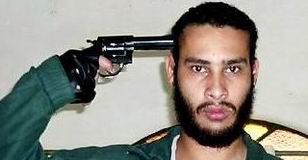
Wellington Menezes de OLIVEIRA
Rio de Janeiro school shooting
Classification: Mass murderer
Characteristics:
Shooting rampage
Number of victims: 12
Date of murder:
April 7, 2011
Date of birth: July 13, 1987
Victim profile: Children
aged between 10 and 13
Method of murder:
Shooting
(a
.38-caliber and a .32-caliber revolver)
Location: Realengo,
Rio de Janeiro, Brazil
Status:
Committed
suicide by shooting himself in the head the same day
On the morning of April 7, 2011, 12 children aged
between 10 and 13 were killed and 20 others seriously wounded after an
armed man entered Tasso da Silveira Municipal School (Escola
Municipal Tasso da Silveira), an elementary school in Realengo on
the western fringe of Rio de Janeiro, Brazil. It is the first time an
incident of this kind — a non-gang school shooting with a sizable
number of casualties — has been reported in the country.
Incident and casualties
A lone gunman, Wellington Oliveira, entered the
school at around 08:30 local time, identifying himself as a former
student and asking to see his school history. By presenting himself as
such his entrance was allowed, but instead of heading to the school's
office he proceeded to the second floor, entering an eighth grade
classroom. Some of the victim's accounts say that he was initially
very polite, saluting the children and putting his bag on a table, but
soon after shot a number of pupils. The perpetrator was armed with a
.38-caliber and a .32-caliber revolver with a number of speedloaders.
A boy who survived the attack said that Oliveira selectively shot
girls while shooting boys only to immobilize them. Ten of the twelve
children killed were girls.
The children ran out of the school as soon as
Oliveira started shooting. Two policemen who were patrolling the area
were alerted to the shooting by two boys who were wounded in the face.
As the policemen arrived at the school, the gunman had already left
the classroom and was preparing to proceed to the third floor where
students and teachers had barricaded themselves inside the remaining
classrooms. Rio de Janeiro military policeman Third Sergeant Márcio
Alexandre Alves shot the gunman in the leg and in the stomach; he fell
down a staircase and then committed suicide by shooting himself in the
head.
The victims were between 10 and 13 years old.
Eleven of the twelve students were buried the day after the shooting
in the Brazilian tradition of holding services within a day of a
person's death. The twelfth child's body was cremated two days after
the shooting.
Perpetrator
The perpetrator was identified as Wellington
Menezes de Oliveira (July 13, 1987 - April 7, 2011) a 23-year-old
former pupil of the school. Local police confirmed they had a letter
stating the perpetrator's intention to commit suicide. The police
stressed that they found no concrete evidence of a religious or
political motive for the attack. Texts found at Oliveira's home
suggest that he was obsessed with terrorist acts and Islam which he
described as the most correct religion. A neighbor said Oliveira had
turned to Islam two years beforehand. In his letters, Oliveira states
that he attended the mosque in downtown Rio and that he would study
the Qur'an for four hours daily. He also describes his association
with "Abdul", who came from overseas and who boasted about having
taken part in the September 11 attacks. He also indicated his desire
to move to a Muslim majority country, either Egypt or Malaysia.
However, both Jehovah's Witnesses and Islam leaders in Rio denied
Oliveira's claims.
Oliveira attended Tasso da Silveira Municipal
School from 1999 to 2002. According to former schoolmates he was a
strange, very reserved person constantly harassed by others, was
called "Sherman" (an allusion to a character from American Pie),
as well as "suingue" (swing), because he had a limp leg, and was
thrown into a garbage bin. In a video he had recorded two days prior
to the shooting Oliveira stated: "The struggle for which many brothers
died in the past, and for which I will die, is not solely because of
what is known as bullying. Our fight is against cruel people, cowards,
who take advantage of the kindness, the weakness of people unable to
defend themselves."
(A luta pela qual muitos irmãos no passado morreram, e eu morrerei,
não é exclusivamente pelo que é conhecido como bullying. A nossa luta
é contra pessoas cruéis, covardes, que se aproveitam da bondade, da
fraqueza de pessoas incapazes de se defenderem.)
As none of his relatives reclaimed Oliveira's body,
it was buried in a potter's field at the Caju Cemetery two weeks after
his death.
Victims
The list of victims was released by police in Rio
de Janeiro. The families of four victims decided to donate the victims'
organs. Six injured children required further treatment, two of them
in critical condition.
Investigation
The police estimate that over 60 shots were fired
by the perpetrator during the shooting. His body was found with two
pistols, a .38 caliber and a .32 caliber, some speedloaders and a
bandolier with 18 unused rounds.
The .32 revolver belonged to a man who died in 1994
and according to his son, it was stolen from him by the time of his
death. The police apprehended the two men who illegally sold the
weapon to the perpetrator, who, according to them, claimed he needed
the firearm for his own protection.
Despite the .38 revolver had its serial number
almost totally scratched-off, the Police managed to locate the
weapon's original owner, a 57 year-old man who works on a
slaughterhouse and is a former co-worker of the perpetrator. According
to the seller he sold not only the weapon to Wellington but also the
speedloaders and a huge quantity of ammo, possibly the same rounds
used in the shooting.
Perpetrator's
letter
First of all you should
know that the impure ones shall not touch me without gloves, only the
chaste ones or those who lost their chastity after wedlock and were
not involved in adultery shall touch me without gloves, in other words,
no fornicator or adulterer shall have direct contact with me, nor
should anything that is impure touch my blood, no impure person shall
have contact with a virgin without their permission, those who prepare
my burial shall remove all my garments, bathe me, dry me and drape me
completely undressed in a white sheet which is in this building, in a
bag that I have left in the primary room of the first floor, after
wrapping me in this sheet they shall put me in my coffin. If possible,
I want to be buried alongside the grave where my mother lies. My
mother is called Dicéa Menezes de Oliveira and she is buried in
Murundu cemetery. I need a visit from a faithful follower of the Lord
to my grave at least once, I need him to pray in front of my grave
asking for God's forgiveness for what I have done imploring that Jesus
on his return wake me from the sleep of death for eternal life. I have
left a house in Sepetiba of which none of my family members need,
there are poor institutions, financed by generous people who take care
of abandoned animals, I want this space where I spent my last months
to be donated to one of these institutions, because animals are very
unappreciated beings and need much more protection and affection than
human beings who have the advantage of being able to communicate, work
to feed themselves, therefore, those who take my house, I please ask
to have good sense and fulfill my request, by fulfilling my request,
you will fulfill the will of the parents who wished to pass this
estate onto me and everybody knows this, if you do not fulfill my
request, automatically you will be disrespecting the will of my
parents, which will prove that you have no consideration for them, I
believe that you all have respect for our parents, prove this by doing
what I asked.
— Wellington Menezes de
Oliveira
National response
President Dilma Rousseff declared three days of
national mourning and shed tears during her speech to the public
regarding the incident.
The State Governor, Sérgio Cabral, and the Mayor of
Rio de Janeiro, Eduardo Paes, addressed the press at the site of the
shooting a few hours later. Cabral described the sergeant, teachers
and children from the elementary school, who were able to call
policemen who were nearby, as "heroes". "Without them, the tragedy
would have been much worse", he said.
The incident has sparked nation-wide discussions
about how safe Brazilian schools are, and the government also promised
to advance the disarmament program which will last from May 6, 2011
until the end of the year.
On April 9, 2011, the house where Wellington de
Oliveira lived was subject of pixação with writings saying "Murderer"
and "Coward". Two days later, a group of locals and former students of
the school repainted the house stating that people "should not
continue the harm that he has caused".
Hundreds of residents and students from other
schools gathered outside the school to remember the ones who died.
Posters and flowers were left in front the school.
On April 10, a group of protesters hung blood-stained
Brazilian flags on Copacabana beach in honor of the children who died
in the shooting.
At the end of a concert in São Paulo, Bono Vox,
from Irish band U2, asked almost 80 thousand people to remember the
children who died in Realengo while their names scrolled up on a
screen.
The three policemen who responded to the shooting
were condecorated for act of bravery by the Brazilian vice president
Michel Temer on April 12, 2011. Third Sergeant Márcio Alexandre Alves
was promoted to Second Sergeant; Corporals Denilson Francisco de Paula
and Ednei Feliciano da Silva were promoted to Third Sergeant.
International response
The International press stated how the Brazilian
public opinion was shocked with the shooting as it was the first time
an incident of this kind occurred in the country.
The archbishop of Rio de Janeiro, Orani João
Tempesta, received a letter from Pope Benedict XVI, where he states
that he prayed for the quick recovery of the wounded and asked all
people of the city to "help build a society with no violence and
respect to each other, especially for the weak and oppressed".
Students from Columbine, Colorado, same site of the
1999 massacre, made a poster, stating their feelings about the tragedy.
The poster will be sent to the Brazilian elementary school.
Brazil News Wrap: Rio de Janeiro School Shooting
Kills 12
Forbes.com
April 7,
2011
A former student invaded and shot up the Tasso
da Silveira Municipal School in Realengo in Rio de Janeiro state
Thursday, immediately killing 11 young students between the ages of 12
and 14 years old, police officials said. It was the first school
shooting in the nation’s history.
A 12th student, a 13 year old boy, died at the Adão
Pereira Nunes hospital after spending the day in critical condition.
Ever since the Columbine High School massacre in
Colorado in April 1999, Brazilians have been thanking their lucky
stars that no such copy cat crimes have ever taken place within their
school system. Brazil’s public schools, especially in major cities
like Rio, are mostly populated by low-income children. And in cities
as violent and crime ridden as Rio can be, one would think that a
similar shoot out would have occurred by now in cities where there is easy access
to firearms.
Brazil’s school culture is very different than US
school culture. Where the US puts a large emphasis on those formative
years and attaining high popularity status among ones peers, Brazilian
students tend not to be pressured by that part of the classroom
culture. American school shooters were classmates, and often
unpopular recluses who were bullied. In this case, the Rio gunman,
Wellington Menezes, was 10 year’s older than his average victim and
graduated from the school way back in 1998. Teachers referred to the
school as a “calm” place, where students got along well.
Rio civil police chief, Martha Rocha, said Menezes
did not have a criminal track record. Media reports said that the Vice
Mayor of Realengo, Edmar Peixoto, had informed the police that Menezes
left a strange note at the school saying that he was dying of AIDS.
The note was given to authorities at 12:50 local time and has not been
released to the press until later in the evening. The note said
nothing about his dying of AIDS, but was full of religious rhetoric
about impurity and asked for a priest to bless his grave so God and
Jesus could forgive him. He asked to be buried near his mother.
Menezes was an adopted child. He had five syblings,
but lived alone. His 49-year-old sister Roselaine told BandNews Radio
that, “he lived on line and had no friends. He was strange and very
reserved.” An ex-classmate in middle school, Bruno Dantas da Costa,
told O Globo newspaper in Rio that Wellington avoided contact with his
classmates.
Menezes was fired from his job in a food company in
Rio in August 2010 for “lack of productivity”, his former boss told O
Globo.
Here’s what O Globo is reporting on the school
shootings.
Approximate timeline of event.
Just before 08:00 local time, Wellington Menezes
entered the Tasso da Silveira School saying he was asked to give a
lecture to a classroom during the school’s 40 anniversary. He was
carrying two handguns and clips.
Shortly after 08:00, Menezes enters one classroom
and starts to open fire. He leaves to another classroom and open
fires again.
Sgt Marcos Alexandre Alves is the first on the
scene around. Alves meets with Menezes on the second floor of the
school as he leaves one of the classrooms and shoots him in the leg.
After that, Menezes shot himself in the head and is pronounced dead
at 09:28.
Of the 11 killed, 10 were girls. Thirty students
were injured; 18 suffering head and neck wounds from the gunshot.
12:20 local time, Menezes body is removed from
the school.
Victims were brought to the Albert Schweitzer
hospital in Rio. Dozens of panic stricken parents and family members crowded
around in tears with students and medical staff, according to O
Globo.
Francisco André, 28, cousin of one of the injured,
said that he was told by his relative that Menezes entered the
classroom and told all the students to raise their hands and close
their eyes as he begins a lecture. “What I don’t understand is how
does the school let in a guy that age into the building and not check
him out first?”
Paulo Gomes, 47, said that his wife, a teacher at
the school, had phoned him at 08:15 to tell him there was a gunman in
the school. Gomes told O Globo that he left home immediately for the
school and by the time he arrived, the police were already there.
“When I got there I saw total chaos. There was a lot of blood and when
I got closer I saw a student around 15 years old that was shot in the
head; I was in shock. My wife is okay, but some of her students were
killed,” he told O Globo.
Lucia Regina da Silva, a mother of a fifth grader
who survived the attack, said that her daughter told her that older
students had covered the bodies of younger students for protection
when they heard the gunfire across the hall. “She heard the children
screaming in the other classrooms, but they couldn’t leave their room because
the teachers had locked the doors,” she said. When she got to the
school to get her daughter, she saw students leaving the building
“covered in blood.”
President Dilma Rousseff called for a moment of
silence when she first heard of the violence. Jose Sarney, president
of the Senate and a former President of the Brazil, called it an act
of terrorism.
Children gunned down in
Rio killing spree
Gunman entered public
school in Brazilian city and opened fire with two handguns, killing 11
students and maybe himself
Aljazeera.net
April 8, 2011
A Brazilian gunman fatally shot 11
children at a Rio de Janeiro public school before he himself was
killed, police said, shocking the South American nation that has never
seen such an incident before.
It was not clear whether the gunman, who is
believed to be a former student at the school, shot himself or was
killed by police.
At least 18 other people, mostly students, were
wounded in Thursday's shooting spree at the school for children aged
10 to 15. At least four were in grave condition, a health official
said.
'No clear motive'
Colonel Evandro Bezerra, a fire department
spokesman, told Brazil's Globo television network that the shooter was
24-year-old Wellington Menezes de Oliveira, a former student at the
Tasso da Silveira school, in the western Realengo neighbourhood, who
did not have any prior criminal record.
Police said Oliveira left a letter at the scene indicating
he wanted to commit suicide, however, it did not give a clear motive
for the shooting.
Thursday's incident happened shortly after 08:30am
local time (1130GMT) in Rio, in the western part of the city, Al
Jazeera's Gabriel Elizondo, reporting from the vicinity, said.
"Police helicopters are landing on a football field
very near the school to collect the injured and transport them to nearby
hospitals," he said.
Initial reports said the gunman entered the school
wearing a backpack and told officials he was there to deliver a speech,
before opening fire in a classroom.
"It is not known why he fired,'' Colonel Ibis
Pereira, a spokesman for the Rio de Janeiro military police said.
Police exchanged gunfire with the assailant, who
was carrying two guns and a suicide note, before he killed himself,
another police official told local media.
'Psychopath'
TV Globo News showed images of the wounded being
loaded into ambulances at the school.
Terrified parents rushed to the school and
television images showed them crying and screaming for information
about their children, while police held them back from the scene.
The attack by Oliveira is the country's first
serial shooting at a school in Brazil, which has never had an attack
similar to incidents in the United States, including the 2007 Virginia
Tech massacre and the 1999 Columbine high school shooting in Colorado.
Dilma Rousseff, the Brazilian president, wept when
commenting on the incident during a speech to business leaders and
requested a moment of silence for the victims.
"This type of crime is not characteristic of [our]
country and therefore we are all ... united in repudiating this act of
violence," Rousseff said.
"We have to show solidarity and support for the
families of the children [killed by] that psychopath, that animal,"
Sergio Cabral, the governor of Rio de Janeiro, said in a press
conference at the school.
Violence in Rio traditionally has been associated with drug gangs that
control vast areas of the city's slum communities.
Rio's government has in recent months made
considerable advances against drug gangs that control vast areas of
the city's slum communities but crime remains a problem in the
beachside tourist haven.
Authorities have stepped up slum pacification
efforts that have created a permanent police presence in poor
neighbourhoods in hopes of tightening security in advance of the 2014
World Cup football championship and the 2016 Olympic Games.