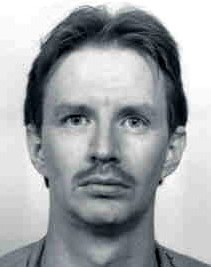
Indianapolis - The man convicted of killing a
Franklin College student in 1997 is scheduled to be executed on May
30, 2008. Michael Dean Overstreet may dominate headlines until his
execution is carried out. But the legacy of his victim continues to
reveal itself at her high school, workplace and in Indiana courtrooms.
In 1997, Kelly Eckart finished her shift at the
Franklin Wal-Mart. She never made it home. Kelly was missing several
days before authorities found her body in Brown County. A jury
convicted Michael Dean Overstreet in a death penalty case.
"His DNA was in and on and around the victim," said
Chief Deputy Prosecutor Brad Cooper, recalling the case he prosecuted
nearly 11 years ago.
Connie Sutton will not forgive Overstreet.
"He killed my daughter," said Sutton. "He took her. He
killed her. He raped her and then dumped her down a ravine. He has no
respect for life at all." Sutton does not believe Overstreet will be
executed in May.
"I think it won't happen in May," said Sutton. "I
think he'll file federal appeals and so we'll be going through the
same process that we did at the state level, we'll be going through a
federal level too. It's going to be another four to ten years."
Prosecutors who won the case still believe they
prevented Overstreet from killing others.
"This was a very dangerous person who won't be on
the street again," said Prosecutor Lance Hamner.
"I think of a guy who was probably on his way to
being a serial killer, who just happened to get caught the first
time," said Cooper. "He was just one evil dude."
Eckart's death left an imprint on Indiana
courtrooms. In 2002, Eckart's parents fought for the passage of "Kelly's
Law," which gives family members of victims the option to give impact
statements at sentencing hearings. They can tell convicted killers
exactly how they feel about them. That was something Kelly's family
couldn't do at the Overstreet trial.
"It doesn't have any impact on the criminal
prosecution because it takes place after the sentencing, but I think
it can have a cathartic effect for the family," said Johnson County
prosecutor Lance Hamner.
"When we went to trial for Kelly and Overstreet was
convicted, I couldn't get up and call him a murderer in front of him,"
said Sutton. "He was convicted. He was a convicted murderer. But I
couldn't say anything to him that day because it wasn't a law. Now it
is."
The effort to pass "Kelly's Law" earned Connie
Sutton an honorary law degree from Franklin College where Kelly
attended as a freshman.
"When I walked down that center aisle at graduation
with gap and gown on, I felt like I was doing the walk for Kelly
because she never got to do it," said Sutton. "She loved that school
She wanted to go there more than any anything. So I feel like I
finished the walk for her."
Kelly's legacy is also blooming this spring at
Franklin College. Nicole Hensley, 22, walks in front of the tree
planted in honor of Kelly Eckart.
"It is very beautiful in the spring once it blooms,"
said Hensley. "Walking by it, everyone notices how pretty it is. Not
everybody knows what it means, but I know what it means."
Hensley attended the same high school as Kelly
Eckart and is attending Franklin College in part because of Kelly.
"I am a recipient of the Kelly Eckart scholarship
through Franklin College," said Hensley, who was in the fifth grade
when Eckart was murdered.
"I remember posters all over the school about this
missing girl," Hensley recalls. "While I didn't know her personally,
I knew my community was greatly affected by this."
The Eckart scholarship helped Hensley and nine
other students pay for tuition. Hensley graduates in May.
"It's more than the money," said Hensley. "I help
fulfill her legacy and what she would have wanted to accomplish by
graduating from Franklin."
At the Franklin Wal-Mart where Kelly worked, you
can see Kelly's legacy on the "Missing Child" display. The girl who
was once the focus of a missing person investigation now draws
attention to other cases.
"You will see her picture and hopefully pan down to
see there's a whole bunch of other people whose lives have been
unsolved," said Chief Prosecutor Brad Cooper.
"Obviously, that was a very famous case of a
missing person that everybody in this community knows about," says
Hensley. "So having that associated with it brings attention to other
missing child cases."
You can find Eckart's legacy at Triton Central High
School where Kelly graduated as a member of the honor society. Her
mother helps lead the guard. Connie Sutton won't leave practice until
every girl does.
"People have to remember what happened to her, so
it doesn't happen to them," said Sutton. "Hopefully it reminds people
to be careful, that not everybody out there is good," added Sutton. "If
you're out in the middle of nowhere, and it's all dark and somebody
tries to stop you, I don't care if he has a flashing light, put your
flashers on to acknowledge that you see him and go place where you
feel safe," said Sutton.
Sutton still wears Kelly's ring with her birthstone. She
has the glasses, ankle bracelet and car keys that Kelly had the night
she was murdered.
"It is sometimes hard to touch it, because the last
time she touched it, she wasn't breathing," said Sutton.