Murderpedia has thousands of hours of work behind it. To keep creating
new content, we kindly appreciate any donation you can give to help
the Murderpedia project stay alive. We have many
plans and enthusiasm
to keep expanding and making Murderpedia a better site, but we really
need your help for this. Thank you very much in advance.
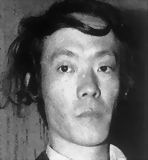
Issei SAGAWA
A.K.A.: "The Cannibal Celebrity"
Classification: Murderer
Characteristics: Cannibalism - Sex with corpse
Number of victims: 1
Date of murder:
June 11,
1981
Date of arrest: 2 days after
Date of birth: June 11, 1949
Victim profile: Renée
Hartevelt, 25
Method of murder:
Shooting (rifle)
Location: Paris, France
Status: Found legally insane and unfit to stand trial. Ordered
to be held indefinitely in a mental institution. Extradited to
Japan. Found sane but "evil". Sagawa checked
himself out of the mental institution on August 12, 1986, and has
been a free man ever since
Issei Sagawa(佐川
一政,
Sagawa Issei, born June 11, 1949) is a Japanese man who in
1981 murdered and cannibalized a Dutch woman named Renée Hartevelt.
After his release, he became a minor celebrity in Japan and made a
living through the public's interest in his crime.
Early life
Sagawa was born in Kobe, Hyōgo
Prefecture, Japan to wealthy parents. He attended college at the
University of Paris.
Murder of Hartevelt
Sagawa served time in a French jail for the murder of
the Dutch student Renée Hartevelt, a classmate at the Sorbonne Academy
in Paris, France. On June 11, 1981, Sagawa, a 32 year old student of
French literature, invited Hartevelt to dinner at his 10 Rue Erlanger
apartment under the pretense of literary conversation.
Upon her arrival, he shot her in the neck with a
rifle while she sat with her back to him at a desk, then began to carry
out his plan of eating her. She was selected because of her health and
beauty, those characteristics Sagawa believed he lacked. Sagawa
describes himself as a "weak, ugly, and small man" (he is just under 5 ft
(1.52 m) tall) and claims that he wanted to "absorb her energy".
Sagawa said he fainted after the shock of shooting
her, but awoke with the realization that he had to carry out his desire
to eat her. He did so, beginning with her hips and legs, after having
sex with the corpse. In interviews, he noted his surprise at the "corn-colored"
nature of human fat. For two days, Sagawa ate various parts of her body.
He described the meat as "soft" and "odorless", like tuna. He then
attempted to dump the mutilated body in a remote lake, but was seen in
the act and later arrested by the French police.
His wealthy father provided a top lawyer for his
defense, and after being held for two years without trial the French
judge Jean-Louis Bruguières found him "obviously" legally insane and
unfit to stand trial and ordered Sagawa to be held indefinitely in a
mental institution. Following a visit by the author Inuhiko Yomota,
Sagawa's account of the murder was published in Japan with the title
In the Fog.
The subsequent publicity and macabre celebrity of
Sagawa likely contributed to the French authorities' decision to have
him extradited to Japan. Upon arrival in Japan, he was immediately taken
to Matsuzawa hospital, where examining psychologists all found him to be
sane but "evil".
However, Japanese authorities found it to be legally
impossible to hold him, purportedly because they lacked certain
important papers from the French court. As a result, Sagawa checked
himself out of the mental institution on August 12, 1986, and has been a
free man ever since.
Post-release
Sagawa now lives in Tokyo and is a minor celebrity in
Japan. He is often invited as a guest speaker and commentator. He has
also written restaurant reviews for the Japanese magazine Spa. In
1992, he appeared in Hisayasu Sato's exploitation film Uwakizuma:
Chijokuzeme (Unfaithful Wife: Shameful Torture) as a sadosexual
voyeur.
Besides books about the murder he committed, Sagawa
wrote a commentary book Shonen A in 1997 on the Kobe children's
serial killings of 1997, when a 14-year-old referred to in the media as
"Boy A" ("Shōnen A") killed and decapitated a child and attacked several
others.
Sagawa's story inspired the 1981 Stranglers song "La
Folie", and the 1983 Rolling Stones song "Too Much Blood",and the 2004
Human Factors Lab song "Dinner with Renee".
A 1986 short film by Olivier Smolders called
Adoration is based on Sagawa's story. In the same year, the TV
channel Viasat Explorer released a 47-minute documentary film called "Cannibal
Superstar".
In 2009, Sagawa was documented in a History Channel
show titled "Strange Rituals" discussing cannibalism. The show reveals
Sagawa as a freelance artist of nude paintings.
Wikipedia.org
THE CANNIBAL
CELEBRITY: ISSEI SAGAWA
By Katherine Ramsland
Act of Obsession
He was a short man,
just under five feet tall. His hands and feet were small and even his
voice was more like that of a girl. He had mentioned in some interviews
that he wasn't the kind of man most women would find attractive, and he
surmised that being acutely self-conscious of his shortcomings might
have fueled his obsession with "the perfect woman."
In Cannibal
Killers, Moira Martingale describes how Issei Sagawa, a brilliant
Japanese student, obsessed over tall women with Occidental features.
Eventually fantasy was not enough, so while studying for his degree in
English literature at Wako University in Tokyo, he became attracted to a
German woman who was teaching him the language.
"When I met this
woman in the street," he later said to British reporter Peter McGill, "I
wondered if I could eat her."
One summer day, he
crawled through the window of her apartment, intent on killing her. To
his delight, she was asleep. Even better, she was wearing hardly
anything at all. He looked for something to use to knock her out or
stab her and he spotted an umbrella. However, before he could do
anything, the woman woke up and saw him there. She screamed, scaring
him, and he fled from her apartment.
But he did not
forget what he most desired. It had been almost too easy to get close
to a woman, and if he prepared himself better, he felt sure he could
indulge in his fantasy. He just had to plan it more effectively, so he
began to look around for his next victim—one that would not get away.
It wasn't until he went to Paris a few years later that he found the
woman that he could not get off his mind. Her white skin, the fleshy
shape of her buttocks, and her beautiful features both repulsed and drew
him. He started to insinuate himself into her life.
Sagawa believed that he loved these women and that he could demonstrate
it by consuming them. It wasn't unheard of.
Sagawa Strikes
While studying at
the Censier Institute in Paris in 1981, Sagawa spotted another tall,
beautiful northern European woman woman, Renee Hartevelt. He says that
when he sat next to her in a class, he fell instantly in love and could
not stop thinking about the white skin of her arms. She was the perfect
woman for what he wanted to do, but this time he had to be more
careful. He had to be ready.
Renee was 25,
blonde, and independent. She spoke three languages and had a bright
future, with the aim of getting a Ph.D. in French literature. Sagawa
asked her to teach him German, and since his father was quite wealthy he
could pay her well. She accepted.
According to him,
she liked his obvious intelligence and ability to discuss everything
from Impressionist paintings to Shakespeare to European literature. He
wrote her love letters and invited her to concerts and exhibits. He was
small, feminine, and walked with a limp, yet she often went with him and
invited him to her apartment for tea. They even danced together,
allowing Sagawa a more physical sense of his fantasies. He found these
Nordic women overpowering, and even as he claimed he loved them, he
wanted to posses and destroy them.
One day he invited
Renee over to his apartment for dinner. He asked her to read a poem by
his favorite German expressionist, which she did. After she left, he
smelled and licked the place where she had sat and vowed that he would
eat her—that would allow him to possess her forever.
Soon he asked her
to come over again for dinner. He had a cassette recorder, he said, and
he wanted to record her reading of the poem. She accepted for the
evening of June 11, 1981, and Sagawa prepared himself to act out his
ultimate fantasy.
Upon arriving in
Paris, he had purchased a .22-caliber rifle "for self-protection." He
had it ready when Renee arrived. He seated her on the floor,
Japanese-style, to drink tea. Into her drink, he put some whiskey to
make her more pliant. They talked for a while as Sagawa waited for the
whiskey to have its effect. Then he told Renee that he loved her and
wanted to take her to bed.
She resisted him.
She found him engaging but not sexually attractive. She wanted only to
be his friend.
Sagawa nodded. He
then got up to get the book of poetry, while Renee sat on a chair.
Sagawa handed the poem to Renee to read and started the recorder.
While Renee recited
the poem in her native language, Sagawa came up behind her with his
rifle and shot her in the back of the neck. She fell off the chair. He
continued to talk to her but she failed to answer. He was surprised by
how quiet it was. Then he noticed the amount of blood that flowed out
of her wound. At first, he attempted to clean it up, he finally gave
up.
Ultimate Fantasy
He then undressed
her, finding it difficult to remove clothing from a corpse. But he was
pleased that now she could no longer refuse his advances. She belonged
to him. Then he got a knife and used it to cut off the tip of her left
breast and a piece of her nose. These he consumed.
"I touched her
hip," he later wrote in his fictional account, In the Fog, "and wondered
where I should bite first." He chose her right buttock, but he found it
difficult to bite into, and then realized he had a headache. He then
went on to describe, moment by moment, the appearance of her fat and
muscle, and the taste of it.
As fat
oozed out of one stab wounds, Sagawa said it had the consistency and
appearance of yellow corn. He smelled it and found that it had no odor.
Cutting deeper to find the flesh, he placed a chunk into his mouth.
"[It] melted in my mouth like raw tuna in a sushi restaurant."
To him, there was
nothing more delicious, and he looked into Renee's dead eyes to tell her
so. He was ecstatic now that he had indulged himself in his fantasy.
He had this gorgeous body all to himself. It had taken him until the
age of 32 to consummate his desires, but he had done it.
Then he got
serious. Using an electric carving knife, Sagawa began to cut Renee
into parts. He laid out strips of flesh to store for later and nibbled
on a few pieces raw. Then he made a quick meal of fried human flesh
with mustard. He took photographs of the mutilated corpse and had sex
with it. "When I hug her," he recorded, "she lets out a breath." He
told her that he loved her.
As he cooked and
ate more of her remains, he listened to the recording he had made of her
reading the poem. When he was finished, he used her underwear as a
napkin to wipe his mouth. He then returned to her body, cut off a
breast and baked it, but disliked the greasy consistency. He found that
he preferred her thighs.
When he finally
felt exhausted, he took what was left of the corpse into his bed to
sleep with it. He knew that in the morning he would have to prepare to
get rid of the evidence.
The next day,
finding that the body did not yet smell, he continued to try parts of
it, in particular the arm that had so fascinated him. He chewed on it
all the way from the underarm to the elbow. "I had no idea," he wrote,
"that it would taste so good."
Sagawa was curious
about a few of the body parts that seemed more repulsive. He hesitated
over what to do, but decided to go ahead and indulge. Cutting out the
anus, he put it into his mouth, but the smell overpowered him, so he
spit it out. He tried frying it, but that failed to diminish the odor,
so he gave up and returned to the body.
The Honeymoon
is Over
By this time,
several large flies swarmed around the corpse, so Sagawa took that as a
sign that he'd lost Renee. The "honeymoon" was over.
He then used a
hatchet to chop her into pieces that would fit into the suitcases he'd
bought specifically for this purpose. Yet even as he dismembered her,
he grew excited, so he used her hand to masturbate. Then he chewed on
her nose and heard the noise of the cartilage crunching. Since he'd
often thought about chewing on her lip, he removed it and set it aside.
That part he would keep for later pleasures.
"I want her
tongue," he said in his fictional account. "I can't open her lower jaw,
but I can reach in between her teeth. Finally it comes out." He cut it
off, popped it into his mouth and watched himself chewing it in the
mirror. Then he went for the eyes.
The final step for
Sagawa was to explore the internal organs, which stung his hands with
digestive acid, and then used the hatchet to cut off her head. With so
many parts removed, it looked like a skull. He grabbed the hair and
hung the head in front of him, an experience that in retrospect caused
him to say, "I realized I am a cannibal."
By the time he was
finished bagging the pieces and locking them into a suitcase, it was
midnight of the second day. He called a cab.
Arriving at the
Bois de Boulogne, he lugged the suitcases into the park, intending to
shove them into the pond. However, he had a difficult time with his
heavy burden. When he spotted some people watching him, he got scared
and just left the suitcases. Martingale reports in Cannibal Killers
that a couple went closer and saw a female hand protruding from one of
the bloodstained cases, so they called the police. Police opened the
suitcases, found the remains, and began the task of tracing the bags
back to the purchaser.
In the meantime,
Sagawa returned to his apartment to enjoy the pieces of Renee Hartevelt
that he'd put into the refrigerator. As he ate another gruesome meal,
he thumbed through some pornography. Each day of his remaining freedom,
he ate another piece, claiming in his later renditions that it became
sweeter with time.
What Makes Them Do It?
The fictional
serial killer Hannibal Lecter, featured in Thomas Harris's Silence of
the Lambs and Hannibal, has a gruesome appetite for human flesh. He
delights in his human liver with fava beans and finds the horrified
reactions of others amusing. People are nothing to him but objects to
be used to satisfy himself. He's the "new" cannibal, the one who brings
his disgusting appetites into public view and revels in them—just as
Sagawa has done.
Fred Katz,
sociologist and author of Ordinary People and Extraordinary Evil,
examines how we can start out innocently and by gradual increments get
into position to enact real evil. This generally involves viewing what
we're doing through a framework that differs from that of society at
large, and we may develop one out of rebellion, curiosity, exposure to
new ideas, or perverse influences on the formation of our private
fantasies.
Cannibalism, or the
consumption of human flesh by another human, has been practiced in many
cultures, generally as a ritual. The Aztecs in Mexico sacrificed and
then ate thousands of people every year to please the gods, and other
cultures such as the Aborigines used the practice to "incorporate" the
power of their enemies. Natives of the Fiji Islands simply like the
taste, and people such as the Donner-led settlers in 1846 dined off
others to survive in the rugged conditions of the Sierra Nevadas.
There are different
forms of cannibalism, or anthropophagy, and they're practiced for
different reasons. Omophagia is a symbolic ritual meant to preserve the
life force of the deceased by transforming the physical substance of the
body into something spiritual. It may be done as part of deity worship
or as a way to honor dead relatives. It may also be done to stave off
widespread starvation, such as the widespread consumption of human flesh
that occurred in the early part of the century in both China and Russia
(mentioned by Chikatilo as influential on his own hunger).
Some killers have
adopted a form of omophagia, which is called zoophagia, as a means of
possessing their victims. Zoophagia is the consumption of life forms,
as seen in the character of Renfield in Dracula, who progresses from
spiders to flies to birds to cats. The idea is to ingest increasingly
sophisticated life forms as a way to improve one's own.
A Sexual
Fetish
However, for many
killers, cannibalism is more of an erotic or sexual fetish. For
example, Fish claimed that as he ate the parts of his victims, he would
grow increasingly excited and sometimes have an orgasm.
Richard von
Krafft-Ebing published Psychopathia Sexualis in 1886, listing well over
two hundred cases of aggressive eroticism, some of which involved
cannibalism. He described a man named Tirsch, 55, who came across a
woman in the woods in 1864 and strangled her. He then cut off her
breasts and genitalia and took them home to cook and eat. When he was
arrested, he said his motive was "inner impulse." Another case involved
a 24-year-old vine dresser who murdered a girl, tore out her heart, and
consumed part of it. Kraft-Ebbing views these cases as being driven by
a perverted lust that forms into a desire to possess by consumption
rather than sexual intercourse. Making a living person into an
inanimate object is about power and control.
In
"Cannibalism and Vampirism in Paranoid Schizophrenia," four
psychiatrists offer a discussion in The Journal of Clinical Psychiatry
on an unusual case. The person was born in a rural part of France in
1940. He was 31 before he was diagnosed as a schizophrenic. Nine years
later, he killed an elderly man, devoured part of his thigh and drank
blood from an artery. Then he murdered a married couple and was
arrested. He confessed to having killed his wife, and then said that
he'd eaten parts of bodies to bring God back into his life. It was a
form of Holy Communion. This sentiment the psychiatrists view as
consistent with Sigmund Freud's interpretation of cannibalism as
appropriating the power of another person. "It seems that cannibalism
may be more basic to our lives than one might want to believe," they
conclude.
Sagawa, who clearly
had a sexualized lust, told a British journalist that his compulsion for
cannibalism probably came from a childhood dream he'd had that left a
huge impression. He was in a boiling pot with his brother, being
prepared for a meal for someone else. From that point on, he began to
fantasize regularly about cannibalism, switching his role from the
disempowered "meal" to the empowered consumer. Yet he wasn't interested
in ingesting the girls of his own race; he envisioned eating large blond
women with white skin. For him, the possibility of being intimate with
them in this way was highly erotic.
After his first
breaking-and-entering incident in Tokyo, he actually went to a
psychiatrist to confess his dark desires. The man believed that Sagawa
was highly dangerous—probably because he'd begun to act out his
fantasies—but Sagawa's father managed to engineer a cover-up and then
sent his son out of the country to another school. The mental health
professionals who evaluated him later also saw dangerous tendencies in
him, from psychosis to psychopathy.
Yet in the end,
none of their diagnoses mattered.
No Trial, Just
Fame
When the police
arrived at his apartment two days after the murder with a search
warrant, Sagawa let them in. They opened the refrigerator and found
pieces of a female body inside, including lips. Sagawa freely confessed
to what he had done, adding that he had a history of mental illness. In
fact, his descriptions were so detailed and salacious that a judge
decided he was not competent to stand trial: he was clearly delusional.
Sagawa received a sentence of incarceration for an indefinite period in
the Paul Guiraud asylum. Three psychiatrists who evaluated him said
that he'd never be cured.
According to Brian
King, who edited Lustmord, while in the hospital, Sagawa corresponded
with several members of the Japanese literati, who sent him books about
other cannibals. "I realized I was not so unusual," was his comment.
He also said that he'd learned how to go about such a crime without
getting arrested.
It pays to be rich,
and his father, Akira Sagawa, president of Kurita Water Industries in
Tokyo, eventually worked out a deal in 1984 to have Sagawa transferred
to the Matsuzawa psychiatric hospital in Japan. The superintendent
there believed that he was sane and ought to be in prison. There Sagawa
remained for only 15 months before he was granted his freedom in August
1985, again, thanks to his father and very much against the advice of
the superintendent. After killing a woman and consuming her remains,
Sagawa was able to go freely about in society only five years after the
crime. He was even granted a passport to go to Germany.
What made the
situation worse was how he reveled in what he did and was only too happy
to tell people about it on television talk shows. He even agreed to
appear in several Japanese pornographic films, and he wrote four
novels. The one in which he described the details of his murder sold
over 200,000 copies. Thanks to his father, he'd gotten away with
murder, and he was quite proud of it.
Now Sagawa enjoys
being the focus of tabloid media, granting interviews and making videos
to indulge the voyeuristic curiosity of those who want to get closer to
someone who has eaten human flesh. He apparently finds the attention
amusing and does not feel that he did anything wrong. "The public has
made me the godfather of cannibalism," he stated, "and I am happy about
that."
The Rolling Stones
wrote and recorded a song about Sagawa's gory deed, calling it, "Too
much Blood," and Sagawa tried his hand at a comic book version of the
story. He also wrote a weekly column for a tabloid publication, edited
an anthology of cannibal fantasies, and was featured on the cover of a
Japanese gourmet magazine. Under an assumed name, he even managed to
get women to pose nude for him.
On his web site, he
offers excerpts from his rendition of his crime and discusses why
cannibalism is not such a horrific act. For those who want to see his
art, he shows examples of his paintings—mostly of the fleshy buttocks of
white females.
In a magazine
article, he said that he now envisions being eaten himself by a young
Western woman, because, he insists, only an act like that will save him.