Murderpedia has thousands of hours of work behind it. To keep creating
new content, we kindly appreciate any donation you can give to help
the Murderpedia project stay alive. We have many
plans and enthusiasm
to keep expanding and making Murderpedia a better site, but we really
need your help for this. Thank you very much in advance.
Charles
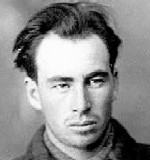
BANNON
Classification: Mass murderer
Characteristics:
Bannon admitted killing the rest of the Haven family after
accidentally shooting Daniel
Number of victims: 6
Date of murder:
February10, 1930
Date of arrest: December 12, 1930
Date of birth: 1909
Victims profile:
Albert Haven, 50, his wife Lulia, 39, and their children Daniel,
18, Leland, 14, Charles, 2, and Mary, 2 months old
In the early morning hours of January 29, 1931, a
mob broke into the small stone jail at Schafer, North Dakota, and
seized Charles Bannon. The mob hanged Bannon from a nearby bridge. It
was North Dakota's last lynching.
Bannon, who was 22 years old, had spent only a few
days in the Schafer jail prior to the break-in. He been moved from the
larger and more secure jail in Williston on January 23, 1931, so he
could be arraigned in Schafer on charges that he murdered the six
members of the Haven family. His father, James Bannon, was also
confined in the Schafer jail, awaiting arraignment as an accomplice to
the murder.
A farm family disappears
The Haven family lived on a farm about a mile north
of Schafer, a village east of Watford City. The family had five
members: Albert, 50, Lulia, 39, Daniel, 18, Leland, 14, Charles, 2,
and Mary, 2 months old. As of February 1930, the family had lived on
their farm more than ten years. They owned household goods including a
piano and a radio as well as "considerable livestock, feed and
machinery."
No member of the family was seen alive after
February 9, 1930.
Bannon had worked as a hired hand for the Havens.
He stayed on the Haven farm after the family disappeared, claiming
that he had rented the place. He told neighbors that the family had
decided to leave the area.
Bannon's father James joined him at the farm in
February 1930. Together, they worked the land and cared for the Haven
family's livestock through the spring, summer and fall of the year.
Neighbors became suspicious by October 1930,
however, after Bannon started selling off Haven family property and
crops. Bannon's father then left the area, saying that he was going to
try to find the Haven family.
James went to Oregon, where Bannon said the Haven
family had gone. James wrote a letter on December 2, 1930, to Bannon
from Oregon, in which he advised Bannon to watch his step and "do what
is right."
In December 1930, Bannon was jailed on grand
larceny charges. In the course of the investigation that followed,
authorities discovered that the Haven family had been murdered.
The hired hand confesses
On December 12, 1930, Bannon gave a statement to a
deputy sheriff in which he admitted involvement in killing the Haven
family, but claimed a "stranger" acted as instigator.
The next day, in a lengthy confession to his
attorney and his mother, Bannon admitted killing the Haven family in a
violent fracas that followed Bannon's accidental shooting of the
eldest child, Daniel. Bannon suggested in this confession that he was
forced to kill Leland, Lulia and Albert Haven because they tried to
kill Bannon after he shot Daniel.
After Bannon confessed, authorites tracked down his
father James in Oregon. James was accused of complicity in the murders
and extradited back to North Dakota.
In a final confession that he wrote out himself in
January 1931, Bannon again admitted killing the rest of the Haven
family after accidentally shooting Daniel. In this confession,
however, Bannon did not claim that he acted in self-defense when he
killed the other members of the family -- instead he said he killed
them because he was scared.
In his last two confessions, Bannon stressed that
he acted alone in killing the Havens. Bannon tried to convince
authorities that his parents, in particular his father James, knew
nothing about the murders. Nonetheless, the authorities kept James in
custody.
Waiting in the Schafer jail
Bannon, his father James, Deputy Sheriff Peter
Hallan, and Fred Maike, who was in jail on theft charges, were present
in the Schafer jail on the night of January 28-29, 1931. A crowd of
men in masks arrived at the jail sometime between 12:30 and 1:00 a.m.
on January 29, looking for Bannon.
The sight of lights flickering through his windows
woke Sheriff Syvert Thompson, who lived near the jail, and he went to
the scene to investigate. The mob captured him and led him away from
the jail.
Thompson and Hallan said that the crowd numbered at
least 75 men in at least 15 cars.
The mob battered down the front door of the jail
and overpowered Deputy Hallan. After he refused to tell them where the
keys to Bannon's cell were, the mob escorted Hallan out of the jail.
Using the timbers they had used to break down the jail door, the mob
began work battering down the cell door. Witnesses said the mob
appeared disciplined and well-organized, going about their work as if
under strict orders.
Maike told investigators that the mob had so much
trouble trying to break down the cell door that they almost gave up.
After the mob broke the door down, Bannon surrendered and pleaded that
his father not be harmed.
Members of the mob brought in a rope and placed a
noose around Bannon's neck. They dragged him from the jail. The mob
put Deputy Hallan in a cell with Bannon's father and Maike, who had
been left alone.
Outside, Sheriff Thompson heard the men demanding
that Bannon "tell the truth" or face hanging. Bannon told them that he
had told the truth.
After taking Bannon, the mob shoved Sheriff
Thompson into the jail cell with Hallan, barricading the door.
Thompson and Hallan were not able to free themselves until after the
mob dispersed.
The lynch mob first took Bannon to the nearby Haven
farm, planning apparently to hang him on the spot the family died. The
caretaker of the farm ordered the crowd off the property, threatening
to shoot if the mob did not leave.
Lynched over Cherry Creek
The mob took Bannon to the bridge over Cherry
Creek, a half-mile east of the jail. The new high bridge had been
built in the summer of 1930. Bannon was pushed over the side of the
bridge with the noose still around his neck. Authorities said the
lynchers use a half-inch rope, with one end tied to a bridge railing
and the other tied in a standard hangman's knot by someone with
"expert knowledge."
Bannon was buried in Riverside Cemetery in
Williston.
Governor George Shafer called the lynching
"shameful" and ordered an immediate investigation. Attorney General
James Morris (later a Supreme Court justice), Adjutant General G.A.
Fraser and Gunder Osjord, head of the Bureau of Criminal Apprehension,
were sent to the scene. Morris interviewed witnesses and examined
evidence from the lynching.
The rope used was of special interest to Morris. He
said that the noose had been tied by "someone with expert knowledge."
He also pointed out that the rope had a thread of red hemp running
through it, which could be a manufacturer's mark. Morris concluded
that "the lynching was well-planned in advance" and that "three or
more leaders . . . kept the mob organized and under control."
Morris said that the governor had ordered the
investigators to "go to the bottom" of the lynching. The state
investigation, however, was not fruitful: no member of the lynch mob
was ever arrested and Morris concluded after less than a week of
investigation that it would be impossible to identify any member of
the lynch mob.
The Federal Council of Churches investigated the
lynching in the spring of 1931. The Council found that even though
feelings ran high against Bannon in the community, authorities "took
the prisoner back to the scene of the crime, put him in a makeshift
jail, and thus gave every chance to a mob." Frank Vrzralek surveyed
North Dakota lynchings in 1990 and noted that one similarity among
several lynching cases was "grossly inadequate" protection for the
prisoners.
On learning of the Council's work, Morris wrote
Rev. Howard Anderson of Williston, who conducted the investigation.
Morris wanted to know if Anderson had obtained any information that
might help the authorities; Anderson responded that the Council had
focused on the circumstances leading up to the lynching. He stated:
It did not come within the scope of my
investigation to try to discover who the members of the lynching mob
were. That, it seems to me, is the duty of the sheriff and state's
attorney of McKenzie County.
Whether or not these duly constituted officials have performed their
duty in this, or to the full in their holding of Bannon, is
something you know as well, or better, than I.
After escaping the lynch mob, Bannon's father,
James, was tried for the Haven murders. Concerned about James' safety,
attorney W.A. Jacobsen asked Morris what steps would be taken "to see
that this man is kept alive during the time he is in the county." The
trial was moved to Divide County, where James was convicted and
sentenced to life in prison.
Jacobsen and E.J. McIlraith, James' attorneys,
argued on appeal that James was not involved in the murders and that
the evidence did not support the charges against him. The attorneys
pointed out that the "witnesses for the State were so anxious to
convict the defendant . . . that they made their testimony to suit the
situation, and made the testimony so positive as to convict him, if
there was any possibility of doing so." The North Dakota Supreme
Court, however, upheld James' conviction.
James was admitted to the state penitentiary on
June 29, 1931. As he left the jail in Minot, he told the guard "you
are seeing an innocent man go to prison." When James sought parole in
1939, Attorney General Alvin Strutz (later a Supreme Court justice)
was sent to McKenzie County to investigate whether the community
believed James was innocent. In a report dated May 18, 1939, Strutz
concluded that the belief in the community was that James was guilty
at the very least of helping cover up the murders. James was released
by the state Pardon Board on Sept. 12, 1950. He was 76-years-old.
In the wake of the Bannon lynching, State Sen.
James P. Cain of Stark County introduced a bill to revive capital
punishment for murder in North Dakota. Supporters of the bill argued
that the lynching would not have occured if Bannon could have faced a
death sentence. The North Dakota Senate rejected the bill on a 28 to
21 vote.
Schafer today
At the time of the Haven murders, Schafer was
county seat of McKenzie County. Today, all that remains of Schafer is
a cluster of buildings, including an abandoned school and the Schafer
jail building. A sign stands next to the jail, outlining the history
of the jail and the events of January 29, 1931, when Charles Bannon
"was taken by an angry mob and lynched."
Strutz concluded his 1939 report on the lynching
with these thoughts:
There is no doubt in my mind but that some
prosecution should have been commenced for the lynching of Charles
Bannon. No conviction could have been had in McKenzie County, it is
true, but the State might have secured a change of venue and, even
though no conviction could have been had it seems to me that such a
crime should not be allowed to have been committed without at least
an attempt to punish those who perpetrated the same. It may not have
been a popular thing to do in McKenzie County but on the other hand
it would have been the right thing.
Schafer is approximately five miles east of Watford
City on North Dakota Highway 23.
A city's darkest secret
By Lauren Donovan - BismarckTribune.com
November 5, 2005
WATFORD CITY - They were hard working family men
and one cold January night in 1931, they committed murder.
The 70 or so men who took the law and a life into
their own hands are most likely dead and buried now. They've joined in
death the same man around whose neck they looped a hangman's noose and
pushed off Cherry Creek bridge near Watford City.
The dead man swung, his neck snapped apart, a deep
purplish rope burn under his chin.
He was Charles Bannon, and he has the ignoble
legacy of having been the last person lynched in North Dakota.
No names of the lynching party ever publicly
surfaced. No one ever confessed his part to the authorities the
governor sent to McKenzie County in 1931 to investigate the lynching,
or anytime in later years.
In the eyes of the law, they were as guilty of
murder as the man they killed, and the statute of limitations for
murder never runs out.
Who they were will always be McKenzie County's
darkest secret.
As years go by, men and women who were children
listening in their beds when their fathers or older brothers went off
into the darkness that night will be gone, too. The secret will be
lost to time, like white mist on a dark night curling into
nothingness.
There remains a fascination with the story of
Charles Bannon, a story so awful it caused good men to cross a moral
barrier few humans pass over. The story is well told in the museum in
Watford City, located in the new Long X Trading Post visitor center.
It is also well told in a small book written by
Dennis Johnson, who combines a private practice with his work as
McKenzie County state's attorney.
Johnson's book "End of the Rope" enjoys brisk sales
in the museum. The lynching exhibit piques visitors' interest in the
book. On display is the original hemp rope used to hang Bannon, a
heavy black stocking cap supposedly pulled down over his head and a
black mask worn by one of the lynching party.
It is a ghastly collection - ghastly like the
murders Bannon committed.
In his book, Johnson doesn't ponder the morality of
the lynching. He doesn't ask readers to decide whether then, in those
hardscrabble times and circumstances, it was right or wrong in the
eyes of God, or their own humanity.
It was done. And it was considered deserved, in
light of the savage butchery Bannon committed and a desire to mete out
justice in a state with no death penalty and fairly primitive law and
legal systems back then, Johnson said.
One wonders if the lynch mob members were troubled,
or if the blood on their hands weighed heavy on their hearts the
remainder of their lives.
They were farm and ranchmen and they raised good
McKenzie County sons and daughters.
If they couldn't sleep well every Jan. 29 as long
as they lived, no one knows, at least who's ever said.
Right or wrong? "I'd have to think about that,"
Johnson said. "It's a question we've never really asked ourselves."
Readers who don't know the story, based here on
Johnson's book, can draw their own conclusion.
Murdered family
Albert and Lulia Haven farmed about six miles
northeast of Watford City. In the '30s, they were more properly
described to be living about a mile north of Schafer, the slowly
fading county seat of McKenzie County, where the jailhouse was located
and other county buildings had been situated.
Today, the stone jailhouse is all that remains at
Schafer from those years. Had the railroad not intervened in the
town's importance by locating closer to Watford City, it would have a
lovely town site still today in the half-mile wide valley of Cherry
Creek with rolling hills on either side.
The Havens were considered good farmers. They were
also considered prosperous by the standards of the Dirty Thirties,
though old black-and-white photographs lend a grim countenance to the
plain wooden buildings and dirt yard at the Haven farm.
When events unfolded, Albert was 50, Lulia was 39.
They had four children: Daniel, 18, Leland 14, Charles, 2, and Mary, 2
months.
The Havens had farmed near Schafer for about 10
years.
It was realized around the community that none of
the family had been seen since Feb. 9, 1930.
The postmaster complained the family's mail was
piling up and becoming a nuisance. Seed loan payments weren't being
made. Albert Haven's insurance lapsed after 15 years of regular
payments. The family's relatives from Wanamingo, Minn., told local
authorities they hadn't heard from the Havens, who had regularly
communicated until then.
McKenzie County Sheriff C. A. Jacobson went out to
the farm to have a look around. He encountered Charles Bannon,
reportedly a hired hand.
Bannon said he was taking care of the place and
told the sheriff the Havens had pulled stakes and left for Colton,
Ore., an act not unheard of in the Depression era.
The sheriff followed up. A telegram from the Colton
postmaster denied any Havens were living thereabouts.
Bannon also said he'd taken the Havens to the
Williston train station, but the ticket master could remember nothing
that clarified that, either.
It wasn't until Dec. 12, 1930 - 10 months after the
Havens had last been seen - that Charles Bannon was arrested for
larceny, when it was discovered he had sold hogs and taken all the
grain, straw and hay from the Haven farm. He was living in the Havens'
house.
Sheriff Jacobson walked through the house and
discovered the family's warm winter coats and caps and mittens,
children's toys and personal belongings.
"I was conscious of grim forebodings as I walked
through those rooms filled with the dusty, silent evidence of their
former occupants," the sheriff commented.
The sheriff took Bannon to jail at Williston,
fearing for the arrested man's safety as talk of foul play swirled
around the small town and countryside.
The following day, Bannon met with his mother, Ella
Bannon, a local schoolteacher, attorney A. J. Knox and a minister.
He confessed to them that Mrs. Haven had gone
insane and killed her entire family, except for Charles, the
2-year-old. He drew a map showing where he'd helped her bury the
bodies. He said she paid him $100 to take her to the train station.
Authorities went out to the Haven farm and started
digging in a manure pile, where parts of small Charles Haven's
decomposed body were found.
In a nearby straw pile, the authorities uncovered
the overall-clad bodies of a man and a youth, and the body of a boy
dressed in a suit and Sunday shoes - Albert, Daniel and Leland Haven.
Knox exclaimed there was something else at the
bottom of the straw pile.
With a wide-tined fork, the sheriff uncovered the
tiny legs of Mary Haven, and then a shocking surprise, the gray hair
of Lulia Haven.
Charles Bannon had lied, again.
Some of the remains of Lulia and Charles Haven were
later found in a nearby wolf den, where they'd been dragged by
horseback.
Bannon changed his story once more, and then
finally confessed to having killed Daniel by accident and the rest of
the family because he was scared.
Based on letters found in Charles Bannon's
possession, his father, James, was accused of complicity and
extradited from Oregon to North Dakota.
Prairie justice
Charles Bannon was brought from the Williston jail
to the Schafer jail for a court appearance since the murder charges
were in McKenzie County.
Locals were convinced he would be taken back to
Williston and possibly never convicted.
On Jan. 29, 1931, sometime after midnight, Bannon
was reading in a small cage-like cell in the jail. James Bannon and
wheat thief Fred Makie were both sleeping.
Outside, in the bone-chilling January night, men
from around McKenzie County began to converge on Schafer, driving
slope-backed coupes and old model pickups down hard dirt roads to get
there.
Someone cut the telephone wire into Schafer.
The deputy wouldn't let them in the jail, so the
men, at an estimated 70 to 75 in number, pounded and broke down the
steel door.
Lovella Assen, the 24-year-old county clerk, was in
a house across from the jail playing cards.
The man of the house told the women to lock the
doors, not look out, and stay put until he returned.
"The sound of the timbers beating against the door
was the most terrible sound I ever heard," Assen said.
Makie, the wheat thief, said that during the long
and thunderous pounding, James Bannon stood leaning, grasping the edge
of his bed for support.
Charles Bannon remained seated cross-legged on his
bunk, head down, looking straight toward the jail door.
Neither Bannon spoke. When the men broke through
they locked the sheriff, the deputy, Fred Makie and James Bannon in
the jail and took Charles Bannon out into the night.
Their first destination with the accused murder was
a mile north to the Haven farm. They wanted the truth once and for
all, they said.
However, C.E. Evanson, executor of the property,
stood them off with a rifle.
They backtracked to the bridge over Cherry Creek.
They tied Bannon's hands behind his back, tied the hangman's noose
around his neck and the other end to the bridge railing. The men
lifted him to the railing and yelled at him to jump.
Charles Bannon's last words, it's said, were "You
boys started this, you will have to finish this."
He was still gently swaying at the end of the rope
when Watford City Police Chief Hans Nelson found him at 2:30 a.m.
"It was a cold, misty night. The body was hanging
from the bridge, just barely turning in that cold grisly night," the
chief said.
After the lynching
Johnson said based on all the stories he's heard
over the years and his own research, he believes there were three
primary reasons the men of McKenzie County were riled to blood lust.
The first was the smell of the Hovens' bodies,
stored in the local livery station in Watford City for lack of
mortuary facilities.
The second was that while murder was heinous
enough, Bannon had killed children, one a toddler, one a fragile tiny
baby.
The third was that an unnamed earlier date the
three young daughters of a rural Watford City family were found
huddled together dead in a burned house by their parents who'd been to
a movie in town.
Charles Bannon had been the family's hired man, and
it was suspected he'd tried to steal money from the cellar, but had
been interrupted by the girls.
Johnson said nothing he's heard over the years
makes him think people in the community second-guessed whether the
lynching was the right action.
"It was fairly well understood that he got what he
deserved," he said.
By today's legal standards, so many parts of the
investigation were mishandled that Bannon might never have been
convicted.
Johnson said Bannon was never read his rights or
informed of his right to an attorney during questioning.
Then, his own attorney handed over his confession,
helped authorities find the bodies and implored the accused "to tell
the truth."
Johnson said it's possible a jury would have
acquitted Bannon, though James Bannon was convicted of the murders and
spent 19 years in prison.
He was released from prison in 1950 because of
terminal illness and died shortly thereafter.
Gov. George Shafer called the lynching "shameful"
and ordered an immediate investigation, conducted by the attorney
general, adjutant general and the head of the Bureau of Criminal
Apprehension.
Attorney General James Morris concluded that the
lynching was well planned in advance and that "three or more leaders
kept the mob organized and under control."
No mob member was ever identified, even by Sheriff
Sivert Thompson.
Locals said the sheriff was "wise" to not have been
able to recognize the four men whose masks he tore off when he was
subdued at the jail.
The state investigation did not turn up the name of
even one of the lynch group members.
Shortly after the lynching, a bill to revive
capital punishment for murder in North Dakota was introduced in the
Legislature. The Senate rejected it 28 to 21.
The men who lynched Charles Bannon settled into the
background of ranch and farm life in McKenzie County.
They never organized again, and never had been part
of any secret organization or club.
They rose up, finding courage in their numbers, to
take justice into their own hands and probably out of a desire to
protect their own families in the event the system would fail them.
They also committed murder by lynching, for the
last time in North Dakota's history.
Johnson said to understand their act, one has to
understand the fear and the outrage of the day.
"They didn't see themselves as murderers," he said.
"I don't think they felt remorse, since no one's
guilt ever caused them to step forward and confess."
Supreme Court of North Dakota
August 23, 1932
STATE OF NORTH DAKOTA, RESPONDENT,
v.
JAMES F. BANNON, APPELLANT
Appeal from the District Court of Divide County,
Lowe, J.
Birdzell, J. Christianson, Ch. J., and Burke,
Nuessle and Burr, JJ., concur.
The opinion of the court was delivered by: Birdzell
The defendant, James F. Bannon, was tried in the
district court of Divide county upon an information charging him with
the murder of Albert E. Haven. He was found guilty of murder in the
first degree and sentenced to life imprisonment. He thereupon moved
for a new trial on the grounds (1) of the insufficiency of the
evidence to justify the verdict and (2) that the verdict is against
the evidence. The motion for a new trial was overruled and the
defendant appeals to this court from the judgment of conviction and
from the order of the court overruling his motion. By stipulation the
cause was transferred from McKenzie county, where the crime was
alleged to have been committed, to Divide county.
Prior to Monday, February 10, 1930, Albert E. Haven
and his family lived upon a farm about one mile north of Schafer in
McKenzie county. The family consisted of Albert E. Haven,
approximately forty-five years of age, his wife and four children: the
eldest, Daniel, nineteen years of age; Leland, sixteen years of age;
Charles, three years of age; and an infant, some six weeks or two
months of age. None of this family was seen alive after Sunday,
February 9, 1930. Albert Haven owned the farm upon which the family
resided. His household goods included a piano and a radio. He had
considerable livestock, feed and machinery. Prior to this date Charles
Bannon, son of the defendant, about twenty-five years of age, had
occasionally worked for Albert Haven, and immediately and continuously
subsequent to this date Charles lived upon the Haven place. Up to this
time the defendant, James Bannon, had been living upon a farm some
three and one half or four miles distant in a northwesterly direction,
known as the McMaster place and shortly thereafter he moved to the
Haven place, which he and Charles farmed together during the farming
season of 1930. Mrs. Bannon, wife of the defendant and mother of
Charles, taught school and was not at home except during vacations.
She attended summer school at the University of Oregon at Eugene in
July and August, 1930. The Bannon family had lived in Oregon in 1926
and in 1924; otherwise, they had lived in McKenzie county since 1916.
The disappearance of the Haven family was a fact
noted immediately in the neighborhood and it was accounted for by a
story originating owing to mental peculiarities exhibited by the wife
of Albert Haven it had become necessary for her to be taken from the
community and that the family had departed for the west on an early
morning train from Williston, North Dakota, on Monday, February 10th.
It was also reported that Haven had rented the place to Charles Bannon
who was left in charge as a tenant. In some instances the defendant
likewise assumed to act as a tenant and agent of Haven. In the latter
part of October, 1930, the defendant left the vicinity, driving west
to Oregon. He took with him a young man named Roy Harrington. Charles
Bannon was later arrested and given a preliminary hearing on a charge
of grand larceny. Investigation later disclosed that the Haven family
had been foully murdered, the bodies being found at various places,
some buried in a cow shed a short distance from the house, one, that
of the infant, in a straw or manure pile. Parts of the body of Mrs.
Haven were found a few weeks before the instant trial upon another
farm some six miles east of Schafer, whence it had been taken from the
place where it had earlier been buried. Charles Bannon confessed the
killing of all the members of the family. Meanwhile, the defendant was
in Oregon. He was there arrested and upon his person were found
substantially all the remaining proceeds of the Disposition of such of
the property and crops as had been sold from the Haven farm. He was
returned to this state and bound over to the district court upon
preliminary hearing. Some time after Charles's confession was obtained
he was forcibly removed from the jail and hanged by a mob.
The only evidence in the record that purports to
come from an eye-witness to the murder in question is that found in
three confessions of Charles Bannon, and in none of these is the
defendant identified as being present. Mention is made in them,
however, of a stranger, but according to the last confession Charles
Bannon alone was responsible for the offense and committed it without
any aid or assistance. These confessions will be later referred to in
some detail. A determination of the sufficiency of the evidence to
connect the defendant with participation in the crime, which is the
sole question involved on this appeal, requires a survey of all parts
of the record which may be thought to have any probative value upon
the question of James Bannon's participation in the offense. The
evidence having a bearing upon this question will be abstracted below
in the order in which it was presented at the trial.
Ellsworth Swenson testified that he was sixteen
years of age; that he lived in Schafer; that he had been acquainted
with the Haven boys for about three years and visited at their home.
The last time he was there was the Sunday before they disappeared. He
went there a little before noon. The older boys, Daniel and Leland,
were not then at home, but Mr. and Mrs. Haven and the two little
children were home. Daniel and Leland returned about two o'clock from
the Calkins farm where they had attended a party the night before. The
witness returned to his home about dark. Charles Bannon came to the
Haven home while the witness was there. He came on horseback and had a
rifle tied to the saddle. He remained after the witness left. No one
came while he was there except Charles Bannon. He did not see James
Bannon that day at all.
R. L. Fassett testified that he was a farm laborer
living at Watford City. He had known Albert Haven possibly two years
and had worked for him several times, the last period of employment
having been in October, 1929, at which time he stayed there about
three weeks but was not employed over a week. He was on the Haven
place on the 10th of February between ten and eleven o'clock in the
forenoon. He found no one there. He left his team outside the fence
and carried his lunch into the house. There was a low fire in the
stove and he put in coal. He noticed nothing unusual to attract his
attention except that there was no one there. He went from there "to
the north place" two miles to get a load of hay. He returned to the
Haven home between one and two o'clock, watered his team, put them in
and fed them. This time Charles Bannon was in the barn and James
Bannon was in the house. When he went into the house the defendant was
preparing lunch. They had difficulty with the cream separator. The
witness said "I told them if they would heat water I would help them
take the separator apart and help them put it together so that they
would get acquainted with it." He had worked that separator. He had
lunch with James and Charles Bannon. He was there three quarters of an
hour. He didn't recall any conversation but he showed them how to take
the separator apart and put it together. Mr. and Mrs. Calkins came to
the place while he was there about ten minutes before he left. They
left before the witness did. They did not enter the house. They came
to get a turkey gobbler which Charles and the witness caught for them.
They took the gobbler and went home before the witness did. He saw
none of the Haven family. The next time he was on the place was some
time within the next two weeks. He tied his team a quarter of a mile
from the buildings and walked to the house for water. Charles Bannon
was there, but he did not remember whether or not James Bannon was
there. About three weeks after the 10th of February he was again at
the house. Both Charles and James Bannon were there. He ate there and
James Bannon washed the dishes. On cross-examination this witness was
reminded of testimony he had given upon a preliminary hearing. When he
had been asked as to the date he was on the Haven place he admitted he
had answered the question thus: "It must have been the 17th of
February, or the 10th, the 10th rather." He admitted that on that
hearing he had testified that he visited with Charles Bannon "not much
over an hour." He testified that after he put his horses in the barn
and fed them "Charles was there and I visited with him awhile;" that
he ate his lunch in the house with Charles and he told about his trip;
that he visited with Charles "not much over an hour;" that when he was
asked whether Charles told him about anything queer that had happened
around the place he answered "He said Mrs. Haven was kind of violent a
night or two before. He told about her taking after Albert Haven and
pushing the kid around." He admitted that after testifying upon such
preliminary hearing to his acquaintance with Charles Bannon for two
years or more he was asked "Do you know his father?" and he answered
"By sight." When asked to account for the fact that in the preliminary
examination he referred to Charles alone and did not refer to his
father he said "The conversation I had with Charles. James was working
about the separator and getting lunch. Q. Did you mention that day
that James was present? (Referring to the day of the preliminary
examination) A. I think I did. Q. Are you sure? A. I am sure. . . . Q.
You did say you were not sure that you mentioned that James Bannon was
on the place or not? A. I can't remember that." There was no
automobile on the place in the morning of the 10th of February when he
was there, but in the afternoon Haven's model A Ford sedan was there
and from its appearance he determined it had been used.
Willis Calkins testified that he lived five and
one-half miles from the Haven place; that he had known the defendant,
James Bannon, for four years. The witness was on the Haven place on
the 10th of February. He fixed the date with reference to a surprise
party for his boy which was held at his place on Saturday evening, the
8th. His wife was with him. He saw Charles Bannon and a young man by
the name of Fassett. He was there between two and three in the
afternoon. He had come for a turkey gobbler and it was caught by
Fassett, Charles Bannon and the witness. Neither the witness nor Mrs.
Calkins was in the house. He was there about a half or three-quarters
of an hour.
Frances Calkins, the wife of Willis Calkins, gave
substantially identical testimony. The date of the party was fixed
with reference to the birthday anniversary of the Calkins boy which
occurred earlier in the week.
George Thomas, a farmer living northeast of
Schafer, about four miles from the Haven place, testified to the
finding a few weeks before the trial of the torso and other parts of
the body of Mrs. Haven in the brush upon a place known as the Bannon
homestead. He testified to seeing and talking with the defendant
regarding the Havens in the fall of 1930, about a week before the
defendant left for the west. The witness asked the defendant if he had
heard from the Havens. The defendant said "Yes." When asked when they
would be back "He said they were looking for them any time."
Dan Harder, who lived fifteen miles northeast of
Watford City, testified that he had known the defendant about fifteen
years; that he had had a conversation with him the latter part of
August or in September, 1930, regarding the Havens. The defendant,
Charles Bannon, a Mr. Hanks, and, he thought, George Thomas were
present. Witness asked Charles Bannon, in the presence of the
defendant, if he ever heard from the Havens. "He said 'No. Not since
last February.' I said it looked funny to me that a family would blow
out of existence and nobody hear from them, and Mr. Bannon spoke up
and said Mrs. Haven was in the asylum or else that they were living
somewhere out of the way so that they wouldn't have to send her to the
asylum. He said, 'If you would be there that night you would changed
your mind, the night they took her away.'" James Bannon said that.
Witness said "Why?" and James Bannon said "'She went on the rampage
and was going to clean up on her old man with a stove poker,' and he
said he had hid behind the door and he said he jumped out and threw
his arms around her, and I asked him how he liked to hug her, and he
said, 'Not very well.' He said, 'By jabbers she is pretty stout.'
James Bannon said it was 'The night we took her away.'"
Frank Frisinger, who lived seven miles northeast of
Schafer, testified that he had known the defendant since the spring of
1915. He talked with the defendant either the 11th or 12th of
February, 1930, in front of a hardware store in Watford City. He
talked about the Havens. "He said the Havens went away and he was
staying there helping Charlie. I said, 'Where did they go?' He said,
'Out west.' He said, 'The other day.' I said, 'What other day?' He
said, 'Sunday night.' I said, 'How come they went away?' He said,
'They had quite a pow-wow and knock down and drag out affair.' I said
'How did that happen?' He said, 'The old lady was playing the radio,
he said, 'Shut it off.' She jumped off and hit Mr. Haven with the
poker over the eye like this (indicating) with a poker.' He said,
'About that time I jumped in and helped him.' I said, 'Were you
there?' He said, 'Yes, she is a stout old heifer to handle.' He said,
'I am staying there while Charlie is taking them to Williston. There
is a lot of chores to do and I am staying there helping.' That is
practically all he said."
William Schoenlein, who lived in Watford City and
was in the wholesale gas and oil business, testified that he had known
the defendant for about three years; that he had a conversation with
him on the Haven place in July or August, 1930. After delivering gas
to the defendant, Bannon said "'Let's go to the house and make out the
ticket.' It was windy and warm. As I went to leave he followed me out
in the yard and I made the remark and said it was strange that Havens
left without leaving word, and he said, 'You wouldn't think it so
funny if you knew the circumstances.' He said, 'The old lady went wild
and hit the man over the head and he got hold and held her, that is
Mr. Bannon did, and he held her, and they took them to Williston.' . .
. He said that she tried to jump out of the car and they held her." He
had never had any conversation like that with Charles. On
cross-examination he was reminded of being asked on a preliminary
hearing whether James Bannon had said who took them to Williston and
he didn't remember answering as follows: "I don't quite remember
whether he did or not but it does seem to me that he said something
about Charles hauling them to Williston." He said he might have made
that answer. He testified that on cross-examination at the preliminary
hearing he was asked "He said at that time that Charles had taken them
to Williston?" and that he answered "He did not mention Charles in
particular. He gave me the impression that they both went."
Frank Rubey, a farmer living ten miles and a half
southwest of Watford City, testified that he had known the defendant
for about fourteen years; that he bought some flax and speltz from him
on the Haven place in the spring of 1930; that on one occasion he had
talked with the defendant regarding the Havens and asked him where
they were and if he heard from them. "He said he heard once. . . . In
harvest he said they would show up at any time."
Bennie Botener, a farmer living six and one-half
miles east of Schafer, testified that he had known the defendant five
or six years or more; that he had a conversation with the defendant
and Charles Bannon, at which Elmer Botener also was present, in April,
1930. They were considering trading horses. "He said Mrs. Haven was
insane at the time Mr. Haven came up and wanted Charles to come up and
take care of the stock while he took Mrs. Haven out to Jamestown or
out West to their relatives. He came he said on Sunday to get Charles
to come down and take them to Williston and then he says 'I came down
to help Charles with the chores.'" When asked "Did he say when he came
over?" the witness answered "As near as I can remember, the following
day. He said he came that same day. Q. That Charles came that same
day? A. He said Charles came in the forenoon. Q. Did James say when he
went down? A. On Sunday night. Q. Did he make any statement as to when
they left? A. The way I understood about ten or eleven at night. Q.
Did he say who took them? A. He said Charles took them. Q. Did he say
where he took them? A. To Williston. Q. Is that what he said? A. Yes,
and that they were going either to Jamestown or Oregon and so my
brother says, 'and they took her to Jamestown and she was allowed to
run loose. I would have been afraid to have her running loose.' And he
said, 'If I didn't know she was in safe-keeping, I wouldn't be on this
place one day or one week.'"
P. C. Arildson, county Judge of McKenzie county,
testified to having a conversation about the 6th day of October, 1930,
with James Bannon and Charles Bannon on the Haven place. The sheriff
was present. He inquired if the Bannons knew where the Haven family
was. "They said that the only knowledge they had of the Haven family
was a letter that they received from them at Colton, Oregon." He
thought that James Bannon said that and Charles went to the house and
got the letter and showed it to him. The witness asked where they
might get in touch with some of the members of the Haven family and
they said they did not know anyone that could get in touch with them.
They said they had not heard any more from the Havens than the letter.
On this and subsequent occasions they discussed the property and the
Bannons claimed a 50-50 share of the grain; that some of the property
had been sold off and that they were holding the money for the Haven
family. When asked if the defendant or Charles had at any time spoken
of the manner or cause of the Havens leaving, the witness answered "I
think the first time that we met the common talk was that Mrs. Haven
had become insane and they had taken her away. We did not dwell very
much on that, just a statement to that effect." The latter part of
October defendant paid some personal property taxes of the Havens and
went to the office of the witness and asked whether or not he had
heard from the Havens. The witness stated "I have not," and he said
"If you hear from them, let me know." That was about the 20th of
October. The witness asked Bannon to let him know if he heard
anything. Later, in January, 1931, the witness was on the premises
with the sheriff, the state's attorney, the county treasurer and
Charles Bannon. Charles was pointing out to them how he claimed the
crime had been enacted. Charles did not say that the defendant had
anything to do with the killing.
Charles Breckner, a carpenter by trade, of
Hastings, Minnesota, testified as to forming an acquaintance with the
defendant on the 17th of August, 1930. He had known the Haven family
for about seven years. Albert Haven rented land belonging to Breckner
and he transacted business with him regularly each year. This farm was
east of the Haven farm and a little north. The Haven lease covered the
year 1930. The witness came to the Haven farm on August 17, 1930, met
the defendant and talked with him. When witness inquired for the Haven
family defendant said they had gone for a vacation and would be back
most any day. Witness asked about crops and rent and defendant said he
had charge of the farm under a contract from Mr. Haven. He said he had
Breckner's farm the same as Havens. Defendant gave Breckner permission
to pitch his tent on the farm, which he did and remained there for
twelve days. Defendant said the Havens might drive in most any day and
said he (the witness) should wait. Later on witness asked about the
Havens leaving and defendant said they took them to Williston one
morning about four o'clock early. "As I recall, he said 'we.' The
Court: Did he say 'we?' A. Charlie. The Court: Did he say 'Charlie?'
A. Yes. Q. Did he say whether or not he was on the Haven place when
they left? A. Yes. Q. What did he say? A. He said when they left they
had quite a time to take them away. Q. Did he say anything about
himself on the occasion? A. No, I don't think he did. Q. Did he say
anything regarding the time he made the contract for the place? A.
Yes, he told me at that time that when they took them away they had
quite a time that she wasn't just about right you know, and they had
quite a time taking her away. The Court: Did he say who had quite a
time? A. The way I took him, him and the boy took them. Q. Do you
remember whether he said 'we,' 'they,' or 'I?' He said 'we' at one
time and the time they left them at Williston he said 'Charlie said he
had quite a time getting away.' Q. Getting away from Williston? A.
Yes. Q. Did you have a conversation with James F. Bannon in which he
told you when he got the contract? A. Yes, he told me a contract from
Mr. Haven, that the contract was made that he was supposed to give me
1/4 delivered at the elevator and he was supposed to take half of the
balance. Q. Did he tell you when the contract was entered into? A. The
night before they left. Q. Where? A. At the house there. Q. Who made
the contract? A. Mr. Haven, he told me. Q. With whom? A. Mr. Bannon.
Q. James F. Bannon, the defendant? A. Yes, sir. Q. How long before
they left for Williston? A. He told me they left the next morning."
The witness said a little later on he got to talking with Charles
Bannon and he told him that he was hired to take charge of the farm
and the next day he (the witness) went up to the house and met the
defendant at the pump and asked him again and he told the witness that
he had the contract from Mr. Haven himself. He didn't mention the date
or the time that was the day before the Havens left.
Mrs. Ellen Breckner, wife of Charles Breckner,
testified that she was a party to the first conversation between
Breckner and the defendant. She overheard the first conversation, then
they came to the car and she spoke with them, asked the defendant when
the folks had left and he said "Early in April." He said he was
running the farm. He didn't say directly to her when the deal had been
made.
Elmer Remele, who had long lived in the
neighborhood and had been acquainted with the Havens and with the
defendant since 1916 or 1918, testified he had talked with the
defendant in Watford City in February, 1930, shortly after the Havens
had "left." He asked the defendant what he had been doing and "he said
he had been pretty busy, he said, 'with the chores on Mac's place and
on the Haven place and with moving.' And then he said he helped
Charles at the place and he was at Haven's while Charles was away. . .
. He said he had been moving and doing chores on Mac's place and on
Haven's place and then he was at Haven's place helping Charles and he
was there while Charles was away." The witness was on the Haven place
later in May to buy some barley, but the barley had wild oats in it
and defendant suggested he seed speltz. Then "Mr. Bannon told me that
they were hearing from the Havens right along and that they were in
Oregon and they could make use of money and I spoke up and told him
that he was taking this means of getting the money, meaning the sale
of the speltz. He says, 'I might as well.'"
Hans Oakland testified that he had been acquainted
with the Haven family since 1916; that he lived for the last three
years a mile northeast of the Haven place; that he had known the
defendant for about ten years. During the harvest in 1930 he and the
defendant operated a combine together, the witness furnishing the
tractor and the defendant Haven's combine. On Tuesday night, the 12th
of February (Tuesday was the 11th of February), he came home from town
and stopped in about dark. Charles Bannon and the defendant were in
the barn. The witness had heard through Calkins that Mrs. Haven was
crazy and had been taken to Williston the day before. He asked about
Mrs. Haven and they said they had taken her to Williston on Monday
morning. The witness would go to town with cream once or twice a week.
He saw the defendant on the Haven place when he went by and talked
with him a few times. When the witness and the defendant were
combining together for about a week in September, 1930, he remembered
one occasion when Mrs. Oakland asked Bannon "if he heard from Havens.
He said, 'Not lately,' and my wife said, 'I hope Mrs. Haven don't come
back if she is crazy.' Mr. Bannon said, 'You don't need to worry, she
won't come back. She is in safe hands.' Q. Anything else said? A. No,
not at that time but later on, but when we were combining down on
Haven's place I asked him many times and he said, 'No, not lately.' I
thought it was funny nobody -- Havens wrote to nobody. Q. Not lately?
A. He said, 'No.' I said, 'Somebody must have heard or they got killed
or something.' He just laughed and lifted his shoulder, that is all he
said." He recalled the day in February, because Calkins was there on
Monday and he went down the next day. (At a preliminary hearing of
Charles Bannon this witness had testified as follows: "Q. Is there
anything that you have in mind that I have not thought of, or don't
know, or haven't asked you, that will in any way tend to throw any
light at all upon the disappearance of the Havens or their present
whereabouts? Anything? A. I don't know. Q. The Bannons worked the
place this year? A. Yes. Q. Openly and above board? A. Yes. Q. Did you
ever have a talk with them as to how they happened to be in possession
of that place? A. I did. Q. When? A. About a week after I heard the
Havens left. Q. Who did you talk with? A. Both Charles and the old man
Bannon. Q. Where? A. In Haven's barn. Q. What was that conversation?
A. Mrs. Calkins stopped at our place and told us about Havens leaving,
so when I went to town, coming back I stopped in to find out. And then
Charles told me what had happened; that they had to take Mrs. Haven
away.") He remembered that Charles Bannon told him that he had taken
the family to Williston and had told him about the occurrence in the
Haven home between himself and the Havens the night before he took
them to Williston. "He didn't say anything about his father, as far as
I remember. "He didn't mention his father as being there but said he
(meaning Charles) was there." The defendant took part in the
conversation on Tuesday. He couldn't remember that James Bannon talked
on Tuesday, but remembered Charles talking in James's presence.
Harold Semple, who lived fourteen miles northeast
of Watford City testified to his acquaintance with the Havens in their
lifetime and with the defendant. Early in February he saw Charles
Bannon on the Haven place. He couldn't exactly fix the date. There was
no one else there besides Charles that he knew of. He asked Charles
where Haven was and how he came to be there. He said Haven had come
over and got him and he had asked him to take them to Williston. He
said that Mrs. Haven had gone crazy "and then I guess he spoke about
taking them to Williston and he said he had left them on the depot
platform at Williston." Asked when, he didn't remember that he had
said when but he would take it that he meant the day before. In a
further conversation the witness said Charles asked him if he would
stay there during the evening and have supper and stay over night.
Witness said he shouldn't stay over night as he had a boy staying with
him that he hadn't been leaving alone. He said Haven didn't say where
he was going to take Mrs. Haven and if anything should happen that he
wouldn't go any further than Williston and she should come back he
would feel pretty nervous and he asked the witness to stay. Witness
said if he felt there was any need he would stay, and he did stay that
night. There was no one else there so far as he knew and he left the
next morning. He was about the Haven place later in the spring a half
a dozen times, but those times both Charles and James Bannon were
present. He couldn't fix the evening of the night when he stayed with
Charles within three days.
Alex Ratio (referred to in Charles Bannon's
confessions as Alec, the Finn) was on the Haven place on a Monday
early in February. It was the Monday following the night of the
disappearance of the Haven family. He went to see Mr. Haven. He went
to the barn and hollered "Is nobody in?" knocked at the door of the
house and hollered "Is nobody in?" received no answer, stepped in and
looked around in the kitchen. "There was a cream separator on the west
side and it looked like milked the cows. There is milk buckets
standing on the floor pretty near full. And in the other room there
was dishes on the table but I couldn't say sure it was dirty or clean.
I think it was kind of funny." He saw nobody there and couldn't say
how many minutes he was in the house but not very long. He looked in
the stove to see if there was a fire and went back to the barn. The
cattle and horses had been fed, the manger was half full of hay. He
didn't see anything out of the way, walked back, got on his horse and
rode away. It was about eight o'clock in the morning. He was there
again in the afternoon around three o'clock and saw nobody, but he
didn't go in. Was there again on Tuesday morning about 10 o'clock and
saw no one and on Tuesday afternoon at two or three o'clock. That time
he saw Charles Bannon but not the defendant. Talked with Charles a
little while "and he told us what happened, where Mr. Haven's folks
went." When asked about the conversation he had with Charles he
testified "A. I asked 'Where is Mr. Haven's folks?' He say, 'They went
away.' I say, 'Where they go?' He say, 'I took them to Williston. Mrs.
Haven went off her mind, and he told me I come stay and to take care
of the chores and later on didn't know what to do, and he hear from
them later on what he got to do there.' He say, 'Take care of the
stuff and he could have cream check what he milked the cows and take
care of the calves and things the way it was.'" Nothing was said then
about farming arrangements but later on he had another talk with
Charles, which he narrated as follows: "A. Before spring but not very
late. After that he told me he got a letter from Mr. Haven. He got a
contract which they make. I ask what it was but I can't remember what
he say it was. He handed me this letter. I said 'I can't read and
write English, if you want me to know, read it to me.' He pulled out
letter and read it to me. It was a contract supposed to be he run this
place." He didn't remember the first time he had seen James Bannon on
the place. He hadn't talked with him about the matter.
Charles P. Hunter, postmaster at Colton, Oregon,
testified to an occasion, probably the first days of December, 1930,
when James Bannon came into a store, in the back part of which the
post office was located, and inquired for A. E. Haven. When Hunter
told him that Haven did not live there the defendant explained that he
had received a letter from the Haven boy that was mailed at Colton and
said "I rented the Haven place or rather my son did." The witness
asked why he was so certain the Haven family came to Colton and he
said "Because I hauled them to the train to go to Colton, Oregon." He
talked a few minutes with a Mr. Danielson, who also was present, and
left. The witness supposed that Danielson likewise heard the
conversation. He was a little ways off.
Alfred Danielson testified and, in narrating that
part of the defendant's statement quoted above from Hunter's
testimony, said "He said they lived in Colton and he had had a letter
from them and that the Haven family was supposed to live out there.
But I told him I didn't know anything about it. He said then that they
had taken them to the depot and knew they had moved out to Colton. Q.
What led up to that statement by Mr. Bannon? A. He said that they, him
and his son, was renting the place out there and that they had had a
letter from them and, as I said, they had taken them to the depot. Q.
To whom did he say that? A. To Mr. Hunter. I was listening in."
There was testimony concerning the condition of the
body of Albert Haven by the undertaker who had examined it. Although
it was in an advanced stage of decomposition he testified to a rather
minute examination which showed fractures of the skull so that it was
pressed directly on the brain from a quarter to half an inch; also,
that the upper maxillary was crushed and the teeth knocked out; that a
thorough examination of both the skull and the torso failed to
disclose any bullet wounds.
Eli Tveden, a mail carrier, testified to a
conversation he had had with James Bannon concerning the proposed
occupancy by the witness of another house upon the Haven premises. In
response to his inquiry the defendant said "the Havens had told him
before they left not to let anybody in there because they didn't know
when they might return and when they did they would need it for
themselves."
On the body of Daniel Haven there were found no
signs of violence on the arms or lower limbs or the main part of the
body. The skull showed a hole about 5/16 of an inch in diameter. An
examination of the body of Leland Haven disclosed that the left
clavicle was broken and that there was a fracture of the skull with an
indentation of the left parietal bone; also, a hole about 5/16 of an
inch in diameter. An examination of the skull of Mrs. Haven showed the
soft part to be badly decomposed and showed a circular fracture of
about two and one-half inches on the left side in front of and above
the ear. There is no testimony of any bullet holes except as stated
below in the confession of Charles Bannon.
The above evidence was all introduced as part of
the state's main case. The state also introduced a letter from the
defendant to Charles Bannon postmarked at Oswego, Oregon, on December
2nd, containing the following:
"Dear Charles
Will drop you a few lines hoping you are well and
getting along all right as this leaves me at preasent writing thair is
nice weather hear only for a little rain i see by the paper thair is
Bad weather Back thair Well Charles our friend Mr. Haven can not be
found as yet the atorities of Cluchmes Co. has looked the country over
looking for then they can not find any track of a family of thet name
ever came hear I have Ben up to Colten and inquired all around the
contry But no one ever herd of sutch a name thair is 101 inquires for
havens when I got to Colten thay got it whair you brought then to
Willeston in thair car and that is the last track that got of them how
are you getting along with the stock are you going to have plenty of
feed Chales I got that slip that was in the paper that your mother
sent to Elmer if havens relations have taking over thair property see
that thay pay for all feed But they probily have made som arrangement
with you and look out and see that you get Paid for what you do thair
was a letter in the postoffice at Colten from you to havens Mailed in
Montana it will be returned well i will close for this time i remain
as ever Father goodby excuse poor ritting for I cant see very well"
On a separate sheet in the same handwriting, but
unsigned, was the following:
"now Charles watch your Sep and see that every
thing is right and do what is right and then thair will be no com Back
you no your Bisnes Better then any one els write and let me now how
every thing is i will be looking for a letter from you every day it
took me a weak to make the trip had very good look good cows are
selling from $35 to 50 i will tell you more next time good By address
your letters General Delivery Portlen Oregon and then I will get them
P.S. write at once for I may leave hear in a few
days."
While Charles Bannon was confined in jail, on two
occasions he made admissions which were taken in writing by the deputy
sheriff. These were introduced by the defendant. They read as follows:
"12-12-1930
Chas. Bannon
"This letter that I have that says Colton, Oregon,
and contents which you all know -- this stranger wrote or dictated
this letter and I traced over it. Started doing chores about 7 or 8
Sunday eve. Mr. Haven, Dan and Chas. Bannon were doing the chores.
There were one team and saddle horse in barn at time -- 8 milch cows
were in barn. It did not take us very long to do chores. Mr. Haven
separated the milk or part of it and I finished it. I carried the skim
milk out and fed two calves. We had lunch after the chores were done.
Mrs. Haven cooked supper or we had hot meal. Mrs. did not wash supper
dishes, the dark man ate supper with us. He showed up when I was
feeding the calves. I saw this man in 1928 in pool hall and at Ole
Berg in 1928 when we were threshing as I was working there at the
time. I haven't seen him since this deal. Mr. Haven appeared to know
this man. He might have called him by name but I did not hear his
name. In their talk he seemed to be sore at Mr. Haven it seems as Mr.
Haven had promised him work and instead hired me. He called the old
man a bastard. This man slept with boys in bedroom. Mr. and Mrs. Haven
slept on davenport. I slept with boys too. We went to bed at about 11
o'clock. Mrs. Haven killed the child and Mr. Haven buried it by the
light of the lantern. This man showed me his gun when we were in the
barn early in evening. My rifle was on my saddle hanging in barn.
Daniel was shot first as he was milking cow. Leland was shot second.
He was milking cow. He was second cow from Daniel. Fawcett backed in
by harness and waited till Mrs. Haven came to barn. She called two or
three times and finally came in barn. As she came thru door I hollered
'look out' and Fawcett shot her twice, once behind the ear and once in
the forehead. Chas. was milking second cow east from drive way --
stranger was milking 5th cow east from driveway -- Daniel was milking
1st cow west of drive way, Leland milking 3rd cow west. Fawcett came
in south drive way door, took rifle from Chas. Bannon saddle on first
peg east of door, then Fawcett moved to alley way or end of alley way
on west side of drive way -- shoots Daniel in right temple. Leland
stands up at report of gun and Fawcett shoots him twice, once in
forehead and once in side of face or right side of face. Five minutes
after Leland was shot Mrs. Haven came to gate by house and called
Daniel, the second time she came and called from behind or near
grainery and called Daniel and no answer. She walked past the door and
went back towards house and came back the third time and came in door
to the south. Fawcett was standing back of harness on pegs east of
door. Fawcett shot her from behind and to her right. Think first shot
hit her in back of head and shot her in forehead when she was about
half way to house and her running and looking back over her shoulder
-- she was looking over her right shoulder, she went to house and fell
inside of kitchen door. She was not dead when I got to the house. Mr.
Haven came out of house and got just outside of yard gate when Mrs. H.
was shot the third time. Mrs. ran past Mr. and stranger standing by
manure pile near door of barn shot Mr. Haven with revolver, shot Mr.
in back and when we got up to him Fawcett hit him over the head with
my rifle as he was not dead yet. Shot Mrs. Haven twice, once in barn
and once on north door step. I shot Mr. Haven when he was at northeast
corner of house, shot him in back, he had the 3 yr. old in his arms at
time he got in house, was standing just south of cook stove and near
door to dining room when I shot him the second time, it was in back or
in head, the 3 yr. old was standing by him at the time, he ran in
dining room. I killed him on a small rug that laid just northeast of
cream separator. I killed the baby as it laid in baby buggy in front
of heating stove which would be west.
Mrs. 2 shots and clubbed
Mr. 2 shoty and clubbed
Dan 1 shot
Leland 2 or 3 shots and clubbed
2 Babies were clubbed with gun bbl. as others were
clubbed."
"Chas Bannon
Dec. 1930.
"I bought 7 young hogs for $28.00
"I bought 10 head of cattle
"I bought 2 horses
"I bought 10 tons old hay
$277.00
I gave him $265.00 cash money
4 days work at $3.00 per day 12.00
$265.00 cash that
I gave Albert Haven this money Sunday eve about 3
or 4 o'clock we were sitting at table when I made the deal and turned
over the money. Swenson boy was there at the time he was in other room
playing with Leland at the time Mr. Haven and I were making the deal.
Daniel ask if I was going to rent the place and stay there. Mr. Haven
answered him and said to keep still and not let nothing out. Next we
talked about renting the place. Mr. Haven asked me if I could stay
there a couple of months and work. I said I would stay and work a
couple of months. He asked if $35.00 per month was too little and I
said I wanted $50.00 per month and he said all right. We did not say
any thing about when he would pay these wages. Mr. and Mrs. did not
know which day they would leave but talked of leaving on Feb. 10th.
That was Monday morning, at this time they had 3 suit cases packed.
Mr. Haven got up first, built fires, he came in room, shook I and
Daniel said for us to go out and do chores said he would help Mamma
with breakfast. Daniel and I went to barn to do chores. Fed three
saddle horses and team and gave the cows some alfalfa hay. Then we
started to milk. I was milking 2nd cow on east side of drive way in
barn, a white cow. Daniel was milking first cow on west side of drive
way. We had milked some of the cows before this time. But these were
the cows that we were milking when Leland came to barn. Leland had a
gallon pail in his hand, he stepped over to Daniel and said, give me
some milk for breakfast. Daniel said go and milk some for yourself. I
got thru with my share of the cows, or I thot so at least. Daniel said
you better milk that other cow you Son of a Bitch. I was laughing and
Danny laughed when he said this to me. I stepped back and took a 25-20
rifle off of side of saddle horn. I said 'What did you say' and he
called me the same name again. I pointed the gun at him, and did not
pull the trigger. Danny was sitting and looking at me at time, the gun
went off and shot him in the right temple killing him dead. I walked
over by him and seen that he was dead. Then Leland jumped up and seen
what had happened, he pulled his 22 revolver out of pocket and shot at
me twice, one bullet striking post at side of feed box and second
bullet striking board on brace above manger at side of feed box, this
being first stall on east side of driveway, Leland standing in alley
way with one leg in manger when he fired the first shot. Then he came
on out in drive way and fired his second shot. I fired about same time
at him, striking him in forehead. He fell on his side -- right side --
and raised up on his elbow, just then Mrs. Haven came to barn, she
walked in part way and Leland was getting up again. He had his gun in
his hand and was going to shoot at me again. He stood up again and I
fired second time striking him in chest on right side. Then Mrs. Haven
was wild. I could not blame her. I would have been the same way if it
had been my father, mother or children. Then she started coming for me
and screaming. I pointed my gun at her and said for her to stand where
she was and I would not harm her. She stood there crying and screaming
till Mr. Haven came. When Mr. Haven came there was a pick lying by
manure pile. He took handle out of pick. He came in barn and he and
Mrs Haven came at me. I took gun off of them and tried to get away
from them thru north door in drive way. Mr. Haven said 'he won't get
away from here alive.' I did not get to door till Mrs. Haven caught me
by coat tail when I was half way thru door, Mr. Haven striking me with
pick handle on right shoulder. It was blue and swollen for quite a
while afterwards. I fought with them till I could get to door Mr.
Haven kept backing up at this time. Mrs. Haven got past me as I did
not get out of north door. She got out of south door, Mr. Haven and I
still fighting with gun and pick handle. I think Mr. Haven called to
Mrs. Haven to get gun. She started for house and looking back towards
barn -- then is when I shot striking Mrs. Haven on forehead. She
staggered but kept on going. I shot again striking her, I don't know
where, and she fell in door way to kitchen, her body lying in house.
Then I started to go up there or to the house and Mr. Haven started
fighting again and he broke and started to run for house and I shot
him in back and he only got to gate. I did not hit him with gun after
he was down. As I walked past him he never moved. He must have been
dead at time. I walked on into house to where Mrs. Haven was lying on
floor. She was not dead yet. She said 'Can you pray' and I said 'Yes,'
and she said 'God help us' and she died. I did not pray at time, but
did afterwards. It was after I had killed all of them and had them put
away in shed at side of barn. After Mrs. Haven died I killed babies. I
killed Charles first, he was in front room screaming. I did not know
what I was doing. I was afraid some one would come around, so I killed
them, the baby the last. I don't remember whether I shot or clubbed
them to death, the baby in davenport bed at the time. I next dragged
all in to cow shed but Mrs. Haven, and I dragged her to cow shed with
the Haven saddle horse, the black one. I covered them all up with hay
in the mangers of barn. I got Mrs. Haven in manger on east of cow
shed. After I covered her with hay I buried the baby in straw pile
where the officers found it. Next I mopped up floor and all blood in
house and on step at front door. Then I took shovel and scraped and
shoveled all snow where there was blood on it, I threw it in garden.
Then I went to cow shed and buried Mr. Haven, Daniel and Leland at
same spot where officers found their bodies in cow shed. Then I went
in and ate some, did not build any more fire, the coffee was warm yet
that they had prepared for breakfast. Then I went back to cow shed and
dug a deep hole for Mrs. Haven and Charlie and while I was digging
Alex, the Finn, came and hollered around the barn and went in to the
house. I was in cow shed and was watching him thru crack in door. I
believe Fassett was there before the Finn came. I
saw Fassett as I was burying Mr. Haven and the
boys. When I was thru burying them Fassett came back with load of hay.
This was about 2 o'clock P.M. While I was out in shed he had put his
coffee pot on stove so he ate his lunch, put his team in barn and
watered them. He stuck around and helped me wash the cream separator
and he hitched up his team and went home. After Fassett started home I
did up the chores and then I went home over to my fathers four miles
northwest. Dad and Mr. Morrison were there. I told Dad I was going to
work for Haven for a couple of months and I had taken Haven's family
to Williston. I told them that I was to get $50.00 per month and that
I had rented the farm. I told this to Dad in the presence of Mr.
Morrison. We were all three out side of the house when I told Dad
this. Morrison went back to town. Dad and I had supper. I helped Dad
with
chores and milking, then I got on saddle horse and
went back to Haven home. Then I went to bed on davenport, got up next
morning, done chores and had breakfast. This morning I took bed
clothes which I had put in to a roll in closet. I burned them between
toilet and bunk house. I also burned at this time three suit cases,
one duck coat. This time is Tuesday forenoon. In afternoon Hans
Oakland came. He stopped in, said he had heard about the Havens
leaving. I told him I had taken them to Williston. He wanted to know
what was the matter. I told him Mrs. Haven had one of her spells
again. He went home, did not have much to say. I had something to eat
then. It was a pretty late dinner, so I done up the chores for the
night. There is one thing I forgot to say about that before I buried
Mr. Haven I took from his hip pocket $265.00 which I had paid to him
on Sunday afternoon for cattle, hogs, horses and hay. Tuesday night
Shorty Semple came from town, stopped in, wanted to warm up. I told
him to put his team in barn so he did. He stayed all night with me. I
told him the same story I told Hans Oakland. I said I did not care to
stay there alone. Semple went home the next morning after breakfast. I
stayed alone for a week and the only one that came around was Fassett
when he came after another load of hay. I went over to see Dad a
couple times that week and I lied to him again and told him I had
rented the place. He told me he intended to drop the McMaster place
and would work with me if I wanted him to. I said 'all right.' I kept
telling him I had it rented and everything. Father had to stay and
take care of the McMaster stock till Morrison, the man who had rented
the place, could get there. Dad and I drove back and forth between the
two places for at least a week doing the chores at both places. Dad
stayed with me nights on Haven farm. During this week there was one
night Morrison came back with Dad as there was no coal at McMaster
place.
We three got up next morning early. We caught the
McMaster team for Morrison to use. I think Morrison got coal and got
his family out from town. From this time on Dad and I were together on
Haven farm. During the week that Dad and I traveled back and forth
between these two places we brought over Dad's cattle and pigs and hay
and feed.
I lied to Dad all the time. I always told him that
they went to Colton, Oregon. Dad talked of going west from the time he
moved from the McMaster place. He always worried about me not hearing
from the Haven family and always there was something wrong. He said
when he left in a laughing way that he would send them back to me.
Father left for the coast on Sunday, I cannot say what date. About 5
days after Dad left I moved the body of Mrs. Haven and Charles. I done
this in night. The tunnel where I put their bodies has always been
there under them white rocks. I was intending to move all the bodies
after Dad left but did not get a chance. I used a team and wagon to
move their bodies. It was a hard job. The reason I did not get all of
Charles I could not find all of him. I has their bodies covered with
hay while I was moving them. I moved them between 7 and 8 o'clock in
evening. The rocks where I put the Mrs. and Charles are near no trail
and away back in the hills there.
This last summer Dad and Mother would be talking
when I came in they would stop. I do not know what they were talking
about but they would watch me just as much as to say that they were
not so sure that I was telling the truth about the Haven family.
Mother at one time had the letter that I have confessed to writing and
which I said I had gotten from Colton, Oregon, from Daniel Haven. She
would look at letter and then at me and said 'are you sure you got
this letter from Havens or is not this your writing.'
This is the only time she said anything about it
till after I was arrested.
I had cattle in the shed over the bodies all winter
and in the summer I had it nailed up tight. Father was not in shed
only when we were castrating calves and dehorning them. I don't think
Dad or Mother ever noticed the smell around the cattle shed. I did not
clean out the manure in shed because I thought it might expose the
bodies. I did not use lime on any of the bodies.
There was a pair of overalls that I had on when
this deed was committed that I burned with the Haven clothes. My
overall jacket had some blood on sleeve but I kept on wearing it. I
did not change any paper on the wall of the Haven house. I did change
the furniture around, put the cupboard in front room and put the
kitchen cabinet where there was more light. There is still some blood
on the base of the cook stove and little lid on side that comes up.
I did not make a trip with the Haven car on these
days that was testified to in my hearing at Watford. The Haven family
used the car Saturday night and were in Watford at Skadrons store. I
used the Haven to go to get my mother at the Kora school twice. Went
to Watford once, was pulled in by Parks. The blood in rear of Haven
car was caused by dressed pigs which I hauled to Williston. There were
4 hogs -- dressed -- I sold 1 hog to Hogans Cafe. I sold 2 hogs to
Model Cafe. The 4th hog I sold to restaurant in old Williston Hotel.
These hogs were all Dad's and were sold just before the 4th of July.
My father or mother know absolutely nothing about
me killing the Haven family only what I have told her today. I have
told this story to Earl R. Gordon, deputy sheriff, of Williston, N.D.,
with my own free will and with the understanding that the evidence can
be used against me in courts. There has been threats of violence used
against me here at Williston, N.D., or at Watford, McKenzie Co.
I am sorry I lied to everybody and officers, as
they seemed to be helping me and was only wanting the truth. I did not
realize it then but I do now."
Later on in January Charles Bannon made the
following confession, written by himself, which was introduced by the
state without objection:
"I left Sunday morning about 10 o'clock and visited
with Mr. and Mrs. Haven until the boys come home. They come home about
2 and 3 o'clock in the afternoon and the Swenson boy was with them.
Dan came in first, then Leland and Swenson next. Mrs. and Mr. Haven
stay in dinning room talking to me, and the Swenson boy and Leland in
the front room. Dan came in and talked to the old folks and me awhile
then went out to clean the barn then Leland and Swenson went out and
started to help Dan clean the barn and Mrs. Haven says to Albert go
out and tell that kid to go home and let the boys do there work, they
have had a good time at the party let them work now and he says Oh let
them play they will get it done any way so she got up and went out she
must have said something because he went home. he went home between 4
and 5 o clock. . that kid comes here for his meals every Sunday but he
has got his last meal here they had it about done then they come in
and we had supper listened to the radio a while then Mr. Haven and I
went out to milk and finish up the chores when we was doing the chores
Mr. Haven says what will you take to work awhile for me I says Oh I
dont know what will you give me. Well we will talk to Mrs. Haven when
we go in. so we went in and sat down while Danny turned the seperator
and Haven says Charles says he will work a while But dont know what he
is worth. She says it should be worth $35.00. But I did not think so
so they decided to give me what I asked $50.00 they neaded me for
around 2 months. so after we listened to the radio awhile I said Well
I better go home Know Mr. Haven says you can stay all night, for we
would like to have you start in the morning so I did. In the morning
Haven called me and Dan and said well get up and start doing up the
chores and you get up Leland and get ready for school so me and Dan
got up and went out to milk and do the chores up while Mrs. and Mr.
Haven got breakfast While Dan and I was milking Leland came down and
asked Dan for some milk. Dan says milk your own milk so Leland did
start to milk one of the cows with his tin pail I had milked my share
any way my pails was full Dan saying in a joking way you son of Bitch
and got my gun from my saddel and shot Dan. seeing what happened I got
seared and shot Leland and Leland did not drop then I shot again then
he did I then waited for Mrs. and Mr. to come out I was so scared some
one might come But Mrs. Haven had called the boys a copel of times
already then Mrs. Haven come out again and come into the barn I was
standing back by the door by the harness and she walk by me I ran up
behind her and she heard me and turned around and I shot her in the
forehead some where she made a run at me saying you little devil and I
got out of her way she started runing to the house and I after her
then Haven come out what the matter what the matter and I shot him in
the head and finished her with another shot on the step and hit her
with my gun on head Haven got in the house andd grab up the next
littel one But my mind seem to be sacared and I shot him and finished
the little ones then I draged Haven out of the house and he was heavy
But I got him down to a straw pile where the baby was when they got it
and Mrs. Haven I draged there too But the boys was in the barn yet I
took them back in the hay yard and covered them over with hay the
babys was with the rest then I cleaned up the floor and step and the
path where Mrs. Haven bleed and then I went in the cow shed thinking
of a place to bury them whil I was in there Alec the Finn come went in
the house because I heard the door slam he walk by the granery and I
see him then went. I then went in the house and seen the coast was
clear.
Well I had every thing covered up then I went home
and talked to Dad awhile and told him I was working for Haven and that
I had rented the place so then I went back and went in the house and I
see slim had been there But I did not now who at the time I then
started to wash up some dishes and the seperator and dad come over
with the team and slay then slim come back with his hay stoped watered
put his team in the barn come up and showed me how to wash the sep.
dad finished the lunch I had started we all eat then slim went home I
don't remember if dad stayed all night or went home But any way
tuesday I burried the boys and Mr. Haven then in the afternoon I
worked late I did the chores eat and started to finish up and dig a
hole for Mrs. Haven and baby just as I had finished up shorty Sempel
came I was in the cow barn and he says what are you doing here so late
I said there is a lot of chores to do here I tell you then shorty went
in the house with me said I am a little chilly I warm up and go so he
warm up and said I got to go now. But I told him stay all night and he
did
I told him that I was scared of Mrs. Haven coming
back, because I told him about the same story I told the rest all a
lie But he stade. went next morning I worked around there till about 2
oclock then dad come over and we did up everything there fed watered
milked then went over to Mac place and finished up the chores there
ate supper talked a while then went to bed I got up early and helped
dad milk then eat then went over to Havens to do up the chores again
before I went dad said I wont be over tonight you can do up everything
stay there and come over here again if your scared But I did not go
home that night I stuck there all day until 3 oclock then went over to
shortys told him I had got a letter from Dan telling me to go ahead
and put the crop in as we planed that which is a lie also I stad there
all night went home about nine oclock done up every thing again then
dad and I went back for about a week then we moved on the place when
Morrison to -- charge of Mac."
During the time the defendant was upon the Haven
place, after the murder in question, grain was sold to the aggregate
amount of over $900 and the proceeds paid to the defendant, and,
according to the sheriff's testimony, when he was arrested in Oregon
he had upon his person postal savings certificates payable to himself
and travelers' checks aggregating over $900. These he said belonged to
the Havens and he said he was looking for Mr. Haven so that he might
settle with him.
The defendant, testifying in his own behalf, stated
that Charles had left the McMaster place on Sunday afternoon about two
o'clock; that he next saw him Monday afternoon between two and three
o'clock on the McMaster place; that just he and Charles were present.
Charles stated that he was going to work for the Havens; that he had
taken the family to Williston; that the Havens had had a row the night
before which arose over the playing of the radio. He said they had
left for Williston about three o'clock in the morning; that on the way
Mrs. Haven wanted to get out of the car and that Charles and Mr. Haven
held her in. He said he had arranged to work for Mr. Haven; that he
was to get $50 a month and that he had given him a cow as part payment
and the first month's cream check; that Charles left alone about four
o'clock; that the next time the defendant saw him was on Wednesday.
The witness went from the McMaster place to the Haven place with a
team and sleigh and got there about one o'clock; that he stayed until
after supper; that Fassett came while he was there around two o'clock
and stayed until nearly dark; that that was the occasion on which
Fassett showed them how to clean the cream separator; that after
helping them milk he went back to the McMaster place arriving there
somewhat after seven o'clock. He moved on to the Haven place some time
in the forepart of March. He denied that he ever told any one he took
the Havens to Williston. He denied having told other persons that he
had participated in a disturbance at the Haven home just preceding the
disappearance of the family and denied being on the Haven place Sunday
or Monday, the 9th and 10th of February.
The only question argued on the appeal is the
sufficiency of the evidence to support the verdict. Counsel for the
appellant concede that the evidence is sufficient to support a
conviction as accessory after the fact, but forcefully argue that it
is insufficient to show he participated in the homicide. The basic
contention is that the evidence does not show that James Bannon was
present upon the Haven farm at the time of the murder of Albert E.
Haven. It is further argued that the evidence shows the crime to have
been committed substantially as detailed in the last confession of
Charles Bannon, and since this account of the crime is one reasonably
to be deduced from all the evidence, it must be said, as a matter of
law, that the evidence does not prove the guilt of the defendant
beyond a reasonable doubt.
The evidence fixes the time of the homicide as
being early in the morning of the 10th day of February, 1930. There is
abundant evidence that Charles Bannon was on the place at that time;
that he had come there alone the day before and had remained that
night and the following day, except for a trip to the McMaster place
which he says he took on the 10th, after the crime was committed.
There is ample evidence that James Bannon was on the Haven place on
the 10th of February. Fassett testified that he was there between ten
and eleven o'clock in the forenoon and found no one present; that he
went to the house; that there was a low fire in the stove and that he
put in some coal; that he returned between one and two o'clock in the
afternoon; and that at that time Charles Bannon was in the barn and
James Bannon in the house. The latter was preparing lunch. He
testified that he had lunch with both James and Charles Bannon and
that he assisted them in cleaning the separator, with which he was
familiar on account of having worked on the place before.
In the last confession, which was written by
Charles Bannon in his own handwriting, he stated "Well I had every
thing covered up then I went home and talked to Dad awhile and told
him I was working for Haven and that I had rented the place so then I
went back and went in the house and I see Slim had been there. But I
did not now who at the time. I then started to wash up some dishes and
the seperator and dad come over with the team and slay then Slim come
back with his hay stoped watered put his team in the barn come up and
showed me how to wash the sep. Dad finished the lunch I had started we
all eat then slim went home I dont remember if dad stayed all night or
went home but anyway Tuesday I burried the boys and Mr. Haven. . . ."
This confession corroborates Fassett's testimony as
to the presence of James Bannon on the place in the early part of the
afternoon of February 10th. James Bannon himself testified to
Fassett's assistance in cleaning the separator, but he placed the
event at around two o'clock on Wednesday instead of Monday.
In an earlier confession Charles Bannon, in
describing the events immediately following the killing, stated "Then
I went in and ate some, did not build any more fire, the coffee was
warm yet that they had prepared for breakfast. Then I went back to cow
shed and dug a deep hole for Mrs. Haven and Charlie and while I was
digging Alex, the Finn, came and hollered around the barn and went
into the house. I was in cow shed and was watching him thru crack in
door. I believe Fassett was there before the Finn came. I saw Fassett
as I was burying Mr. Haven and the boys. When I was thru burying them
Fassett came back with load of hay. This was about 2 o'clock P.M.
While I was out in shed he had put his coffee pot on stove so he ate
his lunch, put his team in barn and watered them. He stuck around and
helped me wash the cream separator and he hitched up his team and went
home." He follows this with a statement to the effect that he then
went over to his father's house and that his father and a Mr. Morrison
were there. Since the testimony does not show any other occasion when
Fassett assisted in cleaning the separator and as Fassett's evidence
and Charles Bannon's confession both refer to this incident as taking
place on Monday, the 10th, and James Bannon testifies to the incident
but places it on Wednesday, there is ample basis to support the
Conclusion that James Bannon was on the Haven place on Monday.
There is another circumstance of some moment which
was brought out in Fassett's testimony. He says that when he was on
the place in the morning there was no automobile there, but when he
returned in the afternoon Haven's model A Ford sedan was there and
from its appearance he determined it had been used. Since Charles
Bannon stated that he was on the place and saw Fassett when he was
first there in the morning, the Ford sedan must have been in the
possession of another at that time, if these statements be true. This
is a circumstance pointing to the participation of more than one
person in the crime, and the fact that James Bannon was seen on the
place when the car was observed in the afternoon showing evidence of
recent use is an evidentiary circumstance connecting him with the
crime.
The general circumstances in relation to this crime
are such as may well give rise to the conviction that it was the work
of more than one person and that the motive was to supplant the Havens
in the enjoyment of the property which they had accumulated. There is
abundant evidence that the appellant entertained or shared such
motive. He was the one who obtained the fruits of the crime in so far
as they were realized. True, he claims it was his purpose to account
to the Havens for such property, but he was exercising rights with
respect thereto that did not rest upon any relations he sustained with
them and he converted the property into a form admitting of its
personal enjoyment by him had he not been apprehended. The adequacy of
his explanation to disprove this apparent motive was clearly for the
jury.
Leaving to one side those parts of the confessions
of Charles Bannon in which he assumes sole responsibility for the
crime, the circumstantial evidence of the defendant's guilt is such
that we cannot say it does not warrant the jury in finding him guilty
beyond a reasonable doubt. Knowing how the spirit of braggadocio
sometimes leads a depraved mind to glory in a horrible deed and aware
of that instinct which leads members of a family to protect each other
at all hazards, the jury was not bound to accept as an adequate
explanation of this crime the story told by Charles Brannon. They were
at liberty to disregard as much of his confessions as they thought to
be unreasonable and uncorroborated. Then, disregarding them, they
could consider the remaining facts and circumstances in the case. If
these be such as to point to the guilt of the defendant beyond a
reasonable doubt and to exclude every reasonable hypothesis except
that of his guilt, the evidence meets the test of legal sufficiency.
See State v. Gummer, 51 N.D. 445, 200 N.W. 20. They were well
warranted in considering the statements made by James Bannon to
various witnesses which indicated that he was present when the Havens
disappeared. They could consider the character of the wounds found
upon the bodies of Albert Haven and Mrs. Haven, showing skull
fractures of considerable size, indicative that they had met death in
a way different from that detailed in Charles Bannon's confession, and
indicative of the participation of more than one person in the crime.
They could consider the fact that gain was the apparent motive for the
crime and that the defendant was the principal beneficiary. They could
consider the fact that in accounting for the disappearance of the
Haven family to various persons this defendant assumed the role of an
actor in the events leading to that result. They could consider the
fact of his departure from the community when serious public concern
as to the disappearance of the Haven family became manifest. The
adequacy of the defendant's explanation of all of these circumstances
was a question for the jury to consider in light of the evidence which
raised an issue of veracity between the defendant and the various
witnesses, both as to his presence upon the Haven farm on February
10th and as to his statements accounting for the disappearance of the
Haven family. We are of the opinion that the evidence is sufficient to
support the verdict.
It follows that the judgment appealed from must be
affirmed. It is so ordered.