Murderpedia has thousands of hours of work behind it. To keep creating
new content, we kindly appreciate any donation you can give to help
the Murderpedia project stay alive. We have many
plans and enthusiasm
to keep expanding and making Murderpedia a better site, but we really
need your help for this. Thank you very much in advance.
Cal
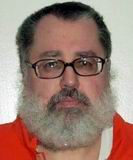
Coburn BROWN
Classification: Murderer
Characteristics: Carjacking - Rape - Torture
Number of victims: 1
Date of murder:
May 24, 1991
Date of arrest: 3 days after
Date of birth:
May 16, 1958
Victim profile: Holly Washa (female, 21)
Method of murder: Stabbing
with knife
Location: King County, Washington, USA
Status:
Executed
by lethal injection in Washington on September 10, 2010
While on parole for a violent sex crime, Brown carjacked 21 year old
Holly Washa in the parking lot of a hotel and demanded at knifepoint
that she "drive or die." He later forced her into the passenger seat,
tied her hands behind her back and drove her to his motel nearby.
In his motel room, Brown forced Holly to remove her
clothing, then tied her to the bed and raped and tortured her
repeatedly for the course of several hours. Eventually, Brown put
Holly in the trunk of her car, slit her throat, stabbed her repeatedly
and left her to bleed to death in a parking lot.
Several days later, Holly's body was found in the
trunk of her car. After stabbing Holly, Brown then flew to Palm
Springs, California, to rendezvous with his next victim in another
hotel room. He handcuffed her and slit her throat, but she survived
and incredibly was able to call the police when Brown left the room.
Brown was arrested in the hotel parking lot and quickly gave audio-taped
confessions to both the rape and attempted murder of Susan in
California, and the rape and murder of Holly Washa in Washington.
Citations:
State v. Brown, 132 Wash.2d 529, 940 P.2d 546 (Wash. 1997). (Direct
Appeal) Brown v. Uttecht, 530 F.3d 1031 (9th Cir. 2008). (Habeas)
Final / Special Meal:
Pizza, apple pie, and Root Beer.
Last Words:
In a lengthy statement, Brown did not apologize to Washa's family but
said he understood their enmity for him. He said he forgave that
hatred and hoped the execution would give them closure. He also said
the prison staff had been most professional and that he had no
complaints about his treatment there. However, Brown protested
sentencing disparities, saying criminals who had killed many more
people, such as Green River killer Gary Ridgway, were serving life
sentences while he was put to death. "I only killed one victim. I
cannot really see that there is true justice. Hopefully, sometime in
the future that gets straightened out." Brown's final words were "Thank
you, God bless you, God bless my family."
ClarkProsecutor.org
Attorney General of Washington
Background of the Cal Brown Case
NAME: Brown, Cal Coburn
D.O.B: April 16, 1958
Race: White
DATE OF CRIME: May 24, 1991
PLACE OF CRIME: King County
BRIEF FACTS: Cal Brown was convicted of aggravated
first-degree murder for the 1991 stabbing and strangulation death of
21-year-old Holly Washa. The aggravating circumstances were that the
murder was committed (1) to conceal the identity of the person
committing the crime, and (2) in the course of or furtherance of
Kidnapping in the First Degree, Rape in the First Degree, and Robbery
in the First Degree. State v. Brown, King County Superior Court Cause
No. 91-1-03233-1.
DATE OF CONVICTION: Dec. 10, 1993
SPECIAL SENTENCING: Dec. 27, 1993
JUDGMENT AND SENTENCE: King County Superior Court, Cause No.
91-1-03233-1, Jan. 28, 1994
Recent Developments:
Jan. 21, 2009: US Supreme Court denies petition for
writ of certiorari
Jan 28, 2009: Mandate issued, execution scheduled
for March 13, 2009
March 09, 2009: Washington Supreme Court denies
Brown's original action against state officers. (Supreme Court No.
82742-7)
March 11, 2009: Thurston County Superior Court
Judge Chris Wickham denies Cal Coburn Brown’s motion to stay his
execution.
March 12, 2009: Clemency and Pardons Board heard
Brown's request for clemency at 1 p.m., voted 2-2 to stay the
execution.
March 12, 2009: Shortly after 4 p.m., the State
Supreme Court ruled 5-4 to grant Brown a stay of execution.
July 10, 2009: Thurston County Superior Court
issued its decision in Stenson, et al. v. Vail, et al. ruling that
Washington's lethal injection protocol is constitutional both under
the United States Constitution and Washington's Constitution. The
Court concluded that Washington's lethal injection protocol is "designed
to administer the death penalty in a way that is humane for both the
inmate and the observers. It is an attempt to provide some dignity to
this most grave event."
July 14, 2009: The AGO filed in the Washington
Supreme Court a motion to vacate the stay entered for Cal Brown, but
the motion was denied on Sept. 10, 2009. A date of execution cannot be
set until the stay is vacated. Once the stay of execution is vacated,
the date of execution will automatically reset for thirty judicial
days (approximately 45 calendar days).
July 29, 2010: The Washington State Supreme Court
dismissed various challenges to Washington's method of carrying out
lethal injection and lifting the stay of execution for Brown. The
justices unanimously agreed that the Legislature properly delegated to
the state Department of Corrections the authority to enact and
implement an execution protocol. The court also declared the inmates’
constitutional challenge to Washington’s three-drug lethal injection
protocol as moot now that the state is using just one lethal injection
drug, sodium thiopental. Brown, Stenson and Gentry argued in the trial
court that that the current one-drug protocol would not inflict pain,
and would therefore would be constitutional. Under state law, the date
of execution automatically resets for 30 judicial days. Brown’s new
execution date is set for
August 18, 2010: Brown and Gentry file a motion
urging Judge John Coughenour to stay the Sept. 10 execution, arguing:
the Department’s one drug protocol presents a risk of severe pain
because the Department has provided no information regarding the
qualifications of the lethal injection team; Brown was denied the
right to access to courts by the change in the protocol; and the
acquisition of the sodium thiopental violates the controlled
substances act.
August 19, 2010: The State of Washington filed a
motion requesting the court deny the motion for a stay.
August 31, 2010: The Honorable Judge John c.
Coughenour issued an order denying Brown's motion for a stay.
Sept. 2, 2010: Brown filed an emergency motion for
a stay of execution in the 9th Circuit Court of Appeals. Brown’s
motion argues that the lethal injection team is unqualified and that
he was denied a full and fair hearing in both the state court and the
district court because he was not permitted to conduct discovery
regarding the qualifications and experience of the team members. He
has asked for a stay until he has been given the opportunity to
conduct discovery of the team members’ qualifications and experience.
The state filed a response. Brown also filed an emergency motion to
stay the execution along with his third personal restraint petition in
the Washington State Supreme Court. Brown argues the execution of his
death sentence will violate the state and federal Constitutions. He
asserts his death sentence should be reversed because information
relating to his mental illness (bipolar disorder) was improperly
downplayed during sentencing.
Sept. 3, 2010: Brown filed a third motion in King
County Superior Court, seeking a stay of execution based on his
allegation that he is incompetent and cannot be executed as a result.
King County is responding to this motion.
Sept. 4, 2010: The Ninth Circuit Court of Appeals
issued a 2-1 decision, denying confessed murderer and rapist Cal
Coburn Brown's motion for a stay of his pending Sept. 10 execution.
Sept. 7, 2010: Brown filed a petition for
certiorari and an application for a stay of execution in the US
Supreme Court alleging the US District Court, Western Washington, and
the Ninth Circuit erred in denying a stay. The King County Superior
Court denied Brown's Sept. 3 motion for a stay of execution based on
his allegation that he is incompetent and cannot be executed as a
result.
Sept. 8, 2010: Brown filed a motion for
reconsideration of the Sept. 7 King County Superior Court ruling
denying his motion for a stay. King County Superior Court then denied
his motion for reconsideration. The Washington Supreme Court denied
Brown's Sept. 2 motion for a stay of execution in his third personal
restraint petition in which he argued he is incompetent and cannot be
executed as a result. Governor Chris Gregoire issued a statement
declining to grant Brown's petition to commute his sentence from death
to life in prison without possibility of parole.
Sept. 9, 2010: The US Supreme Court denied Brown's
motion asking the court to hear his appeal challenging Washington’s
lethal injection protocols. Brown filed a motion requesting a stay of
his execution in US District Court, Western Washington, in Seattle.
His motion before District Court Judge John C. Coughenour argues that
absent his medication, he would be incompetent to be executed. This
motion, while similar to the motion before the state Supreme Court, is
unrelated. The Washington State Supreme Court denied Brown's motion
requesting a stay of his scheduled execution and arguing that absent
his medication, he would be incompetent to be executed. Judge
Coughenour rejected Brown's motion for a stay. Brown appealed to the
Ninth Circuit Court of Appeals. The Ninth Circuit Court of Appeals
denied his motion for a stay. Brown appealed the earlier decision by
the Washington State Supreme Court to the US Supreme Court who did not
respond by midnight.
Sept. 10, 2010: Brown was put to death by lethal
injection. His time of death was 12:56 a.m.
Wash. executes man convicted of woman's murder
By Shannon Dininny and Nicholas K. Geranios -
Associated Press
September 9, 2010
WALLA WALLA, Wash. — Convicted killer Cal Coburn
Brown was executed early Friday by lethal injection for the rape,
torture and murder of a Seattle-area woman, after delivering a
statement complaining he was treated unfairly by the legal system.
Brown, 52, died at 12:56 a.m. PDT, after a four-member team injected a
lethal one-drug cocktail in the execution chamber of the Washington
State Penitentiary.
The father, brother and two sisters of his victim,
Holly Washa, 21, witnessed the execution, as did King County
prosecutor Dan Satterberg. Brown protested sentencing disparities,
saying that criminals who had killed many more people, such as Green
River killer Gary Ridgway, were serving life sentences while he
received a death sentence. "I only killed one victim," he said. "I
cannot really see that there is true justice. Hopefully, sometime in
the future that gets straightened out."
Brown did not apologize to the family of the victim,
but said he understood their emnity for him. He said he forgave that
hatred, held no emnity toward them and hoped the execution would give
them closure. He also said the prison staff had been most professional
and that he had no complaints about his treatment there in 17 years.
After his comments, Brown, who was lying on his
back strapped to a gurney, looked up at the tubes sticking out of the
wall and connected to his body. When the drug was administered, his
chest heaved three times and his lips shuddered, then there was no
movement. Brown's attorney and members of his family were not present
at the execution, though he spoke with them by phone on Thursday.
The U.S. Supreme Court, 9th U.S. Circuit Court of
Appeals, and the state Supreme Court on Thursday all rejected efforts
to stay the execution. Gov. Chris Gregoire rejected his plea for
clemency on Wednesday. It was Washington's first execution since 2001,
and Brown had been on death row for 16 years.
Brown had argued that his mental illness was not
adequately considered during his sentencing and that it should bar his
execution. According to court records, he suffered from bipolar
disorder.
Brown confessed to killing the 21-year-old Washa
during an interrogation in California for an alleged assault on a
woman there. He later led authorities to Washa's battered body, which
was inside the trunk of a car. Brown, who is from San Jose, Calif.,
had a history of violence against women, including a 1977 conviction
in California for assaulting a woman with a knife at a shopping center.
He also served 7 1/2 years — the minimum sentence — for assaulting
another woman in Oregon in 1984.
Washington state says new execution method was
carried out 'humanely'
Family questions why Washington execution took 17
years
By Jennifer Sullivan - The Seattle Times
September 10, 2010
WALLA WALLA — Friday's execution of Cal Coburn
Brown, the first time the state has used just one drug in a lethal
injection, was carried out "professionally, humanely and was dignified,"
according to the state Department of Corrections. Washington and Ohio
are the only two states that use a single drug, sodium thiopental, to
execute condemned inmates. In other states, lethal injection is done
with a three-drug cocktail, a method that has come under fire from
defense lawyers and groups opposed to the death penalty. "Our
preparation, and from what we have learned from the state of Ohio, we
had every confidence the one-drug protocol would be efficient and
swift," Belinda Stewart, Corrections spokeswoman, said Friday.
Coburn was executed early Friday morning at the
Washington State Penitentiary for the May 1991 rape and murder of
Holly Washa, 21, in a SeaTac motel.
After making a nearly three-minute statement from
the prison's death chamber, Brown was administered five grams of
sodium thiopental intravenously while strapped to a gurney. His chest
heaved three times and his lips shuddered, then there was no movement.
Witnesses said Brown died about a minute and a half
after the drug was administered. He was pronounced dead by prison
officials at 12:56 a.m. Brown was the first person executed in
Washington since August 2001. King County Prosecutor Dan Satterberg,
who witnessed the execution along with members of Washa's family and
several news reporters, characterized Brown's death as "quick and
painless."
"It's been so long that we have had to deal with
all of this; now that it's over, I don't have to think about him
anymore," a tearful Becky Washa, Holly's sister, told reporters during
a news conference after the execution. The Walla Walla County
Coroner's Office is scheduled to perform an autopsy on Brown, 52,
according to Stewart.
Portland-based anti-death-penalty attorney Jeff
Ellis, who was a member of Brown's defense team, said "there are many
reasons to conclude that the one-drug protocol lessens the risk of
needless pain and suffering." However, he said, it obscures the basic
issue of whether the state should be in the business of killing. "As
long as we have a death penalty, we must take measures to avoid the
needless infliction of pain on the person who is being killed," he
said. "However, killing a human being is never humane when we could
instead lock him up forever."
The state Supreme Court stayed Brown's execution
last year after his attorneys claimed the state's three-drug method of
lethal injection — the anesthetic sodium thiopental, as well as a
paralyzer and a heart-attack-inducing drug — constituted cruel and
unusual punishment and was prone to error. Two other inmates on death
row, Darold Stenson and Jonathan L. Gentry, joined the appeal, which
effectively put on hold executions in the state. The Department of
Corrections subsequently made the one-drug lethal injection the
primary method of death, while also allowing the condemned to choose
the three-drug method. Death-row inmates may opt for hanging instead
of lethal injection. The last man to be executed by hanging was
Charles Campbell in May 1994.
In July 2010, the state Supreme Court lifted the
stay because the change in execution policy made the initial argument
moot. Over the past year, Ohio switched to the single-drug method
after the botched execution of Romell Broom that was halted by Gov.
Ted Strickland last September. Executioners unsuccessfully tried for
hours to find a usable vein for injection, and Broom has appealed the
state's attempt to try again.
Ellis said there is a condemned inmate on Oregon's
death row who has petitioned to change that state's system of
execution to the single-drug protocol. He said he is certain other
states watched how the one-drug protocol worked during Brown's
execution. "I think that within a couple of years, they'll go to the
one-drug protocol," Ellis said Friday. It's just more humane. There
just isn't any debate about that."
Timeline of Cal Coburn Brown case
May 23 and 24, 1991: Cal Coburn Brown kidnaps Holly
Washa, 21, of Burien, near Seattle-Tacoma International Airport. He
tortures and repeatedly rapes her before killing her by slashing her
throat.
May 27: Brown is arrested in California after he
attacks a woman in Palm Springs. He surprises detectives by confessing
to Washa's slaying during questioning.
June 11: Brown is charged with aggravated murder in
King County Superior Court.
Dec. 10, 1993: Jury finds Brown guilty of murder.
Jan. 28, 1994: Brown is sentenced to death.
June 29, 1997: The state Supreme Court affirms
Brown's conviction and death sentence.
Dec. 8, 2005: The 9th Circuit Court of Appeals
reverses the conviction and death sentence because of an alleged error
in jury selection.
June 1, 2007: The U.S. Supreme Court reverses the
appellate court's decision, finding that Brown had waived any
challenge to jury selection by not objecting when a juror was excused
for cause.
June 27, 2008: The 9th Circuit Court of Appeals
affirms the conviction and death sentence after the case is returned
from U.S. Supreme Court.
March 12, 2009: Less than eight hours before
Brown's scheduled execution, the state Supreme Court issues a stay
based on a last-minute appeal filed by Brown's attorneys challenging
lethal injection.
July 29, 2010: The state Supreme Court rejects the
challenge to the lethal-injection procedure and lifts the stay on
Brown's execution.
Sept. 10: Brown is scheduled to be executed by
lethal injection at the Washington State Penitentiary in Walla Walla.
Execution in Washington 20 Years After Arrest in
Palm Springs
KPSPlocal2.com
September 10, 2010
A vicious murderer and rapist has been put to death
in Washington, but the execution of 52-year-old Cal Brown may have
never happened, if it weren't for another brutal crime he committed in
the Coachella Valley. Investigators say days after he tortured, raped
and killed 21-year-old Holly Washa, back in 1991, Brown came to Palm
Springs and found another victim.
Inside what used to be a hotel on South Palm Canyon,
Brown slashed a woman's throat, then tried to keep her alive, by
wrapping her neck in sanitary napkins and nylon stockings, so he could
withdraw money from her bank account, according to court documents.
Fortunately, she survived the attack. "She was partially tied to the
bed, but able to work free and call the front desk" recalled Cathedral
City Police Lt. Glen Haas, then a 26-year-old Palm Springs Police
Officer who made the arrest, not far from the hotel.
"There was only a couple of directions he could go,"
said Lt. Haas. "I ran out, and there was a man walking down Palm
Canyon as if it was an early morning stroll." The man turned out to be
Cal Brown. "Handcuffed him; found the weapon in his pocket, still had
blood on it..still stained."
And in Palm Springs Police custody, Brown confessed
to more than one crime to detectives. "He said something to the effect
of, 'I have something else to tell you, and you better get something
to write with,'" described Lt. Haas. "He tells them (detectives) a
story about abducting this young girl in Washington, and they would
find her body in the trunk of a car at SeaTac Airport in Seattle.
Washa's body was found, and Brown was eventually
extradited to Washington where he was tried and sentenced to the death
penalty. "He was an evil, evil person that can't hurt anyone anymore,"
said Lt. Haas, who still thinks about the young victim in Washington
and her family. "Doesn't matter how long you've been a police officer,
there's a human element that brings a tear to your eye and makes your
heart ache."
Last Night's Execution Of Cal Coburn Brown Will
Save 5 To 15 Lives Probably
SoundPolitics.com
It has been years since he committed his horrendous
crimes, so a review of them is in order:
[Holly] Washa had left Ogallala, Neb., three years
before her murder believing Seattle was a prime spot to pursue a
career as a flight attendant. She found part-time work as a dispatcher
at a Seattle cable-television company and at a Hickory Farms store in
Southcenter mall. Brown carjacked Washa, 21, at knife point near
Seattle-Tacoma International Airport on May 23, 1991, and forced her
to drive to a bank to withdraw money. He then held her for 34 hours at
a motel where she was repeatedly raped, robbed, tortured and then
slashed to death.
Brown then flew to California, where he was
arrested for trying to rape and kill a woman. While being questioned
by Palm Springs police, Brown told them they could find Washa's body
in the trunk of her Oldsmobile in the parking lot of a SeaTac car-rental
agency. Brown had been released from Oregon State Penitentiary just
two months earlier despite the protests of a prosecutor who had helped
convict him in 1984 for assaulting a woman.
In all the years he has been on death row, he has
shown little remorse for his crimes.
For decades, there has been an academic debate over
whether the death penalty deters murders. Simplifying greatly, you
could say that the early part of that debate was dominated by
sociologists who found no deterrent effect, and the latter part has
been dominated by economists, who have found that every execution
deters a number of murders, with most studies finding that it deters
between 5 and 15 murders. You can find a list of recent studies here,
and a New York Times article on them here. (You can find a dissenting
view on the studies here.)
In my opinion, the economists have had the better
of the argument, though the very range, 5-15, shows us that the matter
is not settled. I say that, not just because economists tend to be far
better methodologists than sociologists — though they do — but because
the conclusion is a common sense one. If someone threatens our lives,
almost all of us behave differently. But I do not think that the
academic question is settled, for reasons I explained in this 2005
post. (Which is illustrated with an example of a famous killer.) But
you don't need to take my word for it; you can take the considered
opinion of economist Gary Becker.
Gary Becker, who won the Nobel Prize in economics
in 1992 and has followed the debate, said the current empirical
evidence was "certainly not decisive" because "we just don't get
enough variation to be confident we have isolated a deterrent effect."
But, Mr. Becker added, "the evidence of a variety of types — not
simply the quantitative evidence — has been enough to convince me that
capital punishment does deter and is worth using for the worst sorts
of offenses."
That the evidence is "not decisive" does not
absolve us from the responsibility to act. If Becker is right, then
the death penalty saves lives, and abandoning it will lead to the loss
of more innocents like Holly Washa. I think trading 1 Cal Coburn Brown
for 5 to 15 Holly Washas is a good exchange. Those who oppose the
death penalty are either unwilling to look at the evidence as Becker
has, or willing to accept the death of many Holly Washas in order, as
they see it, not to be complicit in the death of 1 Cal Coburn Brown.
(I can understand that position, though I do not share it, but few who
do seem to be willing to go all the way with it, since it implies an
absolute commitment to pacifism. Among other things, it implies that
police should not be armed with deadly weapons, and that we should
abandon our armed forces.) You can make a pragmatic argument against
the death penalty by saying that opponents have made death penalty
fights so expensive that we would be better off using the money to
reduce murders in other ways. I haven't seen such an argument, with
actual numbers, but would be willing to look at it. I might still
reject it, because it would allow a minority, using guerrilla tactics
in our legal system, to over-rule the majority.
I saw two of the stories on this execution on our
local TV stations. Neither story mentioned the possible deterrent
effect of the execution. The story on channel 13, KCPQ, was so one-sided
as to be more of an anti-capital-punishment editorial than a story.
This kind of coverage is typical of death penalty stories.
State of Washington Office of the Governor
For Release: Immediate
Date: Sept. 8, 2010
Governor Gregoire’s statement on Cal Brown petition
OLYMPIA – Gov. Chris Gregoire today issued the
following statement on Cal Brown’s petition to commute his death
sentence to life in prison without the possibility of parole: “As
governor, I have a constitutional duty to faithfully execute the laws
of the state of Washington. I also have the solemn power to commute a
death sentence to life imprisonment. The people of the State have
entrusted the governor with this clemency power to use in
extraordinary circumstances that call for leniency. The people did not
inten this power to substitute personal views for the laws of the
State.
“Cal Brown has petitioned for commutation of his
death sentence to life imprisonment. I have carefully reviewed the
facts of Cal Brown’s crimes, the documents and te the Clemency and
Pardons Board, documents submitted to my office, and the judicial
record.
“After this careful review, and after contemplating
the grave importance of this matter, I have determined I will not
intervene. I find no ba the jury in accordance with the laws of our
state.
“I know of no extenuating circumstances and no
flaws in the judicial process that justify changing the jury’s
decisions or the sentence of to consider his diagnosis of a mental
disorder. But the jury heard this evidence and considered whether he
knew right from wrong and was in control of his conduct at the time of
the murder of Holly Washa. State law provides the jury may consider
any relevant factors, specifically including impairment due to a
mental disorder, in deciding whether leniency is merited.
“The post-conviction review by the courts has been
thorough. Since Cal Brown’s conviction, the U. S. Supreme Court, the
Ninth Circuit Court of Appeals and the Washington State Supreme Court
have reviewed his case and have found no basis to reverse his
conviction or to change the death sentence imposed by the jury.
“The torture, rape and murder of Holly Washa were
horrible acts of brutality. My sympathies and prayers are with Holly
Washa’s family, who has suffered immeasurably from Cal Brown’s actions.
No one can do anything to take away or lessen their pain. As a mother,
my heart goes out to them for their tragic loss. I pray for Holly
Washa. I will also pray for Cal Brown.”
Background Information:
In 1993 a jury in King County Superior Court
convicted Cal Coburn Brown of premeditated murder with aggravating
circumstances for the death of 21-year-old Holly Washa. Cal Brown
admitted that he kidnapped Holly Washa, brutally raped and tortured
her for two days, and then murdered her by slitting her throat. He
told detectives he killed Holly Washa because he did not want to leave
any witness alive.
In a special sentencing proceeding, Cal Brown’s
attorneys presented evidence of mitigating circumstances, and the jury
was asked whether it was “convinced beyond a reasonable doubt that
there are not sufficient mitigating circumstances to merit leniency.”
The jury unanimously concluded, beyond a reasonable doubt, that there
were not sufficient mitigating circumstances to merit leniency.
The laws of the state of Washington provide that if
the jury finds that there are not sufficient mitigating circumstances
to merit leniency, the sentence shall be death. Accordingly, on
January 28, 1994, the trial court imposed upon Cal Brown a sentence of
death.
On March 11, 2009, Cal Brown submitted a petition
requesting that the Governor commute his death sentence to
imprisonment for life without the possibility of parole. A hearing was
held before the Clemency and Pardons Board on March 12, 2009. At the
conclusion of the hearing, the Clemency and Pardons Board voted 2-2 on
a motion to recommend that the Governor deny Mr. Brown’s petition. The
two members voting against the motion expressed general views that the
death penalty is problematic as applied or should be abolished. A few
hours later the Washington Supreme Court entered an order staying the
execution.
After the stay was lifted and the execution
scheduled, Governor Gregoire reviewed the petition and the materials
submitted to the Board, the Verbatim Report of Proceedings of the
Board’s March 12, 2009, hearing, a supplemental letter sent to the
Governor by Cal Brown’s attorneys on September 1, 2010, and judicial
records.
Friend of Cal Brown's victim remembers Holly
Washa
By Owen Lei - King5.com
September 8, 2010
SEATTLE -- Cal Brown, a murderer on death row, is
running out of options. His execution is scheduled just after midnight
Friday. Meantime, a friend of his victim, Holly Washa, has been
waiting almost two decades to see justice. "She had the biggest blue
eyes," said Kim Bowen, who said the 22-year old moved to Washington to
pursue her dream of being a flight attendant. "She just had this great
strength about her, coming straight off a farm. I mean, straight off a
farm, in Ogallala, Nebraska."
On Wednesday, Brown lost three chances to stop his
impending execution. Late in the afternoon, the State Supreme Court
denied a request for an emergency stay, 8-to-1. Brown had claimed his
mental illness (bipolar disorder) was improperly downplayed during his
sentencing.
An hour earlier, Governor Chris Gregoire also
denied clemency Wednesday, saying she would not intervene in the
execution. And in the morning, a King County Superior Court judge
upheld her Tuesday ruling against Brown's claim that his mental
illness made him unfit to stand trial in the first place.
Bowen's hope is that this means, after Friday, she
will no longer have to picture Cal Coburn Brown, 55. "Whether he's
lived his life in prison, he's still lived another 18 years," Bowen
said. "She could have had a family. She could have been married. We
would have loved to have her here with us."
Brown kidnapped Washa back in 1991. He tortured and
raped her over a period of 36 hours at a SeaTac motel before killing
her and leaving her body in her own car in a nearby park-and-ride. He
was arrested after a similar incident in Palm Springs, Calif., where
he confessed to Washa's murder. In 1993, a jury convicted him. He was
sentenced to the death penalty.
But on March 12, 2009, about eight hours before the
execution was to be carried out, it was put on hold over the
constitutionality of the lethal injection method. Brown and his
attorneys are still trying to prevent him from being the first convict
executed in Washington since 2001, and just the fifth since 1963.
They maintain his bipolar disorder was never given
enough weight during his trial and sentencing. They also claim the
Washington State Department of Corrections staff isn't qualified to
administer the state's new one-drug lethal injection. Among their
remaining options: the U.S. Supreme Court has not yet decided if it
will take up Brown's claim again the injection team, and Brown can
still appeal today's King County ruling to the State Supreme Court.
Bowen hopes neither of those will happen. "It's
well beyond time that the sentence be carried out," Bowen said. "It
serves no purpose to grant him another stay [of execution]. There's no
reason to do it. He needs to die."
Bowen leaves Thursday to attend the scheduled
execution, she said. "It's not closure, but you're... moving on to the
next phase of grieving," she said, "and that next phase is Cal Brown's
gone, and now we don't have to think about him anymore, and we can
just rejoice in who Holly was and hold onto her as people who love her."
Cal Coburn Brown
ProDeathPenalty.com
In 1984, Cal Coburn Brown was sentenced as a
dangerous offender for his attempted assault on a 24-year-old woman in
Corvallis, Oregon. Brown, a freshman at Oregon State University at the
time, had been introduced to the woman by her babysitter. Brown
appeared at the woman's home wearing a hat and carrying a backpack. He
persuaded her to let him rest what he claimed was a sprained leg. When
she turned her head to call him a cab, Brown flung a 43-inch leather
thong over her head to choke her, but the thong caught on her lip. The
victim recalled the thong instantly tightening and she was yanked off
her feet backwards. She landed on her stomach six feet away with the
thong still around her neck and Brown kneeling behind her. She rolled
to her side and saw him wild-eyed staring into her face." He held her,
and she screamed and a police officer who happened to be nearby
arrested him. Police found a large knife and a roll of two-inch wide
duct tape in his backpack. The woman's two small sons were home during
the attack.
At the time, Brown already had an extensive
criminal record, including a 1977 conviction in California that
involved a knife assault on a woman in a shopping center. Brown served
the minimum seven-and-a-half-year sentence for the Oregon attempted
assault conviction and was released on parole from the Oregon State
Penitentiary on March 25, 1991, after receiving a favorable
psychiatric evaluation. Upon Brown's release, he was placed under the
supervision of a parole office who specialized in the supervision of
sex offenders. The parole officer was given a letter from the district
attorney who had prosecuted Brown on the dangerous offender case. In
the letter, the DA stated that not only did he consider Brown to be
one of the most dangerous criminals whom he had ever prosecuted, but
also that "unless he has undergone a remarkable transformation in
prison, he will remain a potential mutilator and killer of women."
During the first two months of his parole, Brown
had enrolled as a student at Oregon State University and had met with
his parole officer. Towards the end of that period, the parole officer
could not get in touch with Brown and on May 23, 1991, requested that
an arrest warrant be filed on Brown. On the very same day, Brown
carjacked Holly Carol Washa in the parking lot of a hotel near the
Seattle-Tacoma Airport and demanded at knifepoint that she "drive or
die." He later forced her into the passenger seat, tied her hands
behind her back and drove her to his motel nearby. In his motel room,
Brown forced Holly to remove her clothing, then tied her to the bed
and raped and tortured Holly repeatedly for the course of several
hours. The next day, Brown forced Holly to call in sick at her job at
TCI Cablevision. He again tied Holly to the bed, gagged her and
sexually assaulted her with foreign objects, including a bottle. He
whipped her and shocked her with an electrical cord. Eventually, Brown
put Holly Washa in the trunk of her car, slit her throat, stabbed her
repeatedly and left her to bleed to death in a parking lot.
Several days later, Holly's body was found in the
trunk of her car. After stabbing Holly, Brown then flew to Palm
Springs, California, to rendezvous with his next victim, a woman named
Susan, whom he had met on an airplane a few days earlier and with whom
he had made weekend plans. While inside their hotel room, Brown
offered to give Susan a backrub. He was rubbing her back when he
suddenly jerked her arms behind her back in a "very fast, brutal way.
He said, 'Don't scream." I did scream and...he slit my throat." Brown
handcuffed Susan with her arms behind her back. She saw blood on the
pillow. "At that point he lowered the knife so that I could see it. It
was down near my heart, pointed toward me." Brown stopped the bleeding
with a makeshift bandage of sanitary napkins held against her throat
with her nylons, and then sexually assaulted Susan. Then he forced her
to write a check for $4000 to him. He left the room to get more
bandages. Amazingly, Susan was able to call the front desk and summon
the police, who arrived and obtained a description of Brown from Susan,
and arrested Brown in the hotel parking lot. Brown quickly gave audio-taped
confessions to both the rape and attempted murder of Susan in
California, and the rape and murder of Holly Washa in Washington.
After pleading guilty in California and receiving a
sentence of life imprisonment, Brown was tried in Washington. A jury
convicted Brown of aggravated first-degree murder, and sentenced him
to death. In 2007, when the US Supreme Court agreed to hear an appeal
from Brown, Holly's family expressed their frustration. "Here he is,
all these years later, enjoying the life that some people don't have,"
said Ruthcile Washa, the grandmother of Holly Washa, a 21-year-old
Nebraska native who came to Seattle to follow her big-city dreams and
was murdered by Brown. "The death penalty will give us peace of mind
that he won't get out and do this to someone else." Washa left tiny
Ogallala, Nebraska because she wanted to be a flight attendant. Washa
left Ogallala in February 1988 to attend a three-month course at the
International Air Academy in Vancouver, Wash. Three months later, she
moved to Seattle. She worked part-time as a dispatcher at TCI
Cablevision and two weeks before her murder began a second job in a
Hickory Farms store in Southcenter mall. Her former boyfriend, Don
Briscoe, said he and Holly had met in the Vancouver school and lived
together until the month prior to her murder. He said they had decided
to take a break from their relationship but remained close friends. "She
was the sweetest person; she cared about people so much," Briscoe said.
In 2005, the 9th Circuit Court of Appeals overturned Brown's death
sentence, but it was reinstated by the US Supreme Court in 2007. Brown
had a prior execution date in March 2009 but received a stay.